
Sport
Kerry clubs at odds over controversial Parish Rule


In simple terms, Rule 20 (aka the Parish Rule) states that a player must play for a GAA club in the parish where they live.
It was introduced decades ago as a means of safeguarding smaller clubs; it prevents “ambitious” players from transferring to bigger, more successful teams, thereby ensuring that the smaller teams have enough players to stay alive.
Ironically, over time, the rule began to benefit the larger town clubs. As young country families moved into towns like Killarney for work, their children, in accordance with the Parish Rule and irrespective of their mother or father’s allegiances, had to line out with one of the parish’s three clubs, namely Dr Crokes, Legion or Spa.
The rule appears to be taken more seriously in Kerry than in other counties (notably Dublin and Cork) but even here it has not always been strictly enforced. In some parts of Kerry, neighbouring clubs agree to share a common area (not in line with parish boundaries) from where they can both draw players. Some clubs simply turn a blind eye to the rule altogether. When it boils down to it, a player is unlikely to run into trouble unless there is an objection, which, if it comes, invariably comes from a club in the “new” parish where the child’s family now reside.
One of the most famous cases arose a decade ago when a local couple took matters to the High Court after Firies objected to their two sons lining out for Listry on the basis that the family lived in Firies parish. The fact that the boys attended primary school in Listry and that their home was 1.4 miles away from Listry’s pitch and 7.2 miles away from Farranfore was irrelevant according to the rulebook. The matter was ultimately left to the county convention to decide, and clubs voted 59-23 against giving the O’Sullivans a derogation (i.e. an exemption from the rule).
MAJOR PROBLEM
Now, the issue is becoming a major problem in the Killarney area. With suitable, affordable housing difficult to come by in Killarney town, many young families have decided to settle in satellite parishes like Kilcummin, Fossa and Firies, among others. These parents often have strong personal and familial ties to their own GAA club, and they want their children to follow in their footsteps. However, by the letter of the law, unless the child has represented their town club at under 12 level or above (i.e. if the family relocated after that point), they must line out for the club in their new parish.
The Parish Rule, which was initially brought in to help rural clubs, and then, for a time, helped town clubs, now appears to be benefitting “satellite” clubs more than most.
To the uninitiated, it might not seem like a big deal. The child has a club to play for regardless and surely that’s the most important thing. Some parents do see it that way. But to some dyed-in-the-wool GAA men or women, the thought of their child playing for another club is anathema. There have been instances where the family have said, “it’s our club or no club at all,” and the child has been lost to other sports as a result.
One father who has been confronted with this prospect says the idea of his son lining out in different colours is “upsetting” and “unthinkable”.
“It’s hugely important to me that he plays for my club. The GAA is built on tradition. I played for the club, his family are all involved, and then he’s told he can’t play for the club because of where he lives? Mind-boggling is how I’d describe it.”
There is an even greater concern within Killarney GAA circles that the current trend of losing families to out-migration could eventually lead to a stark new reality; one where there aren’t enough players to sustain all three clubs in the town.
This imagined future isn’t the stuff of science fiction. Current vice-treasurer of Kerry GAA Joe Crowley communicated this very point to local clubs as part of his role as chairman of the parish rule and player registration committee.
It’s a possibility that newly-appointed Dr Crokes chairman Matt O’Neill is fully aware of. Speaking to the Killarney Advertiser, he said that the Parish Rule, though good in nature, is causing “difficulties”.
“First of all, I think the Parish Rule is the way to go,” he clarified. “It’s a good rule and as a club we would be in agreement with the full application of it. But it is presenting certain difficulties.
“With rural depopulation, some clubs, particularly in South Kerry, are having difficulties putting underage teams together, which is a pity. [The day after this interview was conducted, it emerged that Valentia Young Islanders were officially looking for a club that would consider an amalgamation at senior level.]
“I think for the likes of Killarney, it’s going to be problematic for the three clubs here in the future because new families are not going to be able to afford to live in the town. It’s already happening. The houses that are coming on the market are going to older people coming here to retire, and people buying for hospitality. Airbnb and things like that. It’s very difficult for young people to buy in the town, and if you don’t have young people living in the town, you’re not going to have children to play with the clubs.
“They’re moving out to the satellite towns and villages and those clubs are picking up a lot of extra young families.
“Killarney is going to find it difficult to service three clubs in the future. That’s the way I see it going.
“It’s going to be a problem down the road, both for rural Ireland and the bigger towns like Killarney. The satellite towns and villages are expanding at a big rate so they’re the beneficiaries of it.”
When it comes to the parents and children involved, O’Neill says it can be hard for them to, effectively, change clubs.
“There are people who can’t live in Killarney so they move slightly outside of town, and they would dearly like their children to play for a Killarney club. Similar situations have happened in Tralee, and the reverse has also happened: people have moved into a larger town looking for work, and they would like their children to play for their home club. There have been a number of cases where derogation has been sought to allow that to happen. The place where the people are living want to hold onto them, and rightly so.
“If there’s somebody who has had a history with the Crokes, for example, and they want the child to play for Crokes, and they have a case, you would like to support them. But the rule is the rule and, at the end of the day, you’ve got to abide by that if you want to play. That’s the game. It can be a bit tough for some people to accept.”
ENFORCED
Meanwhile, the clubs in the satellite parishes rightly say that they are merely asking for a rule to be enforced. Although rival clubs might not be happy about the situation, they seem to fully accept that the likes of Fossa, Firies and Kilcummin, for example, are well within their rights to flag players who might be playing for the “wrong” team.
Speaking to the Killarney Advertiser, Fossa secretary Merry Talbot accepted that objections pertaining to the Parish Rule were causing conflict between local clubs, but he added that “Fossa aren’t breaking the rules”.
“This isn’t a rule that Fossa dreamed up. It was brought in as a mechanism to preserve and protect the community spirit of the GAA. Is it the best mechanism? We don’t know. Does it suit everybody? Of course it doesn’t. But it is a mechanism to do that. You would imagine that the smaller club would lose out if it was removed.
“There are people who say the Parish Rule is outdated but give us another mechanism to protect the smaller clubs, something that will stop the better players migrating to the bigger clubs.
“There have been motions to change it or get rid of it and, each year, it’s defeated. The rural clubs would be very much in favour of it. For Fossa, it’s important to try and maintain the Parish Rule. That’s the view the club takes.
“Fossa is bordering Killarney town, which has a couple of big clubs. If there was no Parish Rule and you [an outsider] moved to Fossa and were looking to get your son playing – maybe you were a good footballer yourself – it might sway your decision [to join a bigger club].
“Fossa have many players who are living in other parishes and their kids have to play with those other clubs. It works both ways.
“70% of our membership are non-native, coming from other parts of the county or other counties. If we didn’t protect the club [by using the Parish Rule], would there be many of them playing in town? You’d have to wonder.”
Local club officers seem to agree on one thing (if nothing else): finding a resolution that will satisfy everyone is impossible.
One prospective path forward that has been suggested in the past, and one that appears to be favoured by the town clubs, is a relaxation of the current rule that would allow children to play for the club of their mother or father. This rule has technically been okayed by Croke Park but it must be passed at county convention before coming into effect here in Kerry. However, when Dromid Pearses, a small, rural club in South Kerry, tabled this motion in 2018, it was soundly defeated.
The fact that it was Dromid and not, say, Austin Stacks or Dr Crokes, who put forward this amendment seems to indicate that smaller clubs might be agreeable to a “parent rule” as it could lead to the children of former players coming home, as it were, to the clubs of their forefathers.
The problem lies in getting it passed at county convention by club delegates who have a reputation for favouring tradition over innovation. After a club forum in 2017, Kerry GAA chairman Tim Murphy stated that the Parish Rule is “sacrosanct for clubs and they want it to stay”, although he also said that perhaps it could be tweaked if doing so would benefit small clubs.
Meanwhile, clubs in satellite parishes, who are currently experiencing a boom-time after many years in the shade of their more illustrious neighbours, will rail against any changes whatsoever. And why wouldn’t they?
News
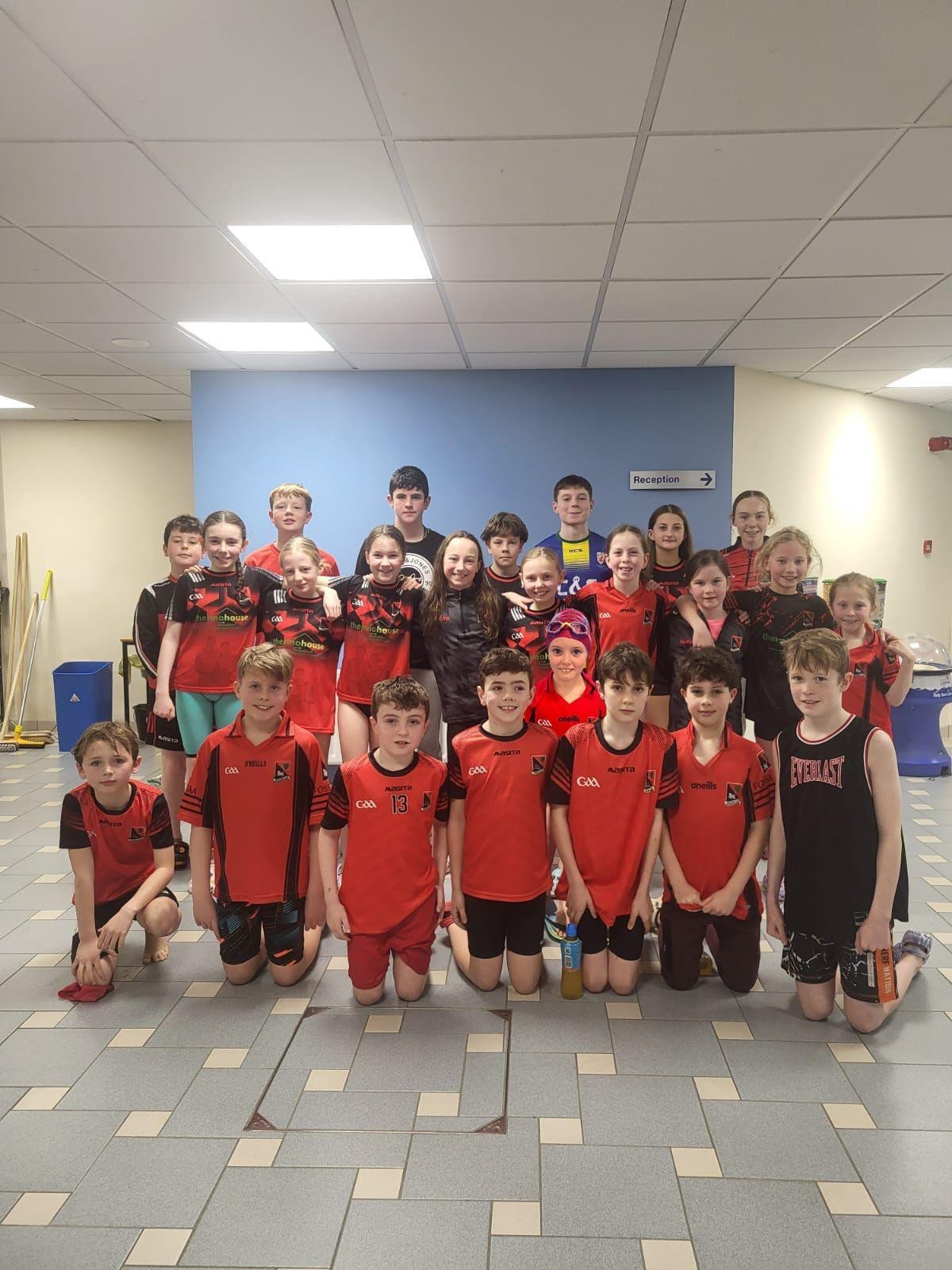
Fossa Swimmers make a splash at County Finals
The Fossa Swim team pictured at the Tralee Sports Complex following their successful outing at the County Finals of the Community Games on Sunday, February 15. The 25-strong squad delivered […]

News
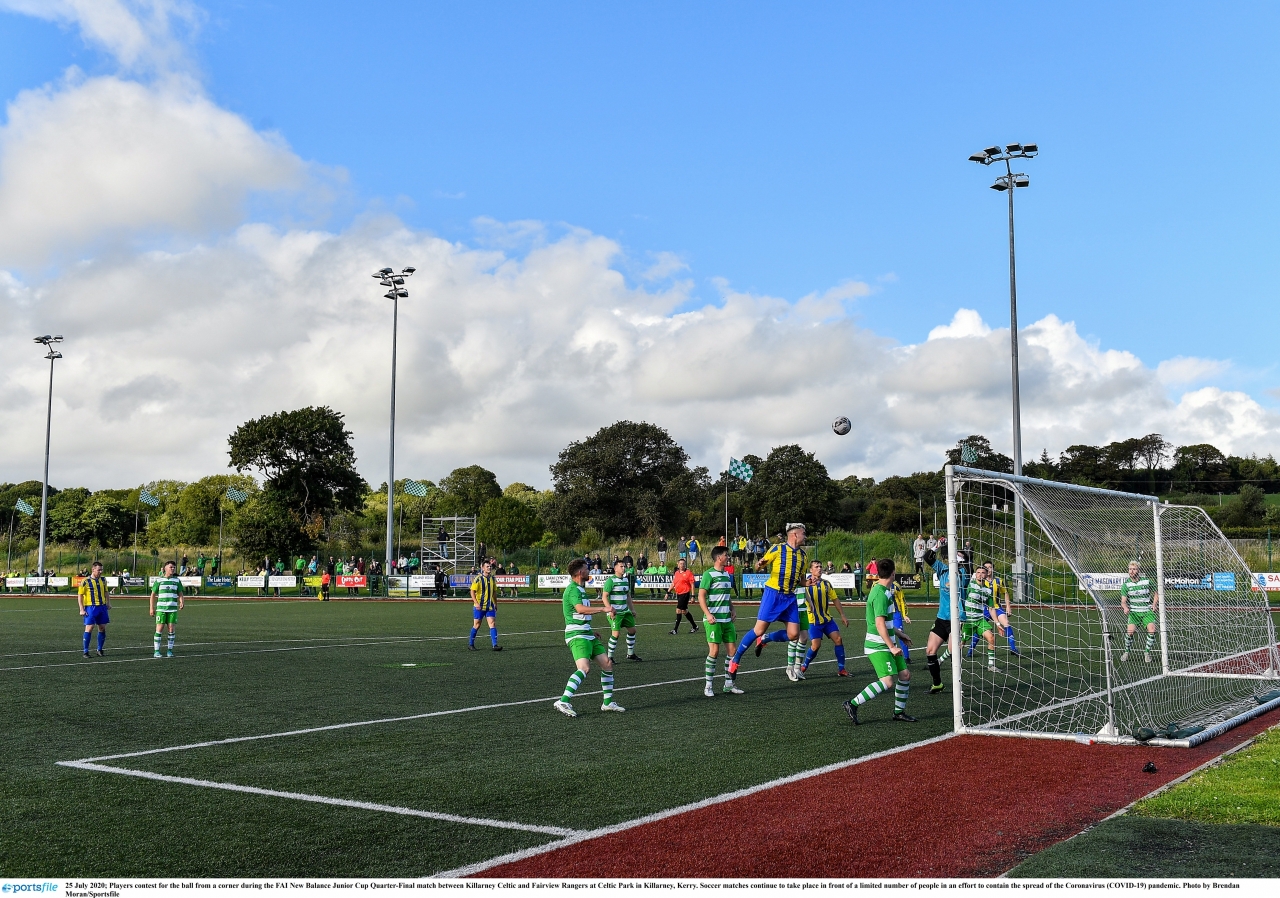
On the Ball Part 2 of the Mikey Daly Interview
Éamonn Fitzgerald EF: Killarney Celtic are invited to participate in an Irish competition. That has big financial implications for travel, meals, etc. MD: It is great to be invited, showing […]


Killarney co-drivers lead the charge for Circuit of Ireland
The NAPA Auto Parts Irish Tarmac Rally Championship heads to Dungannon this Easter weekend for the Circuit of Ireland, with...


SUPPORTING LOCAL EDUCATION
SUPPORTING LOCAL EDUCATION Karen Buckley, representing the Loughguittane National School Parents Council, accepts the proceeds of the Fossa Two Mile...


Lough Lein Anglers announce 38th annual charity competition
The Lough Lein Anglers Association, in partnership with main sponsor Lee Strand Cooperative Creameries Limited, has officially launched this year’s...


New defibrillator installed at Park Road Parish Centre
Killarney HeartBeat has enhanced community safety in the area with the installation of a new Automated External Defibrillator (AED) at...

Clean sweep for Kilcummin at Scór na bPaistí Finals
Kilcummin GAA is celebrating a historic achievement following the County Finals of Scór na bPaistí held recently in Ballybunion. The...
