
News
Meet Jordan Lee and Madie Wilson-Walker, the talented couple with a shared Paralympic dream


A chance meeting at the World Para Athletics Championships in Dubai brought Jordan Lee and Madie Wilson-Walker together. Now, two years on, the Irish high jumper and the Canadian sprinter/long jumper are plotting international glory as a couple. Lee, who was born with one hand, and Wilson-Walker, a bilateral amputee who runs with blades, are currently training out of Killarney.
This week Adam Moynihan caught up with the pair to chat about life in Kerry, dealing with the pandemic, and their shared Paralympic dream.
Adam Moynihan: Madie, you’ve relocated to Ireland. Is it a stupid question to ask why?
Madie Wilson-Walker: *smiles and points her thumb at Jordan, who is seated next to her*
AM: How is Killarney treating you so far?
MWW: I really like it. People here are really nice. The food tastes amazing - even the most simple things. Seeing all the little local and family-owned cafés around is great too, because we have some of them in Canada but it's not a huge thing. The views are amazing. And the weather's not too bad either. I don't mind rain because it snows a lot where I'm from.
AM: And you’re training with Killarney Valley. How has that been going for you?
MWW: Yeah, good. We're kind of coming out of base training a little bit now. So it's starting to be more events-specific training, which is nice. But I really like the team environment that's there, and Tomás (Griffin) is obviously an amazing coach.
AM: I want to talk about the future and both of your ambitions in sport, but first I’d like to take you back to the start. How did you meet?
Jordan Lee: We met at the World Championships in Dubai in November 2019. So, jeez, two years ago actually. I was at the track one day supporting one of my Irish teammates, and Madie just walked up the stairs and asked if she could sit beside me. At first I was really taken aback by the confidence she had. That’s kind of how it all started.
AM: Madie, what were your first impressions of Jordan?
MWW: I thought he was really nice, but I found it very hard to understand his accent! I'm half deaf as well so it was not good.
JL: You were just laughing constantly.
MWW: Yeah, it was nervous laughing. It was like, “I don't know what the hell this guy's talking about”! But he was really nice, really funny. He's very comfortable to be around.
AM: And how did things develop from there?
JL: We were in contact with each other through social media, I suppose mainly through Snapchat. Just asking each other how we were getting on after the World Championships. I was speaking to Tomás and I said, “look, man, I wouldn't mind going on holiday”, because I was stressed out after the competition. He asked if I had a plan on where I wanted to go and I was like, “maybe Canada…” He said, “I called it!” He knew.
I went over to Canada for a week-and-a-half and had a great time. We got up to lots of different touristy things, like Niagara Falls and going to hockey games and stuff. We said, look, we're gonna try this out and see how it goes. And as you can imagine, it was quite tricky, because then COVID happened.
AM: So, no international travel. You were separated again. How difficult was that for you both?
MWW: At first, it wasn't super hard because we knew we probably would have had a few months where we didn’t see each other anyways. And then, when the travel restrictions came in, we were like, “I'll see you next month”, and then, “I'll see you next month”… And then, finally, after over a year-and-a-half, we were able to reunite again. He came to Canada, and then I came back over with him. So that was nice. But in the meantime we just FaceTimed every day. We had a movie night over FaceTime and stuff like that.
JL: It’s all coming out now!
AM: What was it like meeting up again after such a long time?
MWW: I'm a very emotional person but I said to Jordan, “I don't think I'm gonna cry when I see you - I think I'm just gonna be happy”. And when I saw him at the airport, I was fine for about 0.2 seconds and then I start bawling crying.
JL: Everyone was looking at us, I was worried they were going to think I said something to her! It was a bit strange initially when I first saw her because I hadn't seen her in a year-and-a-half - I had been speaking to and looking at her on a screen. But it has been great. It's nice to have that training partner on a consistent basis. Even being at home, when I wake up in the morning, I'm not the only person doing sit-ups! We are motivating each other to strive to be better all the time.
AM: Do you train together every day?
MWW: Pretty much every day. Sometimes he'll have something specific, like a high jump exercise, that I obviously won't have. But for the most part we'll train at the same time.
JL: During the winter season our training will be pretty similar anyway because you're just trying to get into really good physical shape, just plenty of conditioning. We can do it together, which is nice.
AM: Are you competitive with one another, on the track and away from it?
MWW: Not super competitive, trying to one-up each other or anything, but we'll definitely try to battle it out in some workouts. We cheer each other on too. If I'm starting to slow down a bit and I’m getting tired, he will encourage me.
JL: Yeah, we’re competitive, but we wouldn't be doing it for our own ego. Like this morning as an example, at eight o'clock, I was just getting up and Madie was awake before me. I was chatting away, asking how her morning was. And she said, “I've already done my stretching routine, my core work and I was doing a bit of upper body, doing my push ups”. I was like, “already? I really have to up my game here”. It's funny to have that relationship with someone who really relates 100% to what it is that you're doing.
AM: Yeah, it's pretty unique, two top sportspeople in a relationship. If you experience a low in your sport, or you experience a high, the other person knows how you're feeling. Most people don't have that because they're going back to a person to whom sports is a different world. Do you find that helpful?
MWW: Yeah, I find that sometimes friends who aren't necessarily at the level of athletics that we are, they'll be like, “well, just skip the workout”. We can't just skip a workout. People don't realise how much of a time commitment it really is. So I think being able to relate on that level really helps because we know that we can't do anything until after practice, and we've done our recovery. Then we can chill out. Whereas if you are with people who aren’t very understanding they might say, “what's the point of even doing that?”
JL: It’s even more true for the sport that we’re in, because it's an individual event. I think I've mentioned this before in previous interviews: we can’t hide behind our teammates and let them pick up the slack for us. We can't miss a session because our partner or friends don’t understand. I think it helps massively [that we’re both athletes]. If I'm feeling a bit low after a session, or if I'm feeling a bit tired, Madie will notice that straight away. We can help each other on that front.
AM: Do you think para athletics is in a good place right now?
MWW: I think it's gotten a lot larger than when I first started, and a lot more competitive too. If you look back at a couple of performances of people that were medaling back in 2012, the standards now are way up.
AM: Why do you think that is?
JL: I think the power of social media has really helped things. It's really showing people across the world that there is this thing called Paralympic sport and the Paralympic Games for people to take part in, and see whether or not they have some potential. It's amazing, because there's a ton of people now in my category (T47 high jump). It's so competitive to the extent that the three people who medaled this year would have won the able-bodied National Senior Championships the last five years in a row. It’s great to see and I'm delighted that the sport is growing and everybody's continuing to get better. Ultimately, that's what we all want. And we want to have that respect that we're really good professional athletes and not just really good professional, disabled athletes.
AM: What does 2022 have in store for you?
MWW: Definitely, for the both of us, the World Championships would be the next big competition, which is in Japan in August of next year. And then the next Paralympic Games will be in Paris 2024. So, I think that'd obviously be a goal for both of us, because I didn't qualify for Tokyo this year. I definitely want to have a comeback season with Worlds and then hopefully make it to the Paralympic Games. After that, I just want to stay in the sport as long as my body will let me. I think we'll both be involved in sport once we retire, whether it's coaching kids with disabilities, or personal training, stuff like that. It's a really fun atmosphere to be around.
AM: And Jordan, you’re a coach with the local basketball team, Scotts Lakers. How is that going?
JL: Good, yeah. There's a pretty decent vibe amongst the group. We’re trying to bring this sense of togetherness. That's something that maybe they have struggled with in previous years. And I think it's important to really bring everybody together and highlight the goal for the season ahead. We've had a bumpy enough start but we've got plenty of time to turn that around.
I’m also coaching with Killarney Valley and we've got some really good up-and-coming young athletes there as well. We had a fantastic season, and it was only our first real season as a club considering that the track has only been built a year. In the space of 12 months, we had 10-plus national medals, which is fantastic - especially for a small town like Killarney. The quality of coaching, not just from Tomás, myself and Madie but the other coaches as well, is top class.
AM: Madie, what have you made of the facilities?
MWW: The track is amazing. And the fact that Jordan and Sam (Griffin) and Tomás actually laid down the track, that's really cool. All the gyms that we've gone to are really nice too.
JL: The track is a game-changer. I think it's important to have such an amazing track facility in the town. People who may have been involved in other sports might see athletics and they might want to try it knowing that there's a facility that they can actually train on. Whereas before, if somebody was to offer a chance to another athlete to take part, they probably would have declined. Now, you can visit, you can properly, physically go to a track in your hometown, try it out, see how you're getting on, and then be facilitated by really top class coaches who are versatile towards people of all abilities. It doesn’t matter if you're trying to participate in the sport at a really high standard or just taking part because you enjoy it. We've got coaches there that are very versatile. We've got a couple of members of the club who happen to have intellectual disabilities, and everybody's being treated fairly and equally, which is very important.
AM: That’s great to hear. So, looking to ahead to 2024, what would it mean to you both to appear side-by-side at the next Paralympics?
MWW: That'd be really cool – it would be such a cool story to tell down the line, if we both ended up going. [To Jordan] And I'd be, like, cheering you on and you’d be cheering me on? I feel like it would create a great atmosphere for both of us.
JL: Yeah, I mean, it's kind of hard to put into words really, how cool that would be. To be at the biggest event in the entire world, to be able to call yourself an Olympian, and to do it alongside your partner. I don't think many couples can say that. So that would be really cool. That's definitely a goal that we both have. 100%.


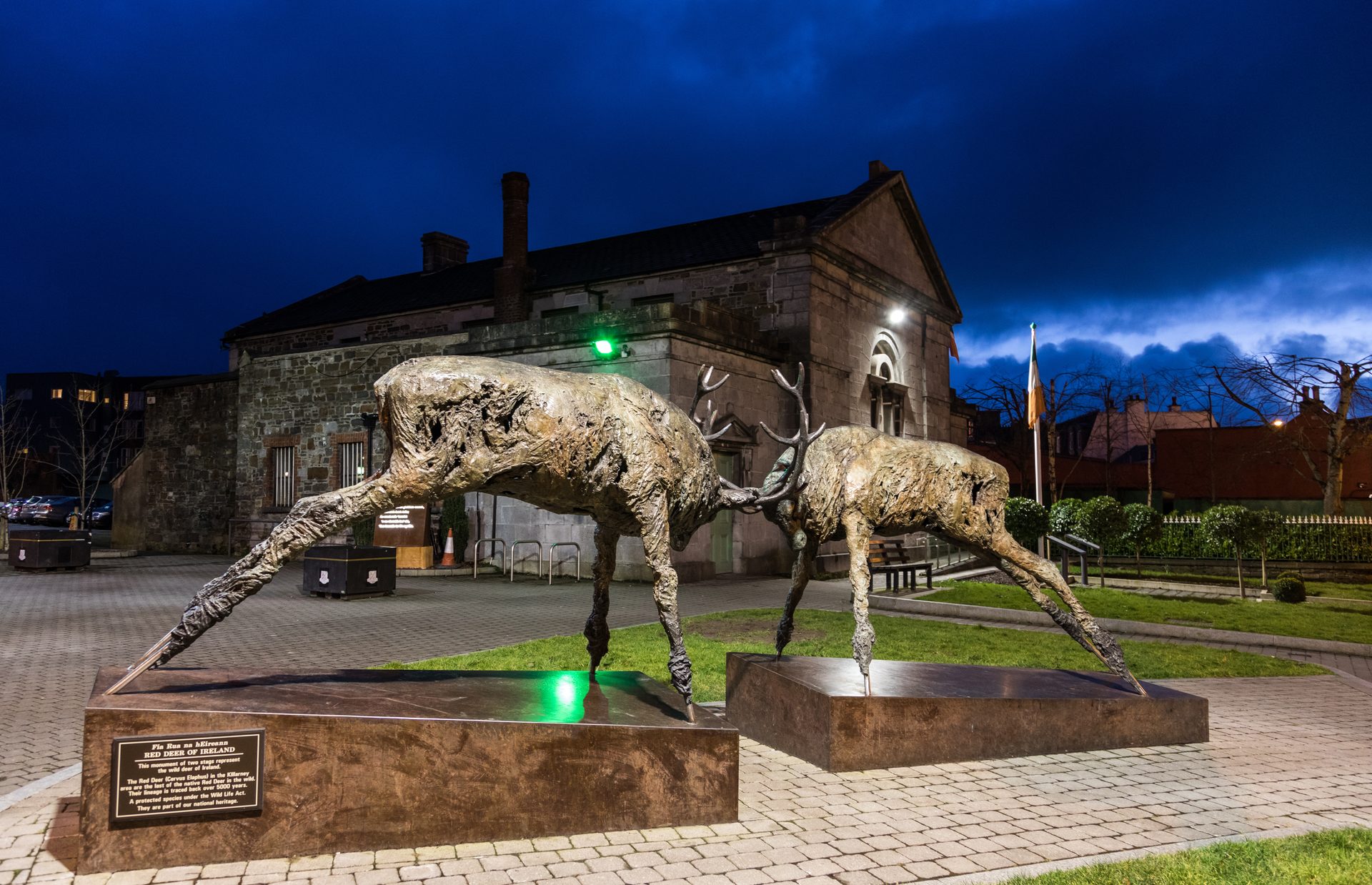
Drivers warned as deer rutting season begins
Motorists in Killarney are being urged to exercise extreme caution as the annual deer rutting season gets underway, causing animals to stray far beyond their usual habitats inside Killarney National Park.
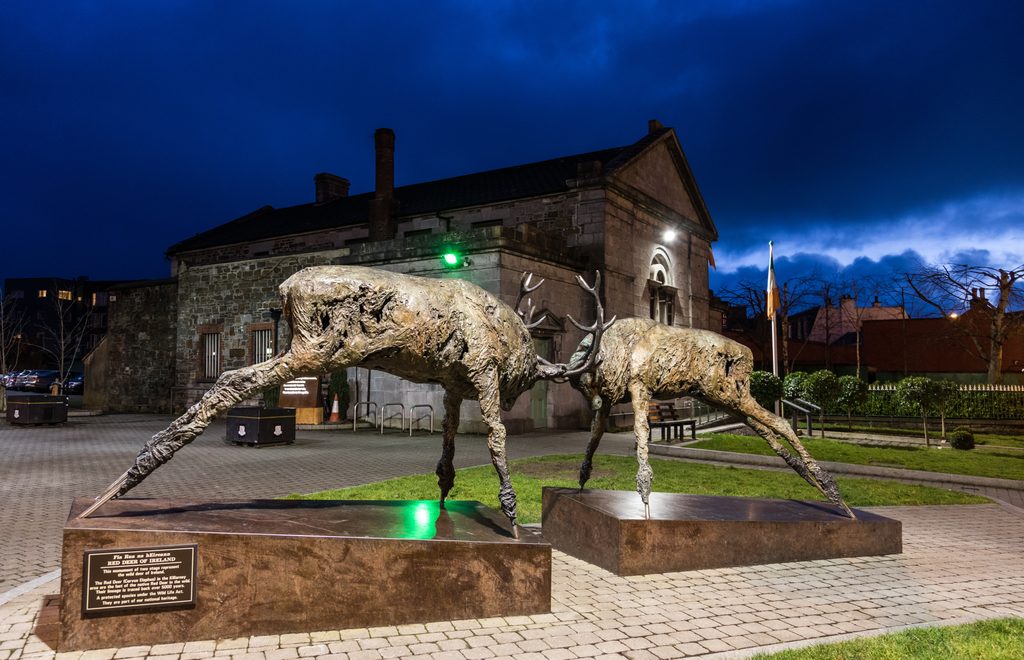
The autumn mating season sees deer becoming highly active and unpredictable, leading to increased sightings and collisions on local roads outside traditional park boundaries.
Two separate incidents highlighted the growing hazard on local routes this week. A reader contacted the Killarney Advertiser to warn drivers after spotting a deer roaming near Tiernaboul towards the school on Sunday afternoon around 7.30pm.
Later that same night, in the early hours of Monday morning, a local driver collided with a deer near Kerry Airport around 1am while returning home from an event.
Despite attempting evasive action, the motorist struck the animal, which died at the scene and temporarily blocked the road before local Gardaí were alerted to clear the obstruction.
The driver sustained substantial vehicle damage, requiring repairs to the bumper, headlamp, and internal components, leaving her facing significant garage costs and time off the road.
Gardaí and road safety advocates advise motorists travelLing during early morning and late evening and remain vigilant along tree-lined routes.

Drivers warned as deer rutting season begins
Drivers warned as deer rutting season begins Motorists in Killarney are being urged to exercise extreme caution as the annual...

Kerry Airport CEO addresses chamber luncheon
Kerry Airport chief executive Adrian Neilan addressed local business leaders at the Killarney Chamber of Tourism and Commerce luncheon at...
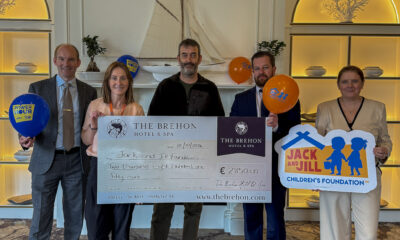

The Brehon raises €2,850 for Jack and Jill Foundation
The Brehon Hotel and Spa raised €2,850 for the Jack and Jill Children’s Foundation after hosting a closest-to-the-pin golf simulator...

Five local postmen retire with 185 years service
Five local postmen retire with 185 years service RETIREMENT NIGHT: Pictured at the retirement party held at Killarney Racecourse on...

New Streetscapes murals launched at College Square
A colourful collaboration between the Kerry Local Creative Youth Partnership (LCYP) and the Architecture Kerry Festival at Kerry County Council...
