
News
Is it time to turn our backs on the Book?

T
The alarming “breach of trust” (Mark Zuckerberg’s words) that has led to this Cambridge Analytica scandal has left many users wondering if they should delete Facebook altogether. To be honest, it might be no harm.
50 million people had their data unwittingly mined, analysed and used against them in a shocking betrayal of privacy that is straight out of a dystopian sci-fi novel. The scary thing is, it wasn’t just people who signed up for these 3rd party apps who fell victim to the scam, it was all of their Facebook friends as well, so it’s not like you can blame the victims for being careless.
Cambridge Analytica took this data – likes, statuses, personal information – identified target voter groups and designed targeted messaging to influence opinion. The kind of opinion they were trying to illicit hasn’t necessarily been proven just yet but the fact that Donald Trump’s former chief strategist Steve Bannon oversaw the company’s activities and Robert Mercer, a major donor to the Trump campaign, invested $15 million, it’s not too difficult to connect the dots.
Broadcaster Matt Cooper deleted his Facebook account live on air and, since the scandal broke, many fellow users have removed themselves (or at least talked about removing themselves) from the world’s biggest social media platform. Unfortunately, it’s easier said than done.
Facebook has become a fairly sad place in my opinion. I remember joining in 2008 and being completely drawn in by its unique design and features. Once all of our group of friends had signed up, Bebo couldn’t compete. Back then Facebook was actually “social”. Almost all of your time on the site was spent chatting to friends, posting on their walls and, if you really liked someone, sending pokes. It was good craic.
Now, trawling through your news feed is a very different experience. All you see is viral videos, memes, click bait and “tag someone who…” posts. WhatsApp has completely taken over the messaging scene (although Facebook’s independent Messenger app isn’t bad either, in fairness) and writing on walls is a thing of the past, so really the social element to Facebook has virtually vanished.
The one thing it can potentially still be useful for is news. At the Advertiser we find that Facebook is a good way of sharing our stories and interacting with readers. Unfortunately, Facebook’s algorithm pushes whatever it sees fit to the top of your news feed, with viral videos and memes apparently more important to them than actual news. It’s worth bookmarking your favourite pages (like the Killarney Advertiser) so you can access them directly.
The problem with Facebook at the moment is that there’s a whole bunch of noise and not a lot of substance.
So why not just delete it? FOMO (fear of missing out) is definitely a factor. What if all the lads are having great banter on FB, and I’m here on my own twiddling my thumbs like a chump? It’s like being at the dullest party ever but being afraid to leave in case it suddenly turns into the best night of all time.
Facebook is also addictive. We’re addicted to getting likes and we’re addicted to viral content. Research has shown that click bait works, even if the content that we click through to is rubbish. It’s the anticipation that gives us the buzz. In terms of this kind of rush, Facebook is a very potent dealer.
People have been wary of how much Facebook knows about us for a long time. I think we have always known that in the wrong hands, our personal information could cause personal embarrassment, profit faceless corporations and even swing an election. But, for whatever reason, we’ve resisted deleting. Now we know for a fact what Zuckerberg and co. think of our privacy, is it finally time to turn our backs on the Book?

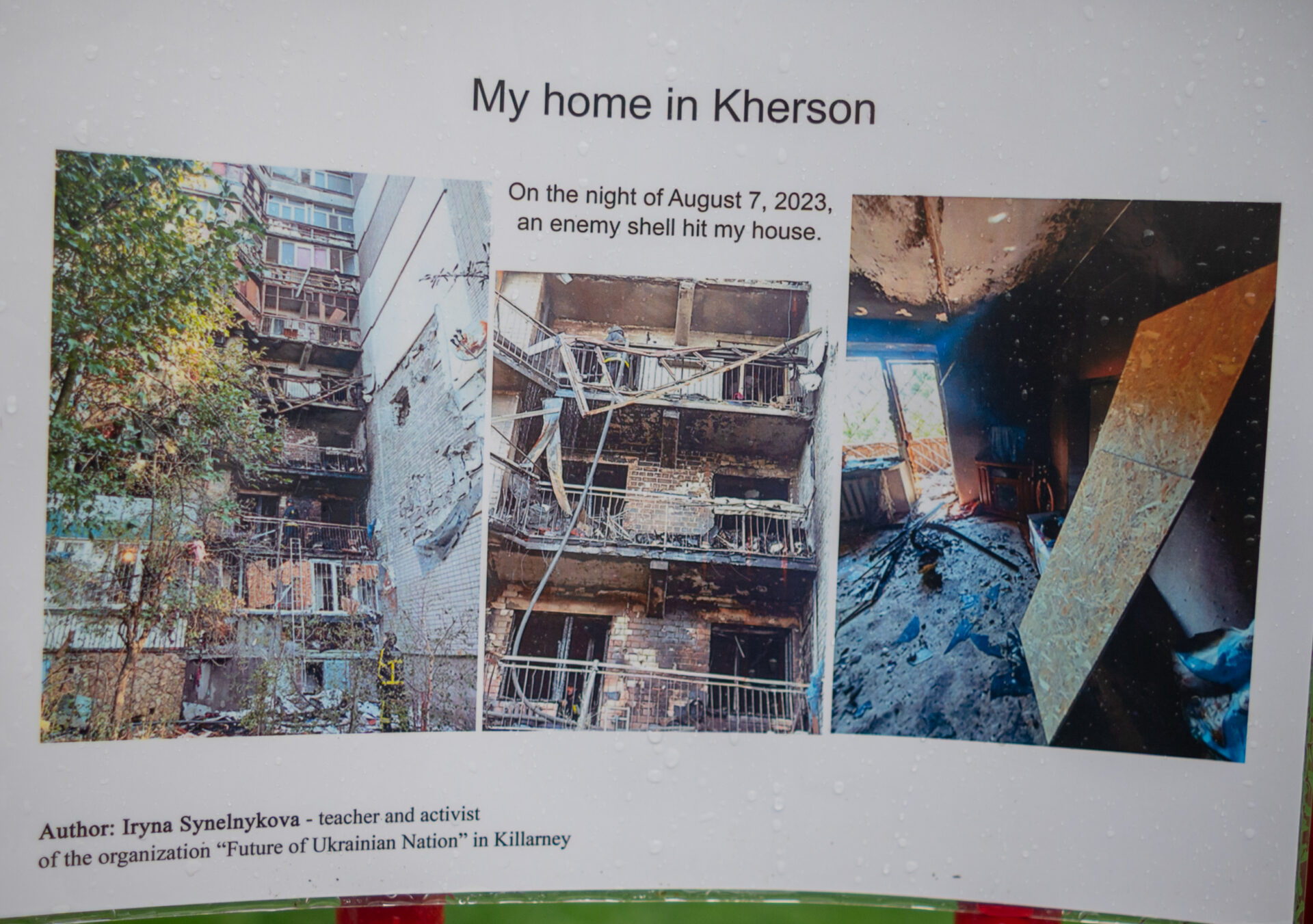



Powerful photo display at St Mary’s brings Ukraine conflict home
A unique photo exhibition has been installed on the railings outside St Mary’s Church of Ireland in Killarney town centre,...


Beaufort Engineer honoured with national emerging leader award
Beaufort Engineer honoured with national emerging leader award Beaufort native Danny Pio Murphy has been named the recipient of the...


Pickleball Club’s record medal haul at Munster Open
Pickleball Club’s record medal haul at Munster Open Killarney Pickleball Club celebrated its most successful outing to date at the...


Women’s Shed to Host Charity Auction for Typhoon Victims
The Killarney Women’s Shed has teamed up with local nurse Chandra Arias to host a major charity auction of upcycled...


Killarney hosts 88th annual Irish Hotels Federation Conference
Hoteliers from across the country gathered at the Gleneagle Hotel this week for the Irish Hotels Federation’s (IHF) 88th Annual...


Fossa Swimmers make a splash at County Finals
The Fossa Swim team pictured at the Tralee Sports Complex following their successful outing at the County Finals of the...


On the Ball Part 2 of the Mikey Daly Interview
Éamonn Fitzgerald EF: Killarney Celtic are invited to participate in an Irish competition. That has big financial implications for travel,...


LUKE MANGAN recently caught up with Kerry FC’s manager, Colin Healy.
He spoke to him about his careers as a player and manager. Here’s how it went: When you began your...


Home cup tie for St Paul’s could be epic
Paudie O’Connor National Cup (Round 1) Utility Trust St Paul’s v GCU Brunell Saturday 7.30pm Killarney Sports and Leisure Centre...


Chances of Kerry v Cork Munster final in 2026 decrease as Munster GAA delay seeding plan
After facing a backlash from Limerick, Clare, Waterford and Tipperary players, Munster GAA have postponed their plan to keep Cork...
