
News
KNOW YOUR RIGHTS: Marriage requirements Notification Requirements if Getting Married in Ireland


Anyone planning to get married in Ireland must give a minimum of three months’ notice to the Registrar at a Civil Registration Service.
This is the law in Ireland and it applies to all civil, religious and secular marriages. This is sometimes referred to as notification of your intention to marry.
If everything is in order, the Registrar will give you a Marriage Registration Form (MRF). The MRF is like a marriage licence. It gives you authorisation or permission to get married.
How do I give notice of my intention to marry?
You will need to do the following:
Contact your local Civil Registration Service to get a postal marriage notification form. Once you have completed the form, you can return it by post or by email.
Contact the Civil Registration Service to make a marriage notification appointment with the Registrar. You can also book a marriage notification appointment online for certain areas of the country.
When you make the appointment with the Registrar, you will be told what information and documents to bring with you.
The requirement to give 3 months’ notice does not apply to civil partners whose civil partnership was registered in Ireland.
What documents will I need to bring?
Generally, you and your intended spouse will each need to bring the original (or certified copy) and a colour photocopy of your:
Passport as identification
Birth certificate
Final divorce decrees in respect of all previous divorces if divorced
Dissolution decrees in respect of all previous civil partnerships if you have a civil partnership dissolution
Final decree of nullity and a letter from the relevant court confirming that no appeal was lodged, if you were in a civil partnership or marriage that was annulled by an Irish court
Deceased spouse's death certificate and your civil marriage certificate if either of you is widowed
Deceased civil partner's death certificate and your civil partnership certificate if either of you is widowed
Documentary evidence of immigration status if not a citizen of Ireland or an EU member state
If either of you is not an Irish citizen, you may be asked to provide a Letter or Certificate of Freedom to Marry or other documentary confirmation of your civil status from your country of origin
You will also have to provide information about the intended marriage, such as:
Whether it will be a civil, secular or religious ceremony
The intended date and location of the marriage
Details of the proposed solemniser of the marriage
The names and dates of birth of the two proposed witnesses
A PPS number is required for all parties serving notice of intention to marry, who have or will have a current or a future address within the State
You will need to download and complete the Data Capture Form, which is available on-line. You should bring the completed form with you to the appointment.
Is there a charge?
You will have to pay a notification fee. The non-refundable notification fee is €200. There is a reduced notification fee of €50 for same-sex couples who are already in a civil partnership that is registered in Ireland and now wish to marry.
What happens at the marriage notification appointment?
When you and your intended spouse meet the Registrar at the Civil Registration Service office, you will be required to sign, in the Registrar's presence, a declaration that you are free to marry and know of no lawful impediment to your proposed marriage.
The Registrar will issue an acknowledgement to both of you and the proposed solemniser of the marriage confirming the date of receipt of notification. This does not give you permission to marry. You will also have to pay the notification fee of €200.
If all the information required has been supplied and there is no impediment to the marriage, the Registrar will issue you with a Marriage Registration Form. This is an important document. You will need this to get married and to be able to register your marriage.
If you, your intended spouse, the witnesses or the solemniser has a limited knowledge of English, you must provide an interpreter. The interpreter must be from an independent, verifiable translation company and be present for both the notification of intention to marry and the marriage itself.
What is the Marriage Notification Form?
Couples require a Marriage Registration Form (MRF) to get married in Ireland. It is like a marriage licence as it gives authorisation for a couple to marry. As long as there is no impediment (barrier) to the marriage, the Registrar will give you an MRF. You must then give the MRF to the person who will be solemnising your marriage. The MRF is also needed to register your marriage after you get married. If you bring all the required documentation to your marriage notification appointment with the Registrar, the Registrar may be able to issue the MRF immediately.
If the marriage does not take place within 6 months of the date of marriage given on the MRF, a new MRF will be required if you still intend to marry. You will need to repeat the notification process.

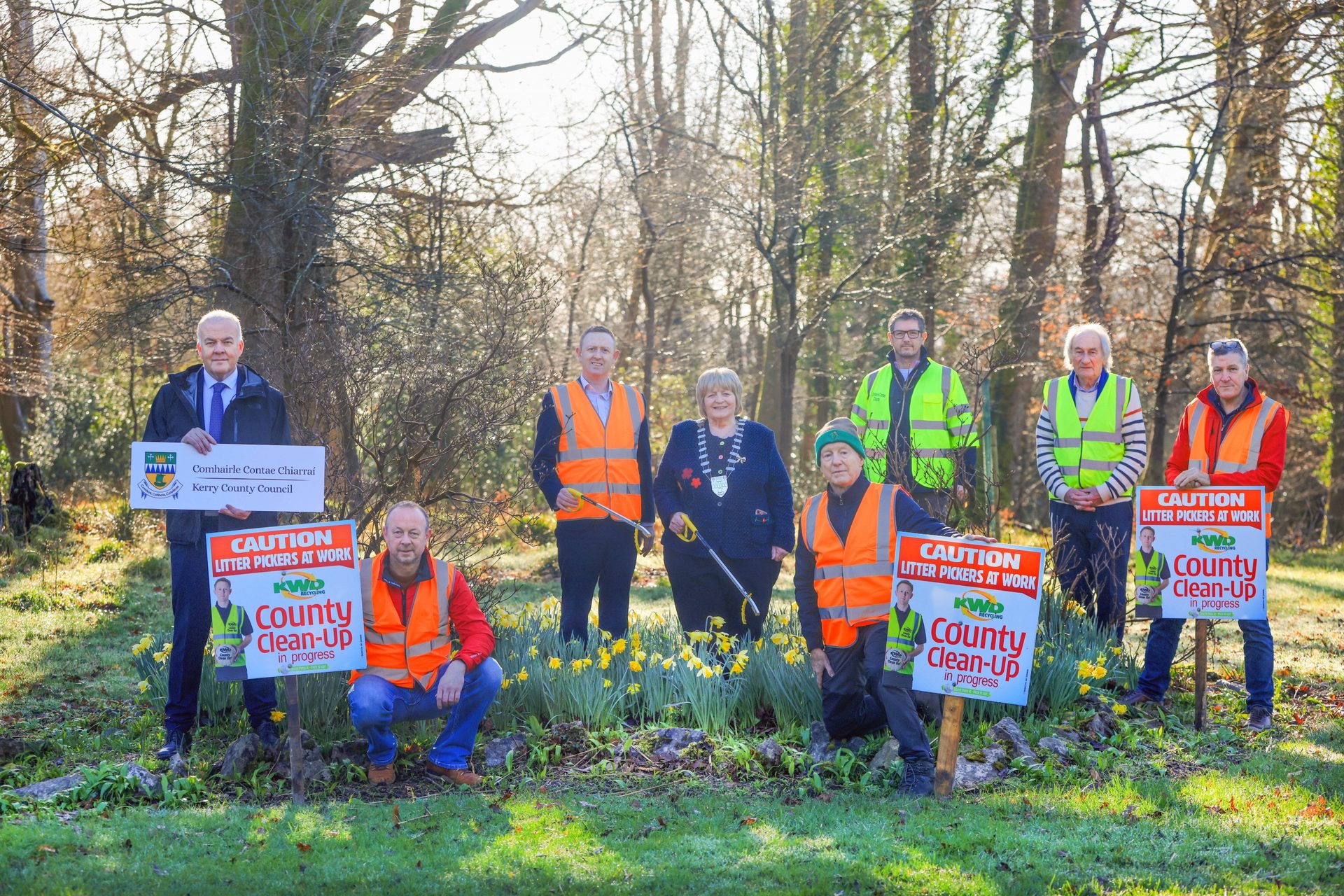
KWD Recycling shortlisted for national environmental awards
Killarney-based KWD Recycling has been announced as a finalist in the 2026 Repak Resource Awards, securing a spot on the national shortlist for environmental achievement.
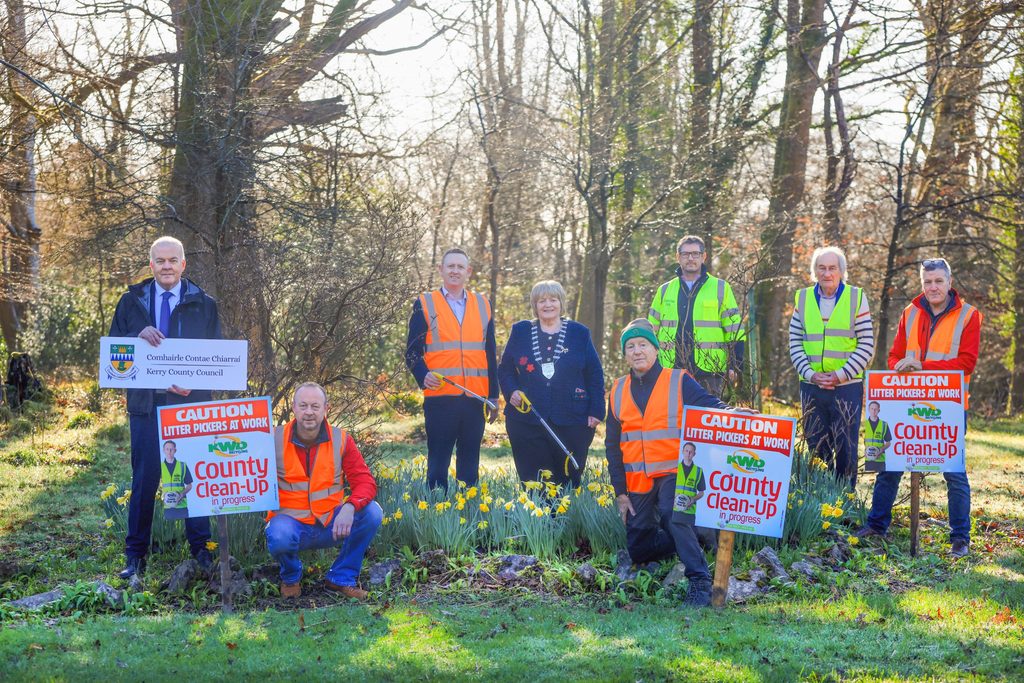
The local waste management company has been nominated in the Best Recovery Operator Innovation category, sponsored by DNV, for its state-of-the-art residual waste recovery system.
The Killarney facility utilizes optical sorting, screening, and mechanical processing to extract recyclable plastics and organic material from municipal waste. In its first year of operation, the technology recovered more than 10 per cent of plastic packaging from residual waste for recycling and diverted almost 50 per cent of organic material toward composting.
KWD Recycling will compete alongside Dublin operators Panda and Thorntons Recycling for the category title.
Repak CEO Zoe Kavanagh commended the Kerry firm for demonstrating environmental leadership and bringing local ambition to the national awards.
Category winners will be announced at a black-tie ceremony at the Mansion House in Dublin on Friday, October 23, where each winner will also compete for the Overall Repak Resource Award.
Local businesses have a strong track record at the national event, with Killarney town venue The Killarney Park and The Ross previously taking home the overall title in 2023.
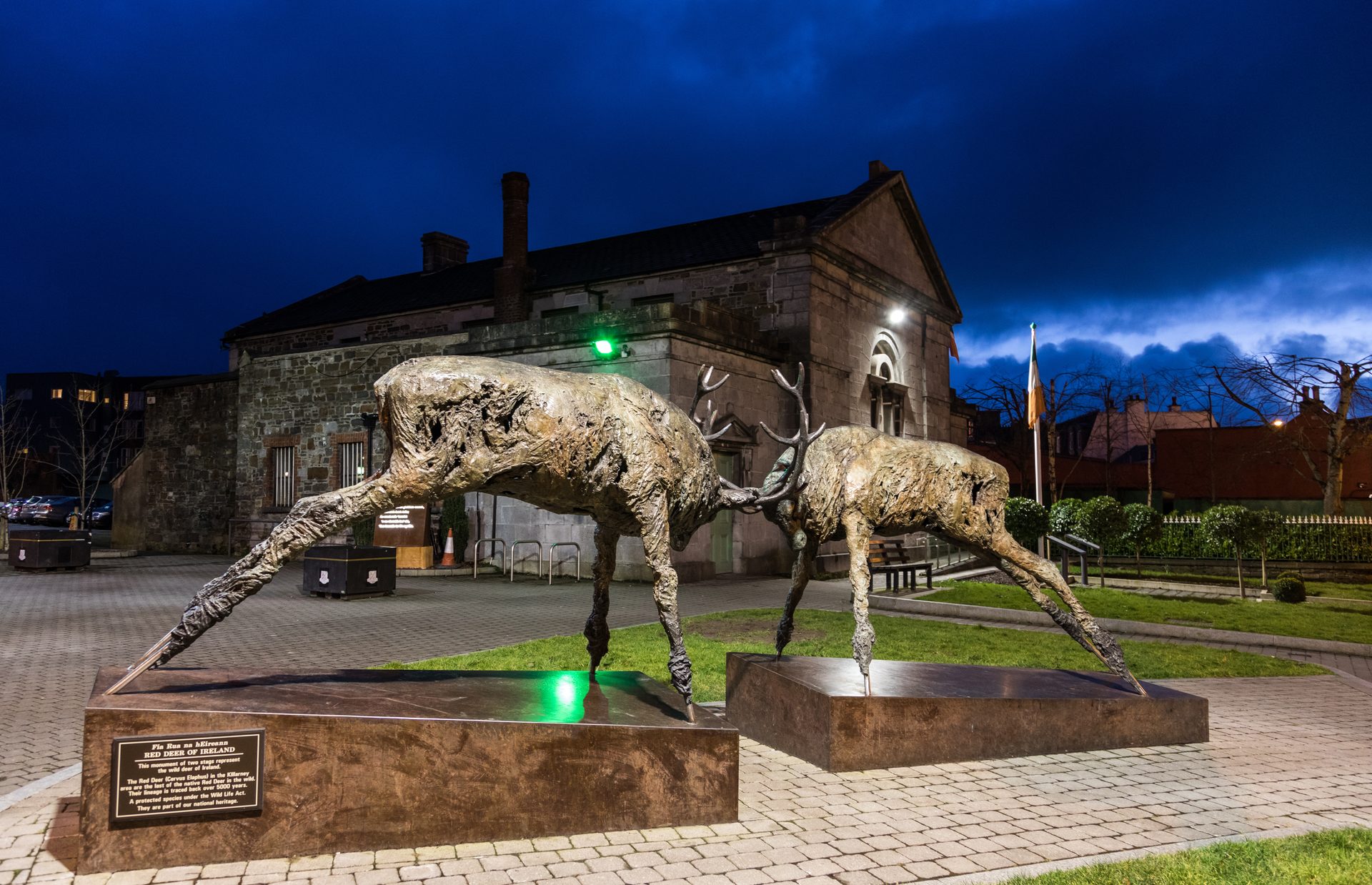
Drivers warned as deer rutting season begins
Motorists in Killarney are being urged to exercise extreme caution as the annual deer rutting season gets underway, causing animals to stray far beyond their usual habitats inside Killarney National Park.
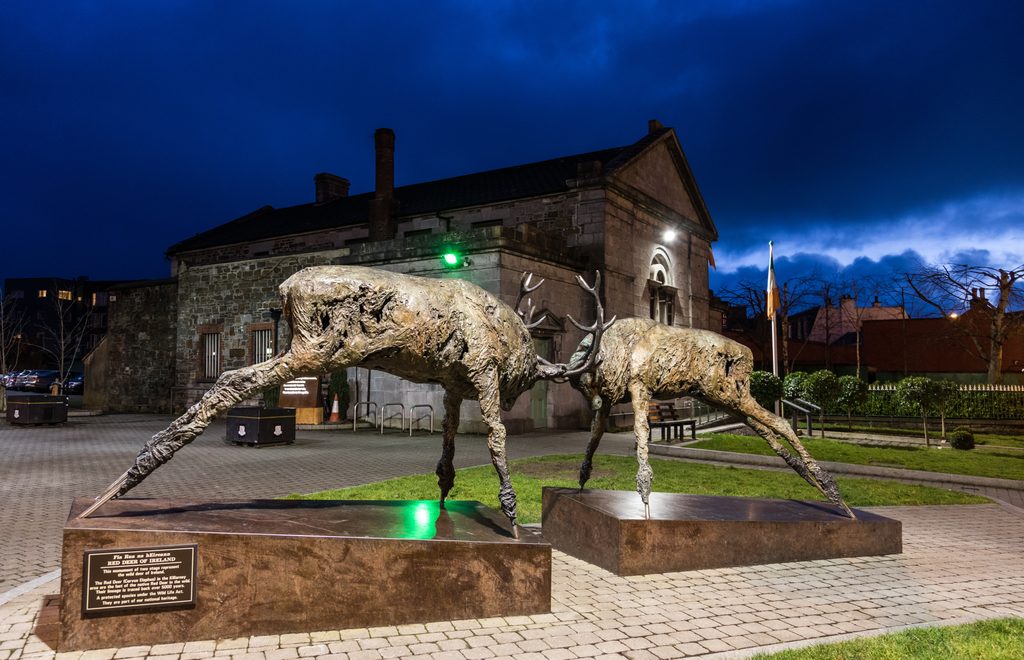
The autumn mating season sees deer becoming highly active and unpredictable, leading to increased sightings and collisions on local roads outside traditional park boundaries.
Two separate incidents highlighted the growing hazard on local routes this week. A reader contacted the Killarney Advertiser to warn drivers after spotting a deer roaming near Tiernaboul towards the school on Sunday afternoon around 7.30pm.
Later that same night, in the early hours of Monday morning, a local driver collided with a deer near Kerry Airport around 1am while returning home from an event.
Despite attempting evasive action, the motorist struck the animal, which died at the scene and temporarily blocked the road before local Gardaí were alerted to clear the obstruction.
The driver sustained substantial vehicle damage, requiring repairs to the bumper, headlamp, and internal components, leaving her facing significant garage costs and time off the road.
Gardaí and road safety advocates advise motorists travelLing during early morning and late evening and remain vigilant along tree-lined routes.
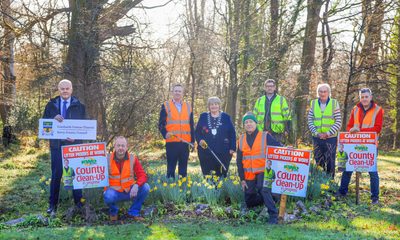

KWD Recycling shortlisted for national environmental awards
KWD Recycling shortlisted for national environmental awards Killarney-based KWD Recycling has been announced as a finalist in the 2026 Repak...
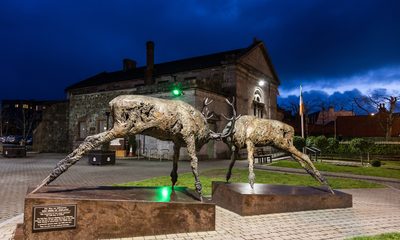

Drivers warned as deer rutting season begins
Drivers warned as deer rutting season begins Motorists in Killarney are being urged to exercise extreme caution as the annual...


Kerry Airport CEO addresses chamber luncheon
Kerry Airport chief executive Adrian Neilan addressed local business leaders at the Killarney Chamber of Tourism and Commerce luncheon at...


The Brehon raises €2,850 for Jack and Jill Foundation
The Brehon Hotel and Spa raised €2,850 for the Jack and Jill Children’s Foundation after hosting a closest-to-the-pin golf simulator...
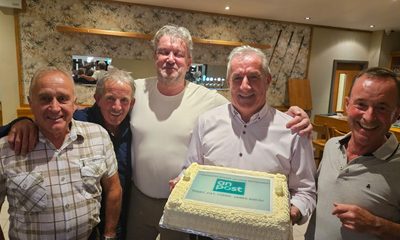

Five local postmen retire with 185 years service
Five local postmen retire with 185 years service RETIREMENT NIGHT: Pictured at the retirement party held at Killarney Racecourse on...


Fossa Swimmers make a splash at County Finals
The Fossa Swim team pictured at the Tralee Sports Complex following their successful outing at the County Finals of the...


On the Ball Part 2 of the Mikey Daly Interview
Éamonn Fitzgerald EF: Killarney Celtic are invited to participate in an Irish competition. That has big financial implications for travel,...


LUKE MANGAN recently caught up with Kerry FC’s manager, Colin Healy.
He spoke to him about his careers as a player and manager. Here’s how it went: When you began your...


Home cup tie for St Paul’s could be epic
Paudie O’Connor National Cup (Round 1) Utility Trust St Paul’s v GCU Brunell Saturday 7.30pm Killarney Sports and Leisure Centre...


Chances of Kerry v Cork Munster final in 2026 decrease as Munster GAA delay seeding plan
After facing a backlash from Limerick, Clare, Waterford and Tipperary players, Munster GAA have postponed their plan to keep Cork...
