
Sport
Silence at the handball alley


Eamonn Fitzgerald laments the decline of handball, the once popular sport that entertained generations of Killarney people
No one shouted ‘stop’. Not my phrase, but that pithy gem came to me when I was walking by St Finan’s Hospital recently, or more specifically viewing the old handball alley, deserted now just like the one in the Old Mon. No longer does one hear or see groups of young people sinking those much-practiced butt shots which bamboozled many an opponent.
John Healy, the well-known journalist with the Irish Times newspaper, used the near deserted handball alley in his native Charlestown, County Mayo as a striking image of what he wrote about in ‘The Death of an Irish Town’, published with that title in 1968. He wanted to use the title ‘No One Shouted Stop’, but the publishers intervened.
They had their way, but Healy wrote it as he saw it. That was his style, writing the popular Backbencher column in the Irish Times. He was the best political columnist up until his death in 1991. The Death of an Irish Town is a very short book, less than 100 pages, but he saw what was happening in rural Ireland from the late 50s/ early 60s. He returned to his native town on some weekends, away from the bustling overpopulated Dublin, where he worked. His description of a lone man, real or imaginary, it matters little, tossing the ball in the handball alley in his hometown of Charlestown and listening to the dull hollow sound of the ball coming back to him. There was no one there to return the serve.
Alone, all alone on the Western front; the scourge of emigration was haemorrhaging the very life out of rural Mayo. Healy knew Charlestown as a busy country town and so did Seán Griffin, my long-time friend and fellow sports aficionado. I spoke to Seán earlier this week and he recalled growing up in the Charlestown area in the 50s and mid-60s.
THE GASÚR FROM COPPLE CURRAGH
“I remember the handball alley in Charlestown very well indeed. As young gasúrs we gathered there, particularly at the weekends, and spent hours upon hours playing each other in friendly games. Sometimes, they weren’t friendly, they were very competitive. You played against maybe your best friend and friendship was put on hold temporarily if it came to 18-20. Could you sink that butt to clinch the game, or was there one last return in him?
“There was always a crowd there and we took no notice of waiting for our turn to play. The doubles were also very challenging. That changed in Charlestown with emigration and migration.”
That was the way it was in the busy Old Mon alley in the 50s, until the pupils transferred to the New Mon at its present location on New Road. You could not wait for the 11am sos to launch an alley cracker. The Presentation Brothers were so generous providing cuts of bread, well covered with red jam and the steaming hot cocoa for our lunches. Cordon bleu, eat your heart out. More like sustenance for those great sporting rivalries to be settled on the handball alley right there in the clós.
There were some great handball players in the Mon. More mature readers of this column will be able to list them off. If any of you readers remember the names of great handball players in the Old Mon, please email their names to sport@killarneyadvertiser.ie for inclusion in next week’s edition of Handball Part 2. Dan Dwyer, that encyclopaedic minded sportsman, will surely recall some.
At that time, players were allowed by rule to drop-kick the ball as well as using the hands, ideal for perfecting the drop-kick in Gaelic football, which is gone out of the modern game. When did you last see a drop-kick in football? Probably Donie O’Sullivan at intercounty level or Gerald Cullinane at club level. They were expert exponents of that skill. Remember Michael O’Hehir’s commentaries: “And he times his drop kick perfectly, sending a long relieving clearance directly down to his forwards and... We have a shemozzle on the edge of the parallelogram.”
THE SEM ALLEYS
There were four wonderful handball alleys in St Brendan’s College; this was the big step-up for the plebs, in particular. Now you had a back wall and a whole new skill to perfect. How could you judge the hop of the ball, when it was injudicious to drop-kick it, an instead letting it come off the back wall, slamming it low to the bottom left-hand corner. Timing was everything and one also had to take into account the quality of the ball. A new ball with the high bounce was a rarity. Most likely it was second-hand, or third-hand from O’Meara’s Shop down the Conc (the Concrete, St Mary’s Terrace). That alley cracker didn’t bounce too high.
I learned from brilliant exponents of the back-wall skill. A few spring to mind. Brian Mac (McCarthy), Pat Harrington, POM (Con Riordan) and Behan (Tony Behan), who was a winner in the colleges competitions. Later in life he returned to the Sem as principal of the college.
One must never forget the exploits of Michael Madden and Seán O’Leary of Rock Road (brother of Sargey). They won the All-Ireland Senior Handball Colleges Doubles in 1958, a wonderful achievement. Both have passed on, go gcúitítear a saothar leo. Seán emigrated to the States and Michael ministered as a priest abroad.
How many readers of this sports column know that handball was a thriving sport in Killarney from the end of the 19th century, when the GAA Convention introduced a Handball Championship? Keen rivalry developed between Killarney, Valentia, Kanturk and Tralee, of course, which produced the best handball player of them all: Fr Jones. He was never beaten, winning the Irish title in 1888 and also in 1889, when he came from Tralee to the Sem for just one year to further his vocation and call to the priesthood.
BRAVO SPA
The good news is that handball is once again thriving around Ireland, including Charlestown and here in Killarney I am delighted to see Spa continuing the great handball tradition in Killarney.
As with all sports, games evolve, as is the case with handball. By in large the game has gone indoors, a very sensible move considering the vagaries of the Irish weather.
Spa are making full use of their magnificent hall/clubhouse, incorporating splendid handball courts. The Spa Handball Club opens its doors to all of East Kerry, not alone for adult handballs, but also for juveniles. It caters for males and females.
Great work here in Spa by enthusiast Mike Casey (the returned, affable Yank, who played the game in California). Like so many emigrants, such as those from Charlestown, they carried the Irish tradition of handball to their adopted countries. Tadhg O’Sullivan and Deirdre O’Sullivan-Darcy are also key workers in the Spa drive to develop handball, specifically mentioned by Dr Croke in his 1884 vision to ensure it was central to the promotion of the GAA.
FR KIERAN
Fr Kieran, your enthusiastic administrator for Killarney Parish and a keen Rockies supporter (the street of champions) did great work for handball when he was working in the parish of Baile an Fheirtéaraigh and was so happy to see a 40x20 handball court built at An Ghaeltacht GAA club. Eilís Luing is the main contact for the handball back west.
More on handball in next week’s issue as we recall Ball Alley Lane, Kerry All-Ireland handball heroes such as Fr Tom Jones, the McEllistrim brothers, Paddy Downey, Mickey Walsh, Sandy McSwiney and Dominick Lynch, one of my heroes, still going strong on the Masters’ circuit. He contemplated giving up the game in 2001, when the Kerry Handball Board, under the aegis of Kerry GAA, slapped a six-month suspension on him for flouting the sponsorship guidelines. Adam Moynihan highlighted this very subject in recent editions of the Killarney Advertiser. Mick O’Dwyer found a way out of it; Dominick didn’t.
Some hurlers use handball alleys to keep their eyes in and first touch well-tuned preparing for games.
Can the silent handball alleys become alive again in Killarney? Can the sliotars overcome the silence in Charlestown that John Healy wrote about in 1968?
Pic: The disused handball alley on the grounds of St Finan's Hospital in Killarney.
News
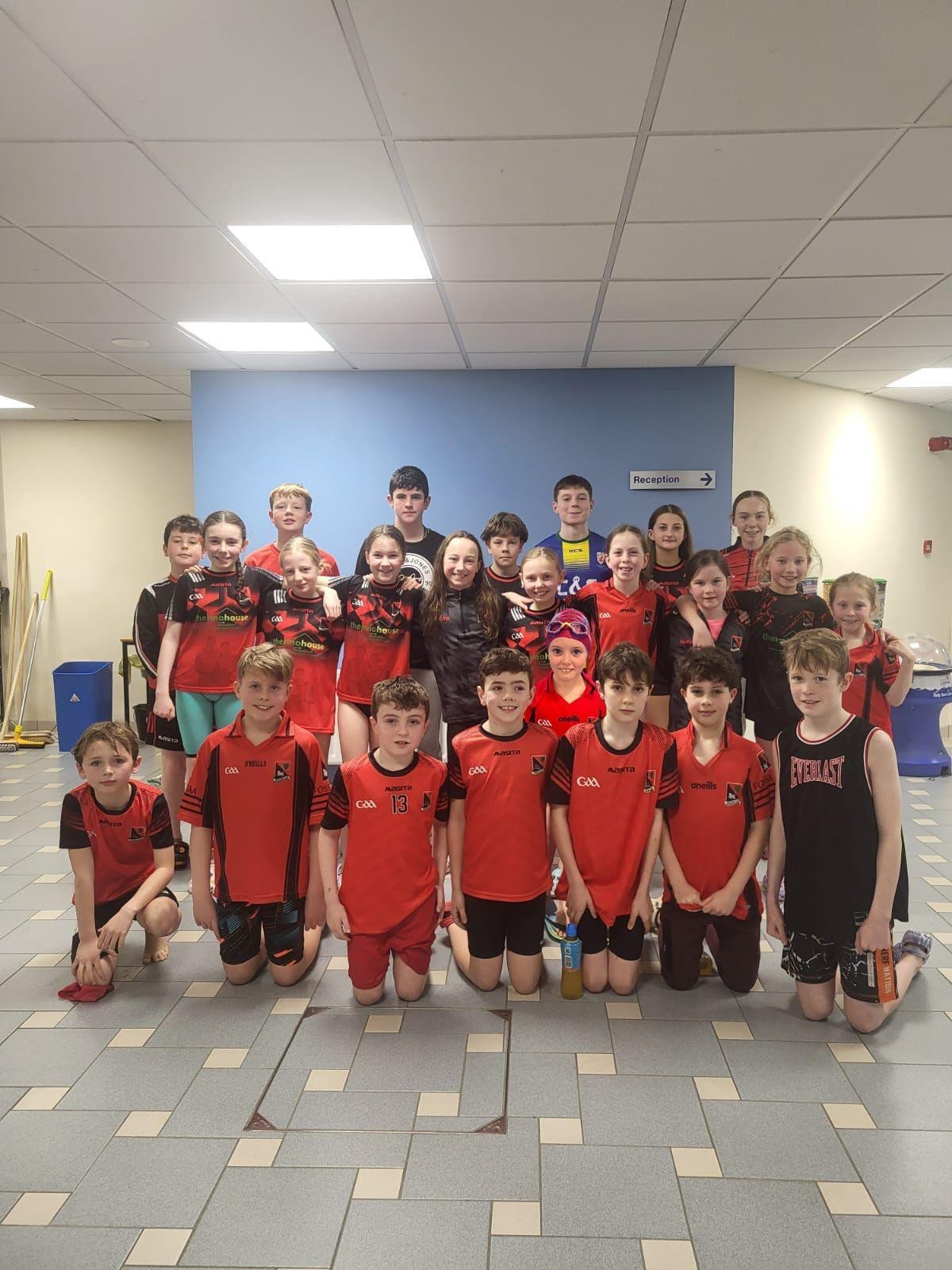
Fossa Swimmers make a splash at County Finals
The Fossa Swim team pictured at the Tralee Sports Complex following their successful outing at the County Finals of the Community Games on Sunday, February 15. The 25-strong squad delivered […]

News
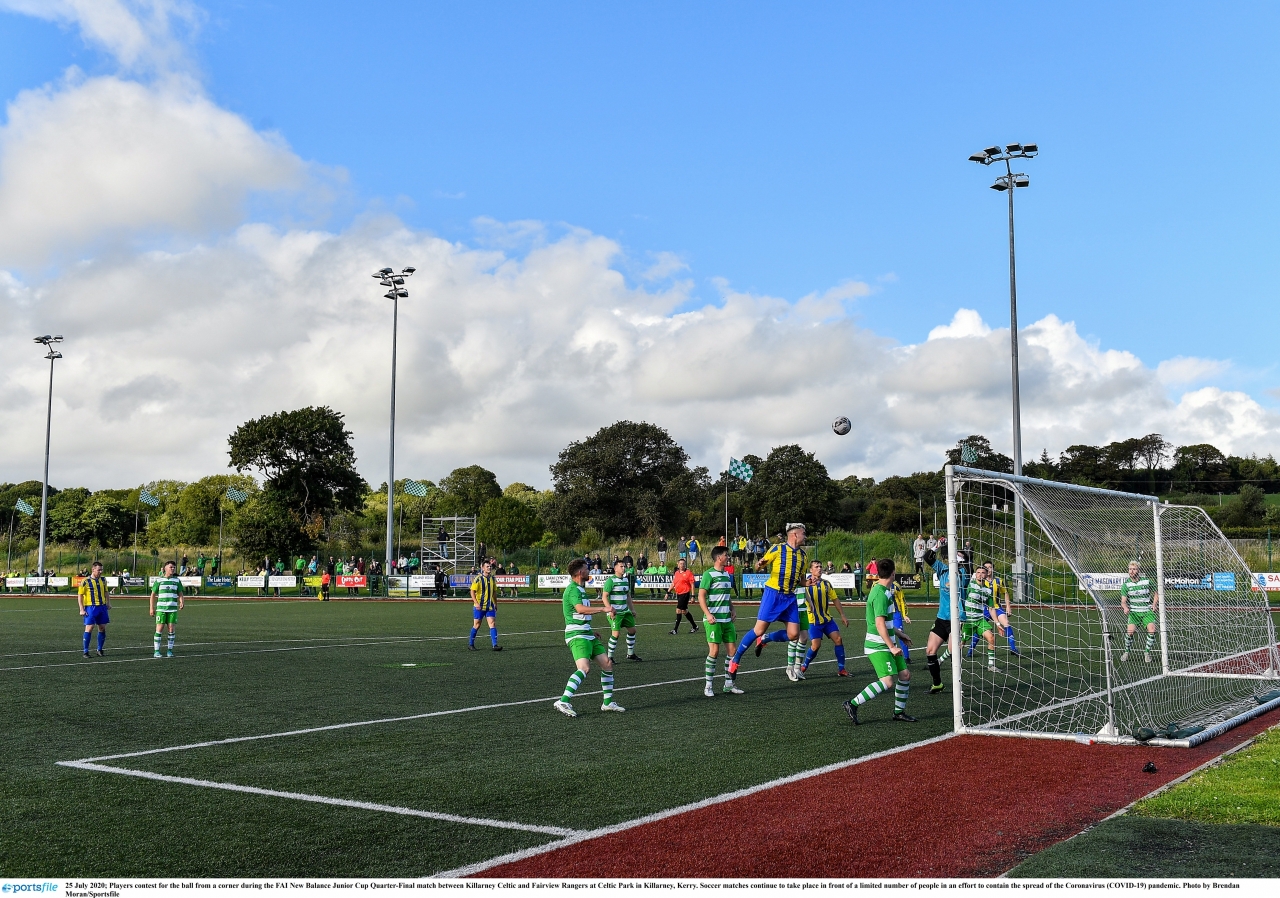
On the Ball Part 2 of the Mikey Daly Interview
Éamonn Fitzgerald EF: Killarney Celtic are invited to participate in an Irish competition. That has big financial implications for travel, meals, etc. MD: It is great to be invited, showing […]

Drivers warned as deer rutting season begins
Drivers warned as deer rutting season begins Motorists in Killarney are being urged to exercise extreme caution as the annual...

Kerry Airport CEO addresses chamber luncheon
Kerry Airport chief executive Adrian Neilan addressed local business leaders at the Killarney Chamber of Tourism and Commerce luncheon at...

The Brehon raises €2,850 for Jack and Jill Foundation
The Brehon Hotel and Spa raised €2,850 for the Jack and Jill Children’s Foundation after hosting a closest-to-the-pin golf simulator...

Five local postmen retire with 185 years service
Five local postmen retire with 185 years service RETIREMENT NIGHT: Pictured at the retirement party held at Killarney Racecourse on...

New Streetscapes murals launched at College Square
A colourful collaboration between the Kerry Local Creative Youth Partnership (LCYP) and the Architecture Kerry Festival at Kerry County Council...
