
Sport
Kerry X adidas: Bonus Information


Last week’s article detailing the history between Kerry and adidas was long (possibly one of the longest we’ve published in our 48-year history!) but there was still some info that I couldn’t quite fit in. Also, some more details have come to my attention since the article was published. So here, in no particular order, is some bonus information on Kerry’s famous green and gold jersey.
NUMBERS GAME
With the lack of external branding, it was difficult to tell whether or not Kerry were wearing adidas jerseys in the early eighties. But there was one significant clue on some of the shirts at the time: the number font. When Kerry wore that famous yellow and green design against Offaly in the 1981 final, the standard plain number font was replaced with very adidas-looking numbers comprised of three white stripes. The same font, which was also used by the German national team in ’81, was wheeled out again for the lime green change strip in 1982.
Although Kerry have predominantly used white numbers in recent decades, their visibility (or lack thereof) on the green and gold home jerseys has frequently been a major gripe as far as supporters and the media have been concerned. Kit-makers have tried to remedy this problem in a number of ways. Black numbers on large white rectangles were used intermittently throughout the forties, fifties and sixties and adidas reintroduced this style in 1984. In 1985, the white numbers returned and they have remained the standard style ever since, with some notable exceptions.
In 1995, Emerald Active Wear (adidas’ Irish licensee at the time) provided Kerry with jerseys that featured bold, retro, navy numbers with three-stripe detailing, similar to the ones used by Premier League clubs Liverpool and Newcastle at the time.
The Millfield jerseys of 1996 and 1997 kept the blocky numbers but when adidas returned in 1998, they replaced the navy with a shade of gold and brought back a rounder font. Even against an all-green reverse, the gold numbers were extremely hard to see and they were ditched for the All-Ireland semi-final against Kildare, with the retro, dark blue numbers making their return. When O’Neills came back on board in 2000, white numbers were reintroduced and they have been in use since.
When designing the 2018 jersey, Paul Galvin intentionally shifted the number higher up on the back so the white would be resting more on the green, therefore making it easier to see from a distance.
KERRY GROUP
In 1992, Kerry Group’s blue, rectangular logo was placed across Kerry’s gold band and this branding, which features the now-famous ‘KERRY’ font with a gold underline, was also used in 1993 and 1994.
Although this was (and still is) Kerry Group’s official logo, it was felt at the time that the word ‘KERRY’ on its own was slightly jarring, so Kerry Group came up with a solution. They added the word ‘GROUP’ and placed it below ‘KERRY’, while also changing the font colour to dark blue and removing the blue background and the gold flashline. This new branding, which has been used ever since, only exists on Kerry jerseys.
[caption id="attachment_36515" align="aligncenter" width="628"] Stephen O'Brien in the 2018/19 shirt. The Kerry Group branding that features on Kerry jerseys only exists for this specific purpose. Pic: Eóin Noonan/Sportsfile.[/caption]
THE NAME ON THE BACK
Kerry added ‘CIARRAí’ to the back of their Emerald Active Wear jerseys, just above the numbers, in 1995. Then county board chairman Seán Kelly believes The Kingdom were the first county to introduce this element to their shirt and he says the use of the Irish name was insisted upon by the county board. It subsequently became commonplace for counties to include their Irish names on the back of their jerseys.
BAGGY SHORTS
In last week’s article, Tomás Ó Sé mentioned that the adidas gear they received in the late nineties was oversized. The baggy, soccer-style shorts were evidently not universally popular with some of the players as Maurice Fitzgerald, Séamus Moynihan, Mike McCarthy, Liam Hassett, Aodán MacGearailt and Billy O’Shea were all spotted wearing the old Millfield shorts during the 1999 season.
ONE-OFFS
When Kerry’s motion to change the playing gear rule was defeated in April of 2000, the arrangement with adidas had to be scrapped. As the new deal with O’Neills was not yet finalised, Páidí Ó Sé’s men needed an emergency set of away jerseys for their National League semi-final against Meath on April 23. They took to the field in unbranded blue adidas jerseys (with the rectangular, blue Kerry Group logo) that were first used in the early nineties. Goalkeeper Declan O’Keeffe wore a white O’Neills Munster jersey from the Railway Cup.
Another unusual variation that didn’t really resemble the adidas or Millfield designs was worn in league matches against Louth and Antrim in late 1998. This jersey is a real mystery – if you have any information please get in touch on Twitter (@AdamMoynihan) or by email (sport@killarneyadvertiser.ie).
https://twitter.com/AdamMoynihan/status/1368960760722898949?s=20
MICKO’S TAPE
This factoid does not relate to a Kerry jersey, but it does relate to a Kerry man. Mick O’Dwyer, the legendary manager who was one of the driving forces behind the Kerry/adidas deal in the eighties, went on to manage Kildare between 1991 and 1994 and again between 1997 and 2002. Although Kildare were kitted out by O’Neills during both of his spells as bainisteoir, O’Dwyer remained loyal to adidas and was often seen wearing adidas tracksuit pants and sneakers on the sideline.
Unusually for a manager, he was also known to wear a replica of the team shirt during matches. One such occasion was the 2002 Leinster semi-final against Offaly at Nowlan Park in Kilkenny when O’Dwyer wore the official O’Neills Kildare jersey over his tracksuit jacket, with the shirt tucked into his pants. It was a distinctive look that was topped off by his headwear: a traditional tweed flat cap.
A closer look at the jersey itself reveals an interesting alteration. The O’Neills logo on the chest was covered up with a strip of white tape.
[caption id="attachment_36514" align="aligncenter" width="409"] Mick O'Dwyer's Kildare jersey with a mysterious strip of white tape covering the O'Neills logo. Pic: Ray McManus/Sportsfile.[/caption]
As O’Neills were the official kit suppliers at the time and their branding was visible on all Kildare clothing, including match gear, it’s hard to think of a reason why O’Dwyer would be required to block out their logo.
Croke Park forced him and his Kerry players to cover up their adidas branding for many years. Would it be too far-fetched to speculate that this was O’Dwyer’s “revenge”?
Or is there a simpler explanation? If you have a theory, please let us know.
News
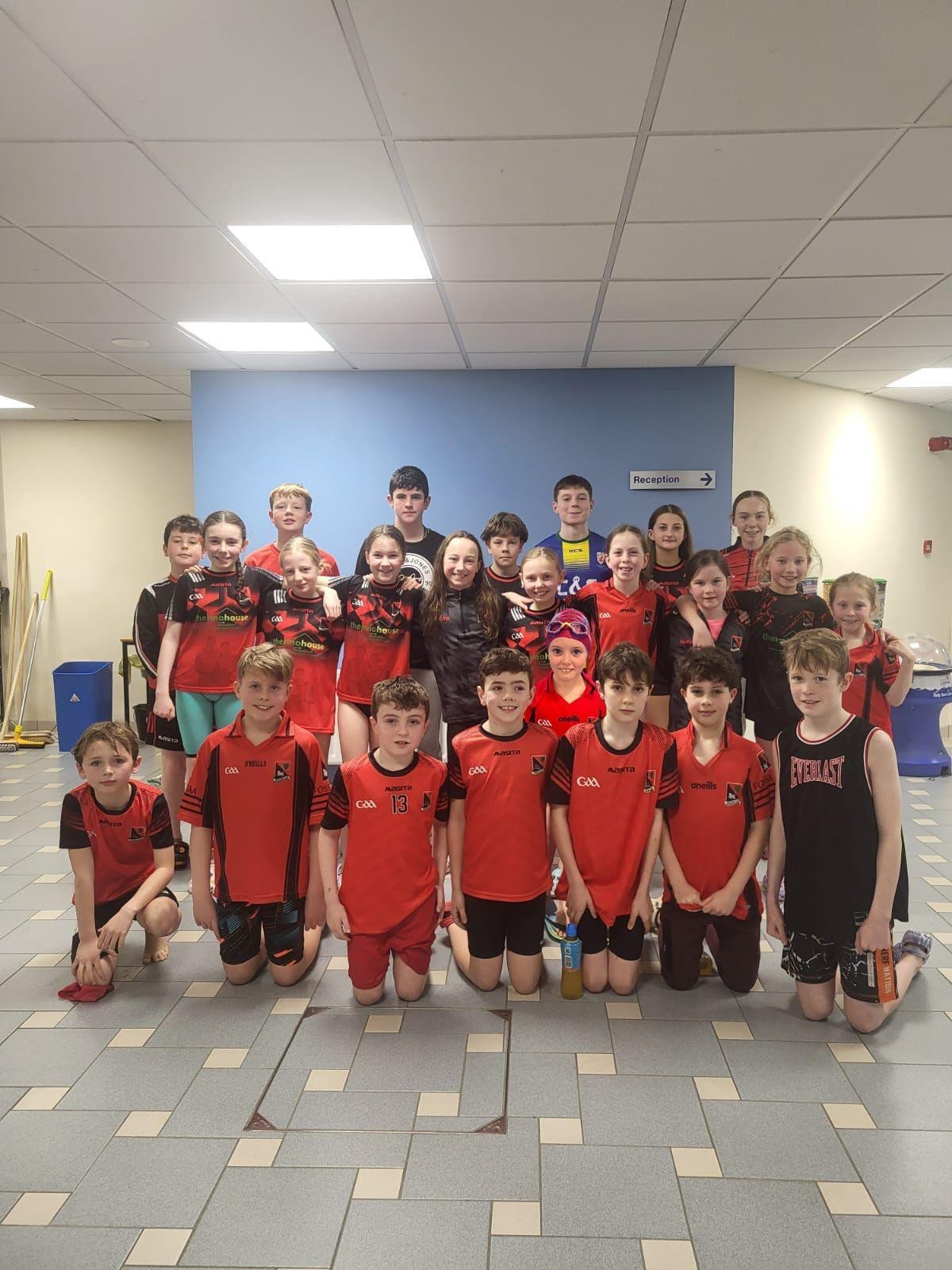
Fossa Swimmers make a splash at County Finals
The Fossa Swim team pictured at the Tralee Sports Complex following their successful outing at the County Finals of the Community Games on Sunday, February 15. The 25-strong squad delivered […]

News
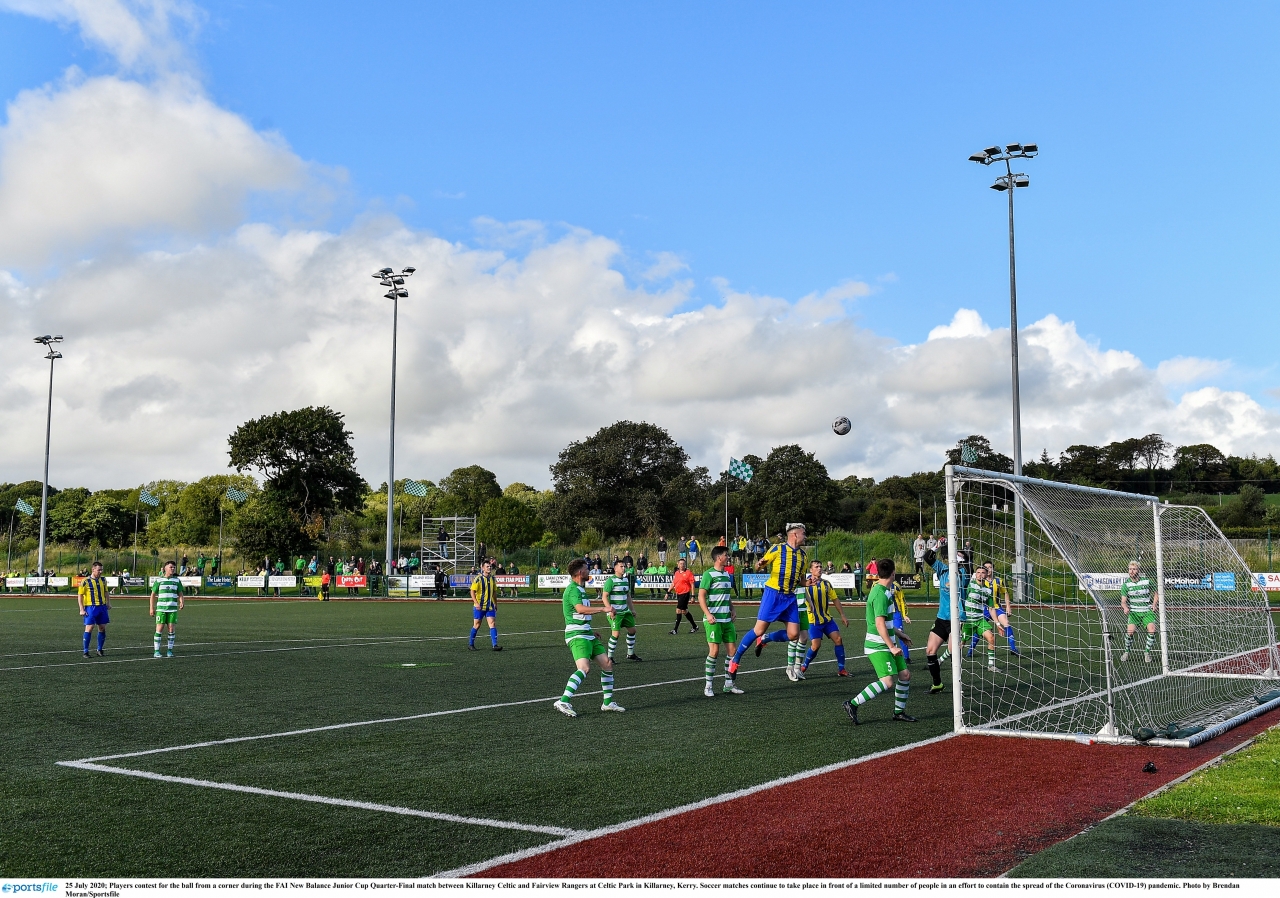
On the Ball Part 2 of the Mikey Daly Interview
Éamonn Fitzgerald EF: Killarney Celtic are invited to participate in an Irish competition. That has big financial implications for travel, meals, etc. MD: It is great to be invited, showing […]

Drivers warned as deer rutting season begins
Drivers warned as deer rutting season begins Motorists in Killarney are being urged to exercise extreme caution as the annual...


Kerry Airport CEO addresses chamber luncheon
Kerry Airport chief executive Adrian Neilan addressed local business leaders at the Killarney Chamber of Tourism and Commerce luncheon at...

The Brehon raises €2,850 for Jack and Jill Foundation
The Brehon Hotel and Spa raised €2,850 for the Jack and Jill Children’s Foundation after hosting a closest-to-the-pin golf simulator...

Five local postmen retire with 185 years service
Five local postmen retire with 185 years service RETIREMENT NIGHT: Pictured at the retirement party held at Killarney Racecourse on...

New Streetscapes murals launched at College Square
A colourful collaboration between the Kerry Local Creative Youth Partnership (LCYP) and the Architecture Kerry Festival at Kerry County Council...
