
Sport
Kerry’s Golden Years (Part 1): A golden dawn

Sheehy’s chip. Bomber’s hat-trick. Four (yes, four) different goalkeepers. In the first of a new series of articles on Kerry GAA's Golden Years, Adam Moynihan takes an in-depth look at The Kingdom’s shock victory over the Dubs in ‘78.
We’ve all seen it. The goal that would, in the words of Mick O’Dwyer, “change the history of Kerry football”.
Well, we’ve kind of seen it. Clearly the RTÉ director on the day was expecting Mikey Sheehy’s quick shot about as much as Paddy Cullen was because between the chopping and changing of angles, we can only just about ascertain from the television pictures what transpired.
https://www.youtube.com/watch?v=_Yrx2Er5O94
Plenty of airtime and column inches have been devoted to dissecting this one incident down through the years and, generally speaking, we are all in agreement on the following three points.
Firstly, and most importantly, it was a magical goal by Sheehy. The vision. The execution. The sheer cheek of it. Half the country claims to have been in the Canal End that wet September afternoon in 1978, but not even those who were actually there to see the goal could claim to have seen it coming.
Secondly, although the goalkeeper has always borne the brunt of the criticism, Dublin corner back Robbie Kelleher certainly isn’t without blame either. When the free was awarded he willingly handed the ball over to Sheehy like it was a newspaper he had already finished reading.
Thirdly (and whisper it quietly), it was never a free to Kerry in the first place. Cullen did not foul Ger Power. So why did Kildare referee Séamus Aldridge decide that he did? The truth may lie in an earlier, and often overlooked, incident involving the same two protagonists.
In the 15th minute of this final, Paddy Cullen came out of his goal to collect a stray long ball by Jack O’Shea. He sidestepped Mikey Sheehy and popped a hand pass off to a teammate. Ger Power came in to meet him and the Kerryman jumped in vain to try and intercept the pass. As Power landed, he collided with Cullen but both players stayed on their feet and Dublin moved the ball up the field.
That’s when things got interesting. Cullen, now 25 metres out from goal, immediately turned back to head for home and as he passed Power on the way, he kicked out his leg and tripped his opponent. Power fell forward and landed with his face in the hallowed Croke Park turf, causing uproar amongst the Kerry supporters at that corner of the ground.
Aldridge missed the incident – although he undoubtedly heard the furore – and play carried on.
In the 33rd minute of this final, Paddy Cullen came out of his goal to collect a stray long ball by Jack O’Shea. He sidestepped Mikey Sheehy and popped a hand pass off to a teammate. Ger Power came in to meet him. There was minimal contact between the two. If anything, Cullen wanted a free. It’s safe to say that he got more than he bargained for.
Speaking to the Independent in 1998, Cullen said that there was “no doubt in [his] mind” that Aldridge’s “bizarre” decision originated from that earlier incident.
CRITICAL
The resulting goal was absolutely critical. It gave Kerry their first lead of the game (2-3 to 0-7) heading towards the interval, and on the balance of play that was more than the underdogs deserved. Dublin, who were searching for their third All-Ireland title on the bounce, had led 6-1 and but for Sheehy’s quick thinking, and John Egan’s fisted goal seven minutes earlier, Kerry were on course for another humbling defeat.
And that, O’Dwyer reckons, would have been that.
The Waterville clubman had led his youthful charges to a stunning victory over Dublin in the 1975 final in his very first year in charge, but that was quickly forgotten after disappointing results against the same opposition in 1976 and 1977.
“It felt like the end of road for me [after ‘77],” O’Dwyer later said. “They were after my head and they were after the chairman of the County Board (Gerald McKenna) as well. The guns were out. But we put up a fight and stayed on.
“If we were beaten that day [against Dublin in ‘78] I could easily have gone, and I might never have been involved with Kerry anymore.”
THE MISSING LINK
Buoyed by their two unexpected goals, Kerry emerged a different animal after the break and, after enduring a torrid enough first half, their 20-year-old full forward was about to announce his arrival on the senior intercounty scene in a major way.
Eoin Liston, nicknamed The Bomber after German soccer legend Gerd Müller, caught Jack O’Shea’s long pass and fisted Kerry’s third goal of the day just two minutes after the restart. Four minutes later, the Beale man beat Cullen again, this time with a superb finish after he fetched a high ball and played a neat one-two with Ger Power.
Subsequent points by Sheehy and Liston meant that Kevin Heffernan’s Dubs trailed by 11 with 15 minutes to play, and any faint hopes they had of salvaging their title turned to dust in the 56th minute when The Bomber rose highest at the back post to spike John Egan’s fist pass into the goal.
“He was a nice, soft, pudgy little fella when I got him,” O’Dwyer would later recall in the brilliant RTÉ documentary, ‘Micko’. “He was a great man for the Mars bars and the packets of Smarties, and by God he had the signs of it.”
Now, the “pudgy” lad from Ballybunion had just scored a hat-trick in the All-Ireland final.
“He made a big difference to the team,” O’Dwyer said. “He was the missing link.”
LAST MAN BACK
It had been an eventful final and The Kingdom were, by this stage, home and hosed but the drama hadn’t finished just yet. With 12 minutes to go, Kerry keeper Charlie Nelligan got involved in a shemozzle with Dublin’s John McCarthy and both were shown the road.
Remarkably, half forward Pat Spillane took it upon himself to stand between the sticks when play resumed. It wasn’t the first thing Spillane took upon himself that day; the Templenoe man was superb in a virtuoso, Man-of-the-Match display.
Starting corner back Jimmy Deenihan, now sporting a yellow full-zip jacket with John Egan’s name emblazoned across the back, temporarily took Spillane’s place in goal before sub keeper Paudie O’Mahony was eventually called upon in the 66th minute.
In the end, as commentator Mícheál O’Hehir joked, they could have put kitman Leo Griffin in goal and it wouldn’t have made a blind bit of difference. Kerry won by 17, to this date the fourth largest winning margin in an All-Ireland football final.
“That was one of the greatest days of my life,” O’Dwyer would later say, “and one of the most enjoyable, I can assure you.
“We could say to people, ‘Now, we’ve done it’. And it was amazing what happened after.”
1978 All-Ireland Football Final
Kerry 5-11 Dublin 0-9
(HT: Kerry 2-3 Dublin 0-7)
Referee: Séamus Aldridge
Venue: Croke Park
Attendance: 71,503
KERRY SCORERS E Liston 3-2, M Sheehy 1-4 (1-3f), J Egan 1-2, J O’Shea 0-1, G Power 0-1, P Spillane 0-1.
DUBLIN SCORERS J Keaveney 0-8 (7f), B Brogan 0-1.
KERRY C Nelligan; J Deenihan, J O’Keeffe, M Spillane; P Ó Sé, T Kennelly, P Lynch; J O’Shea, S Walsh; G Power, D Moran, P Spillane, M Sheehy, E Liston, J Egan. Sub: P O’Mahony (Spa) for Deenihan (66).
DUBLIN P Cullen; G O’Driscoll, S Doherty, R Kelleher; T Drumm, K Moran, P O’Neill; B Mullins, B Brogan; A O’Toole, T Hanahoe, D Hickey; B Doyle, J Keaveney, J McCarthy.
Pic: Connolly Collection/Sportsfile.
News
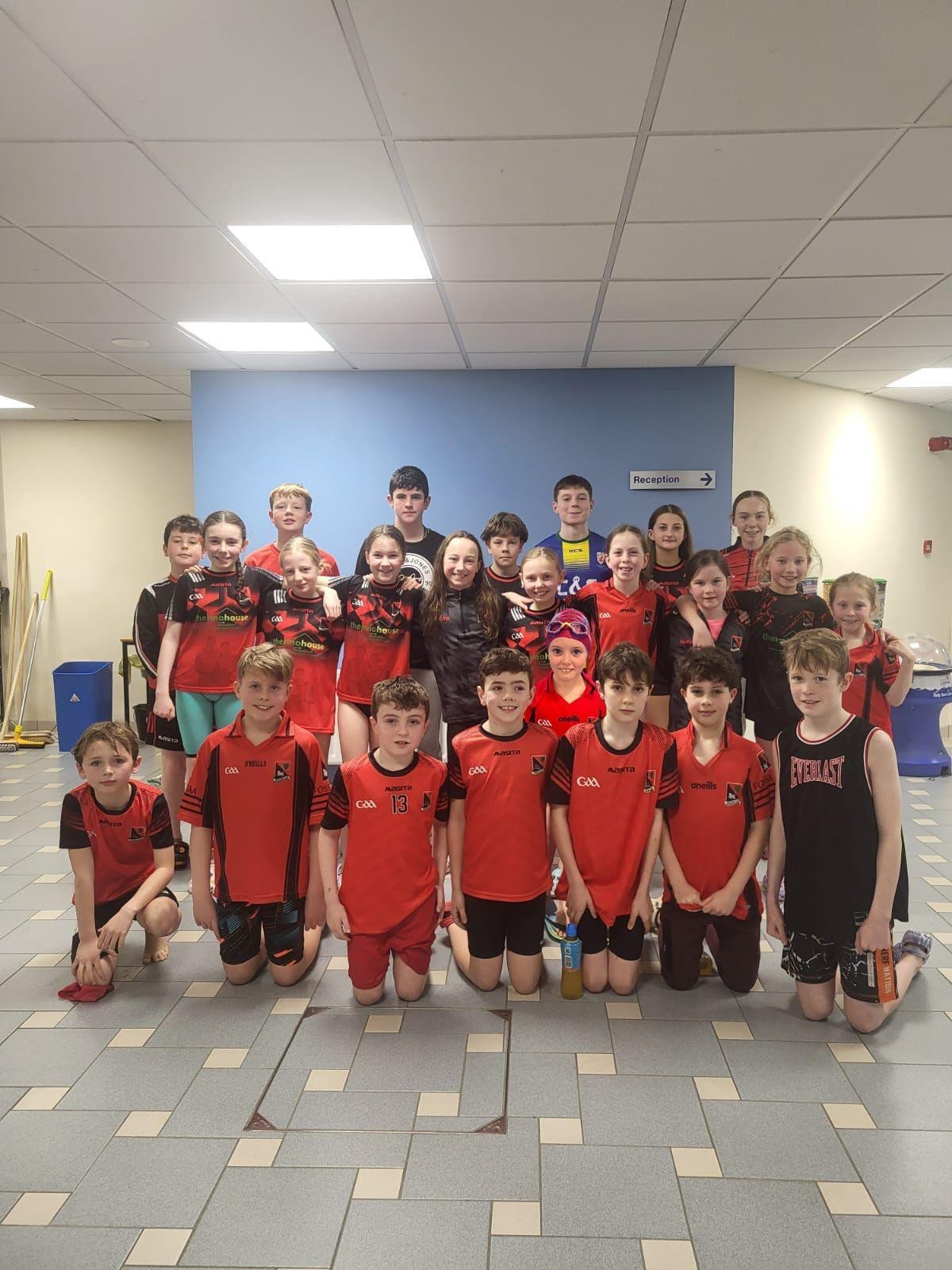
Fossa Swimmers make a splash at County Finals
The Fossa Swim team pictured at the Tralee Sports Complex following their successful outing at the County Finals of the Community Games on Sunday, February 15. The 25-strong squad delivered […]

News
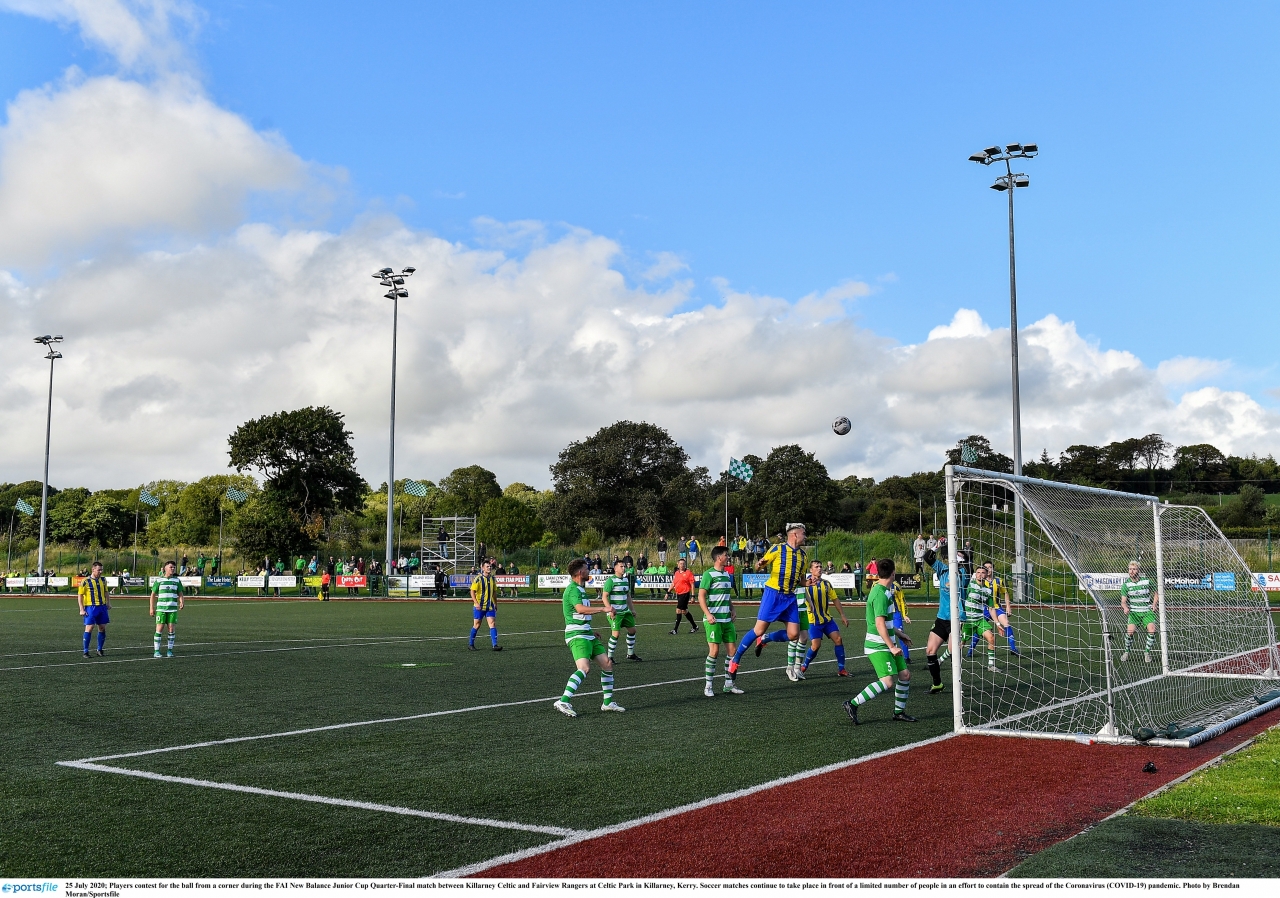
On the Ball Part 2 of the Mikey Daly Interview
Éamonn Fitzgerald EF: Killarney Celtic are invited to participate in an Irish competition. That has big financial implications for travel, meals, etc. MD: It is great to be invited, showing […]

Retailers join national campaign to cut PRSI and safeguard local jobs
Retailers and shop staff across Killarney joined forces this week as part of the nationwide ‘#CutPRSIKeepJobs’ campaign, calling on the...

European mixology elite heading to Pig’s Lane
Fresh off being named Ireland’s Bar of the Year 2026, Pig’s Lane is set to host world-renowned Athens cocktail destination...

WEEK 14: Felicity’s Summer in Killarney
WEEK 14Felicity’s Summer in Killarney Previously: Here on Dundag it was far easier to relax than anywhere else. They had...

Frustration mounts over morning gridlock at Coolcorcoran
Frustration mounts over morning gridlock at Coolcorcoran Mounting traffic gridlock at the Coolcorcoran junction onto the N22 Killarney Bypass is...


Ailbhe Keogan scoops top television writing award
Acclaimed Kerry screenwriter Ailbhe Keogan has won the Best TV Drama Script award at the 19th Writers’ Guild of Ireland...
