
Sport
Eamonn Fitzgerald: Tyrone defeat an opportunity missed


Eamonn Fitzgerald gives his assessment of Kerry’s shock defeat to Tyrone in the All-Ireland semi-final
The scoreboard did not lie at Croke Park on Saturday last. After extra time it was Tyrone 3-14 Kerry 0-22.
GUBU all over again. For weeks now the media had informed us that COVID was rampant in Tyrone with up to 17 of the players/management recording positive results, thus making it impossible for them to play their All-Ireland semi-final v Kerry. Shenanigans, I termed it last week. They called the bluff of the GAA, who relented. First, one week’s postponement, and then stretched to two, leaving Kerry without a game for five weeks.
That was the scenario for Kerry, ambushed at Croke Park and losing out on the All-Ireland final pairing with Mayo, which would have been the popular choice for most GAA fans. Even with Tyrone’s shenanigans, I expected Kerry to win.
All-Ireland semi-finals are not notable per se, just hurdles on the way to the big prize. It is a case of work in progress.
Well, it wasn’t progress for Kerry on Saturday last. The better team won on the day, not necessarily the better football team, but a team of players who fought like dogs, swarming Kerry at every turn and delivering three KO punches. Goal, goal, goal. 22 points would win most matches, led by the brilliant David Clifford and the impeccable free-taking of Seán O’Shea (eight points each). That left six points for the rest.
Two Kerry players scored 16 points while nine Tyrone players shared the spoils of 3-14. Even more startling was that after 45 minutes of play, Clifford and O’Shea were the only Kerry scorers, while the Tyrone goalkeeper and two of his full back line had scored. How did that happen? More tellingly, why was it allowed to happen that these defenders/attackers were allowed the freedom of the park to come up unhindered and score? To complete that unforgivable statistic, the whole Tyrone full back line and one of the wing backs eventually found the target. One could not legislate for Niall Morgan’s massive free just on half-time to send his side 1-7 to 0-9 point clear. It was a strategic lead for Tyrone.
LEAKING GOALS
Once again conceding goals led to Kerry’s defeat, two from Conor McKenna and one from Cathal McShane. This Kerry team has leaked goals in crunch games and at vital stages. Peter Keane will remember them all. A careless knock-down from the throw-in after half-time by David Moran in 2019 was gladly accepted by Dublin defender Eoin Murchan .The small man motored through the middle all of 70 yards. Green flag. Dublin rejuvenated.
Last year in rain-lashed Cork with five seconds left on the clock the Rebels latched onto a Holy Mary hit-and-hope by Luke Connolly. Collingwood AFL player Mark Keane caught the ball unhindered, while Kerry’s former AFL player stood rooted to the ground. Goal. Another year gone.
2021 was to be our year. Kerry were unbeaten, finishing the league with a six-goal trouncing of Tyrone. There was no real test in the championship, although Cork ran up a good score in the Munster final, including a goal, all before the first water break. Then Kerry demolished them, inflicting a 22-point massacre.
With Dublin out of the equation, and all the shenanigans about COVID in Tyrone - would they be able to field a team at all? - Kerry were looking good.
Backtrack a little to those Tyrone goals. In each case there was no blame on Kerry keeper Shane Ryan. He was manning the bearna baol and it must have felt like General Custer’s last stand at the The Battle of the Little Bighorn in 1876.
On Saturday last, Kerry had plenty opportunities for goals and none more clear-cut than the one afforded to Paul Geaney in the 22nd minute. He got clear inside the Tyrone defence just yards from Niall Morgan and no one else to beat. Instead of pulling the trigger for a certain goal he opted to pass it across the goal to Stephen O’Brien, who was inside the small square and diving to the ground. Disallowed goal, a correct decision by the referee. I believe that a Kerry goal at that stage would have put them in the driving seat. Tyrone would have been chasing the game; the hunted, not the hunters. Killian Spillane and Seánie O’Shea also fluffed great goal opportunities.
SHINING STAR
Even though David Clifford was closely marked by Ronan McNamee, the Fossa star shone as brightly as ever. He showed the way with a delightful point after 24 seconds and he was sorely missed in extra time. He was unable to resume due to injury telegraphed by a hospital pass from O’Shea.
Tyrone had done their homework and realised the importance of Paudie Clifford in the Kerry game plan. Conor Meyler stuck to him like glue and Clifford didn’t really come into the game until the third quarter. Then we saw his worth, but Kerry were chasing the game and had been bossed by Tyrone, a key point I made in last week’s preview of the game. “Kerry must initiate, not imitate.” I also queried Tyrone’s shenanigans re: COVID.
There were some saving graces. In defence Shane Ryan did well and varied his kickouts, finding David Moran, especially in the opening half. Jason Foley played very well, as did Tom O’Sullivan. Gavin White made plenty of his trademark up-field sallies, but was gunned down by the Tyrone defence funnelling in from all sides. Invariably, there wasn’t a Kerry forward available for the offload.
David Moran was probably playing his last game in the Kerry geansaí and this great servant gave it everything. 33 years old, cruciates done not just once but twice, he did so well, especially as the target man for Shane Ryan’s kickouts. No wonder he tired as Jack Barry contributed very little and displayed his naivety six minutes into the first half of extra time by gifting Tyrone that important goal, throwing his leg carelessly at a ball that was going wide and kicking it straight into the scoring zone. Santa Claus came early for Conor McKenna. Game over, effectively, but full credit to Kerry to fight back tenaciously, inspired by Paudie Clifford and Paul Murphy.
FIGHT BACK
Kerry played now like they should have played earlier in the game and brought it down to a single point deficit. Tommy Walsh did get one chance to equalise and send the game into a penalty shoot-out, but the wrong forward got the opportunity and his effort went tamely wide.
Paul Murphy finished very well, even scoring a point, but brave and all as the Rathmore man is, he does not have the physique essential for a centre back. Was he the designated centre back on Saturday last? I’m not sure. If he wasn’t, who was assigned the duty of guarding the middle of the defence?
I have highlighted many times this lacuna in the Kerry defence. Many years ago, I asked Mick O ’Dwyer why he persisted with Tim Kennelly at centre back. After all, The Horse was quite limited in basic skills. Dwyer did not disagree, but came with the punchline that centre back is a difficult position to master. You have to mark your man and also mark space. Kennelly could do both. His outstretched hands meant no opposing player had a free passage through the middle. Even when Tony Hanahoe drifted towards the wing, Kennelly still wasn’t codded. I could say the same about Mick Morris, centre back in the 60s/early 70s. Dublin used Ray Boyne to reveal some home truths.
If Kerry are unable to find an orthodox centre back, surely with all the backup personnel in the statistics/coaching sector someone can devise a strategy to close out that bearna baol. Dublin did it getting Cian O’Sullivan (married to a Ballyhar lady) to adapt and shore up the centre. He was the one who was minding the gap, an unsung hero when others claimed the limelight.
HAMPSEY
I am well aware that the modern game has evolved significantly, but team managers at club and county level must come up with a strategy to man the bearna baol. Pádraig Hampsey did the business for Tyrone on Saturday last.
The Kerry forward division has been magnificent all year, ramping up huge scores including those demolitions of Tyrone and Cork in the Fitzgerald Stadium.
David Clifford is a class apart and Seánie O’Shea as free-taker kept Kerry in the game. I always expect more from O’Shea in general play. I thought that his marker Padraig Hampsey was the standout Tyrone player, the type of centre back Kerry need so badly. Himself and Clifford were the stars that brought Kerry five All-Ireland minor titles in a row. The other forwards made little progress.
In the modern game judicious use of the bench is often the key to victory. I wondered why Jack Barry started at midfield instead of Diarmuid O’Connor, his club mate from Na Gaeil. The latter limped off early in the Munster final with an ankle injury, but surely himself and Dara Moynihan were the only Kerry beneficiaries from the extended five-week period arising out of the COVID debacle.
I believe O’Connor will be Kerry’s first choice midfielder from now on. Was he unfit to start? If so, why was he brought on in the 55th minute?
Paul Geaney made no progress apart from a point very late in the proceedings. Surely Micheál Burns was tailor-made for action? His tearaway, brave, incisive running at the Tyrone defence would have drawn fouls or led to scores. The baby was well thrown out with the bathwater when he came on with four minutes left in extra time.
BLACK CARDS
Tyrone (and Dublin) play on the edge: aggressive, in your face, inviting punishing cards, be they black, yellow or red.
Kerry had a numerical advantage with Tyrone black-carded on two occasions, yet they never drove home that advantage. Even in rugby when a player is sin-binned the opposition has the window of opportunity to tack on winning scores. Not so on Saturday. You hardly noticed that Tyrone were down a man. Of course, they were cute enough to literally wind down the clock with delaying tactics. The 10-minute concession is highly abused by the black-carded team with time-wasting tactics.
Kerry have played great football all season, but they are not in the All-Ireland final because they leak too many goals through the centre and, when they are on top, they do not know how to close out a game.
It’s that stark and clinical for a team with great potential.
CÉN TREO ANOIS?
We should have been looking forward to a classic Kerry v Mayo All-Ireland final between two great, open, footballing teams.
Kerry supporters are hurting, but spare a thought for the players/management and their respective families, who have had to live in quasi-hermitic seclusion during the Tyrone shenanigans.
Back to grass roots in Kerry and no Ghost Train to Croke Park. What’s another year? Annoying and frustrating that the Sam Maguire hasn’t come back home since 2014. Opportunities such as 2021 do not present themselves that often.


News
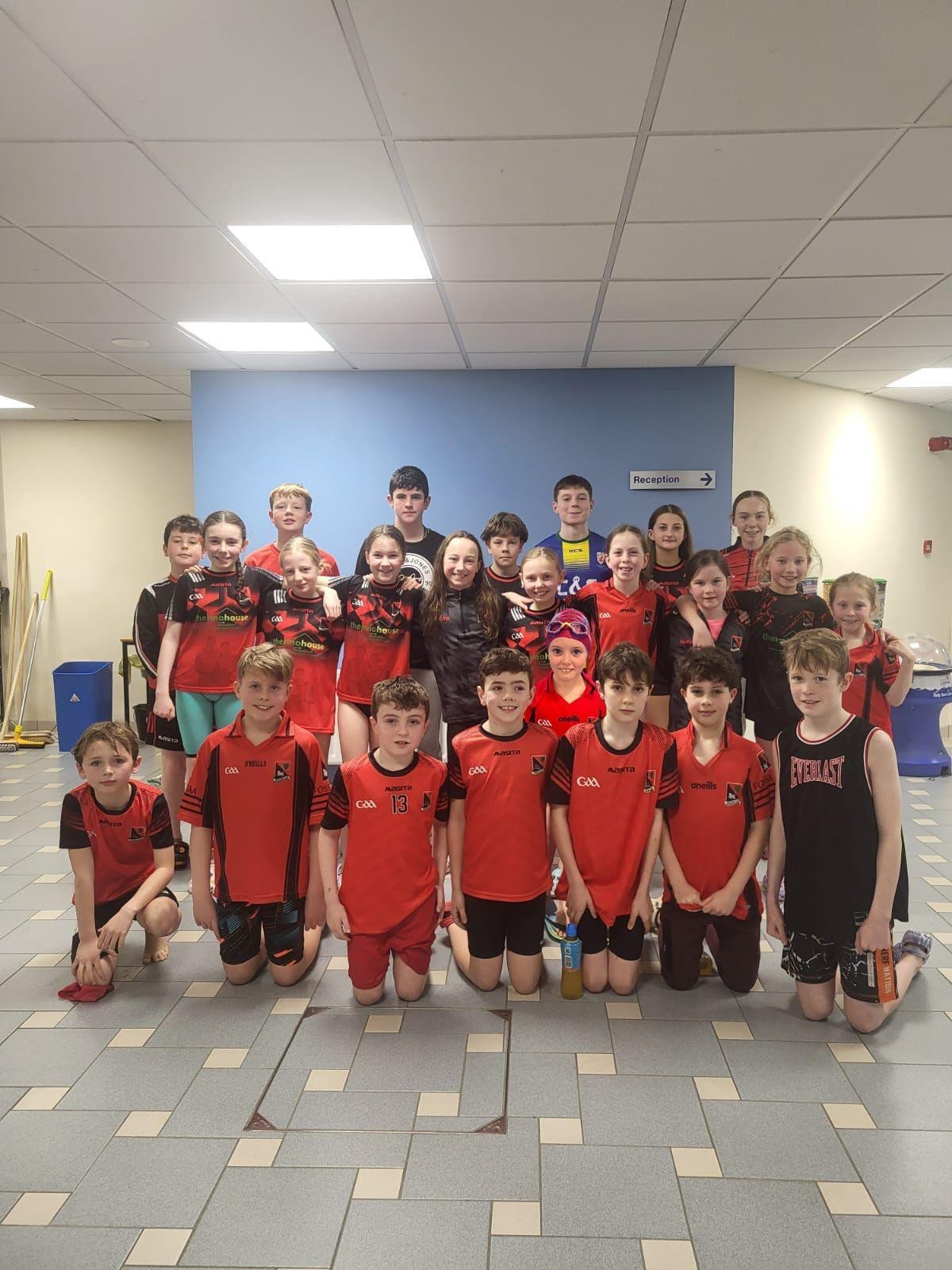
Fossa Swimmers make a splash at County Finals
The Fossa Swim team pictured at the Tralee Sports Complex following their successful outing at the County Finals of the Community Games on Sunday, February 15. The 25-strong squad delivered […]

News
On the Ball Part 2 of the Mikey Daly Interview
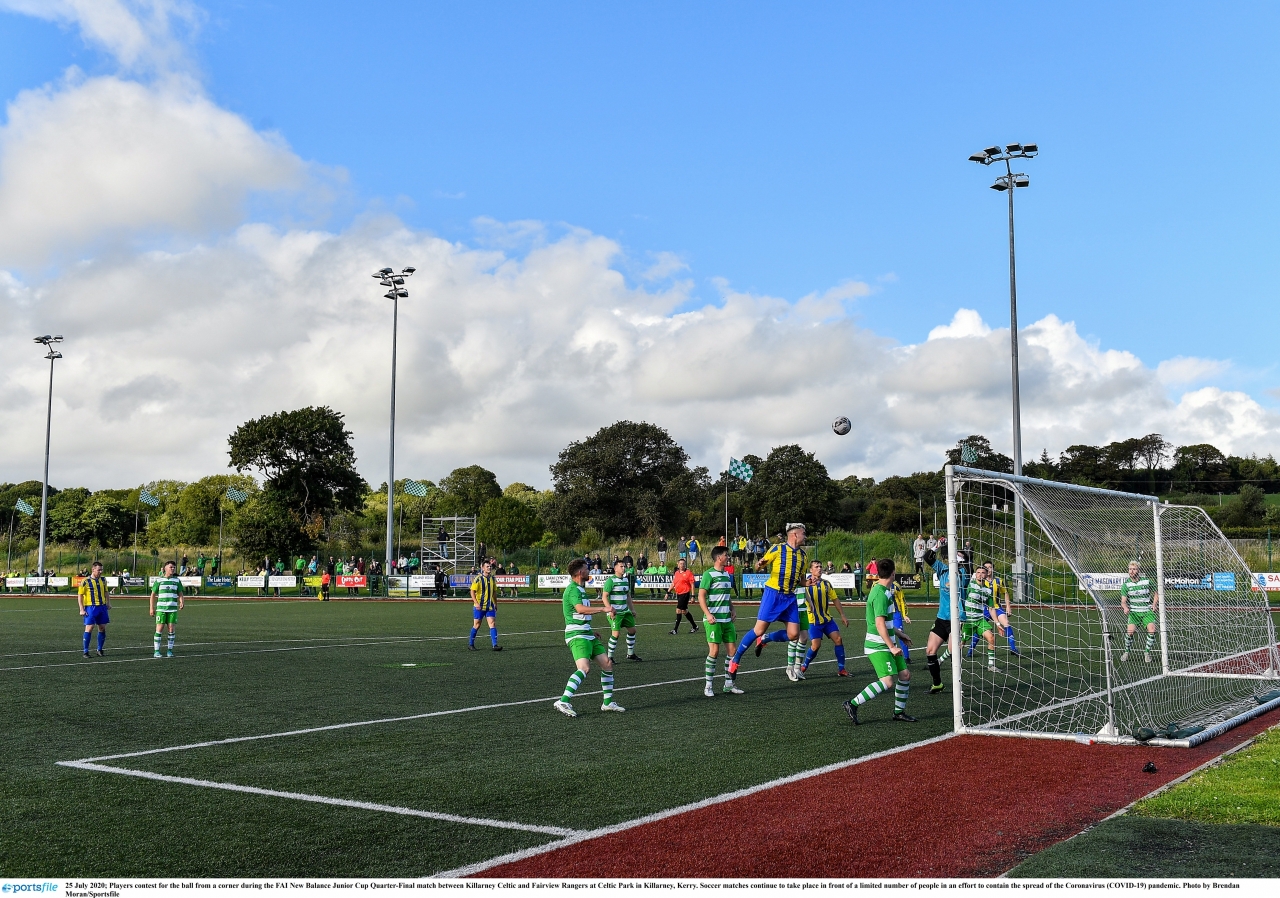
Éamonn Fitzgerald EF: Killarney Celtic are invited to participate in an Irish competition. That has big financial implications for travel, meals, etc. MD: It is great to be invited, showing […]


Arbutus Hotel’s 100th anniversary honoured at IHF Conference
The centenary of the historic Arbutus Hotel took centre stage this week at the Irish Hotels Federation (IHF) Annual Conference....

Over €2K raised at Killarney premiere of Hind Rajab film
Killarney for Palestine welcomed over 120 people to The Brehon on Sunday evening for the Kerry premiere of the Oscar-nominated...


Four years on from the Russian invasion of Ukraine, Killarney resident Natalya Krasnenkova shares her experience
When I first arrived at Dublin Airport four years ago, I was handed a small slip of paper. It had...

Top tips at McSweeney’s Cheltenham charity preview night
Racing fans are invited to the McSweeney Arms Hotel on Tuesday, March 3, for an expert preview of the upcoming...


Double award win for Jessie Buckley
Killarney-born actress Jessie Buckley celebrated a historic weekend by securing Lead Actress awards at both the Irish Film and Television...
