
Sport
A Kerry career less ordinary: The Brian Clarke Interview


25 years on from Kerry’s All-Ireland-winning campaign of 1997, Brian Clarke talks to Adam Moynihan about his role on the team, balancing football with basketball, and his ‘fraught’ relationship with Páidí Ó Sé
“I find that [decision] incredible. I think that was a brilliant piece of work by Brian Clarke… Maybe Kerry will get a point but certainly a piece of genius has been penalised.”
RTÉ co-commentator Colm O’Rourke is livid. The date is the 24th of August 1997, it’s a warm, sunny day in Croke Park, and the referee has incorrectly chalked off one of the greatest assists the game has ever seen.
The match in question is Kerry v Cavan in the All-Ireland semi-final, and the referee in question is Pat Casserly. Two years earlier, Casserly received an affectionate kiss from Jason Sherlock after he awarded the Dublin forward a free in roughly the same part of the same field. No kisses were forthcoming this time. In fact, he’s lucky he didn’t get the head eaten clean off his shoulders. (More on that later.)
Kerry went on to win the match and the All-Ireland, so the incident mattered little in the bigger picture.
But in many ways, this passage of play stands as a microcosm of one man’s entire intercounty career. A brief flash of genius that ultimately didn’t turn out the way it should have. This 15-second incident is the story of Brian Clarke.
A highly skilled full forward who made his senior debut at just 18 years of age, Clarke is considered to be one of the finest talents to come out of Killarney in the past 30 years. For scale, the players towards the top end of that conversation include Gooch, James O'Donoghue and David Clifford (if our near neighbours in Fossa will let me borrow him for a second).
Clarke started and scored in the league final, Munster final, and All-Ireland semi-final in Kerry's historic All-Ireland-winning season 25 years ago.
So how did he only wind up making four championship appearances in total? And why did he retire at 24?
The horse’s mouth is always the best place to find the answers so I popped over to his Killarney home to talk about a sporting career less ordinary. Our 45-minute chat unmuddied the waters.
* * *
Clarkey (as he is known around these parts) greets me at his front door with a handshake and a smile. It's quite a while since the now 47-year-old retired from team sports but he's still a unit of a man; I wouldn't like to be a full back tasked with tying him down for an afternoon, I'll put it that way.
He’s currently recovering following a meniscectomy – surgery on his knees to remove damaged meniscus. He attributes the wear and tear to a combination of his sporting life and working life. Many years pounding Killarney’s pavements as a postman has taken its toll.
He invites me in and some small talk about work leads to me revealing that I'm going to Las Vegas for a stag a few days later. He gives me a look as if to say, "Jesus, good luck to you". He has been there and done that. He recommends checking out some college basketball and visiting the Hoover Dam as we retreat to the living room. He mutes the golf on TV and I switch the voice recorder on.
* * *
Clarke the sportsman had a reputation for being temperamental. In fact, whenever his name comes up in discussions about football, chances are you’ll hear an assessment like this: “He was a class player, but...” The rest often remains unsaid.
I have to confess I was a bit apprehensive about asking a man who is said to have a fiery temper to tell me all about his fiery temper. But speaking very calmly in his distinctive, easy-going lilt, Clarke readily accepts that he was an emotional player. And he also accepts that it sometimes caused him problems.
“With Dr Crokes in 1994, I was actually sidelined (with red cards) three times in a row in finals. Other teams could see that it was maybe a weakness on my part but I never saw it as such.
"Most people that know me, know that’s just the way I am. If I get hit, I’m probably going to hit back.”
Was this attitude borne out of passion? A will to win?
“Yeah, passion, and I suppose growing up in Coolgrean Park and being the youngest fella running around the estate. It kind of hardens you up a bit.”
That hard edge didn’t prevent him from blossoming into a precocious attacking talent. In fact, were it not for his boldness he might never have been a forward in the first place.
“Initially I started off playing in goal with the Crokes. I always played a year or two ahead of me, so when I was nine I was goalkeeper for the U12s. It worked out like that until one day when I called to our trainer, the great Jackie Looney, and threatened him that my mother (Marie) wanted me to play outfield. He gave me a chance. He said, ‘you can go in goal for the first half and we’ll bring you out for the second’. That’s how I started playing in the forwards.”
Lining out on strong Dr Crokes teams that included the likes of his brother Dessie, Maurice O’Donoghue, Brian O’Donoghue, Pa McCarthy, Geoffrey O’Donoghue, John Cronin and Brian McCarthy, Clarke soon caught the eye of the Kerry minor selectors. There would prove to be one significant stumbling block, however: his love for the game of basketball.
Clarke was called into the minors when he was 16 – setting him up to potentially be a three-year minor – but he was also playing basketball for Ireland at the time. The Irish team travelled to the States that summer and it was an opportunity that Clarke wasn’t willing to miss. The minors would have to wait.
This friction between basketball and football would be present for much of his career. In Kerry, the vast majority of intercounty footballers simply park their other sporting commitments (if they have any) and focus on the green and gold. That was never an option for Clarke, who says his grá for basketball stemmed from watching legendary local figures like Paudie O’Connor and Mervyn Griffin playing for St Vincent’s in the Pres Gym.
He played for Vincent’s himself and later St Paul’s, starring as a versatile point guard in Paul’s National and Super League teams throughout the nineties.
“Basketball was always there, but football was the big thing for my father (Desmond),” Clarke explains. “He used to always bring us up to Kerry training in the Fitzgerald Stadium. That was when the Kerry team were going really well, back in the late seventies/early eighties. That was his first love, and my grandfather loved it, so I did too. But then when I realised basketball was such a good game, I moved towards basketball.
“In terms of missing out on the Kerry minors in 1991, my father just about forgave me for that. But just because it was the Irish team!”
* * *
Clarke eventually played for the Kerry minors in 1992 (his bad year), scoring 1-7 on his championship debut against Tipp and following that up with 2-1 against Limerick in the Munster semi-final. He was also a key figure on the Kerry Vocational Schools team that won the 1992 All-Ireland.
The minors came up short against Cork in ’92 and again in ’93, but Ogie Moran had seen enough of Clarke to immediately draft him into the senior panel. The 18-year-old started at half forward in the league against the reigning All-Ireland champions Derry in Killarney on November 7. He scored a point.
“From growing up kicking the ball out to Bomber and Jack O’Shea and these fellas at training, to actually being in the Kerry jersey in the Fitzgerald Stadium… It was an important moment for me and important for my family too.”
He went on to start three more games in the 1993-94 league, but for the next two years his intercounty appearances were limited to the U21s.
After featuring at that grade in 1994, he missed out on the 1995 All-Ireland run due to issues with bainisteoir Páidí Ó Sé and his management team over work commitments. Clarke, then 20, had just started working in the post office.
“There were split shifts and this and that, so I couldn’t make training sometimes. That was looked at the wrong way. Fellas weren’t as forgiving at the time.”
Clarke returned for the 1996 season, however, and playing under Jack O’Connor (Ó Sé was now the senior manager, though he was still involved as a selector), Kerry won another All-Ireland.
By this point Kerry’s stranglehold over Sam had well and truly left the building. It was 10 going on 11 years since the county’s last All-Ireland. But with this stacked U21 team ready to burst onto the scene, fans finally had cause for optimism.
“Beginning with the achievements of the Crokes, and St Brendan’s College and the Vocational Schools team in 1992 (all three won national titles), and then with the U21 All-Irelands, it just gave people faith that there might be players coming through,” Clarke recalls. “And that’s how it transpired.”
Clarke was back in the mix for the Kerry seniors for the 1996-97 season, although clashes with basketball meant that his appearances were intermittent.
“One weekend I’d be with the basketball and one weekend I’d be with the football. That’s the way things were allowed to work out, just to give me a chance to play both.”
How did Páidí take to this arrangement?
“Yerrah, he took it…” Clarke pauses as he considers his next words, “…well enough at times.” He smiles. “If there was no football on the Sunday and the basketball was on the Saturday night, we’d train on the Saturday morning with Kerry and he’d run the shite out of us. He wouldn’t take into account the fact that I was playing a match that evening - it just wasn’t part of what he was thinking. He had his own priorities.”
After missing out on the first three league games, Clarke featured in the victory over Donegal in November of 1996. He returned for the final regular season game, another victory over Cork in March of 1997, and he came on in the league quarter-final against Down. He then started the subsequent semi-final and final wins over Laois and Cork, scoring 0-6 in total over the two games. By this point he felt as though he was settling into the team well.
A groin injury forced him to sit out the Munster semi-final against Tipperary but he was called straight back in for the provincial decider against Clare in Limerick. That match will be remembered for Pa Laide’s wondergoal more than anything else but Clarke (0-1) and his full forward line colleagues Dara Ó Cinnéide (0-2) and Maurice Fitzgerald (0-5) also played their part.
Clarke says he had a good understanding with Fitzgerald, a player whom he describes as a “genius”.
“I’ll probably be laughed at for saying it, but what he did on the pitch for Kerry… He could do more. We saw it in training. He was just a genius with the ball.
“I suppose I had a bit of nous myself from the basketball. I was used to spaces and things like that. Knowing that Maurice was as good as he was, I felt I complemented his game. Having played point guard for St Paul’s, I wasn’t one to be greedy with the ball. I was seen as a ‘win-the-ball distributor’ type player.
“In terms of the team’s tactics it was ‘get the ball to Maurice’ most of the time. I think sometimes too much weight was falling on him to do the scoring when the fellas all around him were more than capable also. I think Maurice felt that pressure. He was 27 when the rest of us were 22, so he just felt it was his time to prove how good he was. To get us over the line, he felt he had to do more.”
* * *
If the feel-good factor within the county had been slowly returning over the course of the previous few years, it shifted into overdrive once the All-Ireland semi-final against Cavan appeared on the horizon.
“Kerry people were starting to wear the colours a little more, you could feel that for the couple of weeks before,” Clarke says.
“Cavan brought a great atmosphere with them, but we were well prepared for what Ulster football had to throw at us on the day. It was the type of game where every man had to win his own ball. Football is played a little differently now.”
The first half was tit for tat as Cavan, who were aiming to reach their first All-Ireland final since 1952, gave as good as they got. The scores were tied at 0-7 when substitute Billy O’Shea kicked a long, accurate pass in towards Clarke down at the Canal End of the ground. When I ask him to explain what happened next, Clarke’s description is incredibly matter-of-fact. He could just as easily be talking about one of the thousands of times he reached into his mailbag and successfully delivered a letter. In reality, the play was a thing of beauty.
“Billy O’Shea knocked it into me. I got the ball probably 25 yards or so out from goal. We used to try and work the ball in the field and have a runner coming off the shoulder. My role was to be a distributor. So, I saw (Eamonn) Breen out of the corner of my eye – the basketball was a help there. He was going so fast I had missed him by the time I got possession. But I was fouled also, so the referee blew his whistle.
“Breen passed by, I jump-stopped, as I would do in basketball, and kicked the ball over my head to Breen. He got it and rounded the keeper. It was a basic enough kick to make really, if you were doing it all the time in training.”
Kerry fans in attendance and watching around the world knew they had just witnessed something special. A unique and magical piece of ingenuity, executed to perfection. Sadly, Pat Casserly was having none of it.
“The referee blew it back. I said, ‘what was wrong with that, ref?’ and I used a couple of other words. He said, ‘you kicked the free too quick’.
“When he gave me that answer, I wasn’t very happy with it. Maurice Fitzgerald was there and he grabbed me by the hand and said, ‘Clarkey, tis alright, I’ll kick it over’. That’s how I settled for a point, because Fitzy said it.”
Fitzgerald swung over the free and Kerry eventually powered to a seven-point win, thanks in part to a goal from the boot of substitute Mike Frank Russell, who had replaced Clarke in the second half. When the final whistle sounded, one of the first people on the field to congratulate Russell was Clarke. “Coming from basketball where a player can be substituted or fouled out, you’re still part of that team,” Clarke says. “The most important thing was that the team got over the line.”
Despite the fact that he had been taken off in the semi-final, Clarke was still expected to start the final against Mayo. That’s what he expected too. Unfortunately, that’s not how things played out.
“I’m not sure where it came from. I had trained for the month between the semi-final and final and there were no signs that I was going to be dropped, until I received a phone call at home at 10 o’clock on Tuesday night. My mother answered the phone and Páidí said, ‘can I talk to Brian, is he there?’ And I was dropped over the telephone, which I’ve always been insulted by. I was disappointed at the way I was treated, really. But it was said to me on that call that I would be very much part of what went on that Sunday (in the final).
“On Wednesday I was dejected, but when Thursday comes around you have to pick yourself up and go to training. We met on the Saturday then again and of course I was talking to the guys in the forwards in particular. Myself and Dara Ó Cinnéide spent a lot of time together over those few days (Ó Cinnéide took over Clarke’s full forward spot with Billy O’Shea coming in at corner forward). He’s a very easy-going, cool character. He suited me well. You can’t have too much fire around the place.”
Kerry famously defeated Mayo in the final with Maurice Fitzgerald putting on an unforgettable display of point-kicking. The man who replaced Clarke in the starting 15, Billy O’Shea, was stretchered off in the first half after Fitzgerald inadvertently broke his leg, but Clarke wasn’t brought on in his stead. All told, Kerry made three substitutions, all in the forwards. The young Dr Crokes man wasn’t one of them.
“I felt part of it all morning and during the game but I suppose when your name isn’t called out to even warm up, having been an integral part of the squad… There was elation first of all when the final whistle blew. But then, after a couple of congratulatory slaps on the back from Kerry supporters as we went across the pitch to collect the cup, a bit of reality sunk in. There was fellas congratulating me for something I wasn’t really involved in, at least not on the day of the final.
“That was a long trip home. We had the celebrations in Dublin which was a brilliant night. But I was a bit annoyed at the time and I let things get on top of me. I didn’t get down with the team on the Sunday because I had a late night the night before. I missed the bus. I travelled down by train and my parents picked me up in Mallow.
“But I met the team in the Gleneagle Hotel then. The craic around Killarney was massive.”
Clarke soldiered on for the first few games of the 1997/98 league but in 1998, at just 23 years of age, he decided to walk away from the county team. By this stage, mainly due to the manner in which he was left out of the All-Ireland final, his relationship with Páidí Ó Sé was well and truly on the rocks.
“What do they call it, ‘fraught’? Is that the word?” Clarke laughs. “The trust from my side was gone really. If Páidí told me it was raining, I’d have to look outside.”
There was to be one final swansong. When two local teenagers, Seán O’Connor of the Legion and Martin Beckett of Dr Crokes (both 18), were tragically killed in a car crash in September of ‘98, Clarke decided to give Kerry football another go.
His voice breaks as he says that Beckett, a talented member of the Kerry U21 panel, would have been part of the Kerry senior team in 1999. His own return to Kerry colours was a tribute to his fallen clubmate.
He played in the league and made one final championship appearance in 1999, a Munster quarter-final victory over Tipperary. However, after being overlooked in the Munster final against Cork, that was that. The 24-year-old walked away from the intercounty game for good.
“I still had to go to work the following morning. All of the commitment with Kerry is grand when you’re involved. Nowadays there’s always an opportunity for a player to get into a game, but back then if they made two subs it was a lot. You have to really love things [to stay committed when not playing], and for me the love was gone from two years previous and that phone call.”
* * *
Sitting in his living room, 25 years on from his best run in green and gold, does Clarke have any regrets when he reflects upon his Kerry career?
“No, I think I walked away at the right time for me,” he insists. “You can’t keep everyone else happy when you’re disappointed and annoyed about things yourself. I felt it was the best thing for me to do. There was no such thing as a retirement back then. I was surplus to requirements, and I felt that way. I didn’t want to rot on the bench.
“Overall, having started with the seniors in ’93 and having played minors and U21s as well, I have a lot to be proud of really.”
He continued to play basketball with Paul’s and club football for the Crokes, although it wasn’t all smooth sailing with the latter.
“I’m a controversial character,” he declares, with more than a hint of humour in his voice. “There was a small falling out within the club in 2000, so I decided it was best to stay away from the team. It was great for Crokes to win the County Championship that year but I wasn’t involved towards the end of the season. I played again in 2001 and then I moved from senior to junior for seven or eight years. I enjoyed playing at that level at that point because I was still keeping in touch with the game and still keeping in touch with the club, but it was on a more leisurely basis. Which suits me!”
Nowadays he gets his sporting fix at the picturesque Killarney Golf and Fishing Club. “I love the golf. There are good characters back there and a great club spirit. The golf to me is an extension of being competitive. That’s what I miss most of all.”
Does that competitiveness sometimes spill over on the course in the same way it did on the football field?
“Moreso when I was starting out. I suppose I realise at this point that I’m not going to make any money out of it! When I started out, an odd club went flying left or right. But now I’m much more settled and I can appreciate that I will hit the occasional good shot, rather than expecting every shot to be good.”
Whether he’s talking about the good or the bad, his achievements, his talents or his moments of indiscipline, Clarke seems quite happy to accept that it’s all part of what makes him.
As he says himself, “that’s just who I am”.
You get the impression that he wouldn’t have it any other way.


News
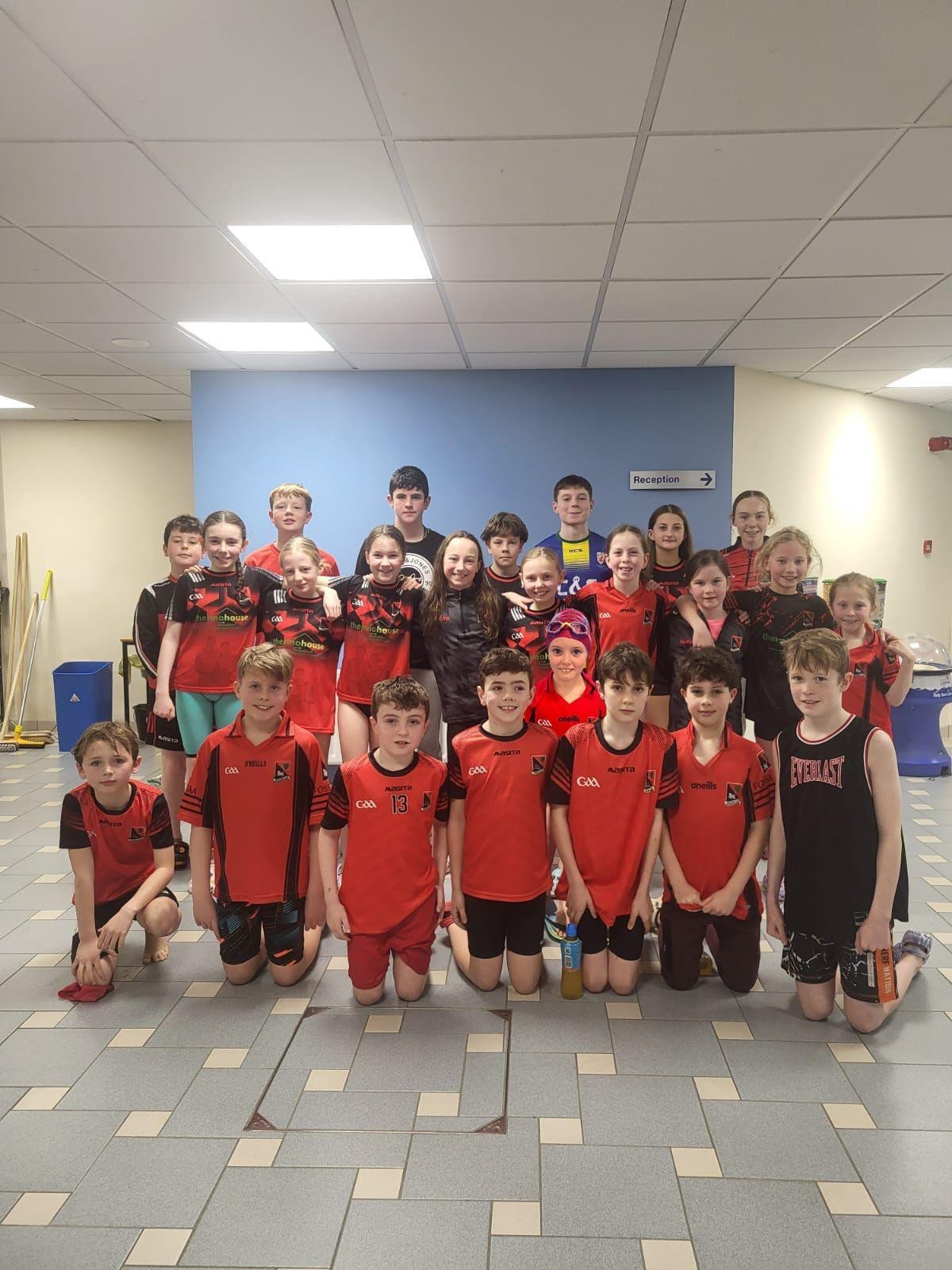
Fossa Swimmers make a splash at County Finals
The Fossa Swim team pictured at the Tralee Sports Complex following their successful outing at the County Finals of the Community Games on Sunday, February 15. The 25-strong squad delivered […]

News
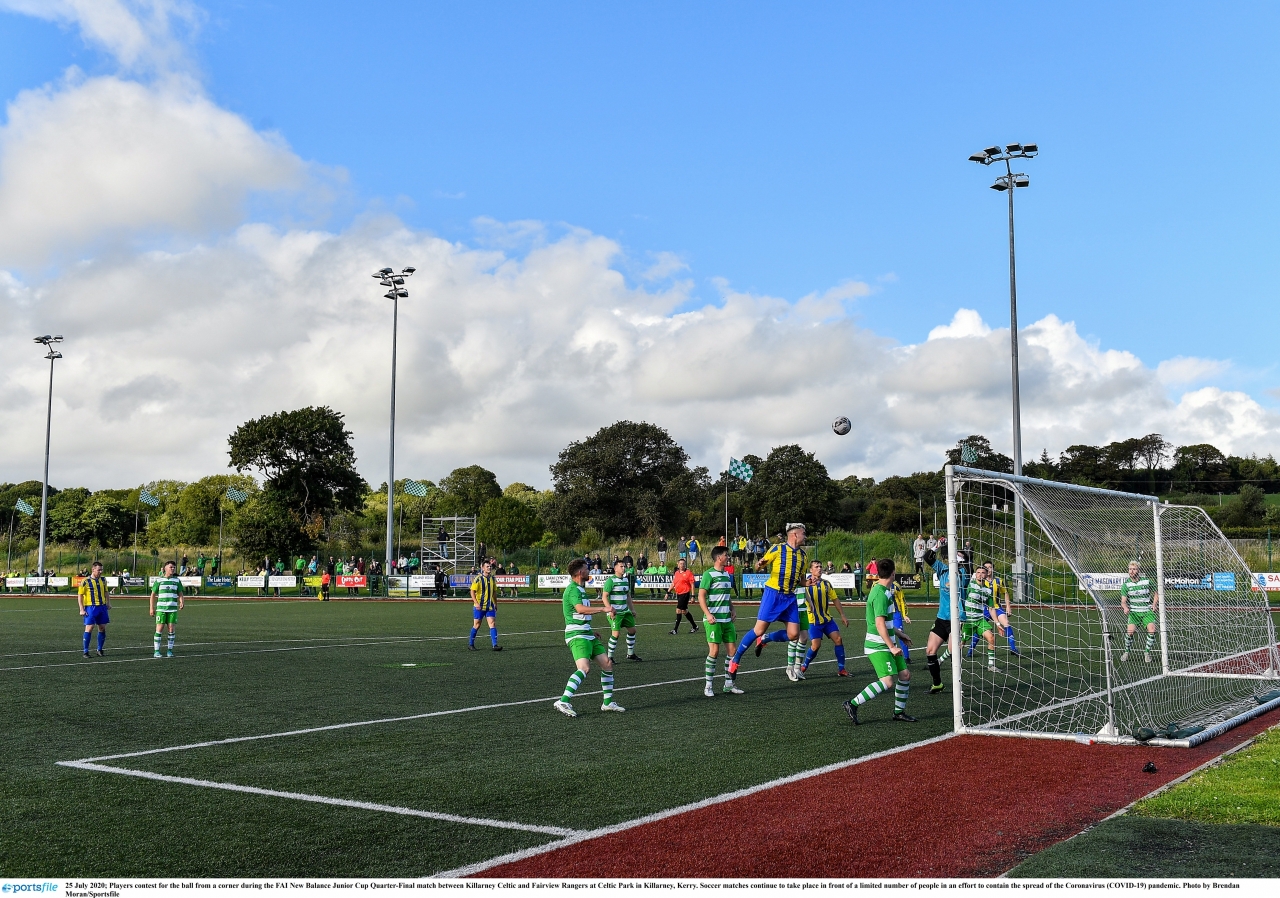
On the Ball Part 2 of the Mikey Daly Interview
Éamonn Fitzgerald EF: Killarney Celtic are invited to participate in an Irish competition. That has big financial implications for travel, meals, etc. MD: It is great to be invited, showing […]
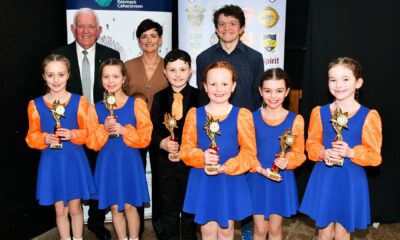

Glenflesk Dancers secure East Kerry Scór na bPáistí title
The Glenflesk figure dancing team of Clodagh McSwiney, Rebecca O’Donoghue, Rachel O’Donoghue, Emily McMahon, Seoidín Dunne, and Paddy MacGillicuddy, pictured...

A special musical celebration titled ‘St. Brigid and the Arrival of Spring’ took place recently in the great hall of Muckross House.
Spring welcomed with trad music at Muckross House A special musical celebration titled ‘St. Brigid and the Arrival of Spring’...

Tourism leaders to briefed on new domestic strategy
Killarney’s tourism industry is set to receive a first look at the national strategy for “home holidays” as Fáilte Ireland...


Funding deal secures future of Kerry Airport
The long-term future of Kerry Airport has been secured following the Government’s announcement of the new Regional Airports Programme 2026–2030....

New leadership and compact route for 2026 Assess Ireland International Rally of the Lakes
Planning for the 2026 Assess Ireland International Rally of the Lakes is moving at a frantic pace as Killarney prepares...
