
Sport
100 days of Jack O’Connor


Our sports editor Adam Moynihan analyses the first 100 days of Jack O'Connor's third spell as Kerry manager.
The McGrath Cup isn’t exactly the acid test – it has been distinctly alkaline so far, truth be told – but Jack O’Connor’s feet are now firmly beneath his desk. It’s hard to believe but he has already put down his first 100 days as Kerry’s manager. I think that gives us the green light to start analysing the poor man to within an inch of his life, as is the custom in these parts.
Kerry have played just two preseason games during O’Connor’s third stint but there is still plenty to pore over. (And if there wasn’t we’d find something, says you.)
THE BEGINNING
Going back as far as Day 1, and even before that, there was significant controversy surrounding his appointment. O’Connor was officially ratified on October 4 but he appeared to publicly flirt with the idea of returning to The Kingdom on an Irish Examiner podcast in August. Some people felt that this was disrespectful to Peter Keane – Kerry had just been knocked out of the championship by Tyrone - and O’Connor later admitted that his comments were “naïve”.
However, I wouldn’t personally go along with this idea that Jack O’Connor ought to have been more mindful of Peter Keane in this situation. The two were competitors in a very competitive field and Keane was technically no longer the Kerry manager after the Tyrone defeat because his term was up. If a journalist asks Jack O’Connor if there is an “allure”, why should he lie and say there isn’t?
The interview process that followed drew sharp criticism in some quarters, particularly amongst Keane supporters, because there was a perception that O’Connor was the preferred candidate before he, Keane and Stephen Stack were interviewed. So what if he was? Complete impartiality is impossible in this kind of scenario. The candidates are known to the board, so some sort of bias is inevitable.
That doesn’t mean they were wrong to meet with Keane and Stack. If Keane was turfed out without getting the chance to make his case, his supporters would have been livid over that as well. There is no nice way to lose a job, particularly one that is as prestigious and coveted as the Kerry gig.
Off The Ball AM went one step further and, quoting an unnamed source, alleged that O’Connor had been hired even before the interview process had started. If true, that would have been a different story. That would be completely unfair and a real slap in the face for Keane and Stack and their respective teams. But the accusations were denied in the strongest terms by outgoing chair Tim Murphy, and OTB AM later apologised for their “groundless, false, and incorrect” claims.
The bottom line, when you sidestep all the politics and gossip, is that Keane was given a three-year term and Kerry were knocked out of the championship by underdogs in Years 2 and 3. No Kerry manager has ever survived such a sequence. There was appetite for change and the board acted.
Only time will tell if they made the right decision by opting for Jack O’Connor. He will be judged by his results, just like every Kerry bainisteoir before him.
LEAVING KILDARE
O’Connor faced some more understandable criticism over the manner in which he left his previous post in Kildare. From the outside looking in, it did appear as though he left them high and dry, but he subsequently explained that he hadn’t actually committed to The Lilywhites for 2022. In fact, he had “more or less” made his mind up that he would be standing aside.
“This thing that I left Kildare because I was asked to manage Kerry or that it was a done deal is absolute and total nonsense,” the Dromid man said. The commute was taking its toll and his management team had largely disbanded.
Even if he had another year with Kildare in the tank, the reality is that no Kerry-born intercounty manager is going to turn down Kerry if the opportunity arises.
CALL-UPS
Now, down to the real business of assembling a squad. Whereas previous regimes were condemned for sometimes overlooking players who were performing well for their clubs, O’Connor has taken a different approach.
Three Austin Stacks players – Dylan Casey, Jack O’Shea and Greg Horan – were drafted in on the back of the Rockies’ heroics in the County Championship. Two more of last season’s most eye-catching club players, Andrew Barry and Jack Savage, were also added to the panel.
Dan O’Donoghue and Darragh Roche both starred for East Kerry in their title-winning campaigns in 2019 and 2020. One could argue that they both might have been looked at sooner.
Elsewhere, goalkeeper Shane Murphy was recalled after being dropped by Peter Keane in 2018. Shane Ryan has done well over the past three seasons but there has been a nagging feeling in the county that Murphy and his unique attributes, particularly when kicking from the tee, might merit a recall. Clearly, Jack O’Connor is of the same mind.
There is also great excitement amongst Kerry fans surrounding the return of Stefan Okunbor. The former Geelong Cats player had made just a couple of appearances for Na Gaeil and St Brendan’s when O’Connor’s first panel was drawn up, but Okunbor was included anyway. He started at midfield in the first McGrath Cup game against Limerick and his eye-catching fetch from the throw-in left those of a green and gold persuasion rubbing their hands with glee.
THE KERRY WAY
There’s no denying that we consider ourselves to be the aristocrats of Gaelic football down here in Kerry. We demand that our senior footballers play the “Kerry way”. This “traditional” style of attack apparently includes plenty of kicking and catching, conveniently ignoring the fact that our best ever team was built around the handpass.
Nevertheless, we do enjoy a fast, direct game, and if the opening two matches in the McGrath Cup are anything to go by, Jack O’Connor intends to deliver on that front.
So far it has been an obvious tactic to get the ball into the hands of the team’s best passers – Paudie Clifford, Seán O’Shea and nominal corner back Tom O’Sullivan – and allow them to spray long, accurate passes into the full forward line.
O’Sullivan in particular appears to be operating as a free man and playmaker, taking advantage of the fact that most opponents drop an extra player back in defence.
This tactic has worked so far with Paul Geaney and Killian Spillane reaping the rewards in the opening preseason fixtures. That has certainly been encouraging. Whether or not the approach will continue to function as well when things get serious remains to be seen.
PLAYER WELFARE
One of the biggest talking points from O’Connor’s first 100 days arrived on the 100th day itself. Last Wednesday night up in Templetuohy, Co. Tipperary, Tony Brosnan and Jack Savage entered the fray as second-half substitutes. The problem? They had lined out earlier that same day for MTU Kerry in their Sigerson Cup victory over UCD. Another MTU Kerry player, Paul O’Shea, was also named on the Kerry panel, but he did not feature against Tipp.
O’Connor’s decision to play Brosnan and Savage just hours after they had finished another match in a different county was rightly called into question. After all, player welfare is a hot button topic and surely there is no shortage of footballers in the county who would be delighted to receive a call-up.
There were mitigating factors, though. Kerry were missing 14 players due to club and college commitments. Without the MTU Kerry trio, they would have travelled to Tipperary with just 20 players. While it should be possible to find replacements, even at short notice, perhaps O’Connor was keen to keep the circle small, so to speak. Particularly with Covid so rampant.
The Kerry boss also indicated that the players were left to decide for themselves if they wanted to play. You might say, well, a fella scrapping to get on the Kerry team is hardly going to say “no”, and that’s a fair enough point to make. Who knows, maybe O’Connor was testing the players to see if they were willing to go above and beyond?
Either way, it’s not something I’d like to see happening again, although in this instance there was no harm done.
GOOD VIBES
By and large, O’Connor has made popular choices up to this point and the mood on the street is positive. Victory over Cork on Saturday in front of a healthy home crowd will add to those good vibes, and with that in mind he is likely to name a strong starting lineup.
But, as the man himself knows all too well, the temperature will gradually increase over the next 100 days or so. O’Connor’s third coming will ultimately be judged in the boiling heat of championship action.


News
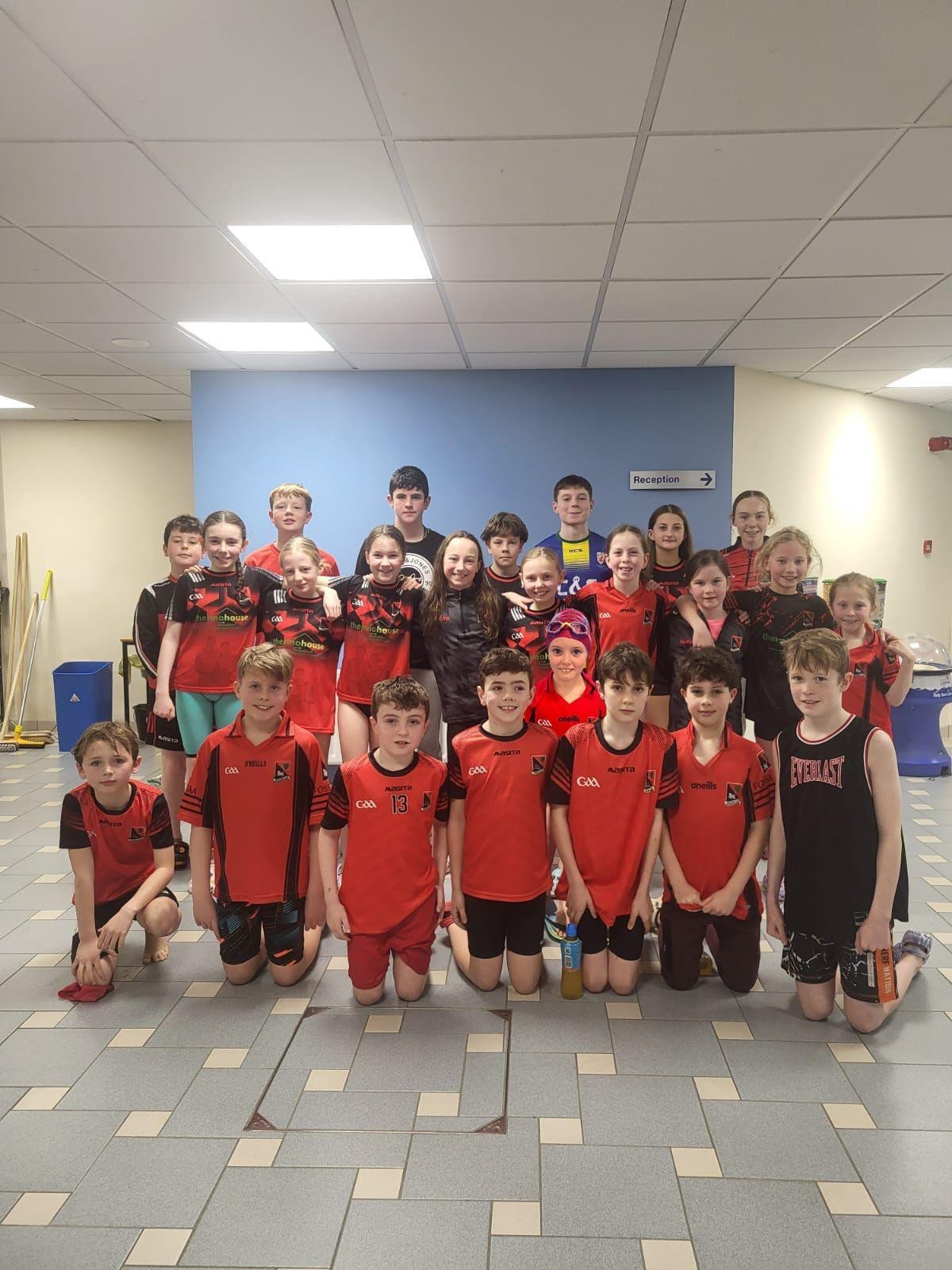
Fossa Swimmers make a splash at County Finals
The Fossa Swim team pictured at the Tralee Sports Complex following their successful outing at the County Finals of the Community Games on Sunday, February 15. The 25-strong squad delivered […]

News
On the Ball Part 2 of the Mikey Daly Interview
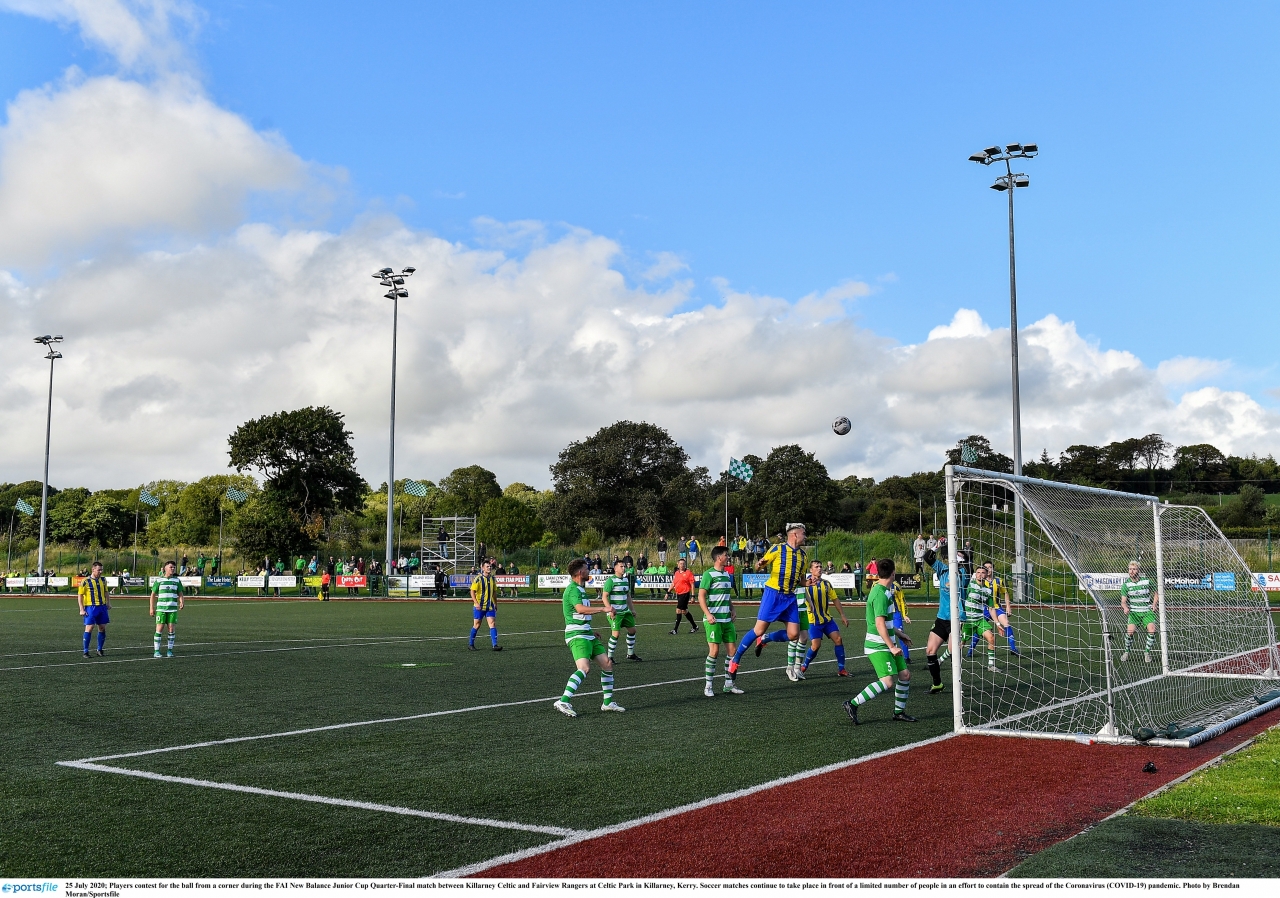
Éamonn Fitzgerald EF: Killarney Celtic are invited to participate in an Irish competition. That has big financial implications for travel, meals, etc. MD: It is great to be invited, showing […]

St Brendan’s College: Voices from the Halls
Interview conducted by Aodhagán Ó Súilleabháin, Cormac Flanagan, and Ryan Twomey. Name: Kieran O’Leary – Entrepreneur and Killarney businessman.Year of...


Official launch of the Assess Ireland Rally of the Lakes set for April 11
The official launch of the 2026 Assess Ireland Rally of the Lakes will take place at Gleneagle Hotel on Saturday,...


Aghadoe native spearheads Darkness Into Light in London
In the absence of a local flagship event this year, one Aghadoe woman is ensuring the Killarney flag flies high...


Killarney co-drivers lead the charge for Circuit of Ireland
The NAPA Auto Parts Irish Tarmac Rally Championship heads to Dungannon this Easter weekend for the Circuit of Ireland, with...


SUPPORTING LOCAL EDUCATION
SUPPORTING LOCAL EDUCATION Karen Buckley, representing the Loughguittane National School Parents Council, accepts the proceeds of the Fossa Two Mile...
