
News
Improve your decision-making process


By Michael O’Connor, theislandinvestor.com
I am someone who wants to see all the information before making a decision.
This is a debilitating character flaw in a profession where every decision is based on limited information and unknowable future outcomes.
When I first started investing, I wanted all the answers before placing a trade. I wanted certainty. As a result, I missed out on countless opportunities.
Over the years, I have worked hard to overcome this. One of the first steps was accepting that investing is a game of probability, not certainty.
People say investing is like chess, but in chess, all information is known and there is a right and wrong way forward at any point. It's based on computation.
Investing is more like poker. Both are games of incomplete information. Your success over the long run will come down to your ability to make the best possible decisions based on the available information.
Flaws in our decision-making process
With this in mind, let’s focus on one of the most common flaws in our decision making process – resulting.
This refers to our tendency to use the outcome of a decision to determine whether or not we have made the right choice. But there are a number of issues with this.
Bad decisions have 'good' outcomes all the time. Imagine you're late for work and approaching a crossroads as the traffic light turns red. You decide to run the light. You get through just fine and make it to work on time.
Was that the right decision?
The outcome was favourable, but you risked potential death to shave two minutes off your commute. A questionable decision at best.
Reinforcing bad behaviour
Previously successful outcomes convince you that it is a good decision.
Sticking with the driving analogies. Imagine you decide to drive home after a few drinks. You get home just fine. So you do it again and again. The successful outcomes compound to the point where you convince yourself this is a perfectly safe thing to do. You become more and more reckless until, eventually, disaster strikes.
Just because the probability of a negative outcome (getting caught, crashing) is low doesn't mean the risk/reward payoff makes sense.
We see this in investing all the time. Traders make statistically questionable decisions that work out in their favour. The initial positive results reinforce the risk-taking behaviour until they eventually get blown up.
Bad decisions can play out in your favour for a long time, but eventually, the statistical probability will catch up with you.
The Element of luck
In poker, you can play a hand perfectly and still lose because there's this luck element to it. Most decisions in life work the same way.
Ignoring the impact of luck means we convince ourselves that we made the wrong decisions when in reality, the decision was correct; we were just unlucky, or vice versa.
Imagine you have a trick coin that is heavier on one side, so it comes up 'heads' 90% of the time. If you place a bet with someone and the coin comes up with 'tails', was that a bad bet? No, you were just 'unlucky'. Every decision is based on probability, but the probability won't always work in your favour.
A 90% chance you will win is still a 10% chance you will lose. Losing doesn't automatically make it a bad decision.
Focus on the process
When investing, we need to focus on the decision-making process, not the outcome. You want to select the options with the highest likelihood of a positive result. But even if you do this, you can still lose. Not every investment will be a winner.
But if you keep making well-thought-out decisions based on a process that is true to your criteria, these decisions will compound and work in your favour over time.
To get my latest 10 stock recommendations, simply sign up to my newsletter by scanning the QR code.

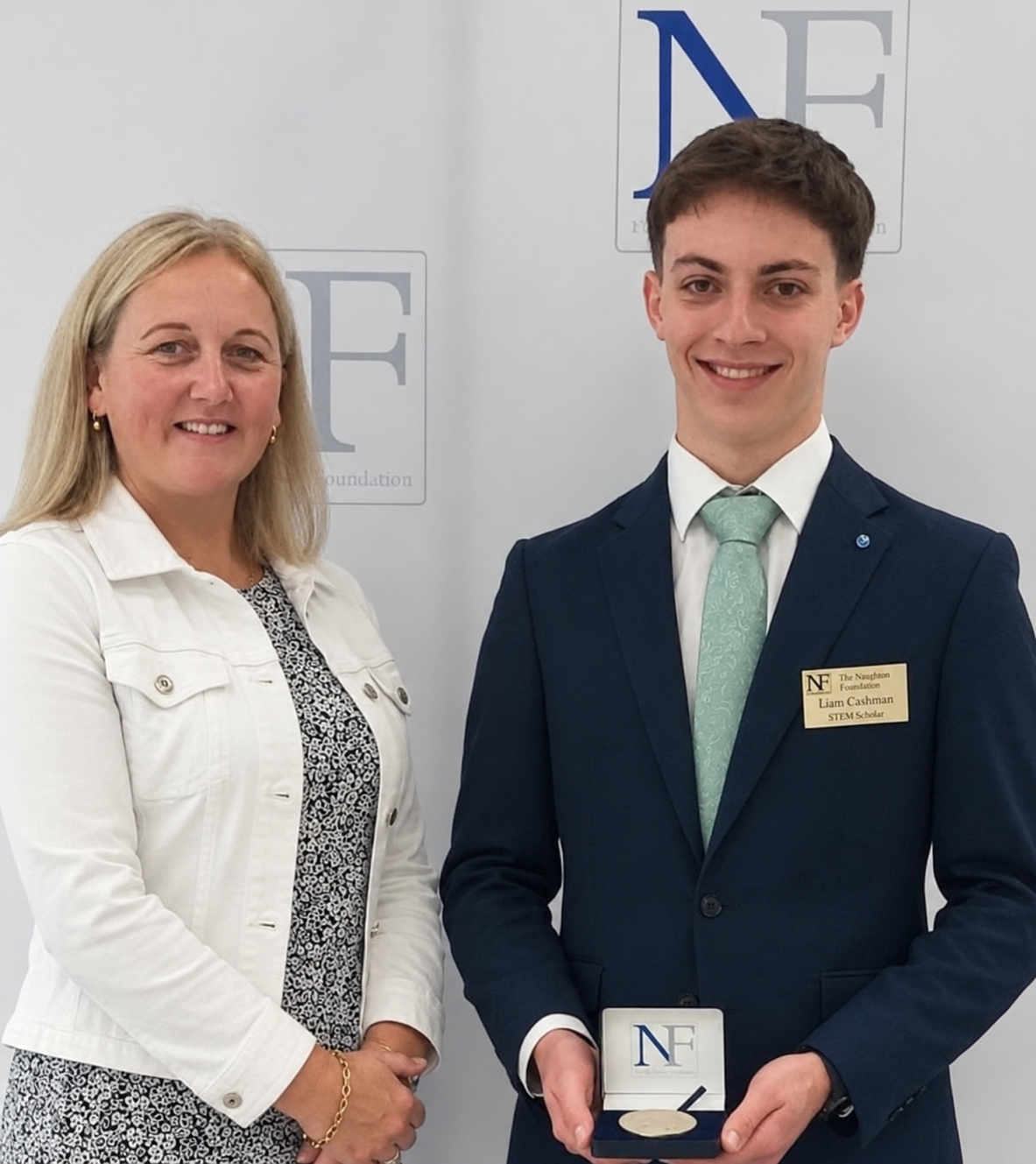
Eoin Cashman named Kerry’s sole Naughton Scholar
Scoil Phobail Sliabh Luacha student Eoin Cashman has been honoured as County Kerry’s sole recipient of the prestigious Naughton Scholarship for 2026.
Eoin received the award at an official ceremony held at Trinity College Business School on Saturday, October 17.
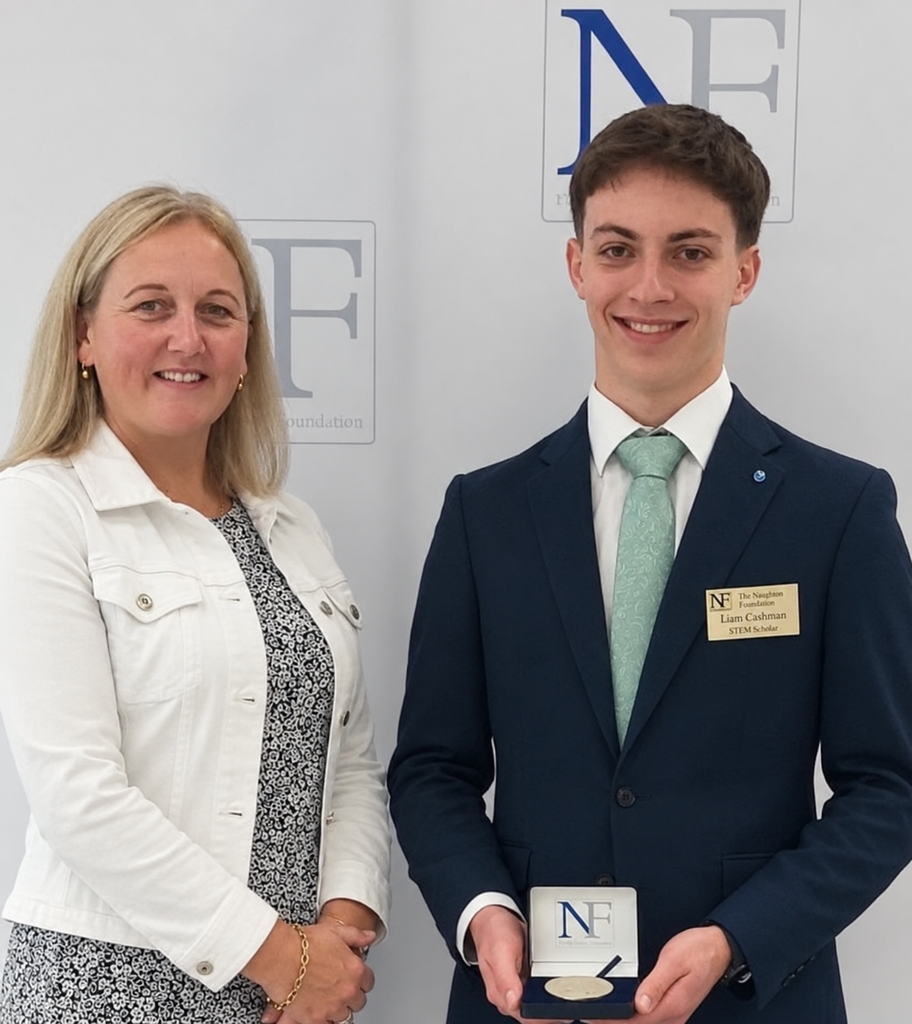
The Naughton Scholarships recognise outstanding students entering third-level education in STEM subjects, including science, technology, engineering, and mathematics.
Eoin was accompanied at the Dublin presentation by his parents, Marian and Pat Cashman, alongside SPSL Principal Mairéad Lucey.
The scholarship follows an exceptional Leaving Certificate performance where Eoin achieved seven H1 grades. His passion for STEM extended well beyond the classroom, having reached the SciFest 2025 National Final as overall runner-up and winning the Regeneron International Science and Engineering Award to represent Ireland in Phoenix, Arizona.
The funding will support Eoin in his current studies at University College Cork, where he is pursuing a Bachelor of Science degree in Physics and Astrophysics.
As part of the award, Eoin will travel to Kylemore Abbey in March 2027 for a special gathering bringing together past and present Naughton Scholars from across Ireland.
Speaking at the ceremony, Minister Jennifer Carroll MacNeill TD congratulated the scholars, encouraging them to maintain critical thinking and independent thought throughout their third-level journeys. Mrs Carmel Naughton also addressed the gathering, expressing immense pride in the class of 2026.
SPSL Principal Mairéad Lucey commended the Rathmore student on his achievement:
“Eoin’s academic achievements are a source of immense pride for the entire SPSL school community. His Naughton Scholarship follows an exceptional Leaving Certificate performance in 2026, when he achieved seven H1 grades as well as his strong commitment to STEM beyond the classroom, reaching the SciFest 2025 National Final and being awarded Overall Runner-Up and also winning the Regeneron International Science & Engineering Award, earning them the right to represent Ireland at the Regeneron ISEF world finals in Phoenix, Arizona.”
The school management and wider Rathmore community extended their congratulations to Eoin and his parents, Marian and Pat, as he continues his academic career in UCC.
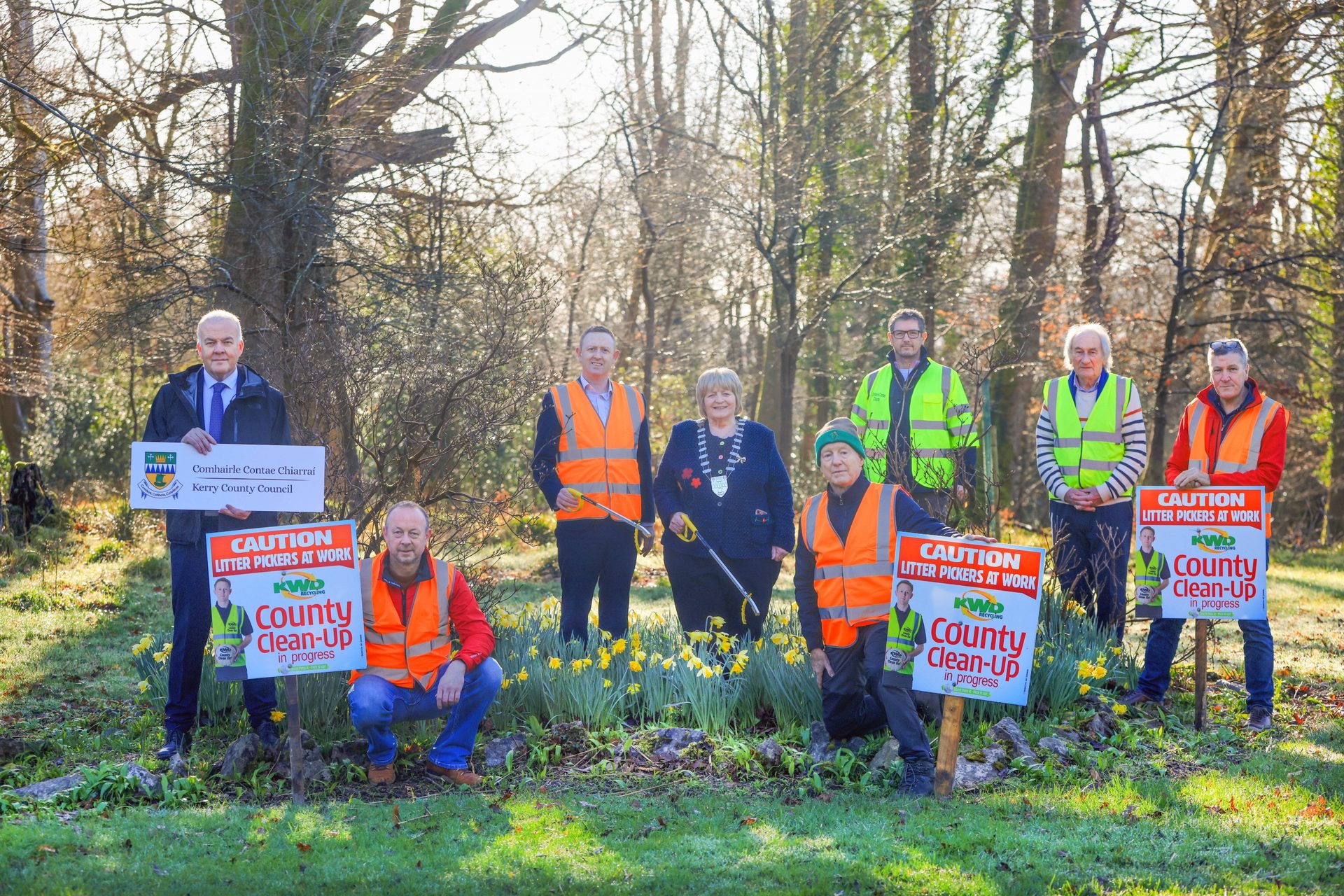
KWD Recycling shortlisted for national environmental awards
Killarney-based KWD Recycling has been announced as a finalist in the 2026 Repak Resource Awards, securing a spot on the national shortlist for environmental achievement.
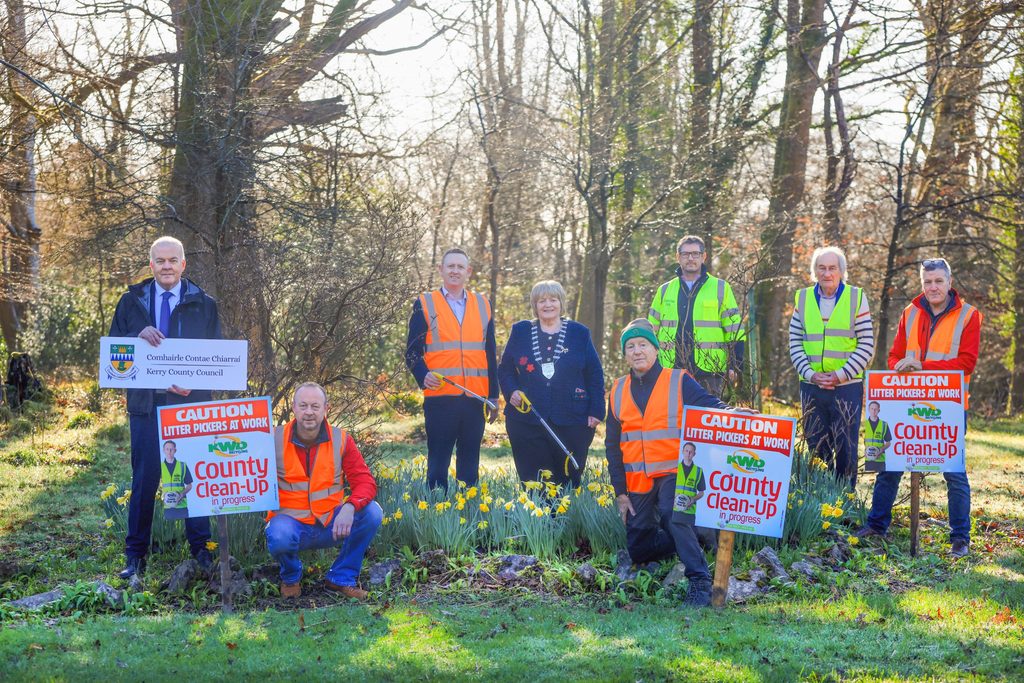
The local waste management company has been nominated in the Best Recovery Operator Innovation category, sponsored by DNV, for its state-of-the-art residual waste recovery system.
The Killarney facility utilizes optical sorting, screening, and mechanical processing to extract recyclable plastics and organic material from municipal waste. In its first year of operation, the technology recovered more than 10 per cent of plastic packaging from residual waste for recycling and diverted almost 50 per cent of organic material toward composting.
KWD Recycling will compete alongside Dublin operators Panda and Thorntons Recycling for the category title.
Repak CEO Zoe Kavanagh commended the Kerry firm for demonstrating environmental leadership and bringing local ambition to the national awards.
Category winners will be announced at a black-tie ceremony at the Mansion House in Dublin on Friday, October 23, where each winner will also compete for the Overall Repak Resource Award.
Local businesses have a strong track record at the national event, with Killarney town venue The Killarney Park and The Ross previously taking home the overall title in 2023.
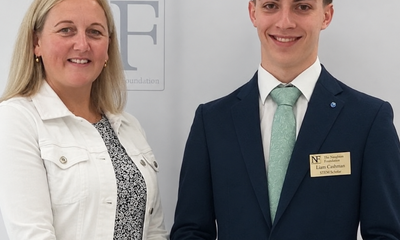

Eoin Cashman named Kerry’s sole Naughton Scholar
Eoin Cashman named Kerry’s sole Naughton Scholar Scoil Phobail Sliabh Luacha student Eoin Cashman has been honoured as County Kerry’s...
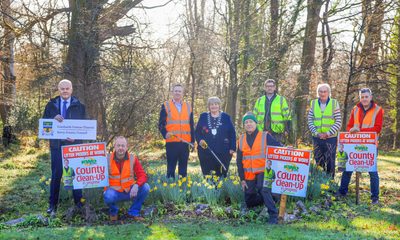

KWD Recycling shortlisted for national environmental awards
KWD Recycling shortlisted for national environmental awards Killarney-based KWD Recycling has been announced as a finalist in the 2026 Repak...
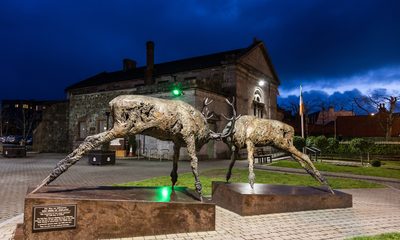

Drivers warned as deer rutting season begins
Drivers warned as deer rutting season begins Motorists in Killarney are being urged to exercise extreme caution as the annual...
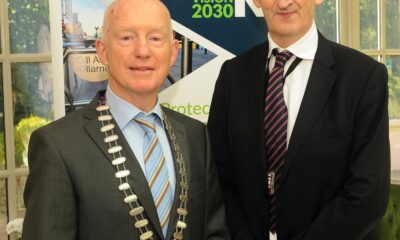

Kerry Airport CEO addresses chamber luncheon
Kerry Airport chief executive Adrian Neilan addressed local business leaders at the Killarney Chamber of Tourism and Commerce luncheon at...
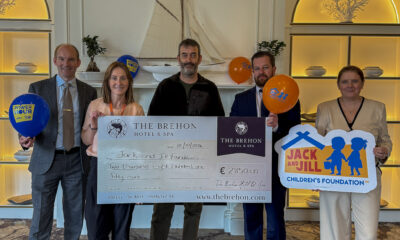

The Brehon raises €2,850 for Jack and Jill Foundation
The Brehon Hotel and Spa raised €2,850 for the Jack and Jill Children’s Foundation after hosting a closest-to-the-pin golf simulator...
