
Sport
Jiu-jitsu champion Wilson da Silva sets sights on world title


This week Adam Moynihan called to the Movement & Fitness Club on New Street to catch up with Killarney man Wilson da Silva. The 38-year-old Brazilian recently won gold at the European Championship for Brazilian jiu-jitsu, and now he’s gunning for a world title.
Wilson, congratulations on your latest success in Rome and Abu Dhabi.
Thank you, Adam.
Before we chat about that, let’s go back to the start. How did you end up living in Killarney?
I came here around 15 years ago because I met someone from Killorglin and we went out for five or six years. After we broke up, I came to Killarney. I’m pretty much half-local, half-Brazilian now.
What part of Brazil are you from?
The northeast. A place called Recife. If you look at the map, it’s the nearest point to Ireland.
Do you get to go home often?
I try to go once a year, you know? I was home earlier this year and then before Covid. But once a year I go home in the summertime.
It must be nice to get some sunshine.
It’s nice, man. Even recently the doctor told me I have Vitamin D deficiency. My skin colour needs the sun! So I go home once a year. I follow the doctor’s advice.
How did you get into jiu-jitsu?
I did it back home in Brazil but I continued here in Killarney. I trained with guys here, Pedro Bessa and Tom McGuire. Then there is another club in Killarney and I trained with them up until four years ago. Things weren’t working out so I started my own gym. I just wanted to do things my way which was to have a clean place, no ego, no drama, no stress, no jealousy. Just come, train jiu-jitsu and help each other. And it’s going well.
Was it hard to go out on your own?
In the beginning it was really difficult because I was opening a second club in the town, on my own. There was really only one guy who wanted to train with me, but then my fiancé (Ewelina) started training and one became two, two became three, and it started to grow. Now we have classes for babies from three years up, kids and teenagers. We’re doing jiu-jitsu and capoeira for all ages. I guess it’s something good for the community.
Can you tell me a bit about jiu-jitsu? Is it similar to other sports?
If you were to describe jiu-jitsu to someone who never saw it, it would be very similar to judo. You have people throwing each other and putting each other on the floor. The jiu-jitsu match is five minutes long and the goal is to checkmate the opponent, to make your opponent quit, or tap out. So there is a lot of ground work, grappling, and wrestling. It’s an excellent sport and great for self-defence. I can’t recommend jiu-jitsu enough.
So there’s no striking?
There is no striking but [in terms of self-defence] there is ducking from striking, turning a strike into a mobilisation. It’s about finding locks on the body – the joint moves this way for example (he turns his arm) - figuring out how the anatomy of the body works.
It seems quite technical and intellectual.
Yes, it’s a very intelligent sport. I trained in weightlifting for a long time, for many years. With time it simply comes down to reps, breaking muscle fibre, and you’re not learning anything. It’s boring. With jiu-jitsu you’re constantly thinking. You’re constantly working your brain.
I compare it to a game of chess. First you figure out how to move the pieces, and then you have to play strategy. Look ahead to the next move and what your opponent can do to you. The moves are complicated and you’re always learning new things. It requires a lot of focus and discipline to get good at it. You don’t get bored with jiu-jitsu.
Is the focus and discipline side of it good for the kids who come to your gym?
Yes, definitely. I find that it is so beneficial for the kids. The kids want to win but if they want to win, they need to learn the moves. In order to learn the moves, they have to pay attention. So straight away it develops focus and concentration and discipline. If they do not pay attention, if they run around the place, they’re going to lose when they spar. It fixes itself. The guys who come in, pay attention, and it makes the others not want to lose so they pay attention and worker hard to learn the moves.
You can see the difference in the kids when they come here. We try to make them comfortable in uncomfortable situations so that when you take the child out of the jiu-jitsu class and they have a to deal with a hard subject in school, or a bully, they are mentally stronger.
I have witnessed that myself. I worked in security for many years and before I dedicated myself to jiu-jitsu, I found it easy to lose the head. But the more hours I put into the gym and training in jiu-jitsu, the more comfortable I became with frustrating situations. You’re able to remain calm. That’s a benefit of jiu-jitsu.
How important is size in jiu-jitsu?
That’s a tricky one. People say that size doesn’t matter. It definitely does. There’s no doubt about that. But the beauty of jiu-jitsu is that once you have the technique, you’re able to apply it against bigger guys. You know, the bigger guys have big muscles and bigger egos, but if the small guy trains hard he will be able to move the big guy’s body in a way that works against him. The big guy who goes to the gym, he’s used to pushing the bar this way (straight out), whereas the guy who knows jiu-jitsu knows that if he moves the bigger guys arms here (upwards), he’s not strong anymore. Now the bench press is worth nothing.
Bigger guys think they are unbeatable. The small guys have to work for it. I always motivate the guys here in the gym to be humble. You always have to consider yourself the second best, the guy who wants to be first. The moment you think that you’re bigger and better than everyone else, you stop working.
Tell me about your recent victories in London, Rome and Abu Dhabi.
Yeah, so I went to the UK and managed to win four golds at the London Open in the ‘Gi’, ‘A’, ‘No-Gi’ and ‘Absolute’ categories. (The ‘Gi’ is a uniform sometimes worn in Brazilian jiu-jitsu. There are categories in which the Gi is worn – ‘Gi’ - and categories in which it is not – ‘No-Gi’. The ‘Absolute’ is an open weight division).
Then a couple of weeks ago I travelled to Rome to compete in the European Championship. The day before that event, the Rome Open was on and since I was already there, I signed up for that too. I won the first fight, submitted the guy, but then in the final I lost. It was a good lesson for me. Coming from so many wins, I thought I was going to smash this other guy. I got a bit cocky. Losing settled me down and humbled me a little bit. I went back to my accommodation and analysed my mistakes. I hoped that the next day I would be able to play a strategy to win.
In the end I managed to win four fights and win the biggest European tournament – the No-Gi European Championship. It was my dream. I have been there twice before and got knocked out in the quarter-final, and came third in the Gi division.
It was really emotional for me. It was a great achievement. Even now when I’m talking, I feel emotional. I don’t train that much with No-Gi so to come first in Europe, it’s hard to believe.
It’s really hard to run and promote a club and also train and win tournaments, a lot of people say it’s not possible, but I’m putting a lot of hours into this and proving that it is possible. When you work so hard, with the help of my training partners, the results have to come.
And you weren’t finished yet. Where did you go next?
Yeah, to finish the story, after winning the European tournament on the Saturday, I flew to Abu Dhabi on Monday for the World Championship. I managed to go there and win three fights before losing the semi-final after getting beat pretty hard. I got my ass kicked by the winner. Then I had to fight to win the third place [match]. So, even though it’s only third place, it’s third place on the biggest podium in the sport.
Is it normal to compete in this number of events in quick succession?
No. It’s crazy to do so many competitions in a short period of time. I usually take a month or two months off before the next competition. It’s expensive too and I must thank Kevin Leahy [from the neighbouring Black Sheep Hostel] for sponsoring me. But after London, I had a feeling that there was no stopping me. I’m healthy. I’m not injured. Now is my moment and I have to take the chance.
It was hard enough to believe that I won the European Championship but to go to Abu Dhabi and fight against the best guys in the world… It’s a dream. Well, it’s not a dream now because it happened. It’s a reality.
Is this it for you now? Have you achieved all you want to achieve?
No, there’s more. Much more. I want to win the World Championship in California next year. For sure I would like to win the European Championship next year too.
But my goal is more than just winning championships, it’s to build champions. I want to teach people and share techniques that are proven to work. As I try to grow the gym, I will continue competing for as long as God blesses me with this health. That’s it.
News
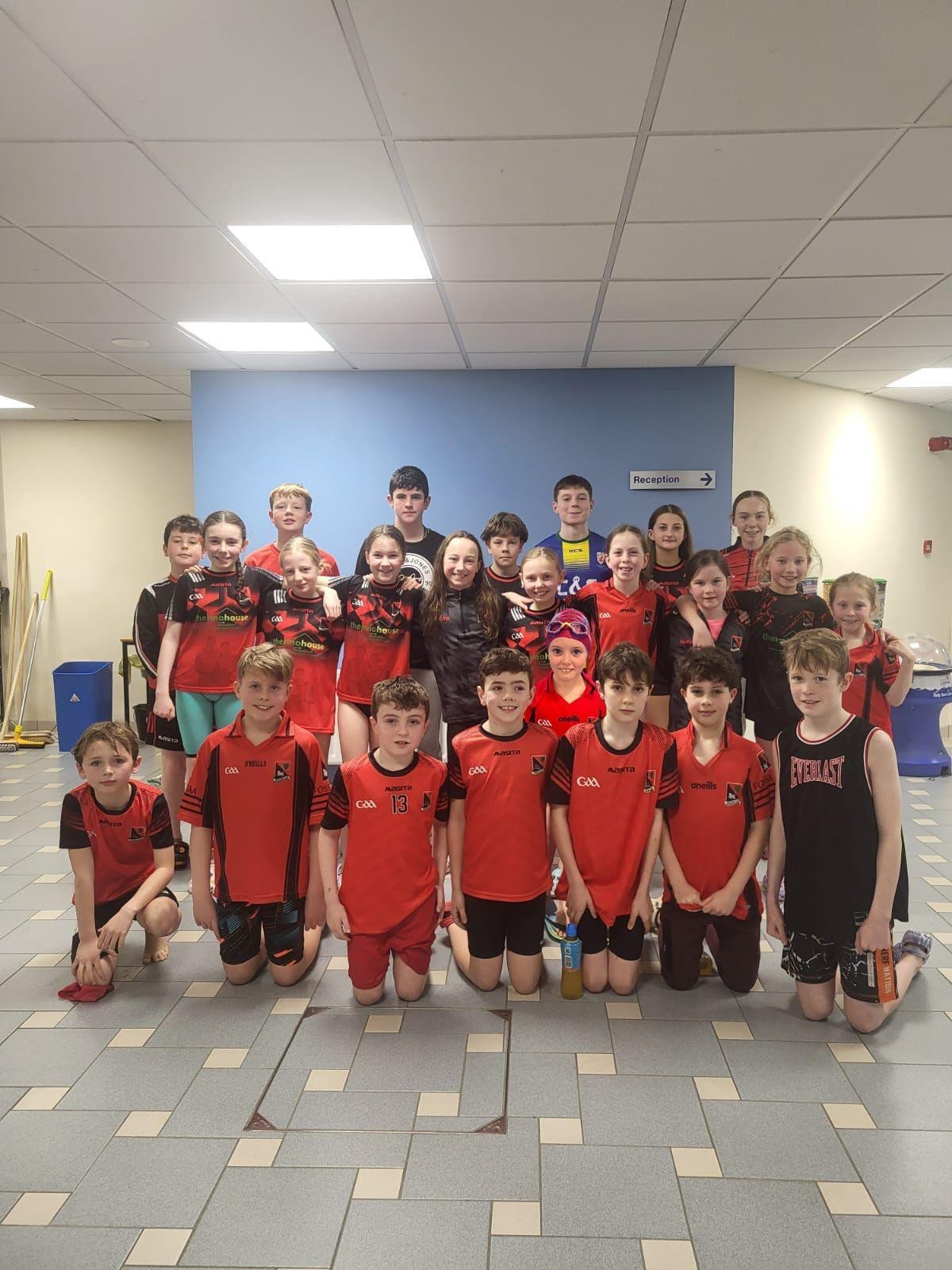
Fossa Swimmers make a splash at County Finals
The Fossa Swim team pictured at the Tralee Sports Complex following their successful outing at the County Finals of the Community Games on Sunday, February 15. The 25-strong squad delivered […]

News
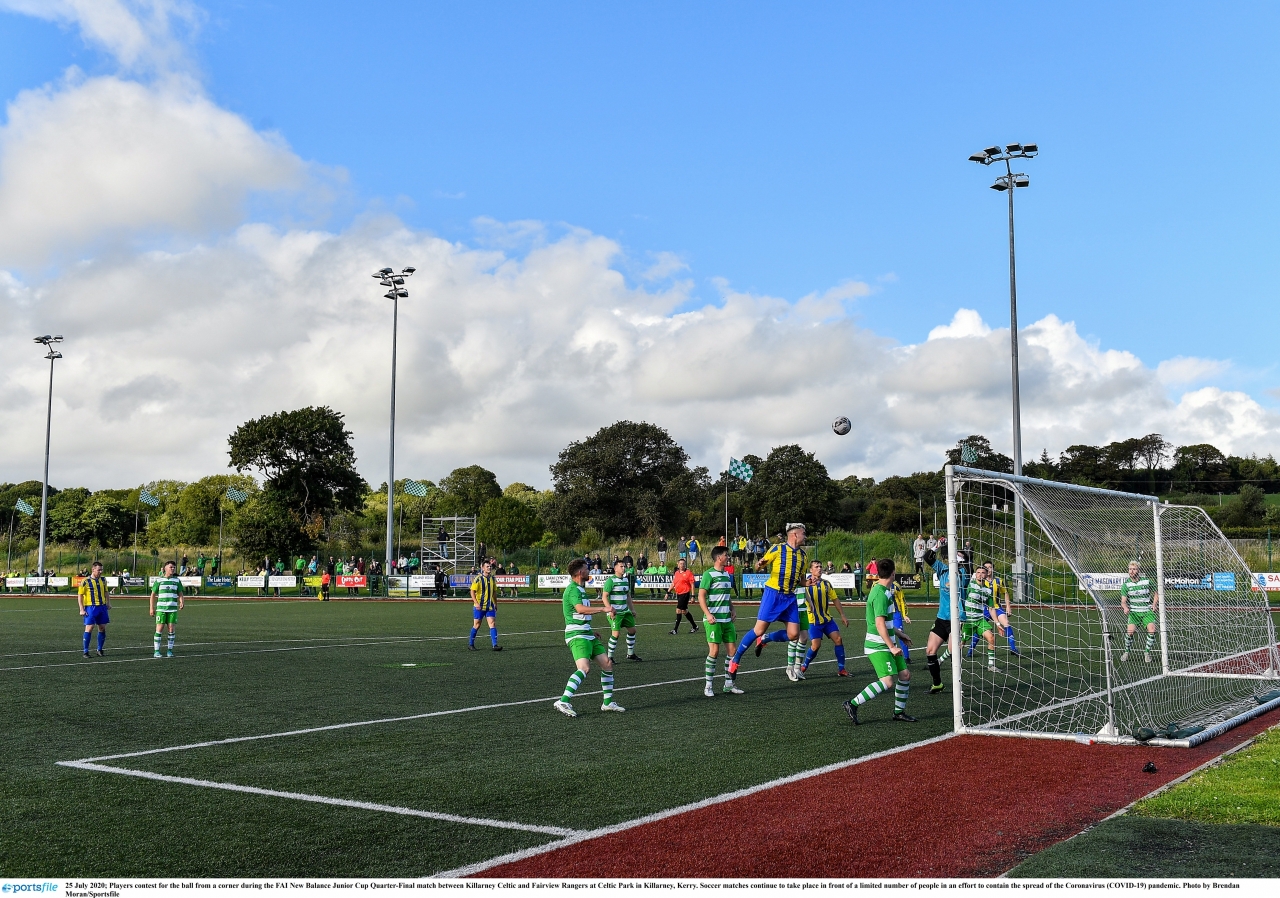
On the Ball Part 2 of the Mikey Daly Interview
Éamonn Fitzgerald EF: Killarney Celtic are invited to participate in an Irish competition. That has big financial implications for travel, meals, etc. MD: It is great to be invited, showing […]

WEEK 14: Felicity’s Summer in Killarney
WEEK 14Felicity’s Summer in Killarney Previously: Here on Dundag it was far easier to relax than anywhere else. They had...

Frustration mounts over morning gridlock at Coolcorcoran
Frustration mounts over morning gridlock at Coolcorcoran Mounting traffic gridlock at the Coolcorcoran junction onto the N22 Killarney Bypass is...


Ailbhe Keogan scoops top television writing award
Acclaimed Kerry screenwriter Ailbhe Keogan has won the Best TV Drama Script award at the 19th Writers’ Guild of Ireland...
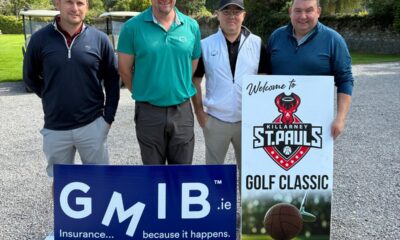

Strong turnout for St Paul’s Golf Classic at Beaufort
After a recent spell of indifferent weather, glorious sunshine and a gentle breeze greeted 35 teams at Beaufort Golf Course...
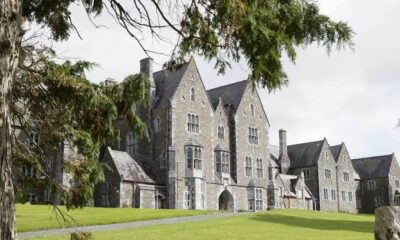

€150,000 granted to draft masterplan for St Finan’s site
Kerry County Council has been awarded €150,000 in government funding to progress a Masterplan and Infrastructure Delivery Plan for the...
