
News
Average Kerry rent €1,125 – up 101% from its lowest point


Rents in Munster rose 12.6% year-on-year, reflecting very low availability - with just 131 homes available to rent on May 1 - down over two thirds year-on-year.
In Kerry, rents were on average 15.4% higher in the first quarter of 2022 than a year previously. The average listed rent is now €1,125, up 101% from its lowest point.
Nationwide rents in the first quarter of 2022 were an average of 11.7% higher than the same period a year earlier, according to the latest Rental Report by daft.ie. The average market rent nationwide between January and March was €1,567 per month, up 2.8% on the last three months of 2021 and more than double the low of €765 per month seen in late 2011.
While there have been differences in regional trends in rents in recent quarters, the rate of increase was similar across all major regions between early 2021 and early 2022. In Dublin, market rents rose by 10.6% year-on-year, while in Cork and Galway cities, rents rose by 10.2% and 13.8%. Inflation was higher in Limerick and Waterford cities, at 15.5% and 16.2% respectively, while outside the cities the average increase was 12.7%
SCARCITY
The sharp increase in market rents around the country reflects a significant worsening in the record scarcity of rental homes. Nationwide, there were just 851 homes available to rent on May 1, down from over 3,600 a year ago and another new all-time low in a series that extends back over 15 years to 2006. The recent fall in homes to rent is seen in all regions of the country, with an 81% fall in availability in Dublin and a 66% fall elsewhere in the country. The report also includes an analysis of 72 multi-unit rental developments, which are estimated to have added at least 400 new rental homes in the last six months. Of these, it is estimated that 82% are already occupied, with occupancy in the wider multi-unit rental sector estimated to be 95% in early May, up from 93% six months ago.
The report also includes an estimate of the trend in rents for sitting tenants since 2010, as compared to new tenants paying market rates. While inflation in market rents is currently above 10%, and market rents have doubled over the past decade, ‘stayer’ rents have increased by just 1.5% over the past year and by less than 40% over the past 10 years.
“The latest figures confirm the overall strength of demand for rental accommodation in Ireland," Ronan Lyons, Associate Professor of Economics at Trinity College Dublin and author of the Daft Report, said.
"While strong demand for housing reflects underlying economic health, it becomes a challenge when there is inadequate supply to meet it. In Ireland’s case, the economy has suffered from an under-provision of new rental accommodation for over a decade. As a result, market rents have doubled and, as shown in this latest report, rental homes have become unbelievably scarce. New figures confirm that sitting tenants have experienced much smaller increases in rents – both during 2021 and over the last 10 years. Thus, the focus for policymakers must remain on creating the conditions for tens of thousands of new rental homes – market and social, all across the country – to be built over the coming years.”

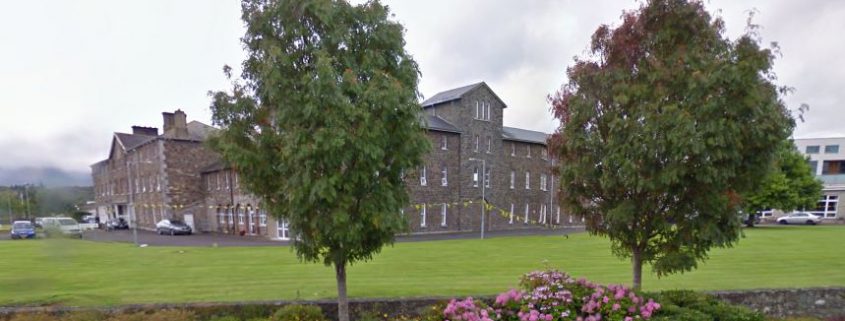
A design team has been appointed to advance plans for the proposed Minor Injury Unit on the grounds of St Columbanus Home though the HSE has confirmed it cannot yet give a construction or opening timeline.
Fianna Fáil TD Deputy Michael Cahill received the update in response to a Parliamentary Question submitted to the Minister for Health. HSE South West confirmed the newly appointed team will progress the project through design development, planning, and regulatory approval following the transfer of residents to the new Killarney Community Nursing Unit.
Deputy Cahill welcomed the appointment of the design team but raised concerns over the lack of a definitive schedule.
“I welcome the appointment of a design team, which represents progress towards delivering this important facility. However, I am concerned that the HSE is still unable to provide a definitive timeline. Previous indications from HSE officials pointed towards construction commencing in 2026, with completion anticipated in 2027. We now need clarity on the project schedule and assurances that there will be no unnecessary delays,” Deputy Cahill said.
He noted that the facility is vital to serve Killarney and the wider east, mid, and south Kerry regions while relieving pressure on the Emergency Department at University Hospital Kerry.
The HSE also confirmed it is finalising a broader review of healthcare accommodation across Killarney to develop the St Columbanus campus as an integrated healthcare hub.
“As a member of the Oireachtas Joint Committee on Health, I will continue to press the HSE and the Minister for Health to ensure this project is progressed without further delay. People across Killarney, east, mid, west and south Kerry deserve certainty. The appointment of a design team is welcome but the next priority must be getting this project to construction and delivering the facility,” Deputy Cahill concluded.
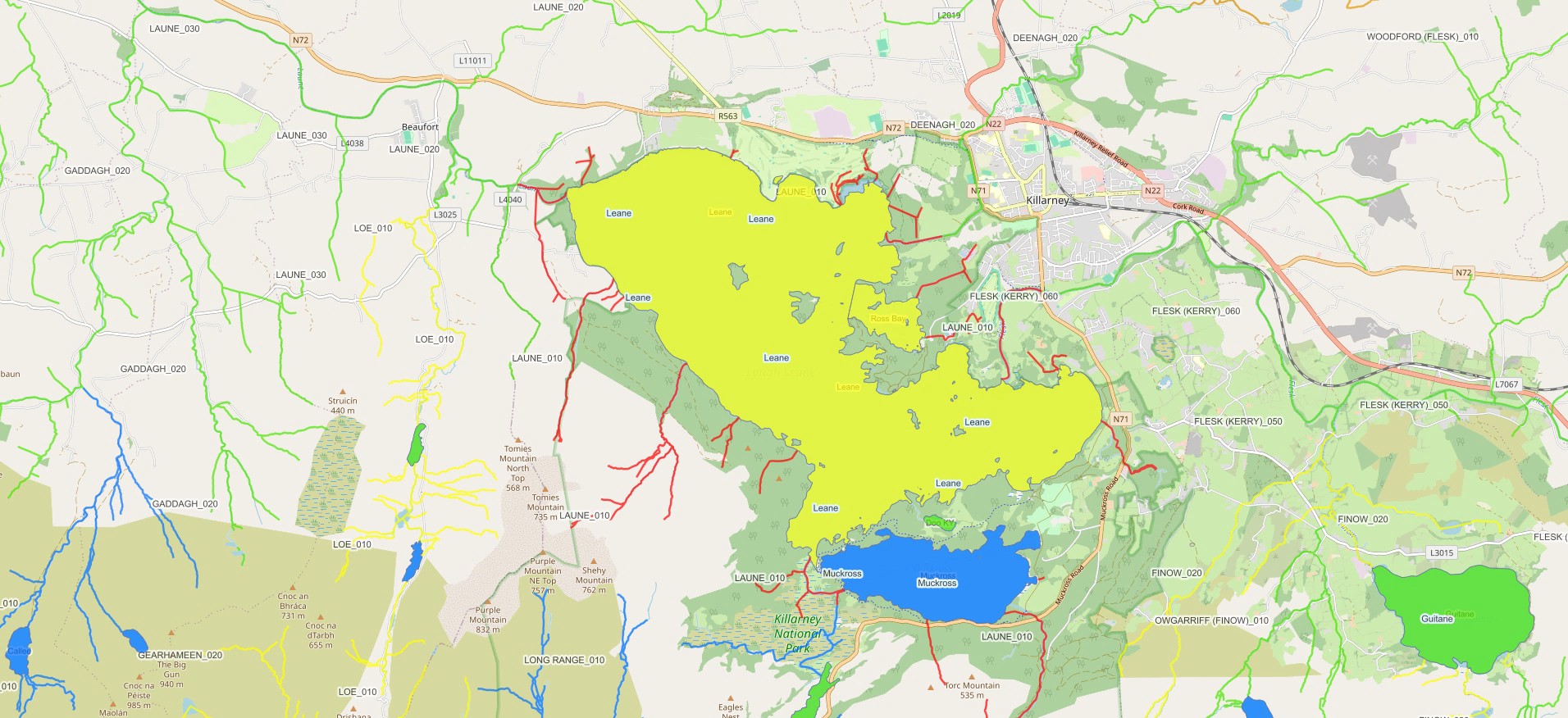
Lochanna Beo’s mapping highlights water quality concerns
Local environmental action group Lochanna Beo has released mapping data from the Environmental Protection Agency (EPA) to draw attention to deteriorating water quality across Killarney and the broader Laune Catchment.
The EPA map uses a colour-coded system to rate water quality status from 2019 to 2024: blue indicates high status, green indicates good, yellow represents moderate, brown denotes poor, and red signifies bad status.
The figures indicate significant ecological pressure on local lakes and rivers compared to neighbouring areas across County Kerry.
Formed during the summer of 2026, Lochanna Beo aims to bring together residents, business owners, agricultural operators, and public bodies to address the key factors affecting the regional aquatic ecosystem.
The community initiative is seeking direct engagement with relevant statutory authorities to implement practical restoration measures and protect the long-term health of Killarney’s water bodies.

Design team appointed for injury unit
A design team has been appointed to advance plans for the proposed Minor Injury Unit on the grounds of St...
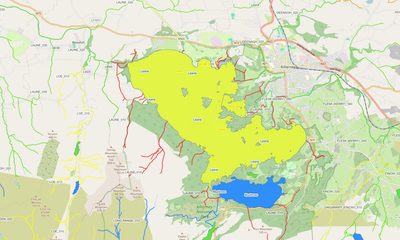

Lochanna Beo’s mapping highlights water quality concerns
Lochanna Beo’s mapping highlights water quality concerns Local environmental action group Lochanna Beo has released mapping data from the Environmental...


Stefan Caulfield-Dreier signs professional cycling contract
Former Killarney Cycling Club rider Stefan Caulfield-Dreier has secured a professional contract with leading Dutch-based outfit Azerion-Villa Valkenburg. The 23-year-old...


Church seeks creative Christmas trees for festival
Church seeks creative Christmas trees for festival The Methodist Church in Killarney is inviting local schools, community groups, businesses, and...


€6,000 Scrooge Giveaway!
€6,000 Scrooge Giveaway! Six lucky audience members will each walk away with €1,000 as the Gleneagle Arena welcomes an extraordinary...
