
Sport
The foreign game: How soccer took roots in Killarney


Eamonn Fitzgerald trawls through the history books and speaks to key players as he traces the origins Killarney’s thriving soccer scene.
The GAA games are the most widely played sports in Ireland,reaching into every parish. But what some readers may not know is that soccer was played in Ireland since the 1870s, some years before the GAA was founded in Thurles in 1884.
Soccer in particular was seen as the ‘foreign game’. Irish nationalism grew from 1905 onwards with the founding of Sinn Féin. A new ban was enacted that forbade any member of the GAA from participating in or even watching ‘foreign’ games. Of course, the foreign games being referred to weren’t all foreign games. In reality, the ban imposed on the GAA membership was explicitly about them playing cricket, hockey, rugby or soccer.
The first big name casualty was Douglas Hyde, who was removed as a patron of the GAA in 1938 following his attendance at an Irish international fixture between Poland and Ireland in Dalymount Park.
TOM WOULFE
The man who led the campaign to remove Rule 27 (aka ‘The Ban’) was Tom Woulfe, a native of Ballybunion. I met him on many occasions in Dublin in the sixties and he convinced me that should be removed. I could see good reasons for the Ban in the early 1900s but, just like Rule 42 which I wrote about some weeks ago, it had outlived its raison d’etre. That was especially so after the 1966 World Cup and TV beaming soccer into Irish homes.
In the early sixties, Killarney man Paul Russell, holder of six All-Ireland medals, argued cogently that the Ban should go. His great friend and club mate Dr Eamonn O’Sullivan was equally strong calling for the retention of the Ban. Eventually the Ban was lifted at the 1971 GAA Congress, a very welcome move for players such as Moss Keane and Kevin Moran, who had memorable careers thereafter as Irish internationals.
In the past I have written of the great progress made by local clubs rugby and soccer clubs. Killarney RFC (founded 1928), Killarney Athletic (1965), Liebherr (1970), Ballyhar Dynamos (1975), Killarney Celtic (1976), Fossa FC (1977), Mastergeeha Rangers (1979), Mastergeeha FC (1999), and MEK Galaxy (2019).
For this week’s column I did some research on Killarney GAA players who defied the Ban. For some it led to suspensions and that scenario lasted for quite a few years after 1971. Officially, the GAA Vigilantes were redundant, but some die-hards still reported GAA players for dabbling in rugby, cricket, hockey and soccer in particular.
In the late fifties one could not get Match of the Day on TV in Killarney, so the schoolboys had to rely on the print media and BBC radio to follow the soccer scene in England for the most part. When they grew older some of them went to Cork or Limerick, where the TV signals could pick up Match of the Day.
During the week young boys (no girls playing at that time, unlike now - thankfully) gathered to play impromptu five-a-side soccer games, usually on Saturdays if the Fairfield was free and again on Thursday afternoons (half day in the Sem and the technical schools).
It wasn’t a full half day as at that time, as the Sem day-boys had to return to school for study at 5.15pm. Lunch was hurried and eaten on the hoof. At max there was a four-hour window of opportunity to live boyhood soccer dreams, emulating superstars such as Pelé, Puskas, Matthews, the Charlton brothers, and Duncan Edwards. The Busby Babes were much-loved and then came that terrible Munich tragedy on February 6, 1958. Out of the ashes, Busby created the great Man Utd team, which to this day has so many followers in Killarney. The late great Weeshie Fogarty was an avid Man U admirer and he also had a small soccer group.
IMPROVISING
No goalposts, just discarded jackets for goalposts and no pitches available. Regulation football, how are you? Lucky to have any ball provided by whomsoever. The usual venues were The Market, The Fairfield opposite the Friary (no fairs on Thursdays), The Sandpit (now High Street car park), Cronin’s field in Tiernaboul, Doyle’s field (a large back garden) in Woodlawn, Park Road, and White Bridge when the Flesk hadn’t overflowed.
Mike Looney (College Street), Richard (Dicko) Clifford, Billy Doyle and others relived those early days with me. Memories are limited and fading. We are conscious of fallibility and will lose out on the names of some. Apologies for soccer rebels we omit. We dug deep for the list of the early soccer players in Killarney.
The Fairfield group included John Doyle (Kilcoolaght, not Celtic), Brian Mulcahy, Greg Collins, Donie Kelly, Donagh Gleeson, Podge Moriarty, Noel Moran, Philip Brady, and others. Joe Grant (Park Road) seemed to be the main organiser, but he did play a little bit as well, as did his brother, Mike.
Some of them also played at The Sandpit in the Oranges v Bananas challenges. There they linked up with Don O’Donoghue, Big Jim O’Sullivan, Donagh Gleeson, Kierney O’Brien, and twinkle toes himself: Sossy (Tom Mullins). His real claim to fame was the day he played with Killarney Athletic and kept a tearaway Rockmount Cork midfield-player scoreless. That boy grew into a man, the famous Roy Keane.)
Also there were Seán Dorgan, Ger Galbraith, Donal Casey, Timmy Kelliher, Tony Fleming and Donie Doyle, who also played on the New Street team, as did his brother, Pat. That was the genesis for the founding of Killarney Athletic in 1965. Dan Harrington, the young Cork guard in town, was the catalyst for founding Killarney Athletic, even if it very nearly caused his transfer to a North Kerry Garda station.
Supt. Batt Harte yielded to pressure from some local diehard GAA stalwarts, who genuinely believed that an official upholder of keeping the peace should not be permitted to promote one of the foreign games where the traditional Irish games would suffer. Fortunately, a local broadminded sportsman interceded successfully, pointing out that this young volunteer was providing a great new community service for youths in Killarney and should be supported.
It takes a great person to admit that he had made a wrong decision, and the Super rescinded his earlier edict.
Incidentally, I recall that one of Barry’s (RIP) own sons preferred rugby to GAA. He was a classmate of mine and practiced penalty-kicking with that trusted ciotóg, while most of us were happier playing traditional football. Diversity, even before it became a buzzword. Sport has room for all.
Happily, Dan Harrington is still alive and ended his working life as a policeman in Manchester, ironically trying to keep the peace with a small number of Man U supporters outside Old Trafford on big match days. I met Dan both in Manchester and in Killarney and he verified the above scenario that enfolded in Killarney in the early sixties. At that time, training for the gardaí lasted only a short few weeks and as he pointed out to me he was a 19-year-old, barely older than the young boys he ‘inspected’ at The Sandpit and elsewhere.
EASTERN SIDE
The Park Road group had players such as the Grants (Joe and Mike), Seán O’Donoghue, Gerry Cronin (a great goalscorer), John Sparling, Donal O’Donoghue, Andrew McCarthy and DD McCarthy.
There was also a small group in the Spa/Tiernaboul area where Michael O’Donoghue (now Fr Michael in the Nottingham diocese) recalled how they played very impromptu five/six-a-side games while they were waiting for the football to start, but it was only a temporary diversion. There was never any doubt about their sporting allegiance when Tadhg O’Sullivan, the revered master in Lissivigeen NS, came along to do trojan work in revitalising the Spa GAA club. Then it was all football. Billy Morris from the same area later came to star with Killarney Celtic.
Woodlawn Rovers was a closely knit community of brothers, who played right up to the seventies. Billy Doyle was the main man here. He remembered playing literally in their big back garden along with his brothers (Gerry and Frank) and the O’Mahonys (Paudie, John and Derry). Paudie went on to win the first of his All-Ireland medals as Kerry goalkeeper from 1975 onwards. Other Woodlawn players were the Aherne brothers, Noel Dillon, Tedso and James O’Connor, Batt O’Connor (who became a well-known soccer referee), Tim Coffey, Jim Ryan, Conor O’Mahony and goalkeeper Gerard Looney, one of the people who got MEK Galaxy underway two years ago. They cater for the Fossa/Mid & East Kerry area and for all age groups, male and female. Tom O ‘Shea (later Killarney Celtic & FAI) also played with Woodlawn. Ger O’Shea and Aidan Kiely came later, when Woodlawn moved to the pitches beside St Finan’s Hospital.
LIEBHERR & FOSSA
Liebherr had very good soccer and football teams in the factory. While the other local soccer teams contained mostly GAA players at the start, Liebherr had some real soccer stars in Aidan McDonald (a Scotsman), Alex Rintoul, and John Beatie. I remember Aidan McDonald as the most skilful soccer player of that era. His playing pedigree was very good, operating at a high level with Pegasus during his college days in UCD. Kevin Moran of Dublin GAA, Man Utd and Ireland was another great Pegasus player. Aidan qualified as an engineer, came to Liebherr, married Margaret Brady and was the key player for Liebherr (later Fossa AFC). He was the man who demonstrated to the GAA/aspiring and perspiring soccer players the basic skills, such as how to trap a ball with either foot, time the run and meet the volley or head it home. With the forehead, as distinct from the head. Surely, a ‘header’ is a misnomer.
The New Street team was backboned by the Culligan brothers (Brendan, Seán and Philip). Ex-sergeant Culligan, their father, was well in with McShain. In his retirement he was a supervisor there so they got permission to play on ‘the farm’ section of the McShain Estate. This paved the way some years later for Killarney Athletic to have the Half Moon as their home venue before moving to their present home in Woodlawn on the banks of the Flesk.
SUSPENSIONS
The Ban was still in vogue up until 1971 and for years later some dual-code players were not picked on GAA teams, because they played the foreign games. I interviewed Tom O’Shea for On the Ball on March 5, 2012. A brilliant speedy half forward with Dr Crokes, he was on the Kerry minor football team and won an All-Ireland U21 medal in 1977. On that team with him were captain Ogie Moran, Jack O’Shea, Charlie Nelligan and Bomber Liston.
“I was eligible for the next two years and was again selected in 1978 for the first round game against Tipperary,” Tom said in 2012. “However, following this match the chairman of the East Kerry Board at the time brought it to the attention of the County Board that a player on the U21 squad ‘did not owe his full allegiance to the game’ – I have never forgotten those words. This was a reference to the fact that I was also playing soccer.
“The result of this is that I ended up suspended for a month and dropped from the panel and although I continued playing with the Crokes for another five or six years (winning three O’Donoghue Cups and two U21 County Championships), I was never again selected for a Kerry squad.”
That U21 team was the basis of the subsequent Golden Years of Mick O ’Dwyer’s all-conquering era. Could O’Shea have been one of that all-conquering Kerry team?
Read Part 2 of Eamonn Fitzgerald’s deep-dive into the early days of Killarney soccer in next week’s Killarney Advertiser.


News
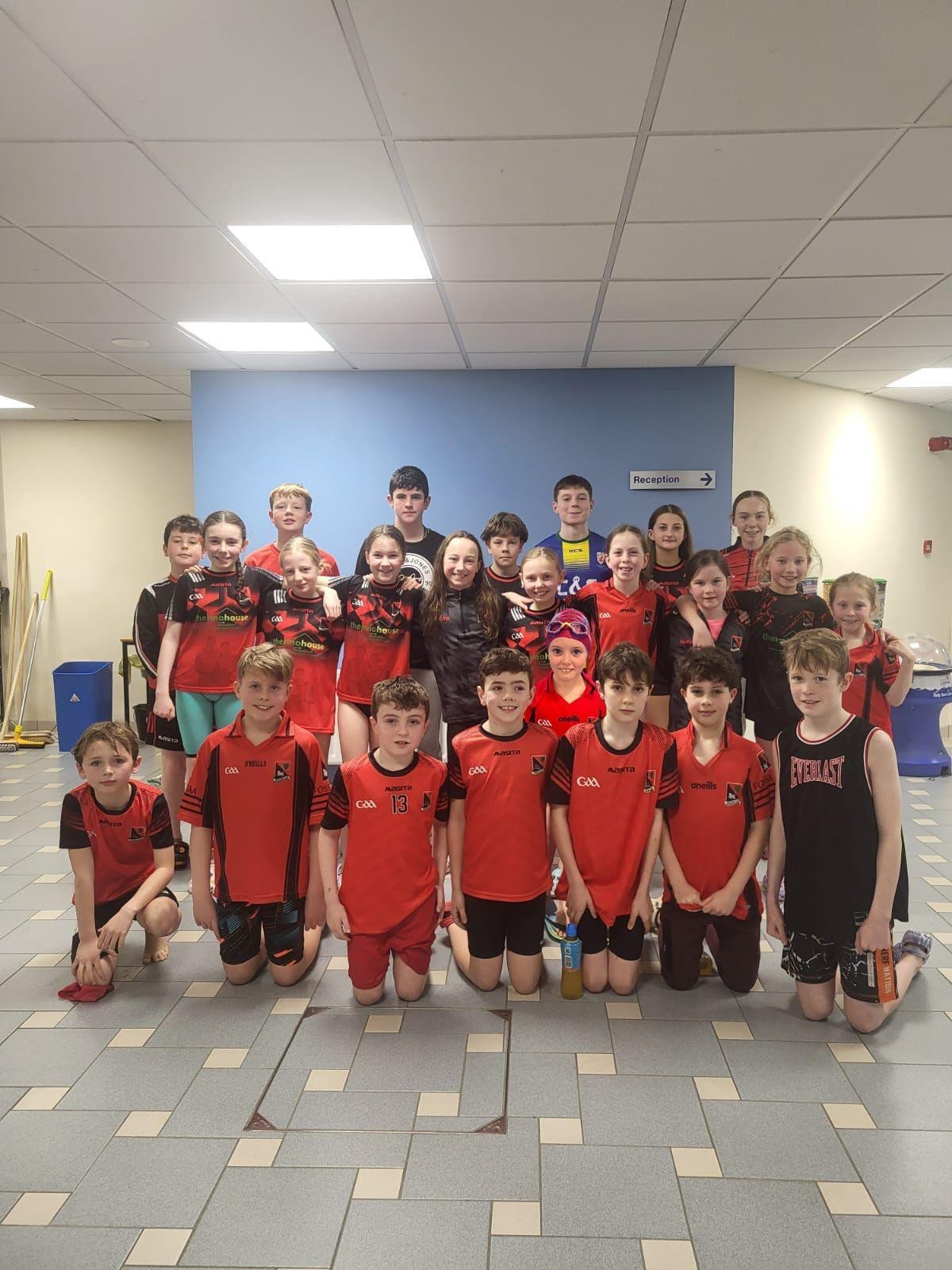
Fossa Swimmers make a splash at County Finals
The Fossa Swim team pictured at the Tralee Sports Complex following their successful outing at the County Finals of the Community Games on Sunday, February 15. The 25-strong squad delivered […]

News
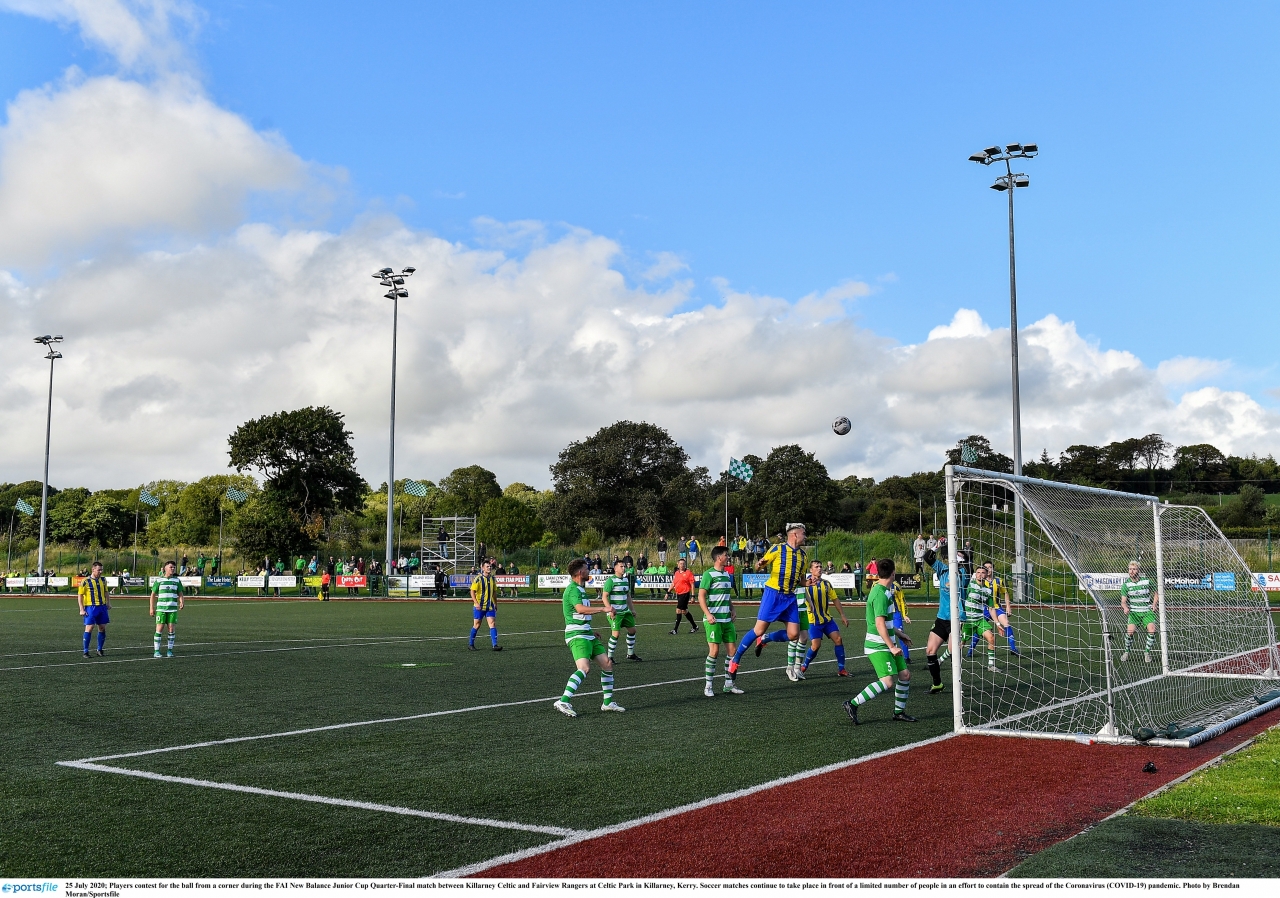
On the Ball Part 2 of the Mikey Daly Interview
Éamonn Fitzgerald EF: Killarney Celtic are invited to participate in an Irish competition. That has big financial implications for travel, meals, etc. MD: It is great to be invited, showing […]

Over €2K raised at Killarney premiere of Hind Rajab film
Killarney for Palestine welcomed over 120 people to The Brehon on Sunday evening for the Kerry premiere of the Oscar-nominated...

Four years on from the Russian invasion of Ukraine, Killarney resident Natalya Krasnenkova shares her experience
When I first arrived at Dublin Airport four years ago, I was handed a small slip of paper. It had...

Top tips at McSweeney’s Cheltenham charity preview night
Racing fans are invited to the McSweeney Arms Hotel on Tuesday, March 3, for an expert preview of the upcoming...


Double award win for Jessie Buckley
Killarney-born actress Jessie Buckley celebrated a historic weekend by securing Lead Actress awards at both the Irish Film and Television...

High-end vehicle stolen in Killarney overnight theft
A high-end vehicle was stolen from the Killarney urban area during the early hours of Tuesday morning, February 24. The...
