
Sport
‘I was lucky there was no social media at the time’ – Seán Kelly reflects on opening Croker to foreign games


MOMENTOUS: Ireland and England engage in a scrum during the historic Six Nations match at Croke Park in 2007. Pic: Brendan Moran/Sportsfile.
Former GAA President Seán Kelly speaks to Eamonn Fitzgerald about his role in opening up Croke Park to soccer and rugby in 2007.
Rules 42 and 27 were the most contentious rules in the official guide of the GAA and both had very clear purposes.
Rule 42 prohibited field games other than Gaelic football and hurling being played in GAA grounds. Soccer and rugby were seen as the enemy, the garrison games in direct competition with Gaelic games. The hierarchy in the GAA reflected the fear and, indeed, the hatred of its members countrywide towards soccer and rugby.
Rule 42 did make provision for once-off games not in direct competition with hurling and football to be played on GAA grounds. One I remember was an American football game played in Croke Park in 1999 between the American Navy and Notre Dame. This posed no threat to the GAA games, so it went ahead.
One could see the logic of excluding soccer and rugby. The GAA has so many games for both genders, played in every parish in the country from juvenile right through to senior, and the logistics of accommodating soccer and rugby in your typical GAA field wouldn’t be realistic. If there were a clash of fixtures at the same time in the local GAA pitch, which would get preference? What pitch would be able to stand up to the wear and tear of the grounds, particularly when most of the soccer and rugby games are played in winter conditions? Who would maintain the pitch, where so much loving care, not to mind the expense, rested on the shoulders of the GAA club supporters?
Also remember that Rule 27 (The Ban) took a long time before it was abolished in 1971.
Move to Croke Park, the hallowed ground, where ardent nationalist GAA supporters, particularly (but not exclusively) from the six counties have not forgotten what happened there on Bloody Sunday 1920, when Croke Park became the bloodied field.
And yet the day came when the Irish soccer and rugby teams played their international games in Croke Park. The man who made all that possible is Kilcummin’s Seán Kelly, who did so during his term as Uachtarán of the GAA from 2003 to 2006.
I spoke with him recently about this and other matters and asked him why he fought so doggedly against fierce opposition within the officialdom of the GAA to the abolition of Rule 42, to overcome the odds stacked against him.
SK: I felt strongly that it was the right thing to do and I first raised the issue of making more use out of Croke Park when I was chairman of the Kerry County Board. It took 14 years to bring that dream to reality and I was realistic enough to know that some members and counties had fears, some justifiably so. I had to take these into consideration, but I felt that our games were thriving and should not be afraid of competition from rugby or soccer. We needed to open up Croke Park to soccer and rugby at that time, showing a generosity of spirit and ecumenism, and an opportunity to help ourselves while also helping our fellow Irish.
For the overall good of Irish sport in a new emerging country, timing was everything. It was so difficult to even get it on the ‘clár’ for Congress and I was very disappointed that in Congress here in Killarney it was ruled out. That cast a huge damper on proceedings in what was an outstanding Congress overall. The timing was favourable with Lansdowne Road closed and no real venue for rugby and soccer internationals. We had a state-of-the-art pitch and full facilities to cater for 82,000 spectators in Croke Park, so why not provide the facilities for the Irish teams?
When I took over as Uachtarán of the GAA in 2003 I deliberately made no mention in my address of plans to abolish Rule 42 and that was strategic.
As expected the ‘No Surrender’ flag was raised by Ulster, particularly by Micheál Greenan, Chairman of the Ulster Council, who could not stomach the thought of the foreign enemy games desecrating the sacred soil of Páirc an Chrócaigh. He branded you as traitor. Not surprisingly the Rebel County of Cork, and their beloved Michael Collins, opposed your mission, especially Christy Cooney. You stood out on a limb because you felt it was right, but you got a lot of stick for pushing your head above the parapet.
I did get a lot of criticism from within some sectors of the GAA as you have outlined, with nasty letters and phone calls, some of which were very bitter and personal. Luckily for me there was no social media at that time, so I was spared the invective so easily delivered at present through Twitter, Facebook, and Instagram etc.
I recall you saying in one of your speeches that you were taking Johnny Cash’s advice and that you would walk the line, but keep your eyes wide open all the time, especially for your enemies within the GAA. How did you negotiate with Bertie, Mary Harney and Charlie McCreevy? After all didn’t Bertie have his dream of Bertie’s Bowl, which would have blown your idea out of the water?
In fairness to them they said that ultimately opening up Croke Park was a matter for the GAA itself. Bertie wanted to build that 80,000-seater stadium in Abbotstown and that would have been in direct competition with the GAA for big events such as concerts. The country could not afford an 80,000 stadium and an 82,000 one. A key man backing my proposal was Cahersiveen man Minister John O’Donoghue. He was so supportive and crucially for me I had access to him all the time and he could not have been more helpful.
You had to work Congress strategically and were lauded by the press, typified by John Fogarty, (Ireland on Sunday) who said “Kelly leads sport out of the dark ages”.
I was very aware of the sensitivities of the first occasion, so I ensured that rugby was first, a 32-county game, as distinct from 26-county soccer, which could be divisive. And also that Ireland’s first rugby game would not be versus England. That took some negotiating with IRFU and FAI but it was agreed before I left office and handed over to my successor Nicky Brennan.
So, mission accomplished. You got your way and Croke Park was to be opened up for soccer and rugby internationals. Take our readers back to those international match days in Croke Park. The first international played was France v Ireland (rugby) in their Six Nations on February 11, 2007. What were your feelings like in Croke Park that day?
A very proud man when they played the national anthems; proud, relieved and satisfied that what I set out to do several years before was now achieved. There wasn’t a guffaw or a single indication of disrespect from the huge attendance of 81,000. It was exciting and fulfilling that we had moved on to a more progressive organisation in the real spirit of sport. Van the Man (Morrison) was right: ‘nobody told me there could be days like this’. The perfect summation of Sunday, February 11. There was a huge build-up in the media to the England game, the old enemy and how could we tolerate the playing of ‘God Save the Queen’ in Croke Park. There were protest marches and I was vilified on placards. Seán ‘Judas’ Kelly, West Brit, and a lot worse than that. Could we forgive and forget? 83,000 spectators attended and Ireland won 42-13. Van the Man’s line once more.
[caption id="attachment_37212" align="aligncenter" width="708"] MOMENTOUS: Ireland and England engage in a scrum during the historic Six Nations match at Croke Park in 2007. Pic: Brendan Moran/Sportsfile.[/caption]
Rugby was tolerated because of its 32-county status, but soccer, the real foreign game, must have been an even bigger challenge. Was the staging of the soccer internationals more demanding?
It presented its own challenges but a full house turned up in a game that Steve Staunton, the late Bobby Robson and their team had to win. Significantly, I noticed that there were far fewer of the GAA hierarchy of the GAA present, unlike the rugby internationals. The game went off without any incidents or protests. We got off to a great start as Ireland were able to grind out a 1-0 win against Wales and a similar winning result four days later when we beat Slovakia on the same scoreline.
‘Olé, olé, olé’ of the magical Charlton days rang round Croke Park with the same passion. In 2007 Ireland played international games in Croke Park between rugby and soccer, winning three and they were just pipped in the other game.
Could you visualise the Fitzgerald Stadium being used for a high-profile soccer or rugby game, maybe a once-off occasion?
I see nothing at all wrong with it, but each request would have to be judged on its own merits. There would be no problem playing these games in Killarney, as long as they didn’t interfere with the GAA games programme.
I admired you for doing what you felt was the right thing to do and for your tenacity to take on entrenched views from, within the GAA and succeeding. That was great but even better still you extended the All-Ireland Club Football and Hurling Championship competitions to include junior and intermediate levels. Now even the smallest GAA club can aspire to play in Croke Park. You must have been particularly proud to see Kilcummin, your own club, win the All-Ireland IFC in Croke Park in 2009?
Micheál Ó Muircheartaigh said that extending those All-Ireland Club competitions, catering for all three grades, was my greatest legacy from my term as Uachtarán. I insisted that all finals would be played in Croke Park. I faced all kinds of excuses to take the games out of Croke Park. Who would turn up for an insignificant junior final, maybe a few hundred followers in this huge stadium where you need upwards to 39,000 paying spectators to pay for the opening up? The first year of the finals were played in Portlaoise. I was bucking but I made sure that from then on the finals were played in Croke Park and that is there to stay.
In your present role as MEP and viewing sport from a European perspective, do you think that the All-Ireland Club competitions can go global? How about the incentive for clubs in all grades to progress to a World Club title?
The concept is great, particularly with the Irish diaspora cultivating their Gaelic games in so many places around the world. Wouldn’t the champions of Dubai love to play in such international competitions. There are some big difficulties such as expense, distances, languages and others, but these challenges can be faced up to, if the will is there and someone with vision to drive the project. I’d be all for it.
Perhaps Larry McCarthy, the new GAA president, would take up that suggestion. His record at club level in the PE College in Limerick and in his native Cork, as well as in New York in recent years, would promote that proposal. In fairness to him, he hardly has his legs under the table and the fall-out from Covid-19 is the major concern at present. However, when we do get back to normal…
You have been a great advocate of promoting hurling since your days as a player with Sat Pat’s East Kerry and your hurling brief at that stage being vice-chairman of the Kerry County Board.
Historically. hurling played second fiddle to football in Kerry. It was confined, for the most part, to a small number of clubs in North Kerry. When I took over in 1982 there was no hurling in East, West, South and Mid Kerry with some exceptions such as Kenmare and Kilgarvan. We founded St Pat’s East Kerry with the help of great stalwarts such as Pa Doyle, Dan Kelleher, and later Pat Delaney. St Pat’s have been competing ever since and that’s nearly 40 years ago. It was great to see Dr Crokes win the Kerry Intermediate Hurling Championship in 2020 and now they are going senior. That is progress.
You will have noticed that the role of ladies in the GAA as players and as administrators has blossomed in recent decades. In one of my interviews with Micheál O Muircheartaigh for On the Ball over a decade ago, he said his one big wish was to see a lady Uachtarán in the GAA. It hasn’t happened.
Not yet, but I am greatly encouraged to see the involvement of ladies as players and as officers, not just at club level but up along the ranks, and I share Micheál’s dream. Cork County Board would be classified as conservative, but they still elected Tracey Kennedy their first female cathaoirleach a few years ago. She did a great job and women of that ilk are well worthy to lead the GAA from the top. The ladies in the clubs are fully accepted and recognised for their work ethic and ability to manage and to lead.
Any views on the present Kerry GAA scene?
I think that eight teams in the Kerry Senior Football Championship is far too little and this should be addressed. The hurlers are going well and were unlucky to lose a few national titles in 2020. There was fierce criticism of the Kerry senior football players, the management and the county board when we lost to Cork. I was disappointed, but so much of the criticism was unfair. It was a once off on an awful day and Kerry have bounced back before from defeats. The good working relationship between the county board chairman and the team manager is crucial for success. In my 11 years as chairman of Kerry County Board, I worked with four managers: Mick Dwyer, Mickey Ned, Ogie and Páidí Ó Sé. All different, but all fully committed. We won some and we lost some, but we worked well together.
Finally, Seán, have you spent most of the last 13 months in Gortroe, working remotely as an MEP?
Pretty much so. I have only been in Brussels three times in that period so, like so many others, most of my work is conducted via Zoom .It’s great to have it, but it’s not as effective as being in the Parliament meeting up with people and getting things done. The vaccination programmes worldwide are paying off, as we see here in Ireland with less than 400 daily admissions. More new vaccinations, inter-country cooperation and we will get back to normal in the not-too-distant future.
Go néirí go geal leat, san Eorap anois, a Sheáin. Fís le torthaí agus gaisce mór ar son CLG.
News
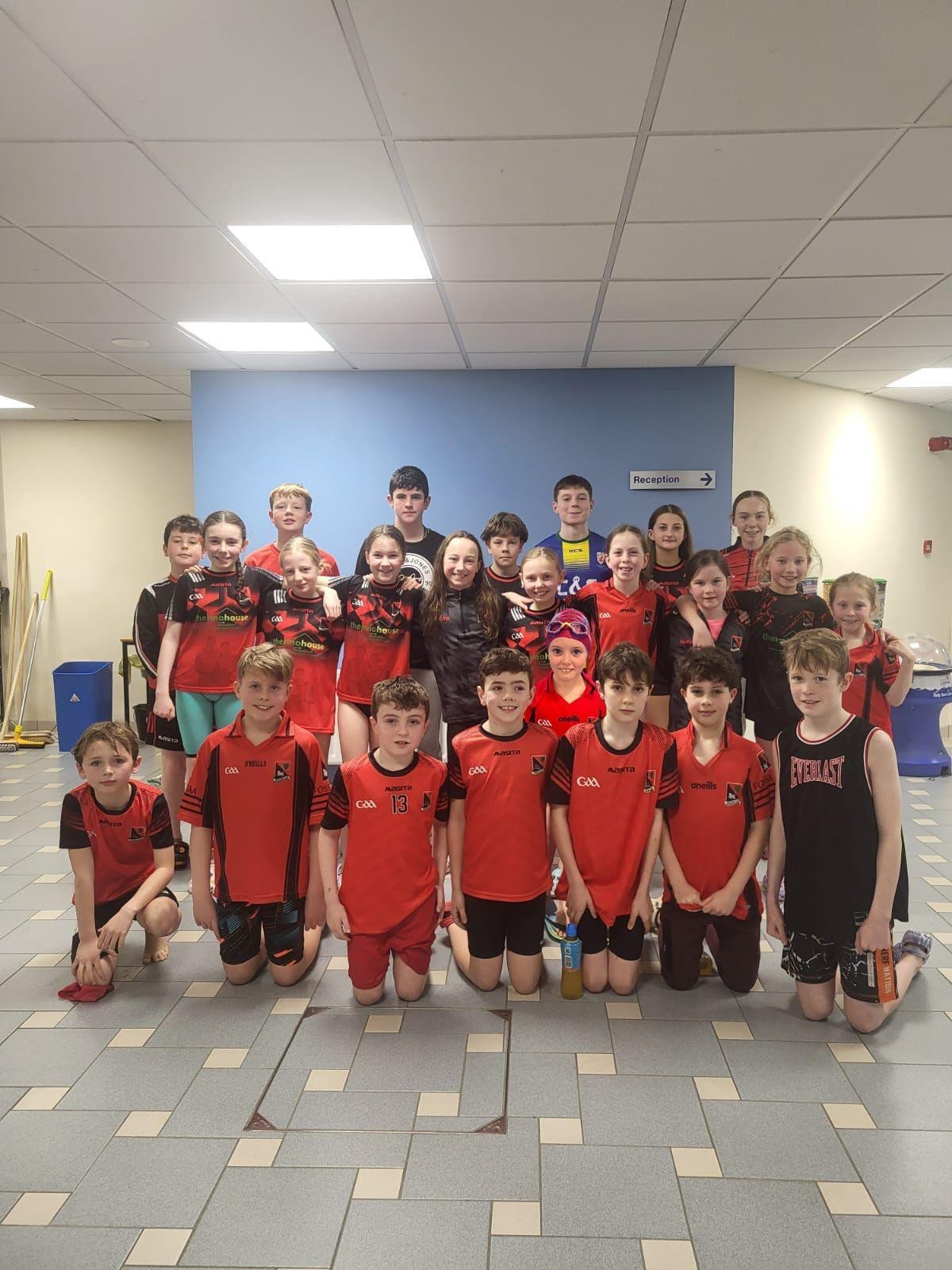
Fossa Swimmers make a splash at County Finals
The Fossa Swim team pictured at the Tralee Sports Complex following their successful outing at the County Finals of the Community Games on Sunday, February 15. The 25-strong squad delivered […]

News
On the Ball Part 2 of the Mikey Daly Interview
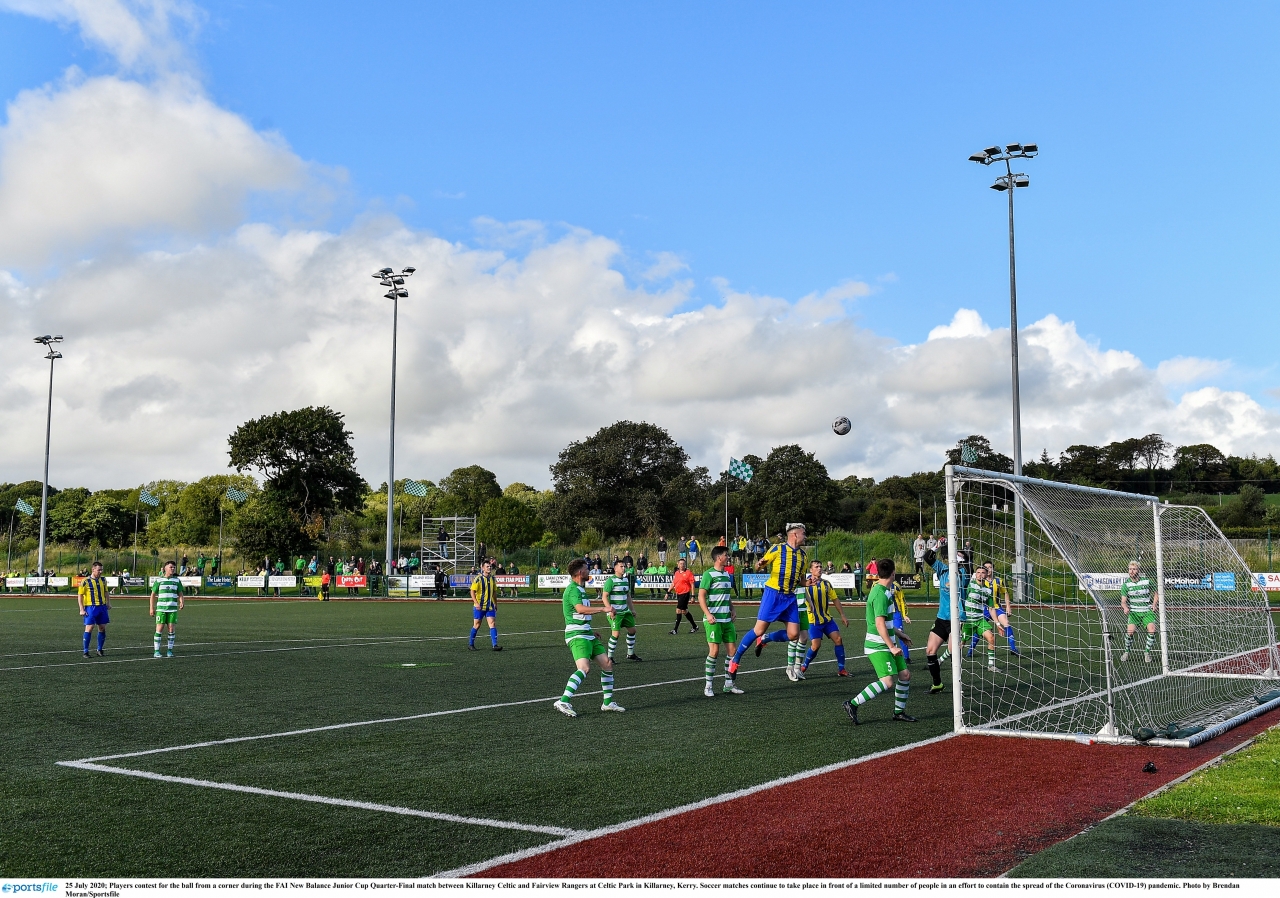
Éamonn Fitzgerald EF: Killarney Celtic are invited to participate in an Irish competition. That has big financial implications for travel, meals, etc. MD: It is great to be invited, showing […]

Drivers warned as deer rutting season begins
Drivers warned as deer rutting season begins Motorists in Killarney are being urged to exercise extreme caution as the annual...

Kerry Airport CEO addresses chamber luncheon
Kerry Airport chief executive Adrian Neilan addressed local business leaders at the Killarney Chamber of Tourism and Commerce luncheon at...

The Brehon raises €2,850 for Jack and Jill Foundation
The Brehon Hotel and Spa raised €2,850 for the Jack and Jill Children’s Foundation after hosting a closest-to-the-pin golf simulator...

Five local postmen retire with 185 years service
Five local postmen retire with 185 years service RETIREMENT NIGHT: Pictured at the retirement party held at Killarney Racecourse on...

New Streetscapes murals launched at College Square
A colourful collaboration between the Kerry Local Creative Youth Partnership (LCYP) and the Architecture Kerry Festival at Kerry County Council...
