
Sport
Athletics legend Gillian impressed by Adeleke and co.


Eamonn Fitzgerald catches up with Irish race walking legend Gillian O’Sullivan to discuss Ireland’s recent success at the European Athletics Championships
“The nation holds its breath,” said RTÉ commentator George Hamilton during Ireland’s quarter-final penalty shootout with Romania in 1990, and David O’Leary’s historic spot-kick. Those were the glory days of the Charlton era.
Well, the Irish sporting nation held its breath once more last week during the European Athletics Championships and the heroics of Ciara Mageean, Rhasidat Adeleke, Sharlene Mawdsley, Thomas Barr and Chris O’Donnell as they won two gold and two silver, a mighty haul for this small nation.
Who better to speak to on this topic than Killarney’s own Gillian O’Sullivan, herself a silver medallist in the 2003 World Championships in Paris?
The Minish race walker also set the unofficial world record in the 5000m walk in Santry, Dublin in 2002, which was thankfully later ratified by the IAAF. Her record stands. That was a magnificent achievement.
Her silver in Paris was the first time since 1995 that an Irish athlete had won a World Championship medal. She was one of the main contenders for Ireland to win a medal in the Olympics in Athens in 2004 in the 20km walk but suffered an injury to her lower back before the games that prevented her from taking part. She retired in April 2007 after enduring years of injuries.
EF: Gillian, the recent successes of the Irish athletes in Rome must have had you holding your breath.
GOS: It was unbelievable for the Irish athletes right from when Ireland won the gold in the mixed relay and then of course Ciara (Mageean) striking gold and Rhasidat winning silver. It is so difficult to even qualify for the final of the events when you look at the world-class competitors at the European Championships.
It was a huge boost for athletics in Ireland and particularly so for the ladies. What that will do for the current Irish athletes in all sports and for the young children sampling other sports is unbelievable.
Killarney Valley AC are making huge strides in New Road, not just with international stars such as Sarah Leahy, and now Oisín Lynch who is heading off on a scholarship to the USA, but also the many club members, young and not-so-young, who are always progressing to even better PBs. That is how it all started for you above in the Spa field many years ago.
Yes, indeed, I started out in the Spa/Muckross Community Games, and I can thank the support I got from my family and those Community Games volunteers in Spa/Muckross who put so much time and effort into encouraging us to participate and improve to win medals. Not just in Kerry but in the national finals at Butlins in Mosney. Those were great days that I cherish.
We rarely heard of race walking until you hit the headlines. Why this event?
I’m not so sure how I specialised in this event, but it just seemed to suit me better than the sprints or the long distance running. Somehow I got good at it, improved and took it on from there.
When I went on to college (UCC) I continued and was fortunate to get good coaching. Rob Heffernan (now an RTÉ athletics pundit) was also making his mark as a road walker. We were a great help to each other as we were competing in all those big races at that time.
You brought great honour to yourself, your family, Killarney and Ireland by winning the silver medal in Paris in the World Championships.
Yes, it was very special to win any medal competing against the best in the 20k walk. It was so competitive, as all of these races are, and it all came together for me that day. You need a lot of luck, of course; timing your run, following your race plan and delivering at the tape.
That memory lives on in a special way near your home at Minish. Visitors arriving from Cork see that Killarney has a world silver medallist as that roundabout in Lissivigeen is named in your honour. Your close neighbour Mick Gleeson, himself an All-Ireland winner, realised the value of your achievements and secured the naming of the roundabout during his time in political life.
Mick was always very supportive and helpful in every way. He appreciated the value of sport.
That was a high, but just like life itself, there are also lows. In the run-up to the 2004 Olympics in Athens, you were in the form of your life and were pinpointed as a real medal prospect for Ireland, until…
As you said there are highs and lows and in the long-term preparation for the Olympics things were going very well. I trained very strategically to peak for the Olympics, got plenty of rest, ate the right foods at the right times and it was all good until I was struck with an injury.
At first it was a setback but I felt all would be well by the time the Olympics came around. It wasn’t to be, and the injury didn’t clear up. I had to make the tough but inevitable decision to pull out. That was devastating as any sportsperson will tell you, having to withdraw from the day you looked forward to so much. That’s sport.
With the maturity of recollection, you appreciate the good days and the fact that you were healthy enough to participate, even if you didn’t win a medal. Most athletes in a race don’t win a medal.
Generally in the past, the misogynistic trait in too many males meant that praise for female athletes, whenever it was given, was done so with begrudgery. Thankfully, that is changing and continues to change thanks to the recent European Championships, successful world-class athletes like yourself, and Kerry LGFA, to mention but a few.
Attitudes are changing and it’s all for the good. I have great admiration for the Irish ladies soccer team and Kerry LGFA who really impress me with their standard of play. It’s not that many years ago when the Kerry ladies had to fight their corner to get basic facilities for training and travel allowances.
What about the vitriol Rhasidat has had to suffer on social media?
Those faceless begrudgers, those hurlers on the ditch who spill out their negativity and hide from their own realities knowing nothing about sport or its values. Their abuse is despicable.
Now for the hard question, Gillian: what does sport mean to you and why is it valuable in your life?
There are great physical advantages, where you learn to take care of your body and live a healthy lifestyle. There is great rivalry in a race but look at all the friendships you make for life. That was very obvious in the European Championships. Not only were the Irish athletes knitted together as an Irish team, but the TV cameras showed the camaraderie and sheer delight when they won. They were enjoying themselves and were united in sport.
That’s one of the great values of sport and it also prepares you well for life. Sport helps us to face the many challenges and stresses in life that we all encounter at some time or another.
And that feeds in directly into your own business as a personal trainer in Carrigaline. (Gillian is married to Anthony Kelly and they have one son, 12-year-old Tom whose sporting interests are horse riding and swimming). Although your business is not confined to sportspeople alone…
No not at all. In fact, many of my clients are not sportspeople per se. They are ordinary people who want to regulate their lives, take responsibility for preserving it and appreciating it. For some, it's an exercise plan and to know how to follow that to get fitter and consequently feel better and enjoy life. They want to feel better about themselves. They may be under certain stresses of one kind or another and want to learn coping mechanisms to deal with these.
Women are usually better at getting their health checked regularly which is the correct thing to do. However, more men are taking up that good advice and that is a very good thing for everyone.
Your parents Alice and Pat as well as your siblings Thomas, Michael, Paul and Maria who supported you throughout your magnificent sporting career must be equally proud of your wonderful work promoting health awareness. The Irish phrase says it best: ‘Níl sa saol ach seal, lá thuas lá thíos’ (Life is only a period of time, one day up, one day down.)
And it just dawns on me now, that Gillian O’Sullivan and Louise Ní Mhuircheartaigh, two of the best-known Kerry sports stars, have the traditional Irish natural red hair, but it takes more than that colour to reach the top in their respective sports. Mná Chiarraí chun tosaigh arís.
News
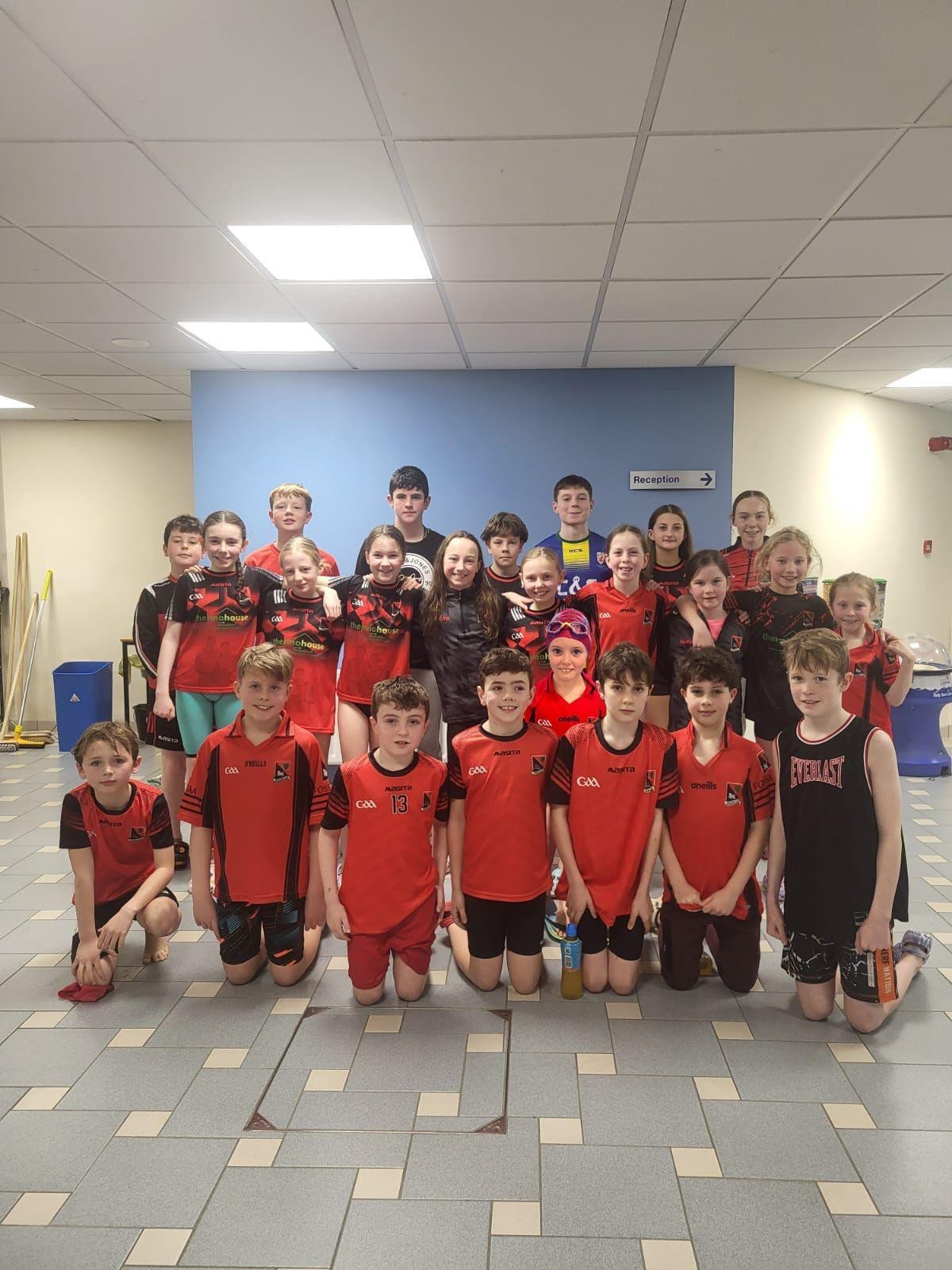
Fossa Swimmers make a splash at County Finals
The Fossa Swim team pictured at the Tralee Sports Complex following their successful outing at the County Finals of the Community Games on Sunday, February 15. The 25-strong squad delivered […]

News
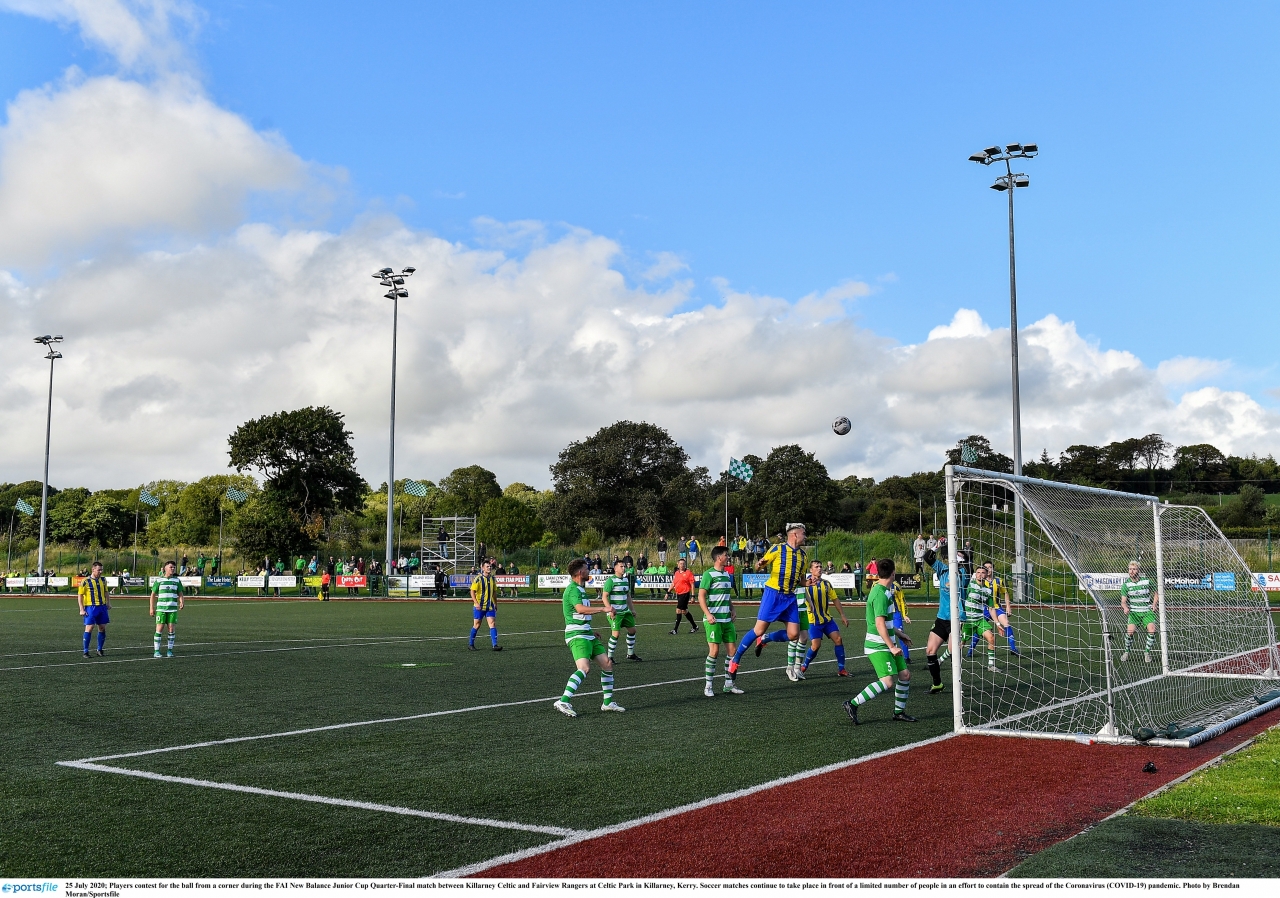
On the Ball Part 2 of the Mikey Daly Interview
Éamonn Fitzgerald EF: Killarney Celtic are invited to participate in an Irish competition. That has big financial implications for travel, meals, etc. MD: It is great to be invited, showing […]

Arbutus Hotel’s 100th anniversary honoured at IHF Conference
The centenary of the historic Arbutus Hotel took centre stage this week at the Irish Hotels Federation (IHF) Annual Conference....

Over €2K raised at Killarney premiere of Hind Rajab film
Killarney for Palestine welcomed over 120 people to The Brehon on Sunday evening for the Kerry premiere of the Oscar-nominated...

Four years on from the Russian invasion of Ukraine, Killarney resident Natalya Krasnenkova shares her experience
When I first arrived at Dublin Airport four years ago, I was handed a small slip of paper. It had...

Top tips at McSweeney’s Cheltenham charity preview night
Racing fans are invited to the McSweeney Arms Hotel on Tuesday, March 3, for an expert preview of the upcoming...

Double award win for Jessie Buckley
Killarney-born actress Jessie Buckley celebrated a historic weekend by securing Lead Actress awards at both the Irish Film and Television...
