
Sport
Adam Moynihan: Both ends at Fitzgerald Stadium should be named after Kerry legends


Upgrades are needed at the Fitzgerald Stadium. A cursory glance around the famous old ground makes that abundantly clear. The good news is that ‘The Park’ is apparently set for a €72 million revamp at some point in the future. Realistically, though, we could be talking years before work begins.
In the meantime, there’s one quick and easy way to improve the stadium, and it won’t cost millions to do it.
We should name both ends of the ground after legends of Kerry GAA.
At present we have a stand and a terrace, both named after prominent figures from the neighbouring Dr Crokes club.
The O’Sullivan Stand was erected in the 1970s in honour of Dr Eamonn O’Sullivan, a revolutionary trainer who guided Kerry to eight All-Irelands across five decades.
On the other side of the ground, we have the O’Connor Terrace. It was named after Michael O’Connor, a highly-regarded administrator who was appointed as chairman of the Munster Council in 1986.
In his book ‘My Beautiful Obsession’, the great Weeshie Fogarty suggests that O’Connor would have become Kerry’s first GAA president were it not for his untimely death in 1991.
The O’Connor Terrace wraps around both ends of the pitch (partially at one end and fully at the other) but, in reality, these ends are never really referred to as the O’Connor Terrace.
Everyone present on a matchday – fans, players, officials, and the media – needs another way of referring to those ends so various informal names have emerged.
If you find yourself somewhere in the middle of the terrace on Saturday when Kerry play Mayo, look to your left. This end is often referred to as the ‘Town End’. But Killarney Town, as the crow flies, is directly over the O’Sullivan Stand. You can get to town by exiting the end to the left, of course, but you can get to town by exiting the other end too.
This end to the left is also sometimes referred to as the ‘Dressing Room End’, which is logical as the dressing rooms are located beneath this part of the terrace. It is also known as the ‘Lewis Road End’, which makes sense as Lewis Road runs parallel to that particular side of the stadium.
From your vantage point on the terrace, the end to your right is most commonly known as the ‘Dalton’s Avenue End’. This is where things get confusing. Fitzgerald Stadium is surrounded on two sides by a housing estate that is subdivided into different sections. You have Dalton’s Avenue, Marian Terrace, St Brendan’s Place and Torc Terrace neighbouring The Park, with O’Kelly’s Villas and Bishop Moynihan’s Crescent a little further away.
Most of Dalton’s Avenue, to the best of my knowledge, runs parallel to the back of the O’Sullivan Stand – it’s not at the end to the right at all. The row of small houses that you can see around the back of the stadium at this end are part of Torc Terrace. So, really, it should be the ‘Torc Terrace End’ – although I’ve never heard it referred to as such.
Of course, it is alternatively, and more precisely, called the ‘Scoreboard End’.
With all that in mind, in the interest of tidying things up for everyone, surely it would be beneficial to bestow the ends with official titles?
If we were to go down the road of naming them after individuals, just as Kerry GAA did with the O’Sullivan Stand and the O’Connor Terrace, we certainly have no shortage of potential candidates.
It is definitely a nice touch to name things after individuals who are no longer with us but, personally, I think it’s even nicer when people get their recognition when they’re still around.
What about renaming the ‘Scoreboard End’ the ‘O’Dwyer End’, in honour of the great Micko who won 12 All-Irelands with Kerry as a player and manager? Waterville, his home village, is roughly that direction.
(Unfortunately, this end of the stadium isn’t much to look at right now but it would surely be a priority if and when any redevelopment does take place.)
And with three Crokes men already remembered at the stadium (O’Sullivan, O’Connor and Dick Fitzgerald), perhaps it would be appropriate to honour a Legion man too?
The ‘Culloty End’ has a nice ring to it, and it would be a fitting tribute to local man Johnny who represented Kerry with distinction in hurling and football. He won five All-Irelands with the senior footballers before going on to train the team and serve as a selector for many years.
In fact, he once lived on Lewis Road, so renaming the 'Lewis Road End' in his honour would be the perfect fit.
You can make a case for many other Kerry legends, of course. But, to my mind, few could be more deserving than Mick O’Dwyer and Johnny Culloty.
News
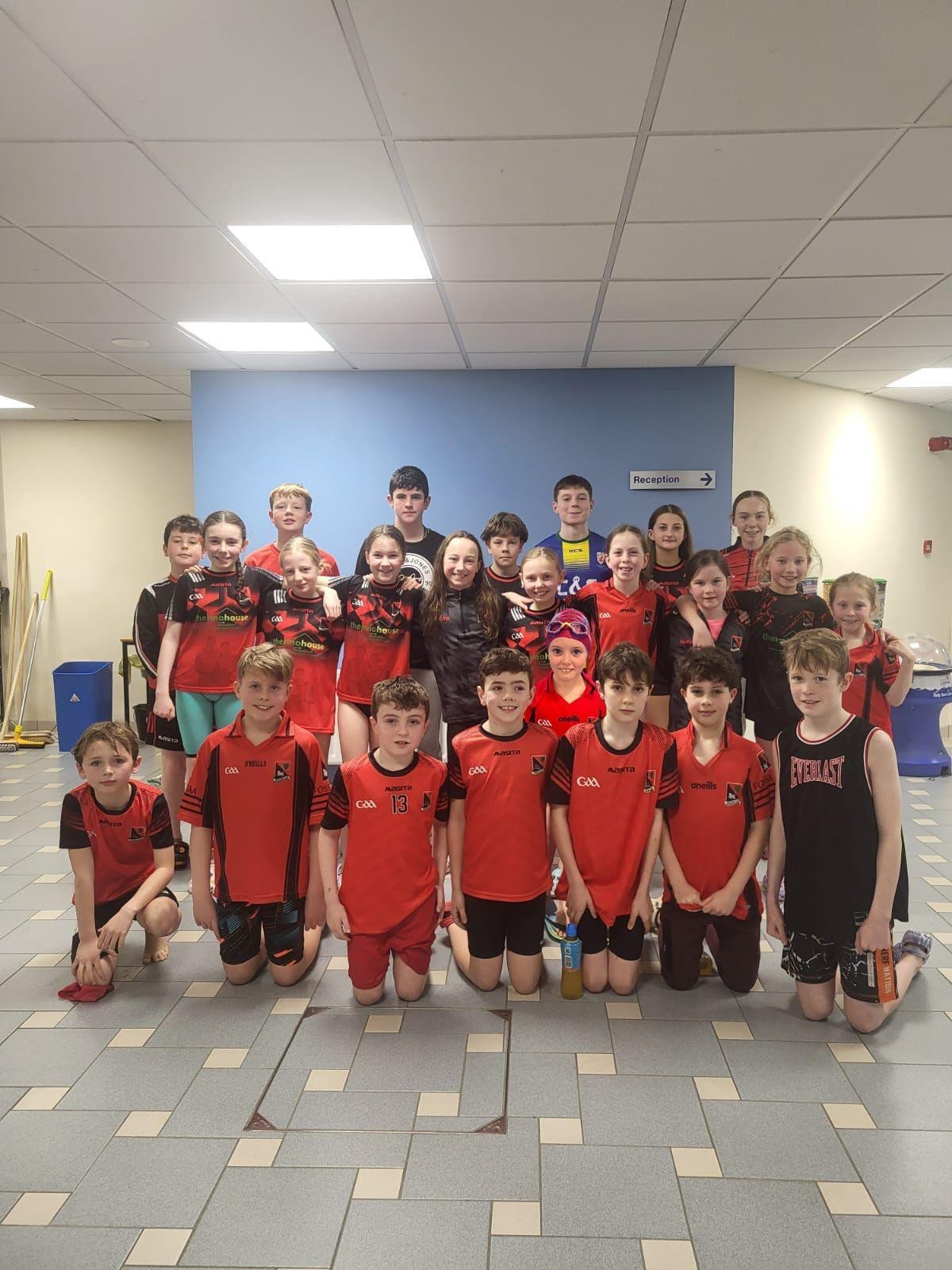
Fossa Swimmers make a splash at County Finals
The Fossa Swim team pictured at the Tralee Sports Complex following their successful outing at the County Finals of the Community Games on Sunday, February 15. The 25-strong squad delivered […]

News
On the Ball Part 2 of the Mikey Daly Interview
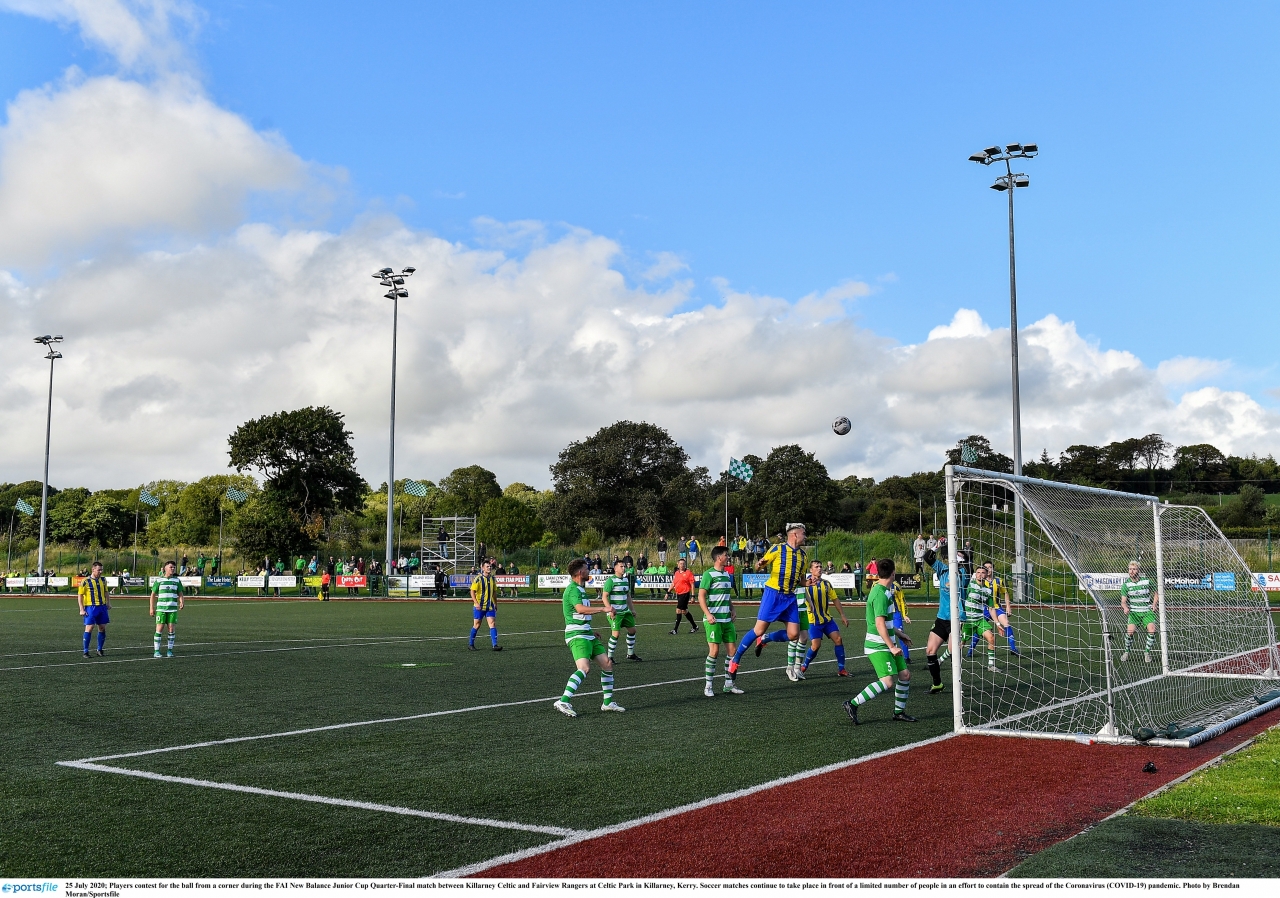
Éamonn Fitzgerald EF: Killarney Celtic are invited to participate in an Irish competition. That has big financial implications for travel, meals, etc. MD: It is great to be invited, showing […]

St Brendan’s College: Voices from the Halls
Interview conducted by Aodhagán Ó Súilleabháin, Cormac Flanagan, and Ryan Twomey. Name: Kieran O’Leary – Entrepreneur and Killarney businessman.Year of...


Official launch of the Assess Ireland Rally of the Lakes set for April 11
The official launch of the 2026 Assess Ireland Rally of the Lakes will take place at Gleneagle Hotel on Saturday,...


Aghadoe native spearheads Darkness Into Light in London
In the absence of a local flagship event this year, one Aghadoe woman is ensuring the Killarney flag flies high...


Killarney co-drivers lead the charge for Circuit of Ireland
The NAPA Auto Parts Irish Tarmac Rally Championship heads to Dungannon this Easter weekend for the Circuit of Ireland, with...


SUPPORTING LOCAL EDUCATION
SUPPORTING LOCAL EDUCATION Karen Buckley, representing the Loughguittane National School Parents Council, accepts the proceeds of the Fossa Two Mile...
