
News
With the right conditions lavender can thrive for years


By Debby Looney, gardening expert
A plant which is synonymous with long, hot summers, is lavender.

.

.
A Mediterranean plant, it can be tricky to grow, indeed, impossible for some of us! Before spending too much on these plants, it is worth remembering that this plant hails from hot, dry countries, and therefore some gardens with wet, clay or dark conditions, will not suit it at all. It prefers slightly alkaline, well-drained conditions. Plant in full sun, south facing is best. If your soil is wet, or clay, mix plenty of organic matter and sand in with it, and even then, planting on a mound or ridge is preferable. If the soil is very acidic, adding lime can greatly improve growth. Lavender can be grown very successfully in pots, as they do not like soil to be too fertile, or wet. Keeping them quite dry over winter improves their resistance to cold.
When happy, lavender can thrive for years. It tends to become woody after a few years, and pruning is essential. Many books recommend pruning in spring, but I find cutting back immediately after flowering, in late summer, is best. Lavender does not ‘break’ easily from old wood, that is, buds do not easily come from old wood, therefore if plants have become lanky and woody, it is usually better to replace them.
CUTTINGS
Cuttings can be taken in early autumn, or spring. They are quite easy to root, but anticipate a 50 percent failure/success rate, as the cuttings often rot just after rooting. Good ventilation is necessary for a better success rate, as well as fungicide which is unavailable to the amateur gardener!
Lavender can be grown in many situations, they are popular in a formal garden, both as a filler plant behind buxus hedges, or as hedging in their own right. It has long been associated with roses, and is often used as under planting or companion planting in rose gardens. In the border, it is beautiful planted with bright green alchemilla mollis, or ladies mantle, peonies, phlox or penstemon. A contemporary way of using it is with Verbena bonariensis and Agapanthus. Blue/silver gardens are very trendy currently, and it is used extensively with rosemary, salvias, veronica, eryngium, caryopteris and perovskia.
There are many varieties of lavender to choose from, but there are basically three types: French (or Spanish), English and a hybrid of the two called Lavendin. The ones we see in garden centres are usually the first two. French lavender has flowers with ‘ears’, two long petals at the top. English lavender is the traditional variety, which, it must be said, grows better in our wet climate. It has the stronger scent, a bushier, more compact growing habit, and, in my opinion, better colour. ‘Munstead’ and ‘Hidcote’ are the hardiest and oldest English lavenders. French lavender is available in so many varieties it is often difficult to see the difference between them, but a tall one to look out for is ‘Vera’, and there is a whole ‘wings’ range which grows well.
ONE LAST TIP
A fantastic alternative to lavender is catmint, or Nepeta, in particular ‘Six Hills Giant’. It also has mauve coloured spikes of flowers, but is an exceptionally easy plant to grow in most adverse conditions!

News
A special musical celebration titled ‘St. Brigid and the Arrival of Spring’ took place recently in the great hall of Muckross House.

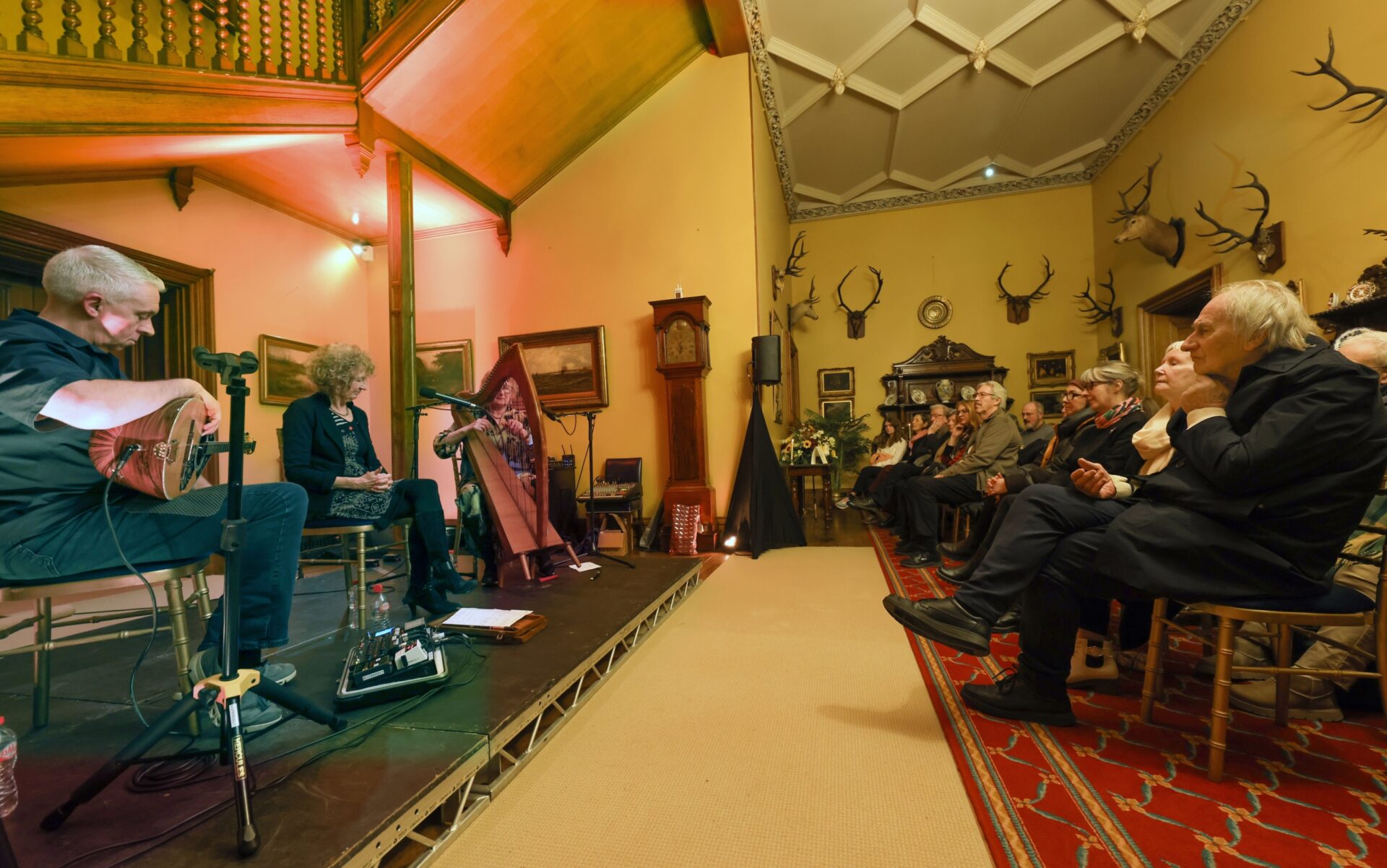


Glenflesk Dancers secure East Kerry Scór na bPáistí title
The Glenflesk figure dancing team of Clodagh McSwiney, Rebecca O’Donoghue, Rachel O’Donoghue, Emily McMahon, Seoidín Dunne, and Paddy MacGillicuddy, pictured...

A special musical celebration titled ‘St. Brigid and the Arrival of Spring’ took place recently in the great hall of Muckross House.
Spring welcomed with trad music at Muckross House A special musical celebration titled ‘St. Brigid and the Arrival of Spring’...

Tourism leaders to briefed on new domestic strategy
Killarney’s tourism industry is set to receive a first look at the national strategy for “home holidays” as Fáilte Ireland...


Funding deal secures future of Kerry Airport
The long-term future of Kerry Airport has been secured following the Government’s announcement of the new Regional Airports Programme 2026–2030....


New leadership and compact route for 2026 Assess Ireland International Rally of the Lakes
Planning for the 2026 Assess Ireland International Rally of the Lakes is moving at a frantic pace as Killarney prepares...


Fossa Swimmers make a splash at County Finals
The Fossa Swim team pictured at the Tralee Sports Complex following their successful outing at the County Finals of the...


On the Ball Part 2 of the Mikey Daly Interview
Éamonn Fitzgerald EF: Killarney Celtic are invited to participate in an Irish competition. That has big financial implications for travel,...


LUKE MANGAN recently caught up with Kerry FC’s manager, Colin Healy.
He spoke to him about his careers as a player and manager. Here’s how it went: When you began your...


Home cup tie for St Paul’s could be epic
Paudie O’Connor National Cup (Round 1) Utility Trust St Paul’s v GCU Brunell Saturday 7.30pm Killarney Sports and Leisure Centre...


Chances of Kerry v Cork Munster final in 2026 decrease as Munster GAA delay seeding plan
After facing a backlash from Limerick, Clare, Waterford and Tipperary players, Munster GAA have postponed their plan to keep Cork...
