
News
The soothing sound of water


By Debby Looney, gardening expert
Finally the weather has arrived - those lovely sunny days where we can sit back, relax and enjoy the fruits of our labour. The garden furniture is out, parasols are up and the barbecue is lit.
The weeding is done, the grass is cut and the pots are watered. Bored much? Well, if you are like me, and need something to do – especially when the weather is fine - how about a water feature? The sound of water is well-known to be relaxing, so maybe that will be the key to finally sitting down and reading a book!
Apart from its calming qualities, water in the garden is important from an ecological point. You will notice the biodiversity in your garden grow as soon as you add water, and it is uncanny how quickly dragonflies find it! Water features do not need to be a particularly work intensive project, it can be anything from a plastic barrel to a large natural pond. I have seen some beautiful plastic barrels with a floating pot with waterlillies inside it and a floating solar light – small but effective. You can also buy a huge range of ready to use, easy to install water features – you literally fill them up with a few litres of water, plug them in and the job is done.
Alternatively, you can build your own pond, which is quite a straightforward project. Decide on a spot and start digging out your pond – the size will depend on you, the depth should always be at least 40cm. If you wish to grow water lilies, you will need to go a bit deeper. Lining a pond can be done with EPDM rubber if you want to shape it yourself. An old carpet or some insulation underneath will protect the liner from tearing on stones.
A layer of sand will do the trick. There are also preformed liners available which are very practical and easy to install. They are usually stepped which allows you to put in different water plants at the edges. These are definitely the quickest and easiest options. To maintain clarity of water, and to prevent algal growth, it is vital to aerate the water.
The simplest way to do this, without the use of a filtration system, is to create running water. Pumps are readily available and relatively cheap. The smallest usually start at about €40. Pumps are sold in two ways, by the amount of water they pump per hour, and by the lift they give.
A pump which pumps at 450L per hour will usually give a lift of one metre to the water – so you can install a small fountain. Pumps then go up in size, depending on what you need. I have a small pump in my pond, set at half the speed, which circles my water up and around the pond to the opposite, rising gradually to give a fall over stones of about 30cm. This creates a small amount of movement within the pond so that it does not stagnate, it oxygenates as it flows over the stones and it creates that soothing sound of water gently splashing back into the pond. An effort well worth making!

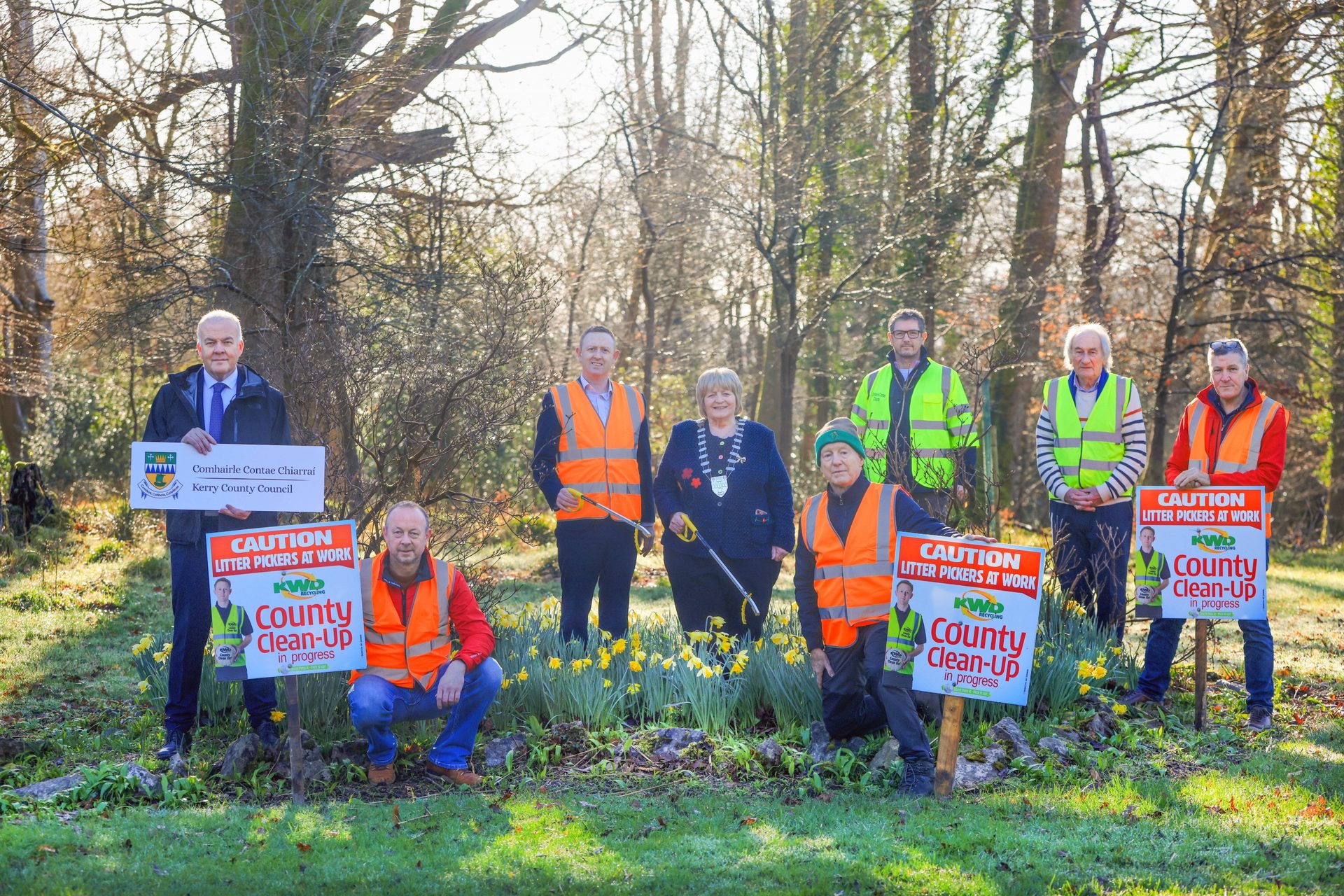
KWD Recycling shortlisted for national environmental awards
Killarney-based KWD Recycling has been announced as a finalist in the 2026 Repak Resource Awards, securing a spot on the national shortlist for environmental achievement.
The local waste management company has been nominated in the Best Recovery Operator Innovation category, sponsored by DNV, for its state-of-the-art residual waste recovery system.
The Killarney facility utilizes optical sorting, screening, and mechanical processing to extract recyclable plastics and organic material from municipal waste. In its first year of operation, the technology recovered more than 10 per cent of plastic packaging from residual waste for recycling and diverted almost 50 per cent of organic material toward composting.
KWD Recycling will compete alongside Dublin operators Panda and Thorntons Recycling for the category title.
Repak CEO Zoe Kavanagh commended the Kerry firm for demonstrating environmental leadership and bringing local ambition to the national awards.
Category winners will be announced at a black-tie ceremony at the Mansion House in Dublin on Friday, October 23, where each winner will also compete for the Overall Repak Resource Award.
Local businesses have a strong track record at the national event, with Killarney town venue The Killarney Park and The Ross previously taking home the overall title in 2023.
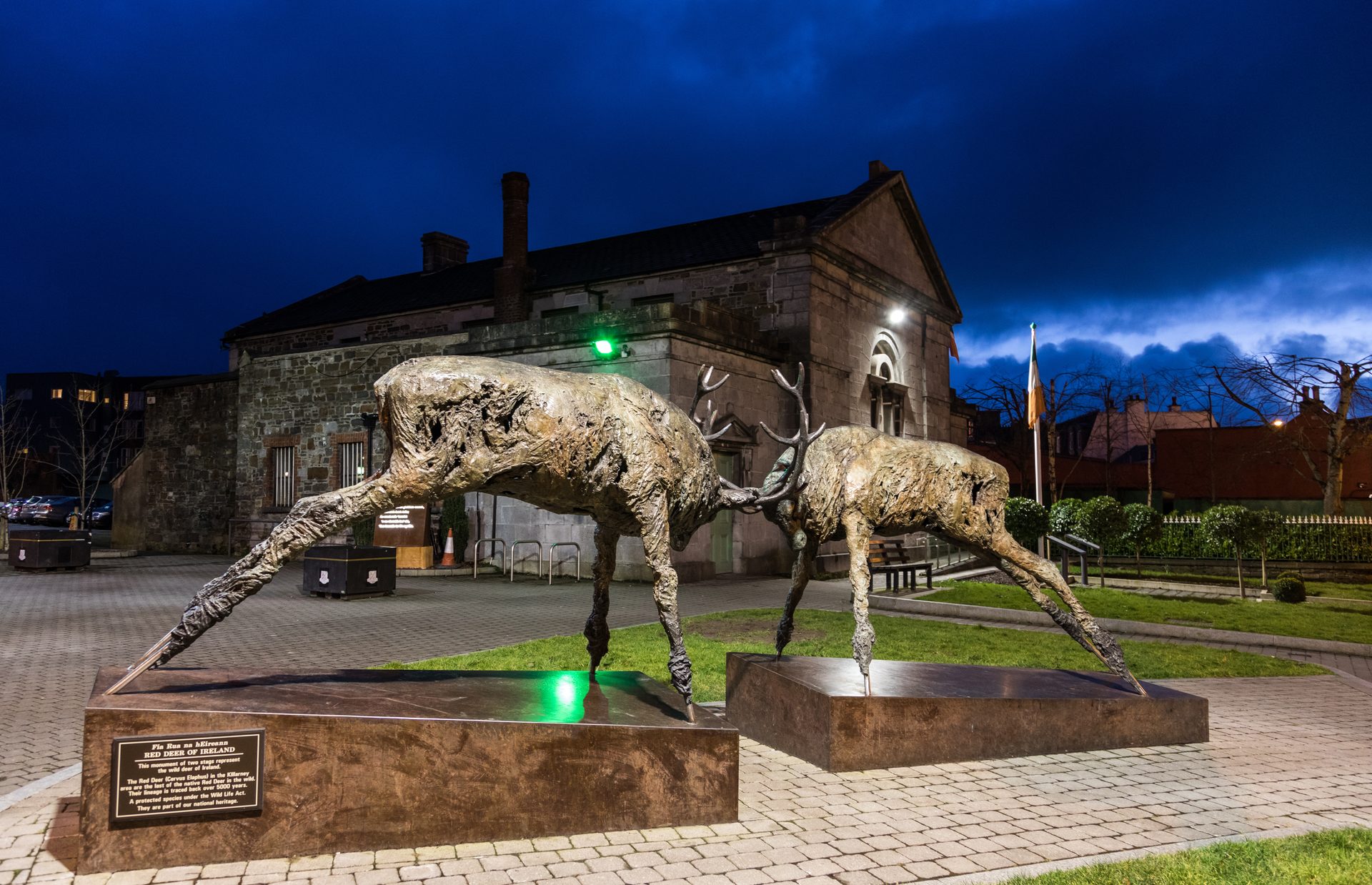
Drivers warned as deer rutting season begins
Motorists in Killarney are being urged to exercise extreme caution as the annual deer rutting season gets underway, causing animals to stray far beyond their usual habitats inside Killarney National Park.
The autumn mating season sees deer becoming highly active and unpredictable, leading to increased sightings and collisions on local roads outside traditional park boundaries.
Two separate incidents highlighted the growing hazard on local routes this week. A reader contacted the Killarney Advertiser to warn drivers after spotting a deer roaming near Tiernaboul towards the school on Sunday afternoon around 7.30pm.
Later that same night, in the early hours of Monday morning, a local driver collided with a deer near Kerry Airport around 1am while returning home from an event.
Despite attempting evasive action, the motorist struck the animal, which died at the scene and temporarily blocked the road before local Gardaí were alerted to clear the obstruction.
The driver sustained substantial vehicle damage, requiring repairs to the bumper, headlamp, and internal components, leaving her facing significant garage costs and time off the road.
Gardaí and road safety advocates advise motorists travelLing during early morning and late evening and remain vigilant along tree-lined routes.
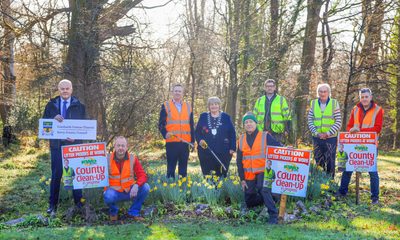

KWD Recycling shortlisted for national environmental awards
KWD Recycling shortlisted for national environmental awards Killarney-based KWD Recycling has been announced as a finalist in the 2026 Repak...
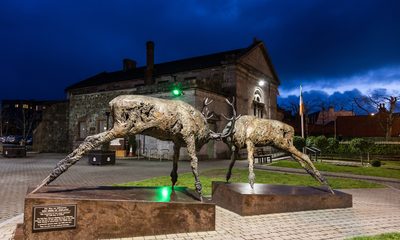

Drivers warned as deer rutting season begins
Drivers warned as deer rutting season begins Motorists in Killarney are being urged to exercise extreme caution as the annual...


Kerry Airport CEO addresses chamber luncheon
Kerry Airport chief executive Adrian Neilan addressed local business leaders at the Killarney Chamber of Tourism and Commerce luncheon at...


The Brehon raises €2,850 for Jack and Jill Foundation
The Brehon Hotel and Spa raised €2,850 for the Jack and Jill Children’s Foundation after hosting a closest-to-the-pin golf simulator...
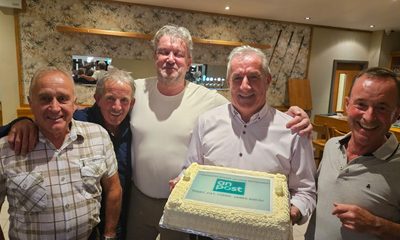

Five local postmen retire with 185 years service
Five local postmen retire with 185 years service RETIREMENT NIGHT: Pictured at the retirement party held at Killarney Racecourse on...


Fossa Swimmers make a splash at County Finals
The Fossa Swim team pictured at the Tralee Sports Complex following their successful outing at the County Finals of the...


On the Ball Part 2 of the Mikey Daly Interview
Éamonn Fitzgerald EF: Killarney Celtic are invited to participate in an Irish competition. That has big financial implications for travel,...


LUKE MANGAN recently caught up with Kerry FC’s manager, Colin Healy.
He spoke to him about his careers as a player and manager. Here’s how it went: When you began your...


Home cup tie for St Paul’s could be epic
Paudie O’Connor National Cup (Round 1) Utility Trust St Paul’s v GCU Brunell Saturday 7.30pm Killarney Sports and Leisure Centre...


Chances of Kerry v Cork Munster final in 2026 decrease as Munster GAA delay seeding plan
After facing a backlash from Limerick, Clare, Waterford and Tipperary players, Munster GAA have postponed their plan to keep Cork...
