
News
The Caseys of Sneem

A
As you enter Sneem from Killarney you are met with the imposing lifesize monument erected in memory of Steve Casey, a world champion from a family of champions. Weeshie Fogarty did a fine Terrace Talk programme on Steve and on his six other brothers, also world champions. Thirty years ago this summer, the Sneem Regatta in Kerry hosted a final reunion on home water of what was arguably the greatest Irish sporting family of all time.
They were called the Casey brothers. There were seven of them in total: Steve, Paddy, Jack, Jim, Mick, Tom and Dan. And to suggest they were Ireland’s greatest sporting siblings may, if anything, be an understatement. They were also once dubbed, not without justification, “the toughest family on earth”.
Sheer size was one of their main attributes, and it was hereditary on both sides. Their father was Big Mick Casey, a bare-knuckle boxer who in his youth had sparred with John L Sullivan. Their mother was Brigid Sullivan, from a family known around Sneem as The Mountains.
But the seven sons had finesse as well as physique. The 1983 reunion (of the five who could still travel) was in a rowing boat, the stage on which they most excelled as a group. They were among the greatest oarsmen of their generation, although that sport was also the source of their greatest disappointment.
As a collective, they also excelled in tug-of-war. But it was in the individual discipline of wrestling, perhaps, that they reached their highest level. And the brother who scaled the final summit was Steve, or as he was known in a sport where nicknames were obligatory, Crusher Casey.
For several years from the late 1930s, Steve Casey – 6’4” and 17 stone – held the most authentic version of the world heavyweight wrestling championship, thanks partly to his trademark move, the Killarney Flip.
Among his rivals, incidentally, was a fellow countryman Danno O’Mahoney whose signature was the Irish Whip. Their first meeting was a draw. But, in a rematch-to-the-finish, the Flip outmanoeuvred the Whip after an epic 18 rounds and 97 minutes.
Not content with wrestling supremacy, however, Casey was also a formidable boxer. He beat the US champion, then challenged Joe Louis for the world title. When Louis didn’t pick up the gauntlet, the New York Post taunted: “Even the greatest run scared of the Sneem Machine”.
Crusher was not the only Casey to excel at wrestling. His younger brother Paddy was a three-time All-Ireland champion and probably destined for greater things when he broke his back during a bout in 1938.
He won that fight anyway, but the injury curtailed further ambitions and he was better known in later years for operating a string of Irish clubs in London: the Glocamorra, the Shamrock, and the Inisfree. Another Casey, Mick, fought 200 wrestling bouts, despite being the only brother never to leave Sneem.
But back to rowing, the sport in which the family first established their legend in the early 1930s. A measure of their collective talents was when five of them combined to win the Lakes of Killarney Salters Cup, in perpetuity, somewhat to the chagrin of the organisers.
The rule was that if you won three years running, the trophy was yours. After they triumphed in 1930 and 1931, however, there was no 1932 competition. So when they won again in 1933, they were first told that the victories had to be consecutive. Not surprisingly, the brothers won the argument and kept the cup, despite the organisers offering £60 to buy it back.

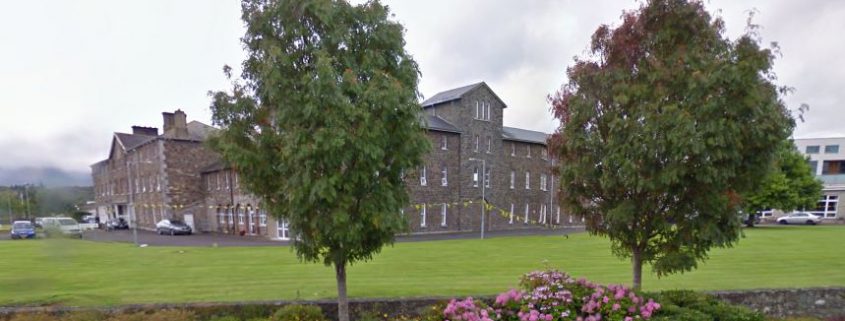
A design team has been appointed to advance plans for the proposed Minor Injury Unit on the grounds of St Columbanus Home though the HSE has confirmed it cannot yet give a construction or opening timeline.
Fianna Fáil TD Deputy Michael Cahill received the update in response to a Parliamentary Question submitted to the Minister for Health. HSE South West confirmed the newly appointed team will progress the project through design development, planning, and regulatory approval following the transfer of residents to the new Killarney Community Nursing Unit.
Deputy Cahill welcomed the appointment of the design team but raised concerns over the lack of a definitive schedule.
“I welcome the appointment of a design team, which represents progress towards delivering this important facility. However, I am concerned that the HSE is still unable to provide a definitive timeline. Previous indications from HSE officials pointed towards construction commencing in 2026, with completion anticipated in 2027. We now need clarity on the project schedule and assurances that there will be no unnecessary delays,” Deputy Cahill said.
He noted that the facility is vital to serve Killarney and the wider east, mid, and south Kerry regions while relieving pressure on the Emergency Department at University Hospital Kerry.
The HSE also confirmed it is finalising a broader review of healthcare accommodation across Killarney to develop the St Columbanus campus as an integrated healthcare hub.
“As a member of the Oireachtas Joint Committee on Health, I will continue to press the HSE and the Minister for Health to ensure this project is progressed without further delay. People across Killarney, east, mid, west and south Kerry deserve certainty. The appointment of a design team is welcome but the next priority must be getting this project to construction and delivering the facility,” Deputy Cahill concluded.
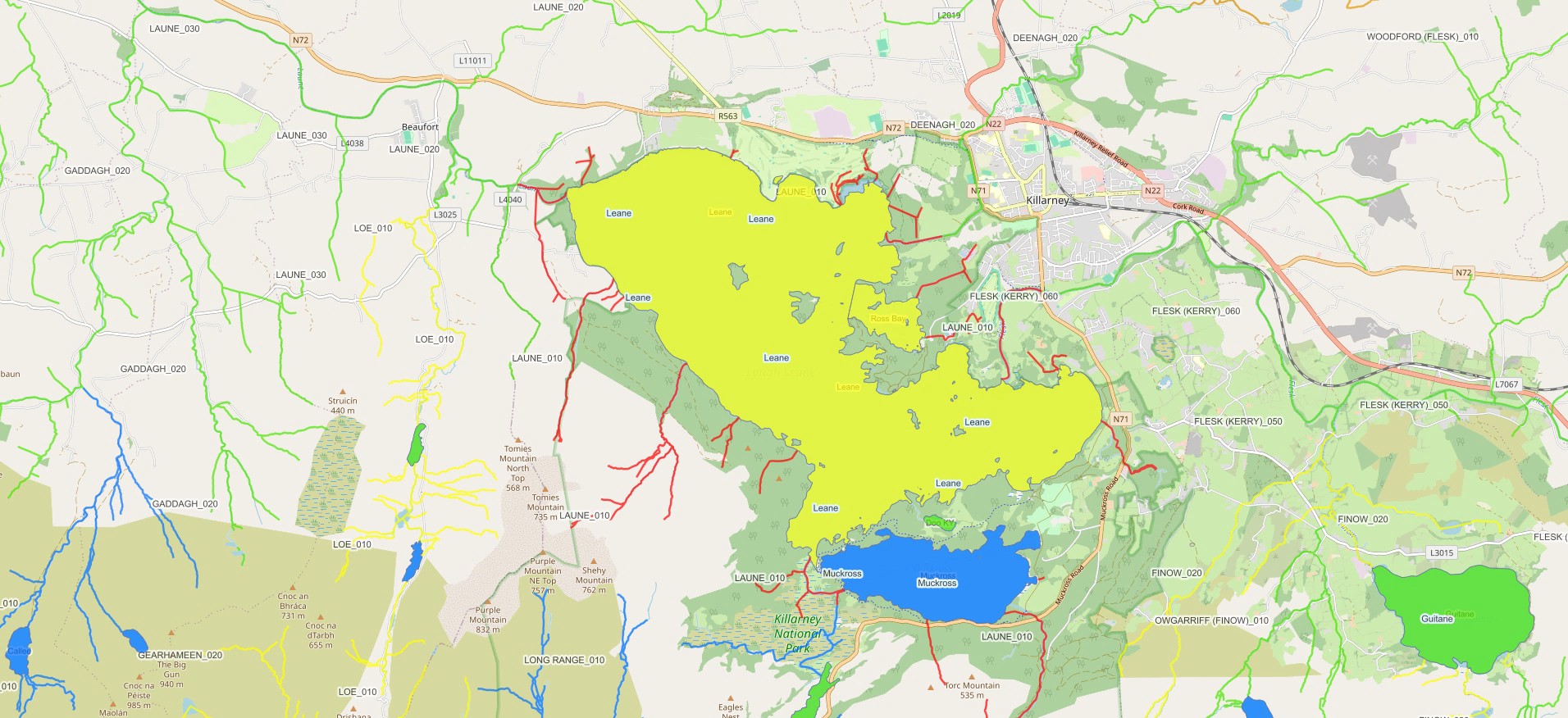
Lochanna Beo’s mapping highlights water quality concerns
Local environmental action group Lochanna Beo has released mapping data from the Environmental Protection Agency (EPA) to draw attention to deteriorating water quality across Killarney and the broader Laune Catchment.
The EPA map uses a colour-coded system to rate water quality status from 2019 to 2024: blue indicates high status, green indicates good, yellow represents moderate, brown denotes poor, and red signifies bad status.
The figures indicate significant ecological pressure on local lakes and rivers compared to neighbouring areas across County Kerry.
Formed during the summer of 2026, Lochanna Beo aims to bring together residents, business owners, agricultural operators, and public bodies to address the key factors affecting the regional aquatic ecosystem.
The community initiative is seeking direct engagement with relevant statutory authorities to implement practical restoration measures and protect the long-term health of Killarney’s water bodies.

Design team appointed for injury unit
A design team has been appointed to advance plans for the proposed Minor Injury Unit on the grounds of St...
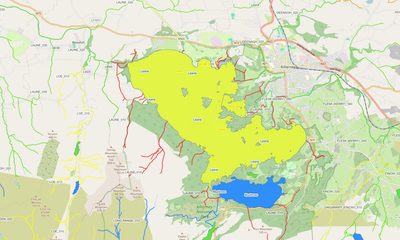

Lochanna Beo’s mapping highlights water quality concerns
Lochanna Beo’s mapping highlights water quality concerns Local environmental action group Lochanna Beo has released mapping data from the Environmental...
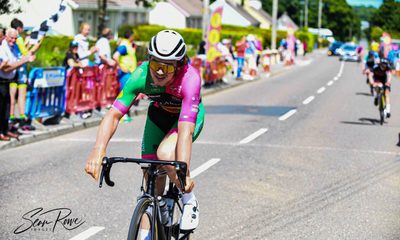

Stefan Caulfield-Dreier signs professional cycling contract
Former Killarney Cycling Club rider Stefan Caulfield-Dreier has secured a professional contract with leading Dutch-based outfit Azerion-Villa Valkenburg. The 23-year-old...
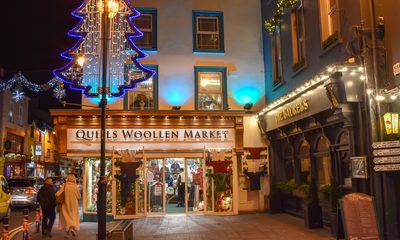

Church seeks creative Christmas trees for festival
Church seeks creative Christmas trees for festival The Methodist Church in Killarney is inviting local schools, community groups, businesses, and...


€6,000 Scrooge Giveaway!
€6,000 Scrooge Giveaway! Six lucky audience members will each walk away with €1,000 as the Gleneagle Arena welcomes an extraordinary...
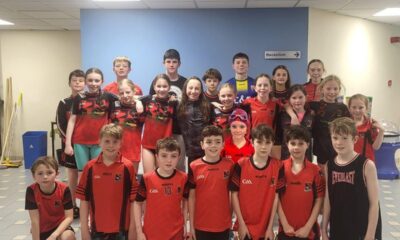

Fossa Swimmers make a splash at County Finals
The Fossa Swim team pictured at the Tralee Sports Complex following their successful outing at the County Finals of the...

On the Ball Part 2 of the Mikey Daly Interview
Éamonn Fitzgerald EF: Killarney Celtic are invited to participate in an Irish competition. That has big financial implications for travel,...

LUKE MANGAN recently caught up with Kerry FC’s manager, Colin Healy.
He spoke to him about his careers as a player and manager. Here’s how it went: When you began your...


Home cup tie for St Paul’s could be epic
Paudie O’Connor National Cup (Round 1) Utility Trust St Paul’s v GCU Brunell Saturday 7.30pm Killarney Sports and Leisure Centre...


Chances of Kerry v Cork Munster final in 2026 decrease as Munster GAA delay seeding plan
After facing a backlash from Limerick, Clare, Waterford and Tipperary players, Munster GAA have postponed their plan to keep Cork...
