
News
“Stress and anxiety levels are increasing” – says exam student


STRESS: Leaving Cert student Cillian Hickey from St Brendan's College says there's a great deal of stress for exam students and a decision must be made if they're going ahead.
Thousands of exam students are unsure whether they should be putting themselves under increased pressure to cover work missed last year, or study for orals and practicals which aren’t guaranteed to go ahead, says Leaving Cert student Cillian Hickey from St Brendan's College.
This week he shares his thoughts with Killarney Advertiser readers about the decisions surrounding the upcoming State exams and the struggles he and his fellow Leaving Cert students are facing across the country.
"The gruelling struggles of any normal Leaving Cert year can be difficult for any student to cope with. However, the class of 2021 have been the subject of an incredibly stressful and torrid year. We spent our last day of Fifth Year in school on March 12 being told we would return before or, in the worst-case scenario, after the Easter holidays. Little did we envisage remote learning at home until the end of May and returning to school having to implement social distancing while wearing masks in September only to being stuck at home once again after the Christmas holidays just passed, and the message that was reiterated to us that it’ll only be for January is now beginning to look more and more unlikely.
I recently represented my year group along with my classmate Darragh Doolan at an online conference hosted by the Irish Second-Level Students Union (ISSU) where students' opinions and suggestions from all over the country were heard. The consensus of most is that we just need clarity and decisions to be made soon in relation to the State exams instead of waiting until the last minute as we saw last year. The Minister and Department of Education say they want to do what is best and what is fair for all students, yet I hardly think it is fair to lead exam students along for weeks on end while stress and anxiety levels are only increasing.
I understand the Minister for Education finds herself in between a rock and a hard place to say the least, but with the lack of clarity and predictability this global pandemic has brought, I think it’s a bold statement for Norma Foley to make that we will be in a safe environment to complete a “tradition Leaving Cert” come June. Despite the fact that our experience of senior cycle has been far from “traditional”, having nearly been absent from our classrooms for approximately 13 weeks so far - with no nailed down date for our safe return - I find it hard to believe that as a year group we are expected to stay motivated to commit so much time to working at home which can often present its own struggles such as a poor Internet connection or no quiet place for a student to work productively, while not forgetting to revise old materials and retain new information being taught to us through a screen without any escape from our studies such as meeting friends, sports or whatever it is that lets you go into a world of your own with no worries.
CRUCIAL
The pre-Leaving Cert exams are crucial for students to experience the environment we could be dealing with over the two weeks that technically define the next couple of years in our young lives if the exams go ahead, and with the amount of school time missed the question being asked by most schools is can we finish courses in sufficient time to allow us enough time for crucial revision while also accommodating nearly two more weeks of class time for the pre-exams when we return to school, whenever that may be. In my own experience I have to thank the teachers and all staff in St. Brendan's College who have adapted fantastically over the last year for the pressure they too are being put under amidst all this uncertainty. Keeping to our timetabled school days we have live classes with each teacher via Microsoft Teams every day. Although it is a somewhat efficient way of making up for our absenteeism from the classroom, it doesn’t come anywhere near the same benefit of face-to-face learning. No matter how many breaks or walks you go for throughout the day, the emotional toll that comes with the mundane repeated routine sitting at the same desk from 9am to 4pm takes on you is mentally draining, without worrying over the fact if we were in school, we’d be expected to take our seat in the study hall for another two, three if not four hours.
There is no definitive line that can be drawn in the sand that will satisfy every student, but from hearing the viewpoints of so many Sixth Years and their thoughts towards the situation, I believe what we all want to know is if the Leaving Cert of 2021 does go ahead will there be additional edits to the papers on top of what has already been changed in September in line with the additional school time missed? Difficult decisions have to be made and bold leadership needs to be seen to come to the fore. After all, the powers that be must take into account and always remember in their decision making that they are dealing with young people's lives and futures."



Kerry Airport CEO addresses chamber luncheon
Kerry Airport chief executive Adrian Neilan addressed local business leaders at the Killarney Chamber of Tourism and Commerce luncheon at...


The Brehon raises €2,850 for Jack and Jill Foundation
The Brehon Hotel and Spa raised €2,850 for the Jack and Jill Children’s Foundation after hosting a closest-to-the-pin golf simulator...

Five local postmen retire with 185 years service
Five local postmen retire with 185 years service RETIREMENT NIGHT: Pictured at the retirement party held at Killarney Racecourse on...

New Streetscapes murals launched at College Square
A colourful collaboration between the Kerry Local Creative Youth Partnership (LCYP) and the Architecture Kerry Festival at Kerry County Council...
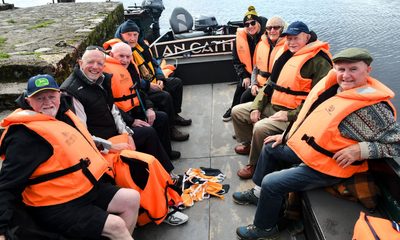

Dr Crokes stalwarts enjoy lake cruise
Dr Crokes stalwarts enjoy lake cruise Dr Crokes GAA Club hosted a special day out for its senior members on...


Fossa Swimmers make a splash at County Finals
The Fossa Swim team pictured at the Tralee Sports Complex following their successful outing at the County Finals of the...
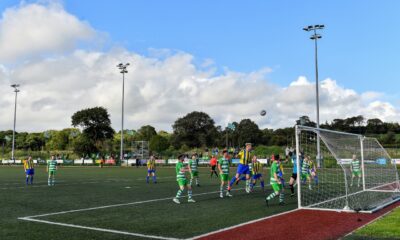

On the Ball Part 2 of the Mikey Daly Interview
Éamonn Fitzgerald EF: Killarney Celtic are invited to participate in an Irish competition. That has big financial implications for travel,...


LUKE MANGAN recently caught up with Kerry FC’s manager, Colin Healy.
He spoke to him about his careers as a player and manager. Here’s how it went: When you began your...


Home cup tie for St Paul’s could be epic
Paudie O’Connor National Cup (Round 1) Utility Trust St Paul’s v GCU Brunell Saturday 7.30pm Killarney Sports and Leisure Centre...


Chances of Kerry v Cork Munster final in 2026 decrease as Munster GAA delay seeding plan
After facing a backlash from Limerick, Clare, Waterford and Tipperary players, Munster GAA have postponed their plan to keep Cork...
