
News
Repot your Shamrock and watch it grow!


By Debby Looney, gardening expert
Seamair óg, or Shamrock, must surely be our featured plant this week.


Until last year, I had never taken much notice of Shamrock as a plant, however, in a fit of curiosity I bought little live Shamrock plants in a number of outlets to see what they would actually grow into.
We all know the religious story behind St Patrick and the little three leaved plant, but I was curious to know whether there is one specific plant which equates to Shamrock. After doing some research, I have concluded that it could have been any of a number of different plants which St Patrick held in his hand. The word Shamrock derives from the Irish ‘seamair' meaning clover, and ‘óg' meaning young. The most common clovers in this country would be white clover, Trifolium repens, and meadow trefoil, or Trifolium dubium. However, red clover, or Trifolium pratense, is also a contender! One of the oldest herbal books, Gerard's Herbal, published in 1597 identified Irish Shamrock to be meadow trefoil, while the Irish botanist, Caleb Threlkeld, identified it as white field clover in 1726.
MEADOW PLANTING
Whichever one St Patrick might have used, it is clear to me that the growers of Shamrock are still not in agreement which it was either! Out of 10 plants I bought last year, I have three meadow trefoil, which are the prettiest green, and flower yellow. These are ideal for meadow planting as insects love them. I have one red clover which grows to a height of 30cm and is ideal in ditches and wild areas. I have one Persian clover, a slightly soft, tall, hairy plant with carmine coloured flowers. This is often included in wildflower mixtures as it is pretty and has a long flowering season. It is the least hardy of these clovers. I ended up with two oxalis which are wood sorrel, and finally three white clover. White clover is an ideal companion plant to lawn grass and I would encourage anyone setting lawn seed to include it in their seed mix. White clover stays low and can be mown along with the grass. It has white flowers, which are a rich source of nectar. It is not particularly invasive, and will not take over the lawn. It does however benefit your grass greatly by ‘setting' nitrogen, thus making nitrogen available to the grass, making it richer, stronger and greener. This also means you do not need to fertilise your lawn as much.
So, if you have bought a pot of Shamrock, be sure to repot it and let it grow a little, then find it a nice spot in your garden, because, regardless of its historical accuracy, all Shamrock has great merit!




Killarney exhibition and lecture on foundations of Fianna Fáil
A widely acclaimed exhibition on the origins and early years of Fianna Fáil in Kerry will opened at Killarney Library...


Resident hits out at “sticking plaster” spend on Listry Bridge
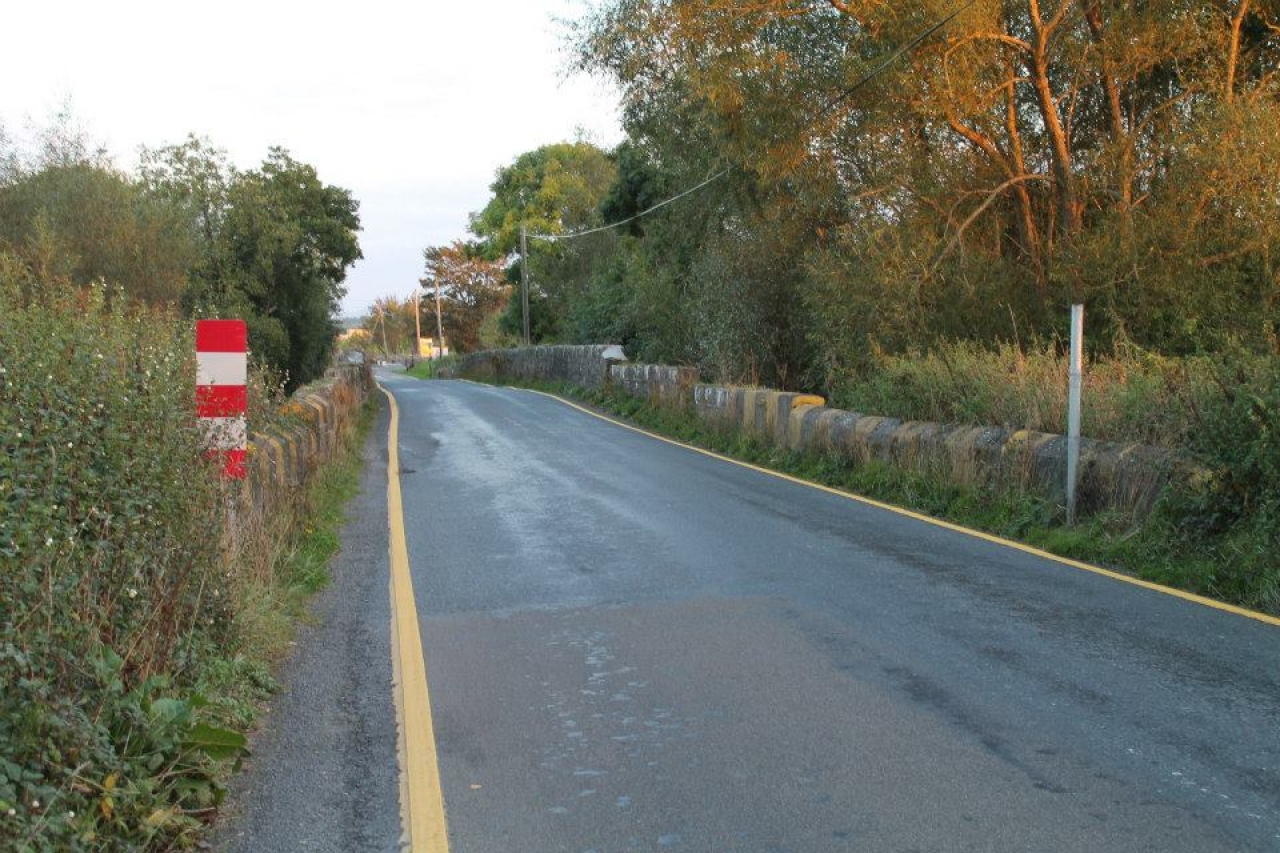
A Listry resident has slammed Kerry County Council’s latest safety funding for Listry Bridge, labelling the repeated small-scale spending as...


Killarney celebrates as Jessie Buckley makes history with Oscar win
Killarney-born actress Jessie Buckley has made history by becoming the first Irish woman to win the Academy Award for Best...


The Scooby Doo Mystery Machine ready for St Patrick’s Day
The Killarney Valley Classic and Vintage Club is putting the finishing touches on its latest project, a full-scale recreation of...


Kelly praises Irish mother’s campaign to criminalise cyberbullying
Seán Kelly MEP (Ireland South) has praised “the courage and determination shown by Jackie Fox”, a mother from Ireland who...


Fossa Swimmers make a splash at County Finals
The Fossa Swim team pictured at the Tralee Sports Complex following their successful outing at the County Finals of the...


On the Ball Part 2 of the Mikey Daly Interview
Éamonn Fitzgerald EF: Killarney Celtic are invited to participate in an Irish competition. That has big financial implications for travel,...


LUKE MANGAN recently caught up with Kerry FC’s manager, Colin Healy.
He spoke to him about his careers as a player and manager. Here’s how it went: When you began your...


Home cup tie for St Paul’s could be epic
Paudie O’Connor National Cup (Round 1) Utility Trust St Paul’s v GCU Brunell Saturday 7.30pm Killarney Sports and Leisure Centre...


Chances of Kerry v Cork Munster final in 2026 decrease as Munster GAA delay seeding plan
After facing a backlash from Limerick, Clare, Waterford and Tipperary players, Munster GAA have postponed their plan to keep Cork...
