
News
Put some Euro back in your pocket for a change


By Ted Healy of DNG TED HEALY
So it looks as though mortgage rates in Ireland have hit rock bottom with inevitable rate increases in the post.
Some 200,000 homeowners are on Standard Variable Rates and are set to pay more with rates across Europe expected to rise in the coming months.
Around 250,000 are on trackers, which rise or fall when the ECB rate changes. An increase of about 25 basis points (one quarter percent) is expected. This means that monthly repayments would increase by about €40 on a €300,000 mortgage.
The European Central Bank (ECB) president Christine Lagarde recently refused to rule out an ECB rate rise – a move that would see tracker and variable rates rise, and new fixed rates become more expensive.
The Dutch Central Bank president and a member of the ECB’s governing council, Klaas Knot, said he expects the ECB to raise interest rates in the fourth quarter of this year. He expects an interest rate rise of 0.25% between October and year’s end.
So does this mean now is the time to lock into a longer-term fixed rate? There are some very attractive fixed rate terms available in the market at present, which in five year's time will very likely look like great value.
NOT ALL BAD NEWS
It is not all bad news however. Surging house prices over the last two years mean that thousands of homeowners are now unexpectedly eligible for lower mortgage rates.
With the sudden rise in property values in recent times, there are now opportunities for anyone coming out of a fixed term period to take advantage of lower loan-to-value mortgage rates which could make significant savings over the life of the mortgage.
Mortgage interest rates get a lot more competitive at 80% loan-to-value as banks tier their rates based on this calculation.
With double-digit property inflation in the past few years, coupled with some of the loan having been paid off, anyone who took out a mortgage in 2019 or 2020 with an original loan-to-value of 90% should be at 80% loan-to-value now.
A loan-to-value of 80% means a homeowner has built up equity of 20% in their home and can now benefit from a more competitive rate.
There are still over 200,000 Irish households repaying their mortgage on Standard Variable Rates of up to 4.5%. The average new mortgage rate in Ireland at the end of last year was 2.79%. However, in 2019 the average rate was just over 3%.
There are certainly savings to be had by switching mortgages – especially for those coming out of a fixed term where their loan-to-value ratio has decreased over the past few years.

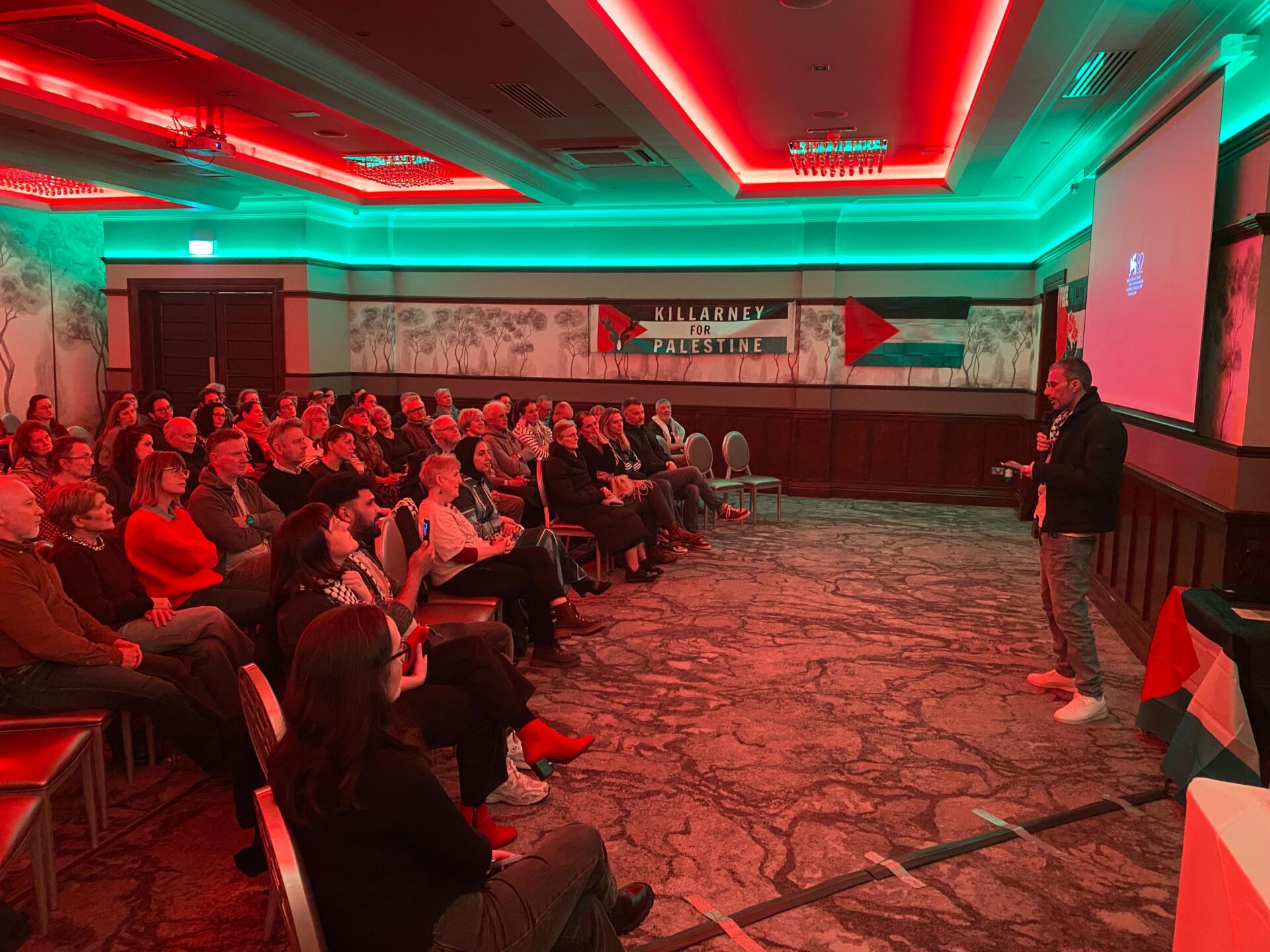
Killarney for Palestine welcomed over 120 people to The Brehon on Sunday evening for the Kerry premiere of the Oscar-nominated film, The Voice of Hind Rajab.
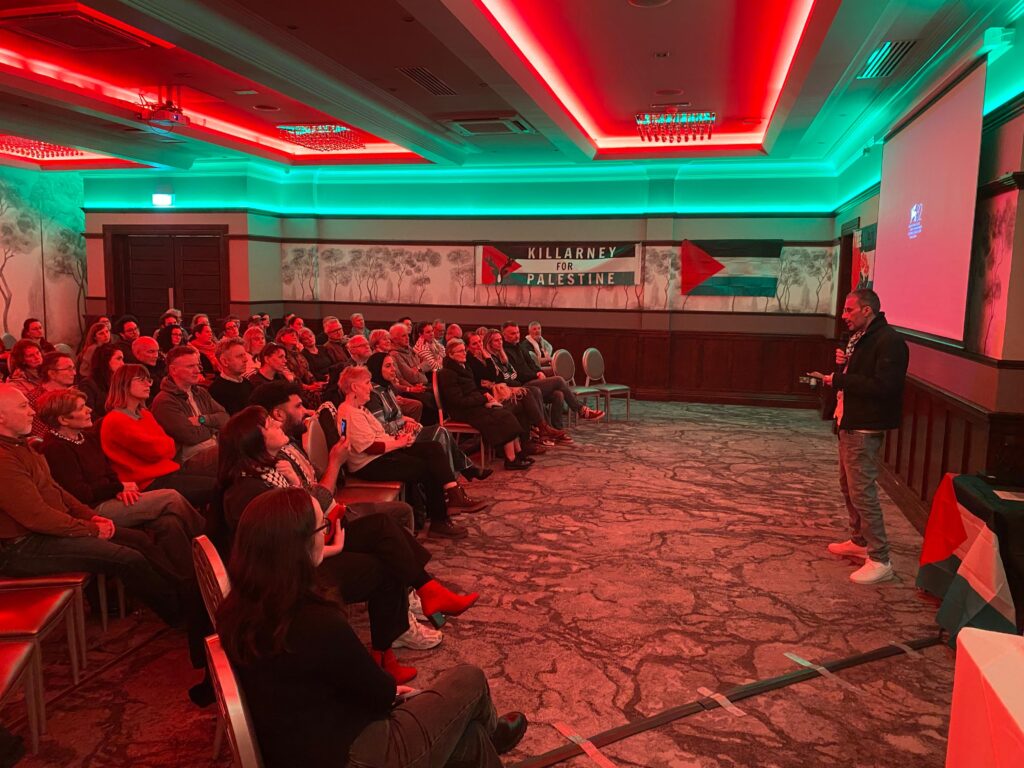
The event served as a fundraiser and an important experience for the local community, highlighting the story of the five-year-old child killed in Gaza.
The evening raised over €2,000 in donations. These funds will be sent via mutual aid directly to five families in Gaza and to The Hind Rajab Foundation.
The film’s director, Kaouther Ben Hania, recently made headlines at the Berlin International Film Festival by declining the “Most Valuable Film” award at the “Cinema for Peace” gathering. Addressing the audience, she explained her decision to leave the trophy behind as a reminder of the lack of accountability for the deaths of Hind Rajab, her family, and the paramedics sent to save her.
“Peace requires justice and accountability, not glossy slogans,” Ben Hania stated, adding she would only accept such awards when peace is rooted in moral and legal obligations.
Killarney for Palestine holds regular updates on their social media pages and invites the public to join their monthly vigil at the Killarney Courthouse, held at 12 p.m. on the last Sunday of every month.
Over €2K raised at Killarney premiere of Hind Rajab film
Killarney for Palestine welcomed over 120 people to The Brehon on Sunday evening for the Kerry premiere of the Oscar-nominated film, The Voice of Hind Rajab.
The event served as a fundraiser and an important experience for the local community, highlighting the story of the five-year-old child killed in Gaza.
The evening raised over €2,000 in donations. These funds will be sent via mutual aid directly to five families in Gaza and to The Hind Rajab Foundation.
The film’s director, Kaouther Ben Hania, recently made headlines at the Berlin International Film Festival by declining the “Most Valuable Film” award at the “Cinema for Peace” gathering. Addressing the audience, she explained her decision to leave the trophy behind as a reminder of the lack of accountability for the deaths of Hind Rajab, her family, and the paramedics sent to save her.
“Peace requires justice and accountability, not glossy slogans,” Ben Hania stated, adding she would only accept such awards when peace is rooted in moral and legal obligations.
Killarney for Palestine holds regular updates on their social media pages and invites the public to join their monthly vigil at the Killarney Courthouse, held at 12 p.m. on the last Sunday of every month.
News
Four years on from the Russian invasion of Ukraine, Killarney resident Natalya Krasnenkova shares her experience




Over €2K raised at Killarney premiere of Hind Rajab film
Killarney for Palestine welcomed over 120 people to The Brehon on Sunday evening for the Kerry premiere of the Oscar-nominated...


Four years on from the Russian invasion of Ukraine, Killarney resident Natalya Krasnenkova shares her experience
When I first arrived at Dublin Airport four years ago, I was handed a small slip of paper. It had...


Top tips at McSweeney’s Cheltenham charity preview night
Racing fans are invited to the McSweeney Arms Hotel on Tuesday, March 3, for an expert preview of the upcoming...


Double award win for Jessie Buckley
Killarney-born actress Jessie Buckley celebrated a historic weekend by securing Lead Actress awards at both the Irish Film and Television...


High-end vehicle stolen in Killarney overnight theft
A high-end vehicle was stolen from the Killarney urban area during the early hours of Tuesday morning, February 24. The...

![Bilal Aldarabe speaks at Killarney for Palestine Screening[100]](https://killarneyadvertiser.ie/wp-content/uploads/2026/02/Bilal-Aldarabe-speaks-at-Killarney-for-Palestine-Screening100-scaled.jpeg)