
News
Approach your job hunt with clear structure

Searching for interesting new roles is often difficult and that is particularly the case for people who are embarking on the hunt for a job as we emerge slowly from COVID-19.
That’s why it’s crucial to have a solid structure for job hunting, to stay as positive as possible, to create a routine and to make the most of a period of career transition.
Working ‘smart’ on looking for a new job or a change of career will help to make the transition process as effective as possible. During COVID-19 we have all been encouraged to work through it by trying to maintain a regular daily routine - getting up the normal time, continuing with daily exercise and doing the positive things that help to stay in a positive mind-set. This also applies when looking for a job.
Allocate one to two hours each day to your job search:
The tasks will vary from day to day. Give yourself every chance of keeping positive about your search. Start a journal at the beginning of your search from a new job or a change of career and record your progress. Each day think of three things that you are grateful for from the previous day. Next list what are the two objectives you want to achieve during the day in relation to your job search such as update your CV, set up or update your online profile, reach out on LinkedIn to friends or associates who work in companies that you are interested in exploring for a job or listing all the people in your network who would be good to talk to you about your job search. Finally think about one thing that you look forward to at the end of the day – it could be cooking a nice meal for a friend, meeting someone for a coffee, watching a good film/series on Netflix or a phone call with someone you have not been in touch with for a while.
Outline your core skills:
How do you tell people what you do? Often we tend to talk about the industry we work in or describe our role in very specific terms that maybe not everyone is familiar with. The risk is that others may not understand what we’re referring to and be too nervous about asking us to explain it. It is important to think about how you can explain your current job role and describe your core skills so that anyone can understand, no matter what industry they’re in. Potential employers can then understand what you bring to the table.
Divide your role into three or four core components.
They could include things like project management, leadership, managing and developing staff, IT management, sales and customer services, client relationship management, communications management, design, financial management and reporting as well as many more. You want potential employers to know what skill set you have to offer and also see how transferable those skills are from one job to another.
Jot down one example of how you have used each of these skills/competencies using the following guide (STAR) which will also form part of your preparation for interviews when they arise.
S/T - Describe the Situation/Task you were dealing with
A – Detail the Actions you undertook – Use ‘I’ statements
R – Explain what the Result was including what you learned from the process.
In coming weeks we will explore how to identify your ideal role, how to enhance your profile and network effectively, what to include in your CV and Cover Letter and how to prepare for face-to-face or online interviews.
Niamh Dwyer, Guidance Counsellor in Scoil Phobail Sliabh Luachra, Rathmore & PRO of Kerry Branch of Guidance Counsellors. She can be contacted on careerfocusnow@gmail.com

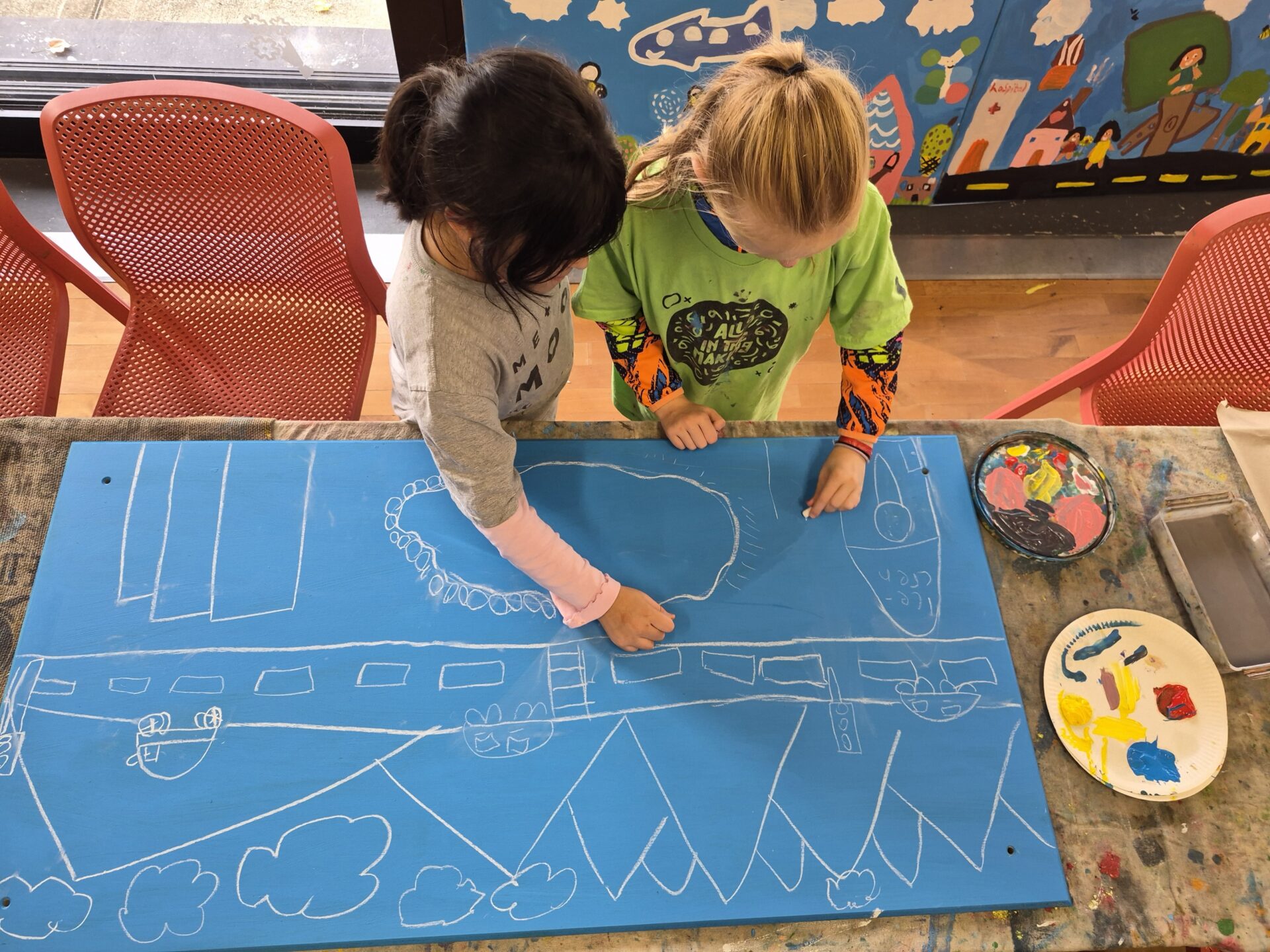
Dr Crokes stalwarts enjoy lake cruise
Dr Crokes GAA Club hosted a special day out for its senior members on Monday, this week, taking a group aged between 70 and 90 on a cruise across the Lakes of Killarney.
Organised by the Dr Crokes Healthy Club committee under its Crokes Cruisers initiative, the event was held to recognise the lifetime contribution made by long-standing members who continue to support club activities behind the scenes.
The group travelled on two vessels, including An Cathal, an open boat operated by local brothers Tony and Mike Fleming. Built to preserve the traditional Killarney lake boat style, it is the only purpose-built, fully accessible boat on the lakes, allowing members with mobility issues and wheelchair users to safely join the two-hour trip.
Following the lake tour, the party gathered on shore for coffee and refreshments provided by Derric McMahon and Harry Clifton of the Ross Castle Garden Cafe.
The initiative forms part of the club’s ongoing community work as a Gold Award winner in the GAA Healthy Club programme.

New Streetscapes murals launched at College Square
A colourful collaboration between the Kerry Local Creative Youth Partnership (LCYP) and the Architecture Kerry Festival at Kerry County Council...
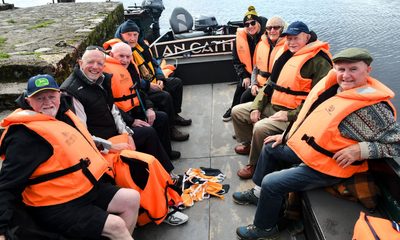

Dr Crokes stalwarts enjoy lake cruise
Dr Crokes stalwarts enjoy lake cruise Dr Crokes GAA Club hosted a special day out for its senior members on...


Green light for Torc to Dinis walkway
Green light for Torc Dinis walkway Planning approval has been granted for a long-awaited lakeside walkway and cycleway connecting Torc...
LOCAL GOLD:
LOCAL GOLD: Terrie O’Shea, founder and owner of Killarney-based business Sorella Berries, celebrating her Gold award win at the Blas...


Grady demands Killarney traffic review
Killarney councillor Martin Grady has called for an urgent review of traffic management across the town following severe delays along...
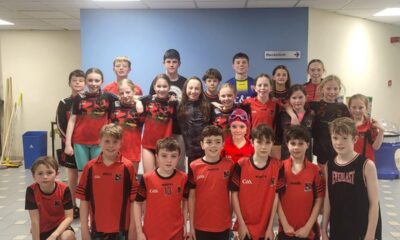

Fossa Swimmers make a splash at County Finals
The Fossa Swim team pictured at the Tralee Sports Complex following their successful outing at the County Finals of the...
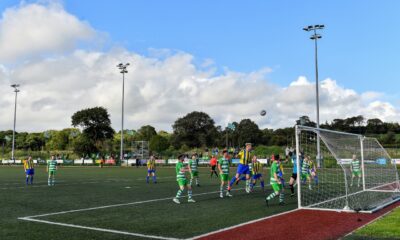

On the Ball Part 2 of the Mikey Daly Interview
Éamonn Fitzgerald EF: Killarney Celtic are invited to participate in an Irish competition. That has big financial implications for travel,...


LUKE MANGAN recently caught up with Kerry FC’s manager, Colin Healy.
He spoke to him about his careers as a player and manager. Here’s how it went: When you began your...


Home cup tie for St Paul’s could be epic
Paudie O’Connor National Cup (Round 1) Utility Trust St Paul’s v GCU Brunell Saturday 7.30pm Killarney Sports and Leisure Centre...


Chances of Kerry v Cork Munster final in 2026 decrease as Munster GAA delay seeding plan
After facing a backlash from Limerick, Clare, Waterford and Tipperary players, Munster GAA have postponed their plan to keep Cork...
