
Sport
INTERVIEW: Older and wiser David Clifford is seizing the day


David Clifford speaks to Adam Moynihan about inclusivity in the GAA, shooting the right shots, and living in the present
They grow up so fast. David Clifford, the boy wonder who shot to fame as a baby-faced prodigy, turned 25 on his latest birthday. Older and wiser? It would appear so.
“As you get a bit older you realise you can’t have that focus of winning the All-Ireland in your head all the time. Of course it’s there and that’s your season-long goal. But if you start wishing the days and weeks away, the season becomes a hard old slog.”
The two-time Footballer of the Year is responding to a question about ‘taking each game as it comes’. Is it hard to live by that mantra when Kerry are expected to walk through Munster and at the very worst reach an All-Ireland semi-final?
“It’s not,” Clifford counters, “because you have to deal with what’s in front of you. You’re just taking it training session by training session at this stage to try and get value from each session. If you do start looking too far down the line, you’re not living in the present at all. You’re kind of wishing the time away. Even the time off the field, you’re nearly wishing it away if you’re looking too far down the line.
“So I’m just trying to enjoy the day-to-day of the whole thing and relax a bit more. Training hard when you’re there but trying to come away from it when you’re not there, that’s something you get better at as you get older.”
Kerry got their 2024 championship off the ground with a largely uninspiring victory over Cork in Killarney last weekend. After going behind to an early goal, the home team steadied the ship and corrected their course – even if it never really felt like plain sailing.
They kicked 18 points in total (Clifford scored 0-4, three from play), which is a solid return, but the bothersome trend of letting big goal chances pass by appears to have carried over from the league. Paudie Clifford missed a glaring opportunity in the first half that you would expect him to score ten times out of ten; it’s the kind of shot that surely needs to converted if it presents itself later in the season against top opposition.
For his part, David is hopeful that the goals will come sooner rather than later.
“It wasn’t perfect [against Cork] but it was decent enough. We were happy with how we responded to going behind early on. We kind of controlled the game well. Everything didn’t click but that’s fine, and the way we were able to grind it out was satisfying enough.
“It’s hard to know [why Kerry haven’t been scoring more goals]. We’d probably put more of a target on creating goal chances and we’re still doing that. You’d hope that with the players we have, we should be able to start finishing those chances.
“We did still create three or four decent goal chances but the last pass might have let us down. So it’s definitely something that we’ll have to work on, but it’s not something that we’re panicking about either.”
At the beginning of April, Kerry manager Jack O’Connor brought his squad to Portugal for a pre-championship training camp. The trip was beneficial in Clifford’s eyes, not only for the work that was put in on the pitch but also because it afforded the players ample time to bond.
“It was brilliant. With the way things are at home, with every fella working, you don’t get to spend as much time together. So just to have a load of sessions together, to get a lot of work done, and meetings… It’s great.
“It’s a great way of getting to know fellas, particularly with so many new fellas on the panel this year. That’s an indirect benefit that comes from it as well, just spending more time together and getting to know fellas.
“It’s grand to have the trip to Portugal but then if you don’t bring everything that you’ve worked on and put it into the matches, the trip is totally pointless. There are people who sacrificed a lot for us to go there so it’s really about putting the stuff into action once we get home.”
As for his own individual game, the perennial All-Star says he’s just “striving for consistency”, while taking on what he calls “better shots at better times”.
“Maybe there were a few games last year where I was firing shots from all angles sometimes and there will be days when they don’t go over. Maybe [I’m] just trying to be more selective in the shots that I take.”
Is there a concern that he might be a volume shooter, i.e. could taking fewer shots adversely affect his conversion rate?
“It’s more about shooting from the right place,” he explains. “If you get into the right spot 20 times in a game, then take the shot 20 times. But it’s just taking the shots from the wrong places, that’s probably the thing to try and avoid.”
COMMUNITY
Clifford was in Croke Park on Tuesday to launch SuperValu’s sponsorship of the All-Ireland Senior Football Championship and their #CommunityIncludesEveryone campaign. The Kerry forward was one of a number of Gaelic games role models and advocates from across the country who were on hand to highlight the role of GAA communities in making Ireland a more diverse, inclusive and welcoming country for all.
It’s a cause that the teacher from Fossa cares about. He believes, for instance, that getting involved with the GAA can help immigrants to settle into their new communities.
“It’s essential that GAA clubs are welcoming to people of all backgrounds. You can see the benefits to getting involved with a club. If you take someone who moves to Ireland, and let’s say their 12-year-old son comes down and trains with club’s under 12 team. Within a few weeks you might see that his dad comes down and helps collect the footballs. Maybe his mother goes and makes the tea for them after the sessions. Then the younger brother or older sister starts playing.
“All of a sudden, you have a purpose. Every weekend you’re going down to the GAA club.
“I think the GAA, in my experience, has been very welcoming. We have always had players and members of clubs in Kerry and all over Ireland from different backgrounds. One of the GAA’s greatest strengths is the whole family and community element of it.”
No active intercounty GAA player has come out as gay since Cork hurler Dónal Óg Cusack in 2009, despite it becoming more common for sportsmen in other codes to do so in the past few years in particular. Leading referee David Gough, a fellow SuperValu ambassador of Clifford’s, came out in 2011 and in recent years he has publicly expressed his disappointment that more intercounty players haven’t felt comfortable enough to do likewise.
Does Clifford feel that the Fossa and Kerry dressing rooms would be welcoming environments for a gay teammate if they decided to come out?
“It would be very disappointing if someone felt that wasn’t the case,” he says. “Away from anything to do with sport, that just wouldn’t be a good reflection of the individuals in those dressing rooms. So, Jesus, you’d be hoping that the dressing room would be a welcoming environment anyway, and you’d be doing everything in your power to make sure that was the case.”
Away from the glare of national superstardom, Clifford is kept busy with his day job at St Brendan’s College and with his two-year-old son, Óigí.
“He has taken an interest in football,” the proud father reveals. “He has around ten different soccer kits and he loves wearing them, and he wants to go out the back kicking ball for spells during the day. So that’s great old fun. He’s starting to copy the soccer celebrations that I’d be showing him now so I have good craic with him.
“He’s right-footed at the moment, but we’ll work on that.”
To listen to the full interview, check out ‘The Kerry Football Podcast’ on Spotify or Apple Podcasts
News
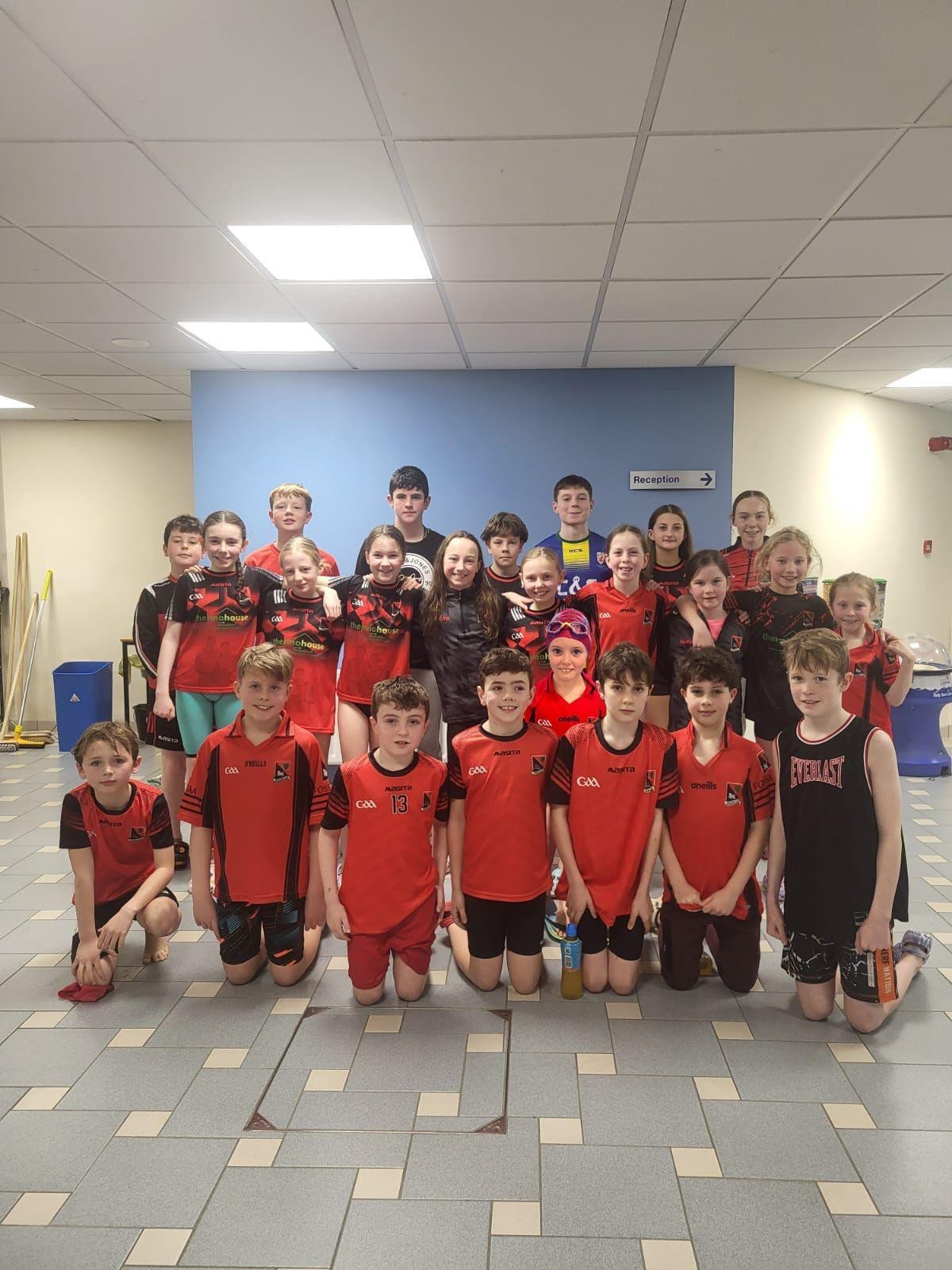
Fossa Swimmers make a splash at County Finals
The Fossa Swim team pictured at the Tralee Sports Complex following their successful outing at the County Finals of the Community Games on Sunday, February 15. The 25-strong squad delivered […]

News
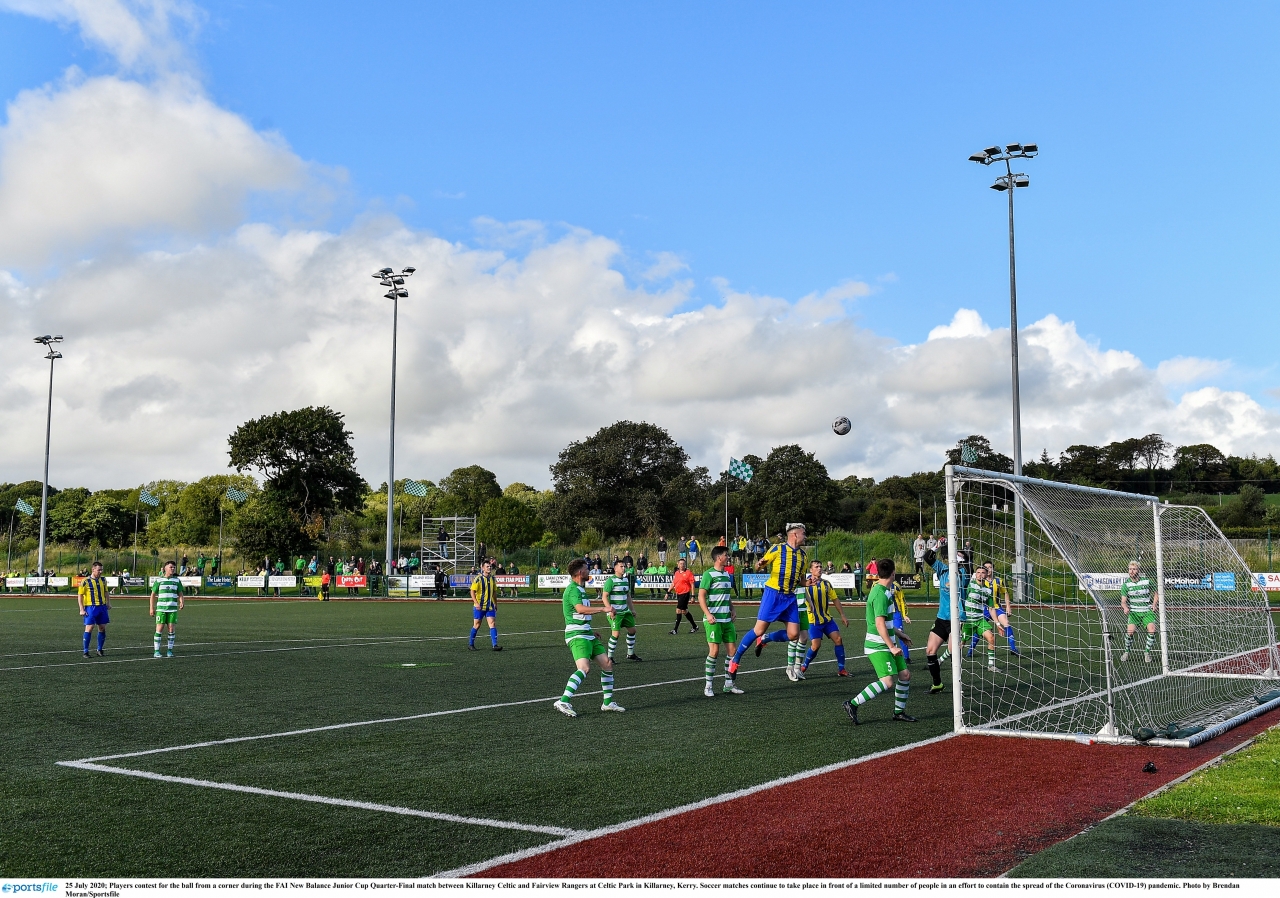
On the Ball Part 2 of the Mikey Daly Interview
Éamonn Fitzgerald EF: Killarney Celtic are invited to participate in an Irish competition. That has big financial implications for travel, meals, etc. MD: It is great to be invited, showing […]

Kerry Airport CEO addresses chamber luncheon
Kerry Airport chief executive Adrian Neilan addressed local business leaders at the Killarney Chamber of Tourism and Commerce luncheon at...

The Brehon raises €2,850 for Jack and Jill Foundation
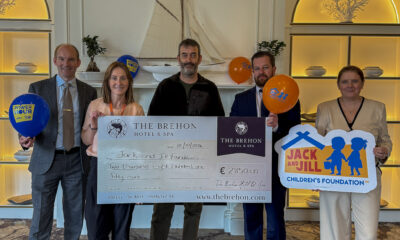
The Brehon Hotel and Spa raised €2,850 for the Jack and Jill Children’s Foundation after hosting a closest-to-the-pin golf simulator...

Five local postmen retire with 185 years service
Five local postmen retire with 185 years service RETIREMENT NIGHT: Pictured at the retirement party held at Killarney Racecourse on...

New Streetscapes murals launched at College Square
A colourful collaboration between the Kerry Local Creative Youth Partnership (LCYP) and the Architecture Kerry Festival at Kerry County Council...

Dr Crokes stalwarts enjoy lake cruise
Dr Crokes stalwarts enjoy lake cruise Dr Crokes GAA Club hosted a special day out for its senior members on...
