
News
There will always be uncertainty


There will always be a seemingly justifiable reason to sell, but history has shown that markets prevail.
Over the long term, the stock market news will be good. In the 20th century, the United States endured two world wars and other traumatic and expensive military conflicts; the Depression; a dozen or so recessions and financial panics; oil shocks; a flu epidemic; and the resignation of a disgraced president. Yet the Dow rose from 66 to 11,497 – Warren Buffet
The truth is, the pending geopolitical events are impossible to predict with certainty. As always, the most practical form of defence against these events is diversification across multiple asset classes, market-cap sizes, regions and sectors.
With that said, it helps to analyse how similar past events have impacted markets.
While international conflict is tragic for all involved, it does not guarantee economic ruin. For example:
During the Korean War (1950 to 1953), US stocks fell at first, then recovered as normality resumed, rising roughly 15%.
During the Vietnam War (1965 to 1973), the stock market grew by 43% as industries in the US rebounded from the initial impact and began rebuilding.
In both Gulf Wars (1990 and 2003), the market fell 10% initially but had recovered within a year.
Market corrections are also nothing new. Remember, stock market losses are a regular occurrence.
Since 1950, the S&P 500 has had an average drawdown from peak-to-trough of 13.6% over a calendar year. And yet, markets have continued to grind higher over time.
Even during the S&P 500's nearly 11-year bull run from March 2009 to February 2020, the S&P 500 witnessed five corrections. The pullbacks were prompted by concerns about everything from interest rates to trade wars to a European debt crisis.
The volatility you get from stocks is the price you pay for the high returns they offer. It's not free.
MARKET MOVERS
Defence stocks, commodities, especially oil and precious metal such as Gold will likely move higher while growth and transport stocks are likely to be negatively impacted over the short-term.
For now, all eyes will be on oil movements. Russia’s outsized role as an oil and gas exporter makes this an area of extreme focus, given the inflationary impact that rising oil prices will have on the broader economy.
NEXT STEPS FOR INVESTORS
Through the clarity of hindsight, all past declines look like opportunities but saying "I'll be greedy when others are fearful" is easier said than done.
When the chips are down and war is looming, it's suddenly much harder to confidently swing for the fences.
Unfortunately, it is impossible to know precisely when this all ends, especially with Putin at the helm.
History has shown that military attacks typically result in initial sharp market drawdowns followed by a rebound - but attempting to pinpoint this reversal is a dangerous game.
From here, investors need to ensure they focus on their medium to long-term view. Concentrating on your individual investment goals and the earnings of the companies you hold will help strip out some of the uncertainty from the market.
To read my full market analysis, go to www.theislandinvestor.com.

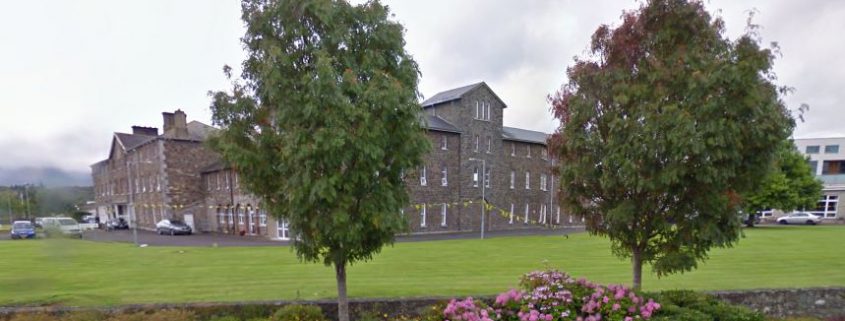
A design team has been appointed to advance plans for the proposed Minor Injury Unit on the grounds of St Columbanus Home though the HSE has confirmed it cannot yet give a construction or opening timeline.
Fianna Fáil TD Deputy Michael Cahill received the update in response to a Parliamentary Question submitted to the Minister for Health. HSE South West confirmed the newly appointed team will progress the project through design development, planning, and regulatory approval following the transfer of residents to the new Killarney Community Nursing Unit.
Deputy Cahill welcomed the appointment of the design team but raised concerns over the lack of a definitive schedule.
“I welcome the appointment of a design team, which represents progress towards delivering this important facility. However, I am concerned that the HSE is still unable to provide a definitive timeline. Previous indications from HSE officials pointed towards construction commencing in 2026, with completion anticipated in 2027. We now need clarity on the project schedule and assurances that there will be no unnecessary delays,” Deputy Cahill said.
He noted that the facility is vital to serve Killarney and the wider east, mid, and south Kerry regions while relieving pressure on the Emergency Department at University Hospital Kerry.
The HSE also confirmed it is finalising a broader review of healthcare accommodation across Killarney to develop the St Columbanus campus as an integrated healthcare hub.
“As a member of the Oireachtas Joint Committee on Health, I will continue to press the HSE and the Minister for Health to ensure this project is progressed without further delay. People across Killarney, east, mid, west and south Kerry deserve certainty. The appointment of a design team is welcome but the next priority must be getting this project to construction and delivering the facility,” Deputy Cahill concluded.
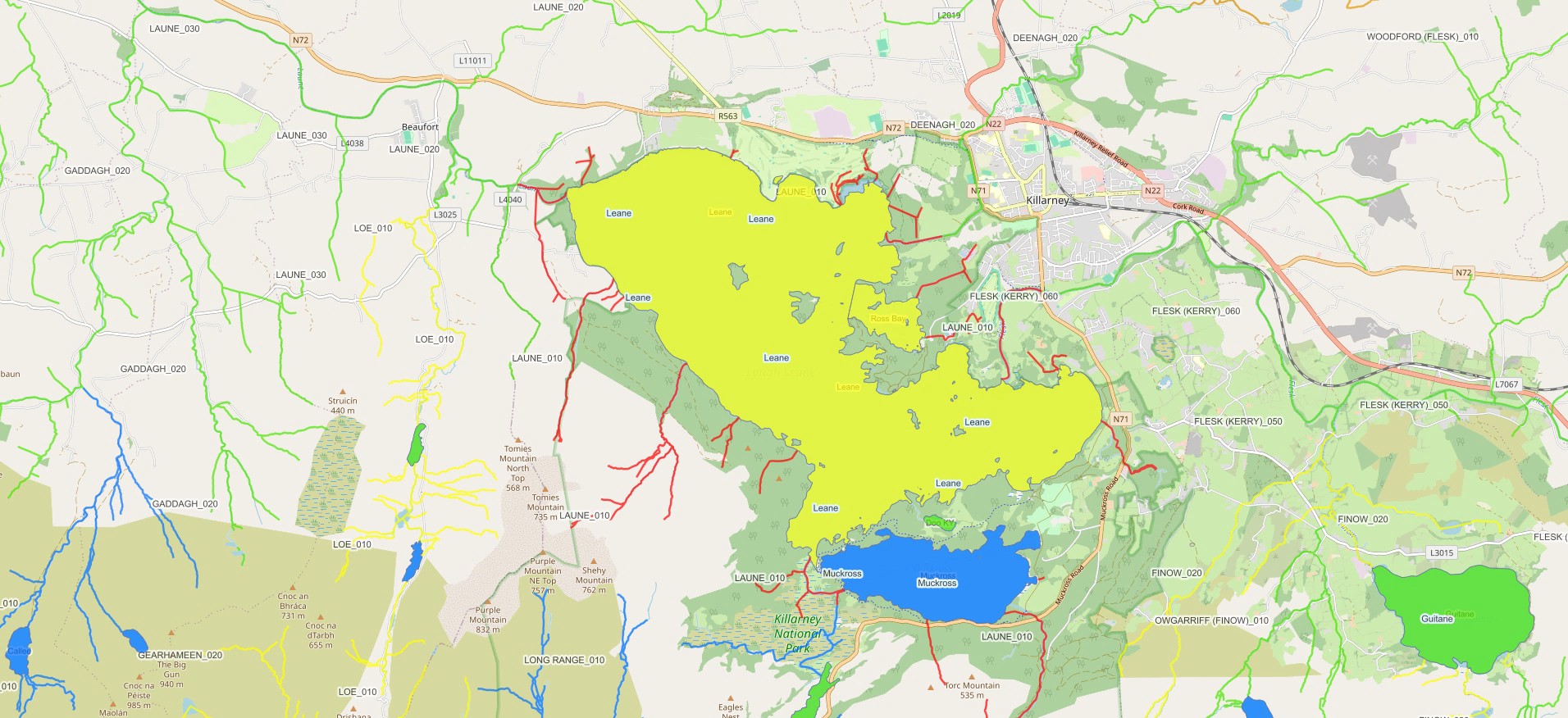
Lochanna Beo’s mapping highlights water quality concerns
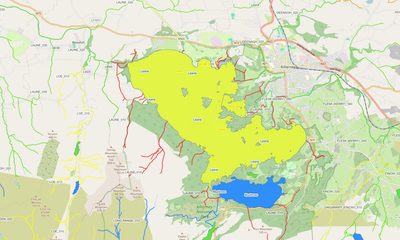
Local environmental action group Lochanna Beo has released mapping data from the Environmental Protection Agency (EPA) to draw attention to deteriorating water quality across Killarney and the broader Laune Catchment.
The EPA map uses a colour-coded system to rate water quality status from 2019 to 2024: blue indicates high status, green indicates good, yellow represents moderate, brown denotes poor, and red signifies bad status.
The figures indicate significant ecological pressure on local lakes and rivers compared to neighbouring areas across County Kerry.
Formed during the summer of 2026, Lochanna Beo aims to bring together residents, business owners, agricultural operators, and public bodies to address the key factors affecting the regional aquatic ecosystem.
The community initiative is seeking direct engagement with relevant statutory authorities to implement practical restoration measures and protect the long-term health of Killarney’s water bodies.

Design team appointed for injury unit
A design team has been appointed to advance plans for the proposed Minor Injury Unit on the grounds of St...

Lochanna Beo’s mapping highlights water quality concerns
Lochanna Beo’s mapping highlights water quality concerns Local environmental action group Lochanna Beo has released mapping data from the Environmental...


Stefan Caulfield-Dreier signs professional cycling contract
Former Killarney Cycling Club rider Stefan Caulfield-Dreier has secured a professional contract with leading Dutch-based outfit Azerion-Villa Valkenburg. The 23-year-old...

Church seeks creative Christmas trees for festival
Church seeks creative Christmas trees for festival The Methodist Church in Killarney is inviting local schools, community groups, businesses, and...


€6,000 Scrooge Giveaway!
€6,000 Scrooge Giveaway! Six lucky audience members will each walk away with €1,000 as the Gleneagle Arena welcomes an extraordinary...
