
News
Know Your Rights: Becoming an Irish Citizen


Q: Who is entitled to Irish Citizenship?
A: You are entitled to claim Irish citizenship if any one of the following applies:
1. You were born in Ireland or Northern Ireland before 1 January 2005
2. You were born in Ireland or Northern Ireland after 31 December 2004 and one (or both) of your parents was an Irish or entitled to be an Irish citizen or a British citizen at the time of your birth or one of the following scenarios apply to you:
* One (or both) of your parents was an Irish or British citizen and died before you were born
* One (or both) of your parents was entitled to live in Ireland or Northern Ireland without any restriction on his or her period of residency
* One (or both) of your parents was legally resident on the island of Ireland for three out of the four years immediately before your birth (this does not include residence on a student visa, or residence while awaiting an international protection decision)
3. You were born abroad and one of the following scenarios apply to you:
* One (or both of your parents) was born in Ireland and was entitled to Irish citizenship
* Your grandparent was born in Ireland and you have entered your birth on the Foreign Births Register
* At the time of your birth, your parents had become an Irish citizen by registering with the Foreign Births Register or by naturalisation. You must register your birth with the Foreign Births Register before obtaining Irish citizenship.
4. You were born in Ireland and are not entitled to be a citizen of any other country.
Q: Who is entitled to apply for Irish citizenship by naturalisation?
If you are not entitled to citizenship by birth or descent, you can apply to become an Irish citizen by naturalisation if one of the following situations apply to you:
* You have lived in Ireland legally for five out of the last nine years ending on the day before your application and you have resided in Ireland legally for the 12 month period before your application and you are over 18
* You received a declaration as a refugee from the Minister for Justice and you have lived legally in Ireland for three years ending on the day of your application and you are aged over 18
* You are currently married to or a civil partner of an Irish citizen and you have lived in Ireland legally for three out of the five years before the day of your application and you have resided in Ireland legally for the 12 month period before your application and you have been married and living together for three years
* You are a child born in Ireland who is not entitled to citizenship by birth and both you and one (or both) of your parents has lived in Ireland legally for five out of the nine years ending on the day of your application and both you and one (or both) of your parents have resided in Ireland legally for the 12 month period before your application
How to apply for Citizenship through Naturalisation?
There are a number of steps to follow. First you need to check that you qualify and then you must complete an application form. It is essential that you use the current version of the application from which you will get on the Immigration Service Delivery website. You can get help with the form from your local Citizens Information Service. You will need to provide supporting documentation with your application and if your documents are in a language other than English, you must get them translated by a professional translating service. All adult applicants must send a Tax Clearance Certificate. This certifies that your tax affairs are in order.
When you have completed the application form and are ready to send the form and supporting documents, you will have to make a statutory declaration. A statutory declaration is a way of swearing that something is true. It is a written statement and must be witnessed by someone who is authorised to witness your declaration.
Your completed form, with the relevant fee is then sent to the Immigration Service at the address on the form.
What rights does Citizenship give?
If you are an Irish citizen, you are entitled to:
* Carry an Irish passport
* Live and work in Ireland without restriction
* Vote in a general election, constitutional referendum or presidential election
* Be elected to Government in Ireland and in the European Union
* Live, travel and work within the European Union
* Serve on a jury, unless you are disqualified or ineligible
* Receive diplomatic assistance abroad from an Irish or EU embassy
Can you hold Dual Citizenship?
Ireland allows dual citizenship, which means that you can become an Irish citizen and remain a citizen of another country.
Some countries do not allow dual citizenship and you should check the citizenship rules of your country of nationality if you are considering applying for Irish citizenship.
If you are a dual citizen, you can apply to have your non-Irish passport stamped with a Without Condition Endorsement (also called Stamp 6). This stamp says that you have a right to live in Ireland without any time conditions.
For anyone needing information, advice or have an advocacy issue, you can call a member of the local Citizens Information team in Kerry on 0818 07 7860, they will be happy to assist and make an appointment if necessary. The offices are staffed from Monday to Friday from 10am to 4pm. Alternatively you can email on tralee@citinfo.ie or log on to www.citizensinformation.ie for further information.

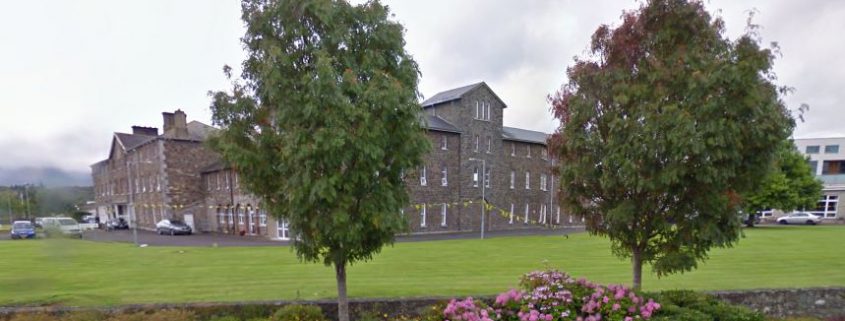
A design team has been appointed to advance plans for the proposed Minor Injury Unit on the grounds of St Columbanus Home though the HSE has confirmed it cannot yet give a construction or opening timeline.
Fianna Fáil TD Deputy Michael Cahill received the update in response to a Parliamentary Question submitted to the Minister for Health. HSE South West confirmed the newly appointed team will progress the project through design development, planning, and regulatory approval following the transfer of residents to the new Killarney Community Nursing Unit.
Deputy Cahill welcomed the appointment of the design team but raised concerns over the lack of a definitive schedule.
“I welcome the appointment of a design team, which represents progress towards delivering this important facility. However, I am concerned that the HSE is still unable to provide a definitive timeline. Previous indications from HSE officials pointed towards construction commencing in 2026, with completion anticipated in 2027. We now need clarity on the project schedule and assurances that there will be no unnecessary delays,” Deputy Cahill said.
He noted that the facility is vital to serve Killarney and the wider east, mid, and south Kerry regions while relieving pressure on the Emergency Department at University Hospital Kerry.
The HSE also confirmed it is finalising a broader review of healthcare accommodation across Killarney to develop the St Columbanus campus as an integrated healthcare hub.
“As a member of the Oireachtas Joint Committee on Health, I will continue to press the HSE and the Minister for Health to ensure this project is progressed without further delay. People across Killarney, east, mid, west and south Kerry deserve certainty. The appointment of a design team is welcome but the next priority must be getting this project to construction and delivering the facility,” Deputy Cahill concluded.
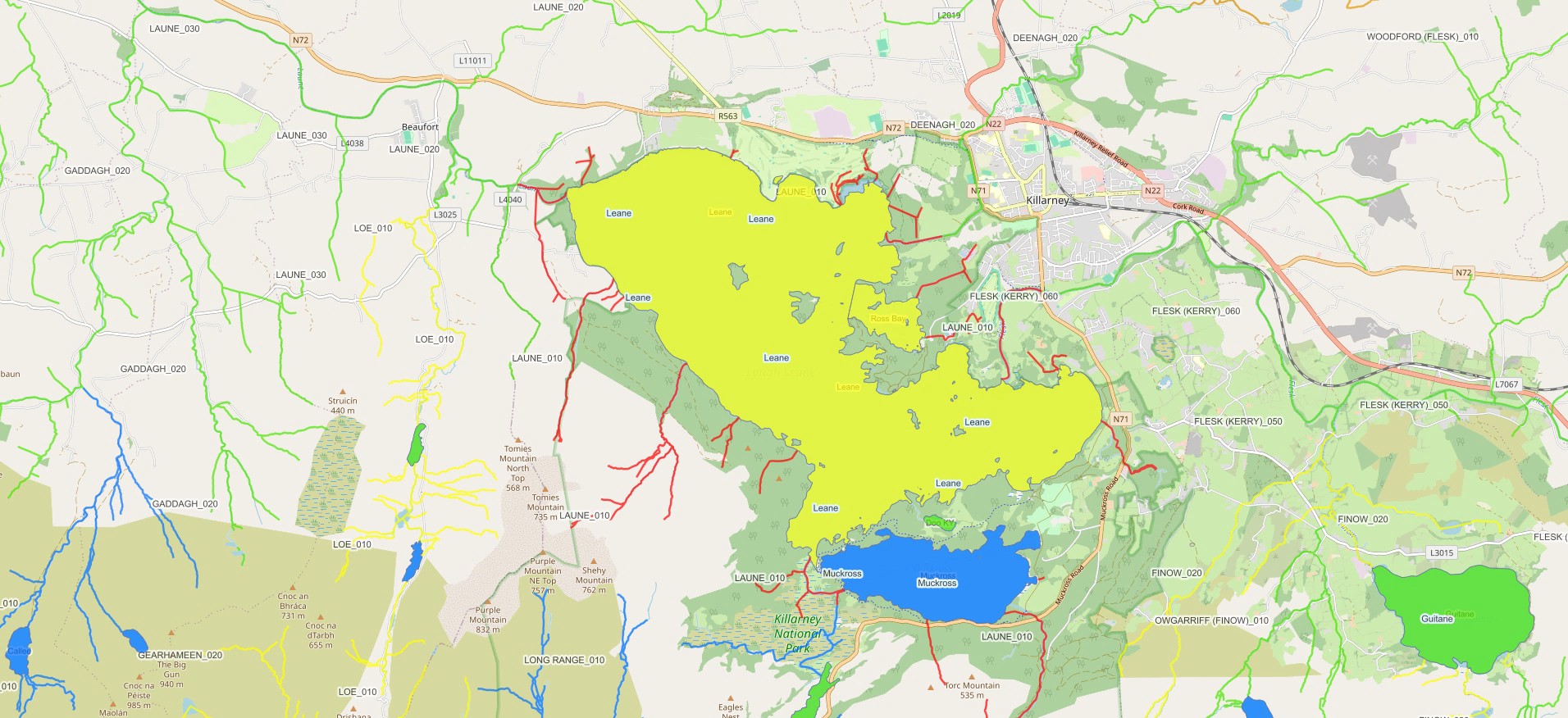
Lochanna Beo’s mapping highlights water quality concerns
Local environmental action group Lochanna Beo has released mapping data from the Environmental Protection Agency (EPA) to draw attention to deteriorating water quality across Killarney and the broader Laune Catchment.
The EPA map uses a colour-coded system to rate water quality status from 2019 to 2024: blue indicates high status, green indicates good, yellow represents moderate, brown denotes poor, and red signifies bad status.
The figures indicate significant ecological pressure on local lakes and rivers compared to neighbouring areas across County Kerry.
Formed during the summer of 2026, Lochanna Beo aims to bring together residents, business owners, agricultural operators, and public bodies to address the key factors affecting the regional aquatic ecosystem.
The community initiative is seeking direct engagement with relevant statutory authorities to implement practical restoration measures and protect the long-term health of Killarney’s water bodies.


Design team appointed for injury unit
A design team has been appointed to advance plans for the proposed Minor Injury Unit on the grounds of St...

Lochanna Beo’s mapping highlights water quality concerns
Lochanna Beo’s mapping highlights water quality concerns Local environmental action group Lochanna Beo has released mapping data from the Environmental...


Stefan Caulfield-Dreier signs professional cycling contract
Former Killarney Cycling Club rider Stefan Caulfield-Dreier has secured a professional contract with leading Dutch-based outfit Azerion-Villa Valkenburg. The 23-year-old...


Church seeks creative Christmas trees for festival
Church seeks creative Christmas trees for festival The Methodist Church in Killarney is inviting local schools, community groups, businesses, and...


€6,000 Scrooge Giveaway!
€6,000 Scrooge Giveaway! Six lucky audience members will each walk away with €1,000 as the Gleneagle Arena welcomes an extraordinary...


Fossa Swimmers make a splash at County Finals
The Fossa Swim team pictured at the Tralee Sports Complex following their successful outing at the County Finals of the...


On the Ball Part 2 of the Mikey Daly Interview
Éamonn Fitzgerald EF: Killarney Celtic are invited to participate in an Irish competition. That has big financial implications for travel,...


LUKE MANGAN recently caught up with Kerry FC’s manager, Colin Healy.
He spoke to him about his careers as a player and manager. Here’s how it went: When you began your...


Home cup tie for St Paul’s could be epic
Paudie O’Connor National Cup (Round 1) Utility Trust St Paul’s v GCU Brunell Saturday 7.30pm Killarney Sports and Leisure Centre...


Chances of Kerry v Cork Munster final in 2026 decrease as Munster GAA delay seeding plan
After facing a backlash from Limerick, Clare, Waterford and Tipperary players, Munster GAA have postponed their plan to keep Cork...
