
Sport
A lover of music and song: Jimmy O’Brien RIP


Eamonn Fitzgerald remembers the late Jimmy O'Brien, the eminently popular bar owner, singer and GAA fan who left an indelible mark on the town of Killarney.
Publican Jimmy O’Brien was laid to rest at sunny Aghadoe on Monday last. He wouldn’t want any fuss, but he got his promise from his lifelong friend, Jimmy Doyle. Jimmy was on the button accordion playing ‘Mary from Bonane’, a firm favourite, and even more so in recent weeks when Bonane native Seán O’Shea was kicking points from all angles.
After his love for his family, nothing meant more to Jimmy O’Brien than football, music and song.
Born in the town land of Lyreatough, Kilcummin in 1932, he attended the local Anabla NS and was well inducted in the various stages of getting the turf from sleán to the reek in the haggard. He was of the bog and proud of it. But he knew it was very hard work and headed for town, specifically Culloty’s Garage at Fair Hill (now Killarney Hardware). There he learned his trade as a mechanic. He didn’t boast about it but was very proud of the papers he received to certify him as fully qualified.
Like so many more people of that time, he was taken to America by Patrick Cronin in 1956 and was home for good in 1961. He must have collected a fair fistful of dollars and held on to them because, when Conno Healy’s pub came up for sale in 1959 (across the road from Culloty’s), he bought it. He returned home to open up Jimmy O’Brien’s pub along with his wife, Mary.
The family came along in due course - Siobhán, Ann and Jim - and the business grew. All went well until September 29, 1994, when his beloved Mary passed away aged 61. Too young to die and it hit him hard. No wonder; wasn’t she his life and soul?
His three children, the bar and his twin loves of football and song kept him going. He had no time for soccer, recounting times he would go up to the Friary, say the rosary, and still no score when he returned.
He was an ardent supporter of the Kerry football teams, but even more passionate about club football. Which was his club?
ROGUES
Set the scene in the Fair Hill bar, with a nice crowd inside. That’s the way he liked it - he got a bit flustered if it became jam-packed. It’s summer time and the O’Donoghue Cup draw has been published.
Johnny Batt (Cronin) was the instigator, and his Spa club mates the Herlihy brothers (Dave and William) stirred it further. Who was Jimmy going to support in the forthcoming matches, in which the rivalry would be intense? Mick Gleeson was as philosophical as ever; he knew better than to try and win this one.
The McCarthy brothers from Gneeveguilla, Thado, Joe and Billy, were in fast to lay claim to the boss of the house. After all, wasn’t he reared in the traditions of Sliabh Luachra and one of its finest sean-nós singers? Rosy was far more definite. Gneeveguilla, of course, I have to say.
Kilcummin’s Dermot Moynihan was in no doubt about how the allegiance would stand. After all, Jimmy was born in the parish, went to school in the parish and the parish rule was, and still is, sacrosanct in Kerry football.
The odds favoured the country clubs and were stacked against the townies. Weeshie Fogarty was a regular and he had lined Jimmy up for Terrace Talk.
His daughter, Ann, married Harry O’Neill (Dr Crokes), Tom Long was his gun club friend traipsing around Cock Hill and not a word out of him, but beside him supping porter and watching the scene develop was Mike Cooper, the man who was born just inside the county bounds and was now living in Killarney. The Crokes are the team, said Mike, his chest swelling with pride. He had just returned from Cahersiveen where Dr Crokes had defied the odds to beat the Maurice Fitzgerald-led South Kerry team in the Kerry County Championship. Five of his sons played the full match to secure victory. But I thought there were only four?
“No, I have five, all good, but the youngest is only a slip of a lad. You’d think you’d blow him over, but the foxy boy will be the best of all of them.” How right he was. The boy became a man and won five All-Irelands with Kerry. Crokes went on to win the 2000 Kerry SFC, managed by Harry O’Neill, Jimmy’s son-in-law.
How was the proprietor going to get out of this one before the gallery of rogues? Sure, he was the greatest rogue of all himself, but we loved him for it.
Everyone looked to Jimmy for an answer, but he turned to another regular, the independent voice of Bracker, from the Rock.
Plenty of grimacing and carry on, but no answer to Johnny Batt’s question. Jimmy O’Brien had the knack of not falling out with anyone and he couldn’t win this one, so he carried confirmation of club allegiance with him to his grave.
I’m pretty sure it is Gneeveguilla, in the heart of Sliabh Luachra, which made Jimmy O’Brien a household name in traditional music, especially with his lifelong ‘brother’ Jimmy Doyle. He embraced the greatness of Julia Clifford, Denis Murphy, Johnny O’Leary, the Doyle brothers and many more.
SINGING
What’s more, he enhanced that marvellous tradition, not in playing, but in singing. I asked Jimmy Doyle at the graveside about Jimmy on the melodeon. “Oh, he could play… But he was only alright! But for singing he was tops, pure and just outstanding. He could interpret a song so well. You wouldn’t hear a pin drop when he sang unaccompanied.”
Is it any wonder that his pub in Fair Hill was a mecca for traditional singers and musicians? They came to the master’s pub for a session.
Paddy Moloney, chief of The Chieftains, was a regular caller; as were The Dubliners; and the Kelly brothers, Luke of ‘Raglan Road’ and Paddy, who was also a beautiful singer. When Paddy was head of the Trade Unions, they held their conferences in Killarney’s Great Southern Hotel. Business over, they trooped down to O’Brien’s. The pint was much cheaper there and they would have a right session singing, and what are you having yourself, sir?
Dolly McMahon, The Wolfe Tones, and the Begley’s all came to sing and play.
There were so many impromptu sessions and you’d get the discreet phone call that the session had already started. “Come, you’ll enjoy it, but ná h-abair focal to anyone.” What an invitation to listen to musical greats from the list above.
“Johnny O’Leary and the Doyles will be here around 10. We have Seán Ó Sé (Poc ar Buile), Johnny Lehane and Diarmaidín Ó Súillabháin will be here from Cúl Aodh. He’ll have the recorder for Radio na Gaeltachta.”
Regular visitors were Mick O’Connell, Micheál Ó Muircheartaigh, Donncha Ó Dulaing and Cíarán Mac Mathúna. Thankfully, Ciarán recorded so many of Jimmy’s songs, preserving this priceless legacy for the Irish oral tradition.
And then there were the American tourists drawn to a real Irish pub. They wanted ‘Danny Boy’ and ‘Galway Bay’. They also wanted to know what music college from which the vintner graduated. The prime boys from UCC provided him with the answer for the Yanks question. The University of Sliabh Luachra, with its constituent college in Lyreatough. “Wow, fancy that. Must Google that when we get back to the States.”
FRIENDSHIP
My friendship with Jimmy O’Brien goes back a long ways, but specifically to November 1969, when East Kerry won the second of their Kerry SFC titles and the Bishop Moynihan Cup had pride of place.
He introduced me to so many people, including Con Houlihan, sitting in the high seat inside the door, hair well down his back, no pigtail and his hand cupped to his nose. This genius of a wordsmith was a shy man that I met many times later in Dublin.
Just like Paddy Moloney, Jimmy shared his talents with so many young up and coming singers who went on to great things in life. I recall one such case. A very young nervous girl was preparing for her first time on stage, a recitation in Scór. Would he help her out?
Would he what? Bring her along. To this day the now adult woman recalls sitting up on that seat inside the door and this gentle, loving man encouraging her with great tips.
That seat is long gone, but not the bar stand. He splashed out on a magnificent mahogany piece, surplus to the requirements of the Great Southern. “That’s not like you,” says Johnny Batt. “What’ll you use it for?”
“It’ll be a fine bar counter,” Jimmy replied. “And what’s more, when its job is done, won’t it make a fine coffin?”
He was a great Friary man and the highlight of St Patrick’s Day was the singing of the Ár nAthair. Father and daughter, Jimmy and Siobhán, the All-Ireland champion singer unaccompanied in touching harmony. Flawless. Enchanting.
His relationship with his son Jim was more like that of brothers, looking after each other. They got great joy out of travelling to matches in the ageless red Mercedes, certainly the only one in Killarney, if not in Europe. He never got a parking ticket and definitely was never caught for speeding. I’m convinced that the former mechanic set cruise control at 40km and away she went with co-pilot Jim Bob. No need for GPS, Jim Bob in control. God help the poor motorist trying to pass out on the rural roads.
July was his favourite month to live his passions. The Munster final in Killarney on the first Sunday of July was the occasion to meet so many of his friends from afar. It was also the first day of the Willie Clancy festival at Miltown–Malbay and that ran for a week. He never missed it, linking up with Galway hurlers Joe McDonagh and the Connolly brothers and especially their aunts and uncles, the Jimmy O’Brien cultivators of traditional singing and music in Connemara. It was his spiritual retreat. Sustenance for another year.
His nephew, Fr Liam O’Brien, celebrated the touching funeral mass, enhanced by the singing of Maura Reen.
I had the good fortune to spend an hour with Jimmy less than a fortnight before he died. He wanted to know the inside story on Jack O’Connor’s return and then sang ‘The Boys of Bárr na Sráide’ and Garry McMahon’s ‘Kerry’s Green and Gold’.
Pitch perfect. Word perfect. Never a faltering note.
“Not bad for an ould fella,” were his parting words. He knew he could still do it and I was so happy to video live the Master of Songs, treasured recordings for the memory bank.
I wonder if St Peter will listen in on the hop balls between new neighbours, Johnny Batt and Jimmy O’Brien?
To Siobhán, Ann, Jim and extended families, as well as friends from far and near, comhbhrón ó chroí.
Traditional cultural Ireland has lost some great people in recent weeks: Tony Loughnane, Paddy Moloney, Máire Mac an tSaoí, Brendan Kennelly and Jimmy O’Brien. Class acts.
And Jimmy, go gcloisfidh tú na h-aingil ag déanamh ceoil leat ar Neamh.


News
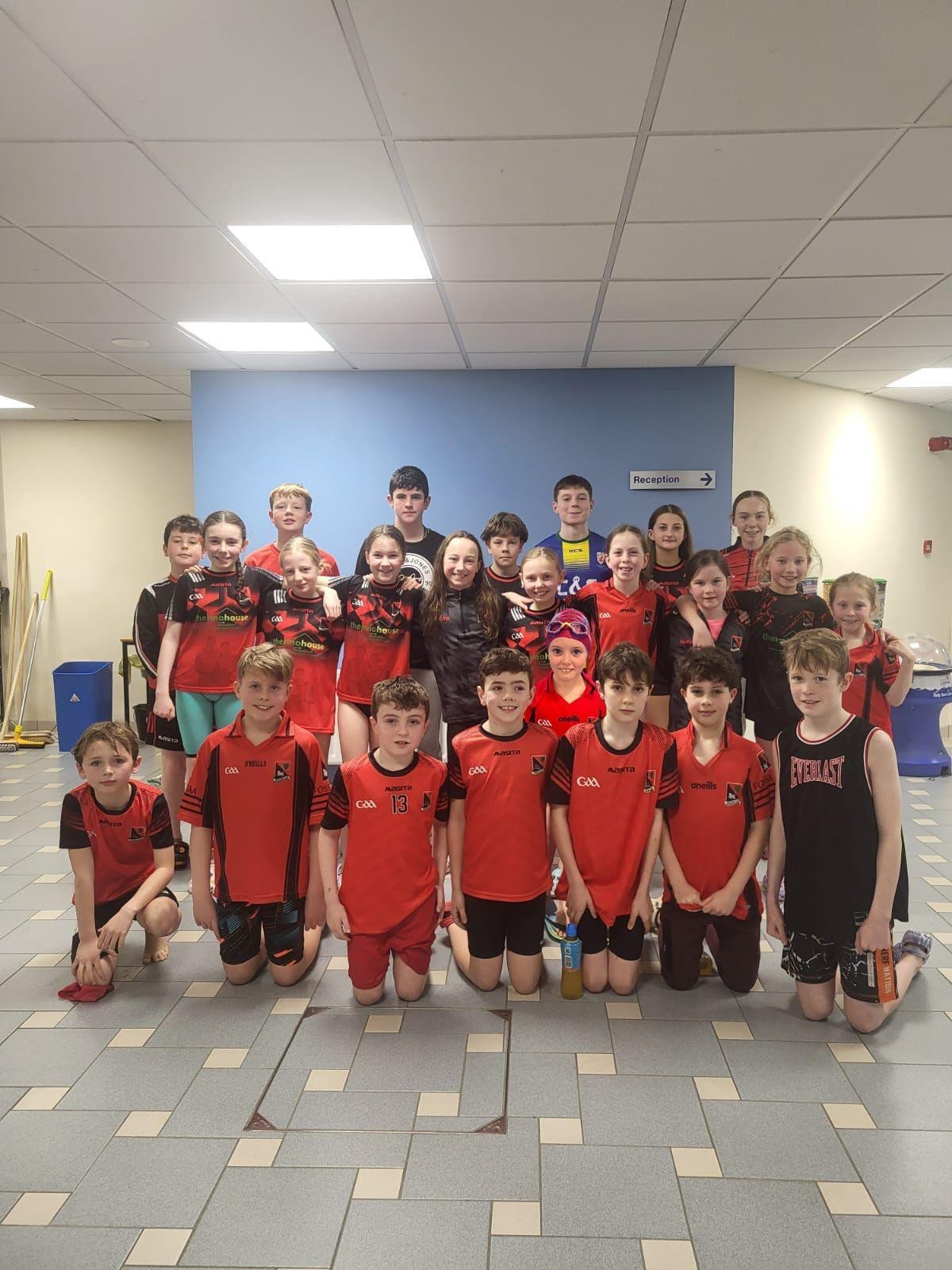
Fossa Swimmers make a splash at County Finals
The Fossa Swim team pictured at the Tralee Sports Complex following their successful outing at the County Finals of the Community Games on Sunday, February 15. The 25-strong squad delivered […]

News
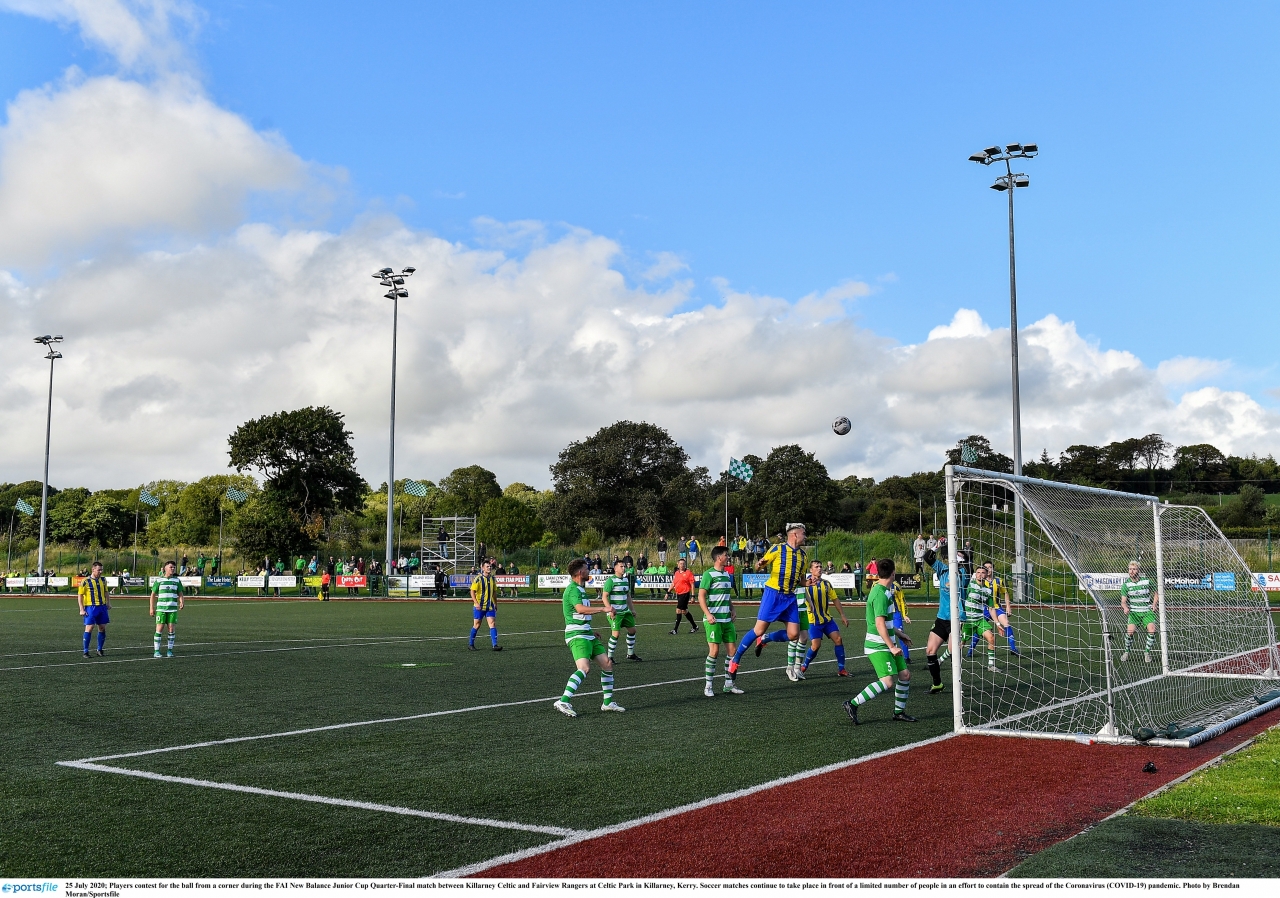
On the Ball Part 2 of the Mikey Daly Interview
Éamonn Fitzgerald EF: Killarney Celtic are invited to participate in an Irish competition. That has big financial implications for travel, meals, etc. MD: It is great to be invited, showing […]

Kilcummin parish celebrates milestone wedding anniversaries
Couples across the parish of Kilcummin gathered at Our Lady of Lourdes Church for a special celebration Mass honouring milestone...

Killarney Plaza wins top golf hotel award
Killarney Plaza wins top golf hotel award Killarney Plaza Hotel and Spa has been named IGTOA Large Golf Hotel of...

Kilcummin Men’s Shed goes jaunting!
Kilcummin Men’s Shed goes jaunting! Three jaunting cars, a gang of Kilcummin characters, two unsuspecting Americans and a few amorous...

New Dutch flights to connect Groningen and Kerry Airport
New Dutch flights to connect Groningen and Kerry Airport Tourism across Kerry is set for a boost following the announcement...

Eoin Cashman named Kerry’s sole Naughton Scholar
Eoin Cashman named Kerry’s sole Naughton Scholar Scoil Phobail Sliabh Luacha student Eoin Cashman has been honoured as County Kerry’s...
