
Sport
Grealish is winning over the Irish… Rice? Not so much


Adam Moynihan gives his take on the Irish public's "complicated" relationship with Jack Grealish and Declan Rice, while also asking the tricky question: can a person be both Irish and English?
Without wishing to resort to bottom-of-the-barrel “you know you’re Irish when…” humour, you know you’re Irish when, at some point in a major tournament, you are utterly consumed by the giddy anticipation that precedes the English national team’s newest implosion.
Annoyingly, it appears as though that joyous moment of self-destruction might not actually happen this time. Which is weird.
Nevertheless, hating the English is undoubtedly one of our favourite things to do, even if that hate is becoming more playful and less actually hateful as time goes by.
There are still some proper hate figures when it comes to Anglo-Hiberno relations, though. The Royal Family. Cromwell. Churchill. Thatcher. Grealish. Rice. And not necessarily in that order.
The latter duo could help to bring football “home” on Sunday evening, a feat which will no doubt make them eternal heroes in the country of their birth. But back in the home of their forefathers (Grealish has four Irish grandparents and both of Rice’s parents are Irish), winning Euro 2020 will do little for their popularity, which plummeted when the pair separately decided to switch allegiances to England having represented Ireland at underage level.
Rice actually played three times for Ireland’s senior team before defecting.
The decisions (Grealish’s in 2015 and Rice’s in 2019) left Irish football fans absolutely furious. Not only were we losing two desperately needed high-potential players, we were losing them to England. It left a very sour taste. There was a time in Ireland when the mere mention of Grealish’s name was sure to incite furrowed brows and some fairly choice expletives. He was well and truly hated.
They say time heals all wounds, however, and an informal poll carried out on my Instagram this week seems to suggest that, in Grealish’s case at least, all is forgiven.
Over three-quarters (77%) of the 250 respondents said that they now “like” Jack Grealish, with the remaining 23% standing firm and stating that they still “hate” him.
The poll itself can’t claim to be a completely accurate reading of the entire room – most of my followers are from County Kerry and roughly from my own generation or younger – but it’s a remarkable figure nonetheless, especially when you consider how despised the Aston Villa player was following his change of heart.
Perhaps the fact that Grealish has blossomed into such an exciting talent has impacted Irish soccer fans’ perception of him. He has lit up the Premier League in recent seasons and is now a target for a number of clubs, including Manchester United - one of the most popular teams on these shores.
He does also seem to come across as a genuine guy and whenever he speaks about the controversial transfer, he is respectful to Ireland. The Birmingham native, who played Gaelic football as a boy, clearly has legitimate ties to both communities and, considering how well his career is going, no Irish supporter can seriously claim that he made the wrong choice by opting for England.
Rice, on the other hand, still divides opinion. There is a well-founded perception that the West Ham midfielder did not handle his defection as well as he could and, perhaps, should have, and that he strung Ireland along for longer than he needed to. Maybe he always wanted to play for England? Maybe Ireland was just a stepping-stone?
The poll revealed that 60% of my followers still “hate” Rice, which is lower than I would have guessed but is still in stark contrast to the positive approval rating achieved by Grealish.
BOTH
Another question in the survey threw up an interesting figure. When asked if it is possible to feel both Irish and English, as Grealish and Rice apparently do, three out of five people said no, it isn’t.
Can one be both? To get a better grasp of the concept, I spoke to a number of locals who have mixed Irish and English backgrounds.
One, a woman with an English mother and an Irish father, said she has loyalties to both countries. “I feel a sense of belonging in both places,” she explained. Another, a man who was born in London before moving to Ireland with his English father and Irish mother when he was five, explained how he has “grown attached” to both Ireland and England.
Despite spending most of his life in Ireland and feeling Irish, another man, who was born in England, “admitted” to supporting England in the Euros. “Who else am I going to cheer for when Ireland fail to qualify?” he asked. He still feels a connection to the place of his birth.
The majority of English/Irish people I interviewed were not at all shocked that such a high percentage of Irish folk apparently believe that you have to pick a lane, so to speak, when it comes to nationality.
“Irish people are fiercely loyal to Ireland,” one pointed out. “So it makes sense that they struggle with the idea of someone feeling both Irish and English.”
But that’s exactly where Grealish and Rice fall. They were never simply Irish. They are not, now, simply English. They are both.
Of course, most of us will understandably stop short of supporting our neighbours in the final on Sunday. I’m fairly sure the right to enjoy watching England lose on penalties is enshrined in Bunreacht na hÉireann.
But, if the English do bring it home, maybe we can take some small bit of pride in knowing that they couldn’t have done it without a little help from the Irish.


News
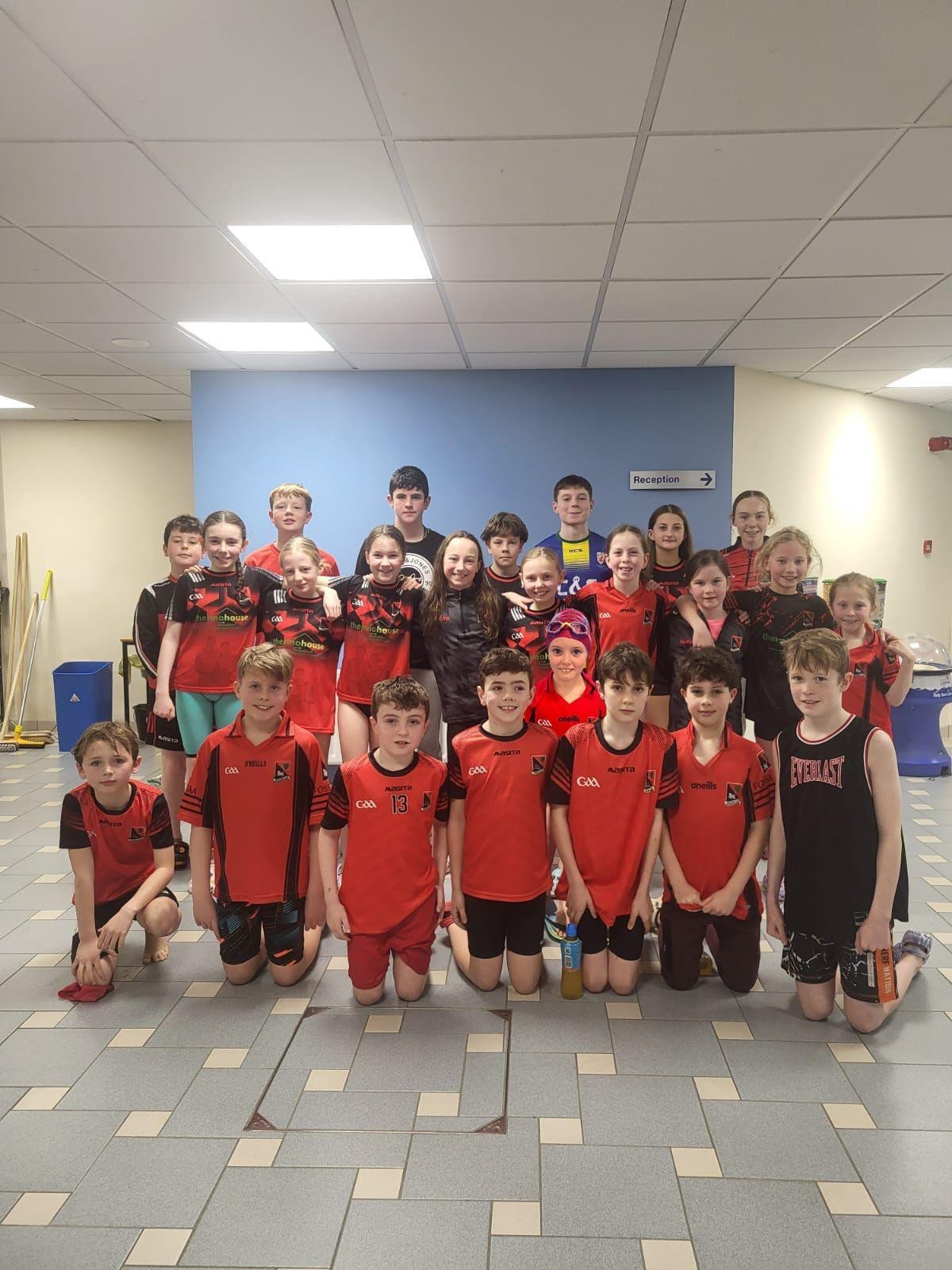
Fossa Swimmers make a splash at County Finals
The Fossa Swim team pictured at the Tralee Sports Complex following their successful outing at the County Finals of the Community Games on Sunday, February 15. The 25-strong squad delivered […]

News
On the Ball Part 2 of the Mikey Daly Interview
Éamonn Fitzgerald EF: Killarney Celtic are invited to participate in an Irish competition. That has big financial implications for travel, meals, etc. MD: It is great to be invited, showing […]



KWD Recycling shortlisted for national environmental awards
KWD Recycling shortlisted for national environmental awards Killarney-based KWD Recycling has been announced as a finalist in the 2026 Repak...


Drivers warned as deer rutting season begins
Drivers warned as deer rutting season begins Motorists in Killarney are being urged to exercise extreme caution as the annual...


Kerry Airport CEO addresses chamber luncheon
Kerry Airport chief executive Adrian Neilan addressed local business leaders at the Killarney Chamber of Tourism and Commerce luncheon at...


The Brehon raises €2,850 for Jack and Jill Foundation
The Brehon Hotel and Spa raised €2,850 for the Jack and Jill Children’s Foundation after hosting a closest-to-the-pin golf simulator...


Five local postmen retire with 185 years service
Five local postmen retire with 185 years service RETIREMENT NIGHT: Pictured at the retirement party held at Killarney Racecourse on...
