
News
The Killarney Rules: Important soccer laws came from meeting in Killarney in 1905

Tunisia v Serbia and Montenegro. August 17, 2004. The Olympic Games in Athens. Nikola Milojević hunkers down on his goal line with his hands on his knees.
Astoundingly, the Serbian goalkeeper is about to face his fourth penalty kick in just two minutes. With the game tied at 1-1, Tahitian referee Charles Ariiotima has already ordered Tunisia to retake their 78th-minute spot kick three times because of encroaching attackers. For his part, Tunisian midfielder Mohamed Jedidi cuts a fairly forlorn figure; he has now beaten Milojević three times without forcing a change on the scoreboard.
The mood around the stadium is one of incredulity.
The Tunisians have now (very dramatically) withdrawn all of their players from the vicinity of the penalty area, so there’s no threat of encroachment this time around. Surely this one will count?
Jedidi steps up… Milojević saves! The drama is over… Or is it?
The assistant on the endline has raised his flag. The Serbian No. 1 advanced from his goal line before the ball was kicked so Ariiotima is signalling for yet another retake.
Milojević puts his hands on his head and wheels away into his goal, completely dejected. The ref is surrounded by angry Serbians and Montenegrins. Andrija Delibašić squares up to the assistant and when Ariiotima intervenes, Delibašić genuinely looks as though he might actually kill him. The whole thing has descended into farce.
Take five. It’s Jedidi again. Up he steps… Another save! But Jedidi heads home the rebound! That’s the end of that!
Wait… The flag is up again. Milojević stepped off his line again. If Jedidi wants to give Tunisia the lead, he’ll have to do it at the sixth time of asking.
With 82:08 on the clock (four minutes after the initial penalty was awarded), Jedidi steps forward and smashes the ball into the bottom corner. He turns and looks anxiously at the referee, who points at the centre circle and calmly jogs back towards the halfway line.
Tunisia eventually run out 3-2 winners (neither side qualified for the knockout stages) and so endeth one of the most bizarre passages of play in the history of association football.
LAKE HOTEL
You’re probably wondering what all of this has to do with Killarney. What connects this crazy soccer incident involving a Serbian, a Tunisian and a Tahitian at the Athens Olympics, and a small town in County Kerry in the southwest of Ireland?
Well, on a balmy Saturday evening in June of 1905, the International Football Association Board convened at the Lake Hotel on the banks of Lough Leane where they decided, among other things, that goalkeepers must stand on their goal line for penalty kicks.
Since 1886, the IFAB have been the guardians of the Laws of the Game. Initially comprised of the four football associations of the “home nations” (England, Ireland, Scotland and Wales), the group is now made up of the four British football associations plus FIFA. They are the only body authorised to make changes to the rules that govern the game of soccer.
That AGM in Killarney in 1905 was the first time the IFAB met outside of the modern-day UK and they have only met in what is now the Republic of Ireland on one other occasion (Donegal in 1909).
CHANGES
The minutes of the Killarney meeting outline a number of significant rule changes, some of which are still in use to this day.
As well as the amendment which stipulates that a keeper must “not advance beyond his goal line” for penalties (the previous law simply stated that keepers must stand in their “goal area”, i.e. six-yard box), another notable “Killarney rule” changed how referees carried out a drop ball.
Prior to 1905, drop balls in soccer were actually more akin to hop balls in Gaelic football in that the referee threw the ball up into the air.
A motion proposing that the ball be dropped to the ground before players can challenge for it was passed in Killarney, and that law was in effect right up until last year when the IFAB removed the competitive element of the restart. The ball is still dropped to the floor, however, as has been the case since the landmark AGM in the Lake Hotel.
Another rule stipulating that goals may only be scored from certain free kicks was also agreed upon and this is still around, albeit in slightly different terms. Nowadays such free kicks would be classed as “direct”, while others would fall into the “indirect” category.
It was also decided that defenders had to stand at least six yards back from an opposition free kick (this was subsequently pushed back to 10 yards in 1913) and that the outer casing of footballs must be made of leather.
[caption id="attachment_32696" align="aligncenter" width="573"] The meetings of the IFAB meeting in Killarney in 1905.[/caption]
Some other minor resolutions were made on the night and after a vote of thanks was passed to presiding chairman DW Foy of the Irish FA, the meeting came to an end.
It’s amazing to think that our sleepy little town and the Lake Hotel played a small role in defining the global game. Whenever a goalkeeper strays from their line for a penalty, be it in a park in Lagos, or in the World Cup final, or on a beach in Rio de Janeiro, they’re breaking a rule that was made in Killarney.
It really is fascinating.
But maybe don’t mention it to Nikola Milojević.

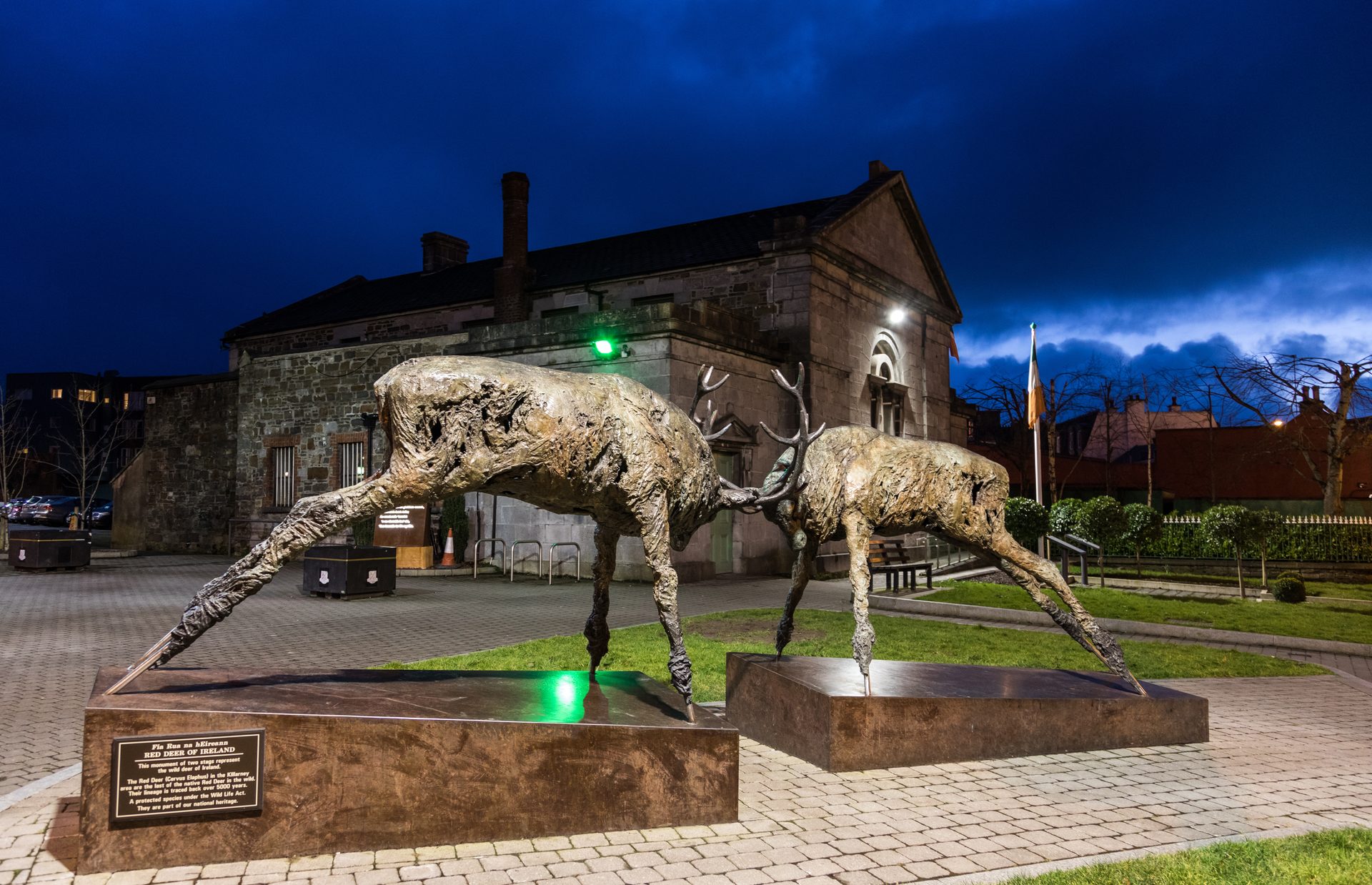
Drivers warned as deer rutting season begins
Motorists in Killarney are being urged to exercise extreme caution as the annual deer rutting season gets underway, causing animals to stray far beyond their usual habitats inside Killarney National Park.
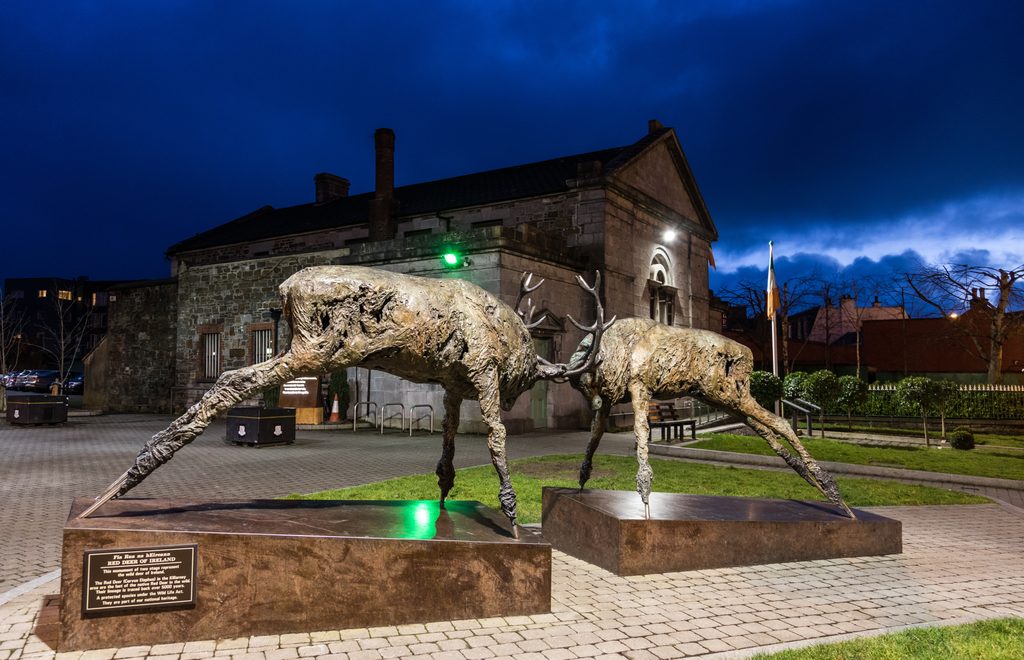
The autumn mating season sees deer becoming highly active and unpredictable, leading to increased sightings and collisions on local roads outside traditional park boundaries.
Two separate incidents highlighted the growing hazard on local routes this week. A reader contacted the Killarney Advertiser to warn drivers after spotting a deer roaming near Tiernaboul towards the school on Sunday afternoon around 7.30pm.
Later that same night, in the early hours of Monday morning, a local driver collided with a deer near Kerry Airport around 1am while returning home from an event.
Despite attempting evasive action, the motorist struck the animal, which died at the scene and temporarily blocked the road before local Gardaí were alerted to clear the obstruction.
The driver sustained substantial vehicle damage, requiring repairs to the bumper, headlamp, and internal components, leaving her facing significant garage costs and time off the road.
Gardaí and road safety advocates advise motorists travelLing during early morning and late evening and remain vigilant along tree-lined routes.

Drivers warned as deer rutting season begins
Drivers warned as deer rutting season begins Motorists in Killarney are being urged to exercise extreme caution as the annual...


Kerry Airport CEO addresses chamber luncheon
Kerry Airport chief executive Adrian Neilan addressed local business leaders at the Killarney Chamber of Tourism and Commerce luncheon at...
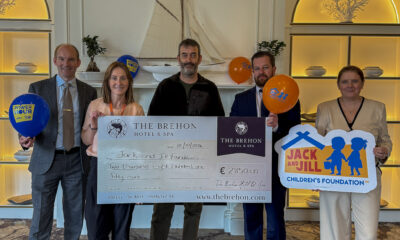

The Brehon raises €2,850 for Jack and Jill Foundation
The Brehon Hotel and Spa raised €2,850 for the Jack and Jill Children’s Foundation after hosting a closest-to-the-pin golf simulator...
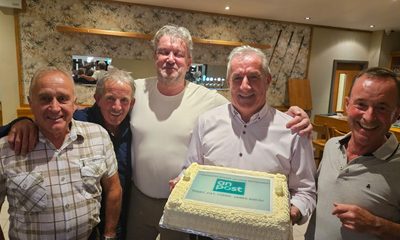

Five local postmen retire with 185 years service
Five local postmen retire with 185 years service RETIREMENT NIGHT: Pictured at the retirement party held at Killarney Racecourse on...
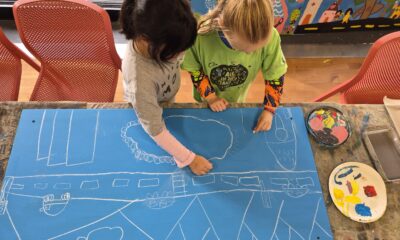

New Streetscapes murals launched at College Square
A colourful collaboration between the Kerry Local Creative Youth Partnership (LCYP) and the Architecture Kerry Festival at Kerry County Council...
