
Sport
Guinness, golf and gambling: The day Michael Jordan came to Killarney


What did Michael Jordan do after The Last Dance? He did what any wealthy American retiree would do. He came to Killarney to play golf and drink Guinness. To find out what the GOAT was really like, Adam Moynihan spoke to the locals who showed him around back in May of 1999.
If, like me, you’ve been gripped by the ‘The Last Dance’, you’re probably wondering what comes next. Now that the fascinating documentary is all over, how do we fill the void?
Well, Michael Jordan was probably wondering the same thing himself after the real Last Dance back in 1998. With his sixth NBA championship secured and the break-up of the Bulls imminent, the game of basketball was about to lose its biggest star for the second (but not the final) time.
A salary dispute between players and owners pushed the beginning of the 1998-99 season out to the New Year so Jordan officially retired on January 13, 1999. Just a few short months later, perhaps to get away from the States during the NBA Playoffs (which, for the first time since 1984, did not feature the Chicago Bulls), Michael and a dozen of his friends landed in Ireland for 10 days of non-stop golf.
Why did he choose our little island? The same reason many American basketballers have arrived on our shores down through the years. The late, great Paudie O’Connor.
GOLF TRIP
Arguably the greatest Irish basketballer of all time and one of Killarney’s most famous sons, Paudie revolutionised the game in this country when he was responsible for bringing the first American professionals to our league in 1979. He subsequently moved to Las Vegas where he set up O’Connor Golf Tourism and when a mutual friend introduced him to Jordan, Paudie, ever the big thinker, jumped at the prospect of bringing one more baller back to his hometown. He suggested that Jordan, an avid golfer, should join him on a trip to Ireland and Scotland.
The biggest athlete on the planet accepted his invitation and on May 18, he and an entourage including his manager, George Koehler, and fellow athletes from the NBA, NFL and MLB arrived in Shannon Airport on a private jet adorned with a large Nike swoosh.
There to greet him on the runway was Killarney man Dennis Carroll, a Kerry Coaches bus driver who would ferry Jordan and co. around the country for the following week and a half.
Dennis remembers the trip well and speaking to the Killarney Advertiser this week he said that, contrary to his portrayal as a disagreeable character in the documentary, he found Jordan to be “perfectly fine”.
“You wouldn’t think that he was the superstar he was,” Dennis says. “He’d salute and he’d engage… He was respectful, courteous and he took care of me. As a group, Jordan and his friends were good fun. They were just like ordinary guys.”
Paudie’s brother Séamie, who caddied for Jordan when he was in Kerry, admits that the six-time NBA Finals MVP “got a bit cranky at certain things”, but overall they got along famously during their time together.
“To me, he was a very fine gentleman,” Séamie recalls. “I couldn’t say a bad word against him.”
FANS
Understandably, Jordan’s arrival in Killarney caused quite a furore.
“The day he played Killarney it was like the Irish Open,” Dennis says. “Young fellas were skipping school left, right and centre to see him. I think there were a few teachers there as well if I’m not mistaken! When they played Ballybunion one of the teachers from a nearby school was a golfer and he got wind of it. He brought his whole class down to see Michael Jordan.
“Everywhere they went there were lots of people. It was kind of being kept quiet but word got out fairly quickly. He didn’t shun the people but he wasn’t going around pressing the flesh and signing autographs. He was here on a private visit and he was given his space. The Irish being the Irish, they were respectful. They weren’t on top of him at all.”

Jordan never asked Séamie to keep fans at arms-length either.
“He didn’t refuse anyone anything and he didn’t tell me to stop anyone coming up to him, but I used to wait for the right moment and give the young lads a wink to say, ‘now is the time’.
“Certainly in Killarney there were a lot of young lads around the place looking for autographs and he did a bit of it in fairness, but he was on holiday. It wasn’t long after The Last Dance in 1998 so he had been under a lot of pressure.”
The group, which included baseball player Vince Coleman and NFL wide receiver Roy Green, stayed in the Aghadoe Heights for three nights and they also got to sample Killarney’s nightlife when they were in town.
“They went into The Crypt nightclub three nights on the trot and they had great fun," Séamie says. "This was a strange country to them but they were very struck by the courtesy of the people and the food and the drink, and life in general.
“Jordan loved the pint of Guinness and the Irish coffee and he used to consume them both at the one time."
"They’d be on the golf cart when was playing and the Irish coffee would be cold and the Guinness would be flat, and he’d drink them away.”
36 HOLES A DAY
The travelling party played an incredible amount of golf during their stay. In fact, their driver reckons they took on 12 courses (some of them twice) in just 10 days.
“Michael was a fanatical golfer – I don’t know how good he was – but 36 holes a day was no problem to him.
“They played Lahinch, Waterville, Tralee, Ballybunion, Killarney, Ring of Kerry, Old Head, Fota, The European Club, Portmarnock twice, Royal County Down twice and the two courses in Portrush. They didn’t do 36 holes every day but a lot of days they did.”
And, as was highlighted in the documentary, it wasn’t just the love of the game that was motivating Jordan on the course.
“They were playing for quite large sums of money,” Séamie says. “I helped him to get up and down on the 18th in Killarney for a four and he gave me a slap across the arse. ‘Great call, Séamie!’ I had saved him some money. He was quite entertaining.”

Dennis also recalls some significant wagers being made on the bus.
“He was fond of the gambling. Between golf courses, they were playing cards. They were pretty heavy gamblers, most of them. They weren’t afraid of it.”
One day, however, a game of cards was interrupted when Jordan and his friends became very much afraid. It seems as though His Airness, ironically enough, wasn't too keen on heights.
“We were going from the Ring of Kerry golf course to Waterville, so we were doing the Ring of Kerry arseways for the want of a better word,” Séamie says. “Going up towards Coomakista there’s quite a large, steep drop – it’s probably 200 feet – on the left-hand-side into the ocean. Michael and the boys were playing cards in the back of the bus when we went around a turn. Next thing we looked around and they were all hiding under the table!
“I asked Jordan about it after and he said he had never seen anything like it."
Dennis, nicknamed The Steerologist by Paudie and Séamie for his abilities behind the wheel, laughs as he retells the story.
“Yeah, they were scared. The small roads and all that. I wasn’t hanging about because I was trying to make the tee time. Michael was afraid of heights, strangely enough for a very tall man.”
When they were finished in Ireland, Jordan and his friends moved on to Scotland for some more golf before flying back to America. In the weeks and months thereafter, the people of Killarney could have been forgiven for thinking that it was all just a dream. Did the biggest sports star of all time really just potter about our quaint little town, play a round of golf in Killeen and drink pints of Guinness in The Crypt?
“It was an amazing experience,” Séamie says. “It was great for the town and great for the golf club.
“Jordan enjoyed this part of the world too. He never realised it would be so quiet, with parts of it uninhabited and the green grass and the cattle and the sheep. He couldn’t understand how these golf courses were built and how they were so good. He got a great reception in Killarney and he loved it.”
And, of course, the mastermind behind it all was Paudie O’Connor. Sure, who else could pull it off?
News
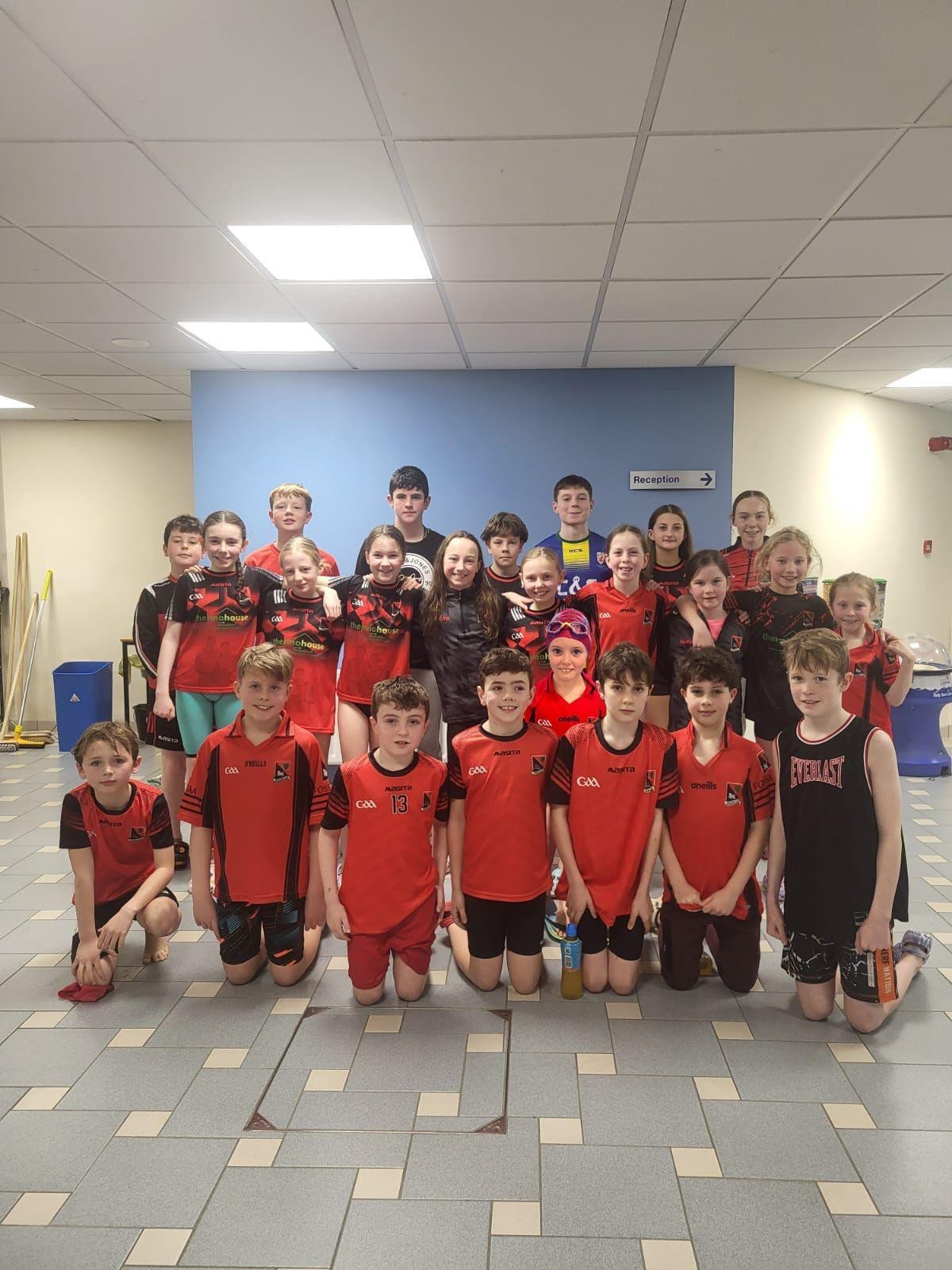
Fossa Swimmers make a splash at County Finals
The Fossa Swim team pictured at the Tralee Sports Complex following their successful outing at the County Finals of the Community Games on Sunday, February 15. The 25-strong squad delivered […]

News
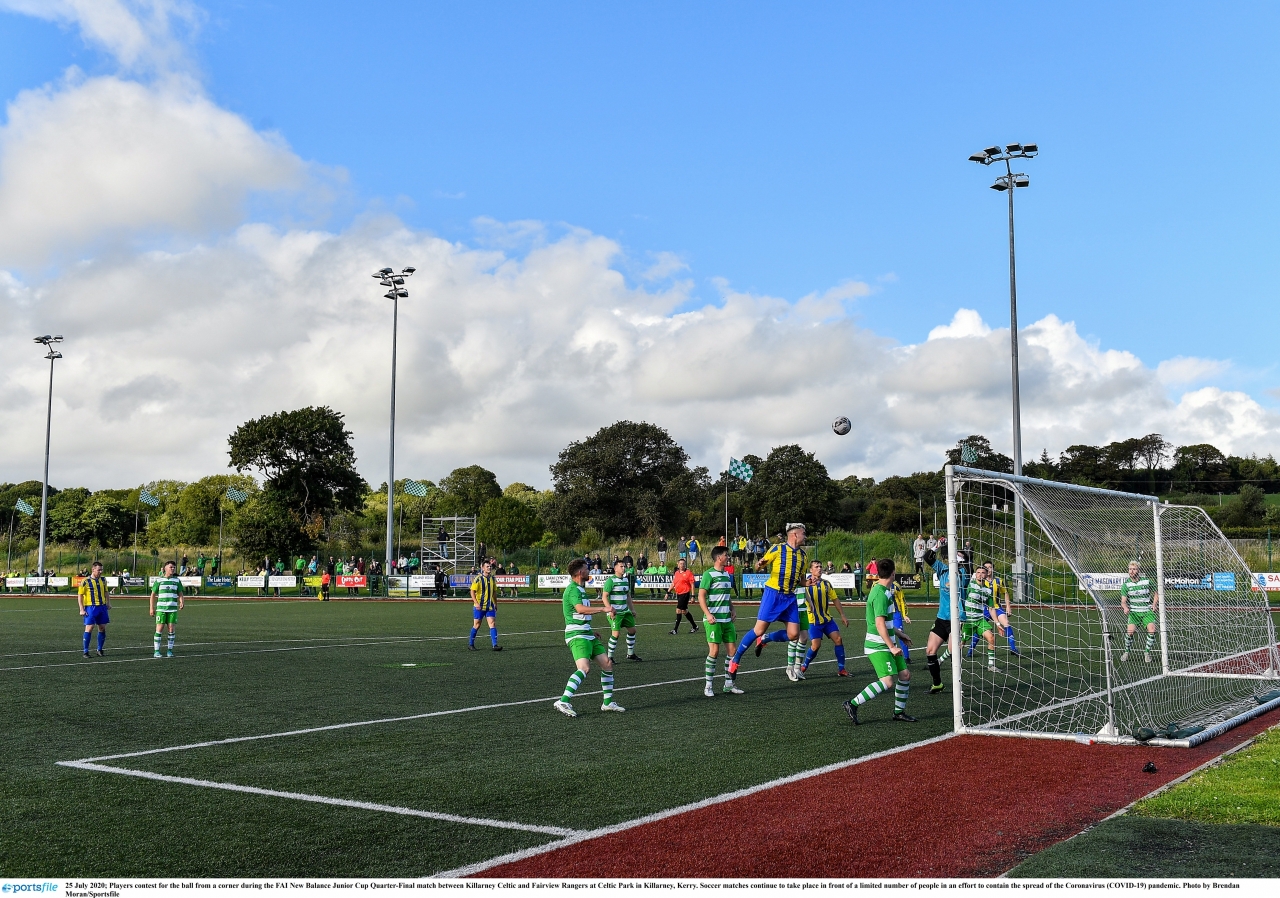
On the Ball Part 2 of the Mikey Daly Interview
Éamonn Fitzgerald EF: Killarney Celtic are invited to participate in an Irish competition. That has big financial implications for travel, meals, etc. MD: It is great to be invited, showing […]

KWD Recycling shortlisted for national environmental awards
KWD Recycling shortlisted for national environmental awards Killarney-based KWD Recycling has been announced as a finalist in the 2026 Repak...

Drivers warned as deer rutting season begins
Drivers warned as deer rutting season begins Motorists in Killarney are being urged to exercise extreme caution as the annual...

Kerry Airport CEO addresses chamber luncheon
Kerry Airport chief executive Adrian Neilan addressed local business leaders at the Killarney Chamber of Tourism and Commerce luncheon at...

The Brehon raises €2,850 for Jack and Jill Foundation
The Brehon Hotel and Spa raised €2,850 for the Jack and Jill Children’s Foundation after hosting a closest-to-the-pin golf simulator...

Five local postmen retire with 185 years service
Five local postmen retire with 185 years service RETIREMENT NIGHT: Pictured at the retirement party held at Killarney Racecourse on...
