
News
Students should consider senior cycle subject choices carefully

&
At this time of the year many Third and Fourth Year students are considering their options for Senior Cycle. Some thought and proper research at this stage paves the way for lots of opportunities for progression onto college courses, apprenticeships, training programmes and the workplace in the future. The main choices to consider are Transition Year, Leaving Cert Applied and the traditional Leaving Cert.
Transition Year: Opting to do TY gives students lots of opportunities to develop new skills personally and in terms of the world of work. It also facilitates work experience and subject sampling which greatly assists subject choices for Leaving Cert and subsequently career choices. Students are encouraged to engage in activities that move them outside of their comfort zone, allowing them to take on more responsibility and leadership thus gaining more independence. The TY programme varies from school to school so it is important to look at what is offered before deciding if it is the right option.
Leaving Certificate Applied Programme: For students who are interested in more practical learning and hands-on work, the LCA is the ideal option. It is a two year stand-alone programme which focuses on equipping students with work-based skills and knowledge while assessing in a more continuous way. Work Experience is an integral part of the programme, usually offered on one day of the school week. While students who do LCA can’t apply directly through CAO from Leaving Cert, most other career paths are open to them, including Post Leaving Courses (PLCs) which then allow them to progress onto Institutes of Technology and Universities.
Traditional Leaving Certificate: Moving into the final two years of secondary school requires students to make subject choices that suit them and allow them to progress in career areas they may be interested in. That said, it is perfectly normal for 15 and 16-year-olds to not know what they want to do after school. Students will generally take seven subjects for Leaving Cert; Irish, English and Maths, which are compulsory unless a student has a language exemption and four optional subjects chosen from those which are offered in the school. If on offer in the school, some students will also opt for Leaving Cert Vocational Programme (LCVP), a subject which focuses on enterprise education and preparation for the world of work.
Optional subjects should be chosen by taking the following into consideration; what subjects the student likes, what they are good at and what subjects/grades may be required for the colleges or courses that they are interested in. For students who have a big interest and a flair for a particular area for example business or science, they may opt to take two subjects from either area. For students who are considering applying to an NUI College such as UCC for areas other than Science, Food Science and Engineering they will need to keep on a language as it is a minimum requirement, while this is not the case for other Universities and ITs. For students who are undecided, the best advice is to choose a broad range of subjects. Consider taking one option from the following; a language, a science, a business subject, a practical or humanities based subject. By talking to the guidance counsellor in school, students can consider their strengths, results, aptitudes, interests and career areas they are considering before making choices. Further information on entry requirements is available on the college websites and by checking the subject requirement module on www.qualifax.ie. For information on the content of all the subjects on the Leaving Cert course consult www.careersportal.ie/school/subjectexplorer.
Niamh Dwyer is a guidance counsellor in Scoil Phobail Sliabh Luachra, Rathmore and is PRO of the Kerry Branch of Guidance Counsellors. careerfocusnow@gmail.com


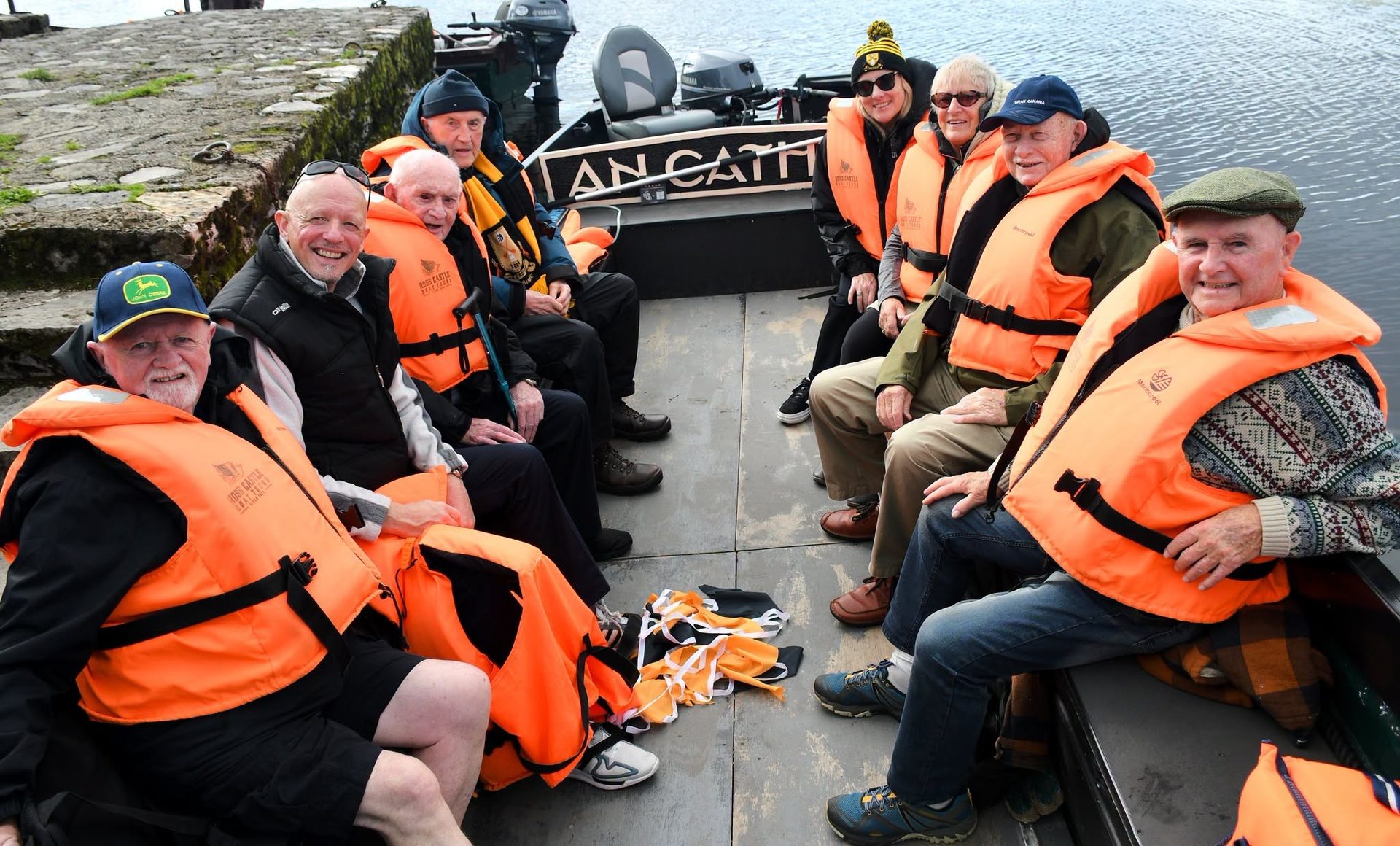
Dr Crokes stalwarts enjoy lake cruise
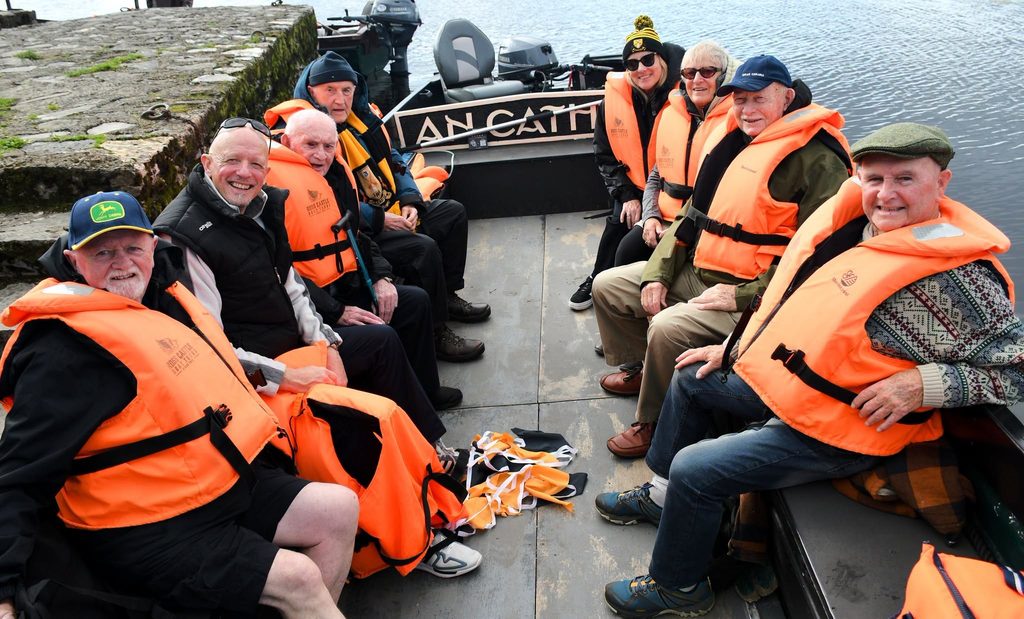
Dr Crokes GAA Club hosted a special day out for its senior members on Monday, this week, taking a group aged between 70 and 90 on a cruise across the Lakes of Killarney.
Organised by the Dr Crokes Healthy Club committee under its Crokes Cruisers initiative, the event was held to recognise the lifetime contribution made by long-standing members who continue to support club activities behind the scenes.
The group travelled on two vessels, including An Cathal, an open boat operated by local brothers Tony and Mike Fleming. Built to preserve the traditional Killarney lake boat style, it is the only purpose-built, fully accessible boat on the lakes, allowing members with mobility issues and wheelchair users to safely join the two-hour trip.
Following the lake tour, the party gathered on shore for coffee and refreshments provided by Derric McMahon and Harry Clifton of the Ross Castle Garden Cafe.
The initiative forms part of the club’s ongoing community work as a Gold Award winner in the GAA Healthy Club programme.


New Streetscapes murals launched at College Square
A colourful collaboration between the Kerry Local Creative Youth Partnership (LCYP) and the Architecture Kerry Festival at Kerry County Council...

Dr Crokes stalwarts enjoy lake cruise
Dr Crokes stalwarts enjoy lake cruise Dr Crokes GAA Club hosted a special day out for its senior members on...


Green light for Torc to Dinis walkway
Green light for Torc Dinis walkway Planning approval has been granted for a long-awaited lakeside walkway and cycleway connecting Torc...
LOCAL GOLD:
LOCAL GOLD: Terrie O’Shea, founder and owner of Killarney-based business Sorella Berries, celebrating her Gold award win at the Blas...


Grady demands Killarney traffic review
Killarney councillor Martin Grady has called for an urgent review of traffic management across the town following severe delays along...

Fossa Swimmers make a splash at County Finals
The Fossa Swim team pictured at the Tralee Sports Complex following their successful outing at the County Finals of the...
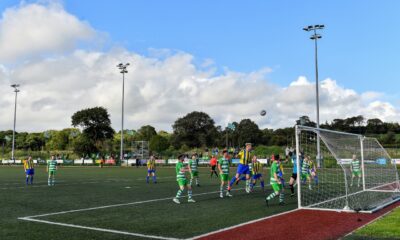

On the Ball Part 2 of the Mikey Daly Interview
Éamonn Fitzgerald EF: Killarney Celtic are invited to participate in an Irish competition. That has big financial implications for travel,...


LUKE MANGAN recently caught up with Kerry FC’s manager, Colin Healy.
He spoke to him about his careers as a player and manager. Here’s how it went: When you began your...


Home cup tie for St Paul’s could be epic
Paudie O’Connor National Cup (Round 1) Utility Trust St Paul’s v GCU Brunell Saturday 7.30pm Killarney Sports and Leisure Centre...


Chances of Kerry v Cork Munster final in 2026 decrease as Munster GAA delay seeding plan
After facing a backlash from Limerick, Clare, Waterford and Tipperary players, Munster GAA have postponed their plan to keep Cork...
