News
New community hospital: Is it happening or not?

P
Plans for a new community hospital in Killarney are in the final design stages and a planning permission application was due to be submitted by the end of June.
That is according to a report that the Health Information and Quality Authority published this week on current activities at Killarney Community Hospital.
The report was published on Tuesday this week, the same day the newly elected Killarney Municipal Council met of the first time.
In the course of the meeting Cllr Maura Healy Rae asked: “To ask Kerry County Council and the Department of Health, what is the current update regarding the provision of a new community hospital in Killarney.”
As such, this means that Kerry County Council needs to write to the Minister of Health to get an update on the project.
However, official Kerry County Council planning application paperwork seen by the Killarney Advertiser reveals that there was no planning applications made on behalf of the HSE up to June 28.
“There is a lot of fudging going on,” Cllr. Healy Rae told the Killarney Advertiser after the meeting. “I am calling on the government not to back to down on a promise that we would have a new hospital by 2021 and that other projects would not suffer as a result of the cost overrun on the Children’s Hospital in Dublin.”
The new hospital cannot come soon enough. The report published on Tuesday did not paint a pretty picture of current goings on a the hospital.
Limited availability of single rooms for end of life care; limited privacy and noise and lack of space in multi-occupancy rooms were just some of the issues highlighted in a report published this week on dementia patient care across the hospital’s three sites.
The centre, located on Rock Road is registered to provide long term, respite, palliative and dementia care for 96 residents.
Resident accommodation is spread across three separate units; Fuschia which can accommodate 22 residents, Hawthorn which can accommodate 36 residents, and Heather which can accommodate 38 residents.
Inspectors carried out an unannounced inspection focused on the care of residents at the hospital in early April this year.
Inspectors met with residents, relatives, the provider representative, the person in charge, the two Assistant Directors Of Nursing, nurses, care staff, activities staff, support staff and numerous other staff members.
The inspectors found that residents’ overall healthcare needs were met and they had very good access to appropriate medical and allied healthcare services. The quality of residents’ lives was generally enhanced by the provision of a choice of interesting things for them to do during the day and an ethos of respect and dignity for residents was evident.
It follows a previous inspection in October last year. Certain objectives from the previous report where not met.
Inspectors found thatthe Health Service Executive (HSE) failed to take all necessary action to improve the privacy and dignity of residents and that a comprehensive review of occupancy levels was not carried out to inform the profile and number of residents who could appropriately be accommodated in the centre.
Long-term residents continued to be accommodated in situations which adversely impacted their daily quality of life, privacy and dignity following a reduction in the number of residents accommodated in the centre, the registered provider had failed to ensure that the space created by the reduced number of residents was utilized in all cases to enhance the quality of life and privacy and dignity of the remaining residents.
Inspectors found gaps in documentation and a care plan for a resident that suffered seizures was not sufficiently detailed to direct care. Gaps were seen in wound care documentation where a section was left blank for staff to retrospectively document wound care given which does not follow with best practice on documentation.

LOCAL GOLD: Terrie O’Shea, founder and owner of Killarney-based business Sorella Berries, celebrating her Gold award win at the Blas na hÉireann Irish Food Awards held in Dingle last week. Her hand-crafted chocolate covered strawberries secured the top spot in national competition, earning recognition for the local food producer on the national stage.

LOCAL GOLD:
LOCAL GOLD: Terrie O’Shea, founder and owner of Killarney-based business Sorella Berries, celebrating her Gold award win at the Blas...


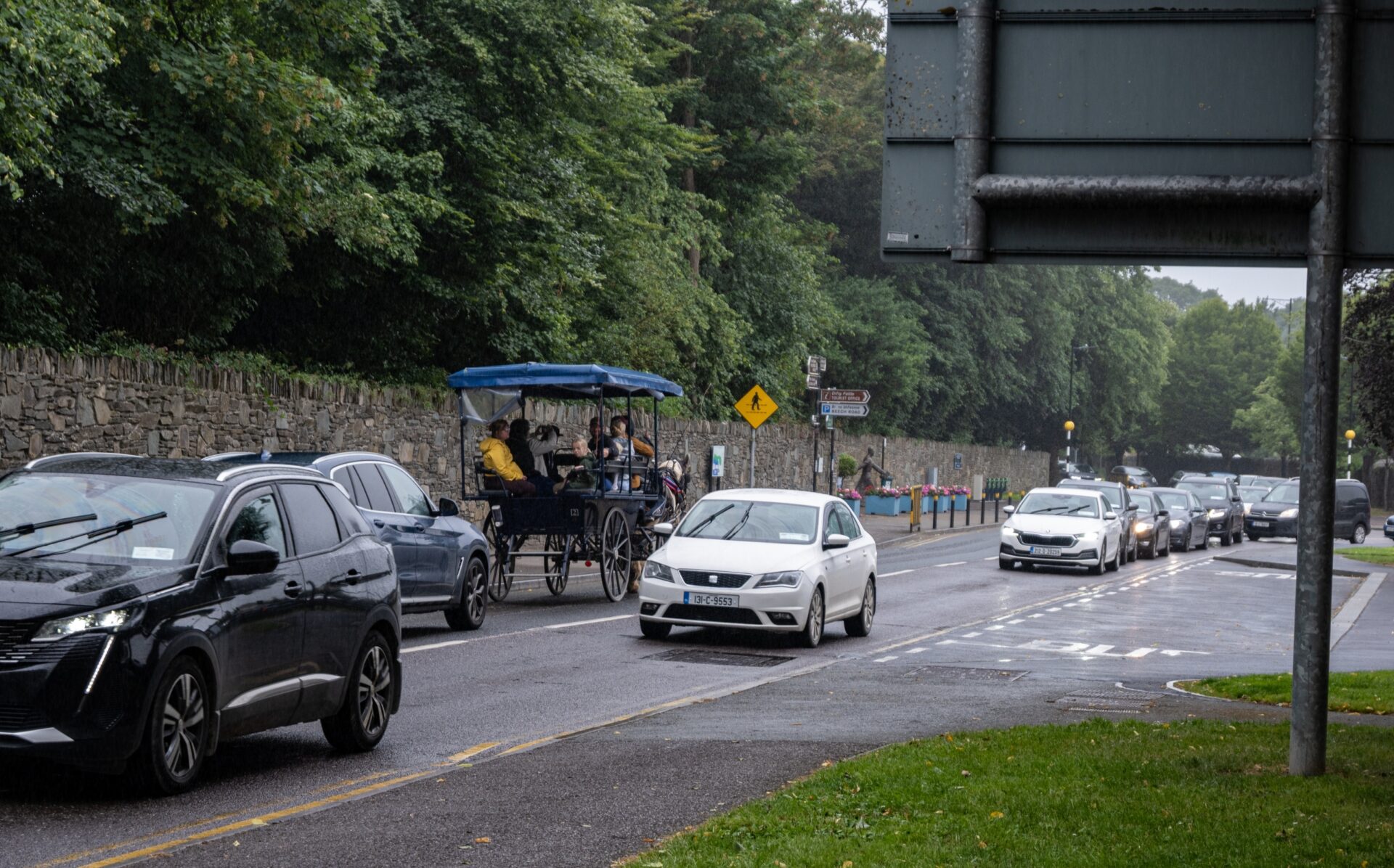
Grady demands Killarney traffic review
Killarney councillor Martin Grady has called for an urgent review of traffic management across the town following severe delays along...


Killarney Pumpkin Farm returns for Halloween
The annual event is in its sixth year and caters to people of all ages. The farm is located in...


Killarney Toastmasters host special open night
Killarney Toastmasters is inviting members of the local community to an open night at the Dromhall Hotel on Muckross Road...

Killarney hotels achieve top global rankings in Readers’ Choice Awards
Killarney hotels achieve top global rankings in Readers’ Choice Awards Two leading Killarney hotels are celebrating major international accolades following...


Fossa Swimmers make a splash at County Finals
The Fossa Swim team pictured at the Tralee Sports Complex following their successful outing at the County Finals of the...


On the Ball Part 2 of the Mikey Daly Interview
Éamonn Fitzgerald EF: Killarney Celtic are invited to participate in an Irish competition. That has big financial implications for travel,...


LUKE MANGAN recently caught up with Kerry FC’s manager, Colin Healy.
He spoke to him about his careers as a player and manager. Here’s how it went: When you began your...


Home cup tie for St Paul’s could be epic
Paudie O’Connor National Cup (Round 1) Utility Trust St Paul’s v GCU Brunell Saturday 7.30pm Killarney Sports and Leisure Centre...


Chances of Kerry v Cork Munster final in 2026 decrease as Munster GAA delay seeding plan
After facing a backlash from Limerick, Clare, Waterford and Tipperary players, Munster GAA have postponed their plan to keep Cork...