
Sport
What links Olympic gold and the Cathedral spire?


Eamonn Fitzgerald shares the tale of Johnny Hayes, the Irish-American Olympian who played his part in erecting the spire of Killarney’s iconic Cathedral.
Sport presents a microcosm of life itself. Both swing from highs to lows, or vice versa if one is fortunate.
For the Tokyo Games, Kellie Harrington presented Ireland with a real chance of Olympic gold. She won the gold medal in the lightweight division at the 2018 Women's World Boxing Championships. Skibbereen rowers Paul O’Donovan and Fintan McCarthy were also hotly tipped. They have delivered on the promise and hopefully Kellie is still in contention. This column was put to bed before her recent bouts.
She put sport in context with with philosophical clarity in a brilliant one-liner: “The Olympics is a journey, not a destination.”
We all experience the swings and lows of sport and of life. Kellie, the inner-city young lady, is well grounded in the realities of life for an area being in the news for all the wrong reasons. There, the drug barons dictate how the people live and in too many cases so many lives are lost in violent ways. She wasn’t born with a silver spoon, certainly not one of the elite class, but when it comes to boxing she is in the elite class. Now training with her club, St Mary’s BC in Tallaght, she will give it everything and hopefully win a medal, preferably gold. What an uplift that will give the Dublin community she cherishes.
I hope David Kenny from the Farranfore Maine Valley AC walks well in his event during the week. How proud we all were of Gillian O’Sullivan on her wonderful achievements on the world stage in the same sport. She was outstanding yet was denied Olympian glory because of the dreaded curse of all sports people: injuries. Sport is glamorous, but it is also cruel.
ALL WINNERS
The vast majority of the competitors in Tokyo have no chance of winning a medal, whatever the colour.
In my book all the competitors are heroes deserving of our support. Just to make it to Tokyo is fantastic achievement; that’s what it takes to be an Olympian. TV glamorises all the competitions, but rarely shows the huge sacrifices to make it to Tokyo. A rigorous fitness regime for the past four or five years, such as breaking the ice on the waters of Killarney’s lakes on bitterly cold January mornings before entering the water, shows the required discipline. Then there was the added fallout from COVID these past 18 months. Would the Games go ahead? Yes/no depending on the spread of the virus worldwide. How does one curtail a long-term training programme?
Last week I reported on Kerry’s 22-point trouncing of Cork in the Munster senior football final, but the Rebels did not have long to wait for the pendulum to swing in faraway Tokyo, where Skibbereen’s rowing duo Paul O’Donovan and Fintan O’Leary won Olympic gold. Emily Hegarty, another Skib rower, showed them the way earlier by winning a bronze medal, Ireland’s first at Toyko. The Rebels basked in reflected glory. We all did, just like the good old Charlton years. The timing is perfect as Ireland needs a boost after life-changing experiences this past 18 months or so coping with the challenges of COVID.
Three Olympic medals from one small town in West Cork. Is there something in the water of the local River Ilen that keeps providing world class rowers from the club that was only formed in 1970?
KIERAN MCCARTHY
Kieran McCarthy, sports editor of the Southern Star newspaper, is a native of Fossa and is well aware of the long and proud tradition of Fossa RC where Paul Griffin started before moving to Muckross. Paul was an Olympian rower at Athens (2004) and again in Beijing (2008).
When Kieran’s work took him to Skibbereen he witnessed rowing at the highest levels. In 2019 he published Something in the Water, capturing the essence of the local club’s ability. I would recommend that book to anyone.
MARATHON
Kerry and Killarney has produced many fine Olympians including Cathal Moynihan, Seán Casey, Paul Griffin and Gillian O’Sullivan, whom I have covered in previous editions.
Tomorrow one of my favourite events will grab our interest when the marathon, all 26 miles and 385 yards of it, invokes memories of the heroics of John Treacy and Gerry Kiernan. Treacy won silver, but for sheer grit I recall North Kerry’s Kiernan with flowing long black hair sticking with the leaders and finishing a very creditable ninth. God rest poor Gerry.
There is a Killarney connection to a gold medal winner in the 2008 marathon at the London Olympics. The story of Johnny Hayes in the 1908 London Olympics is worth telling.
His parents from Nenagh were Tipperary emigrated to the USA and their son Johnny joined the Irish American athletic club and progressed steadily in the longer races, which brought him to London for the 1908 Games.
Britain had decided again not to allow Ireland to field its own team, imperiously stating that, “Ireland is not a nation.” All Irish athletes would have to compete as members of the British team and Johnny was not allowed to run for Ireland, the land of his parents. Having to represent Britain infuriated the Irish athletes. This ban worked well for Britain in the 1896 Olympics in Athens, where Irish athletes won most of Britain’s medals in track and field. One of them, Peter O’Connor, rushed to the Olympic flagpole after winning the hop, step and jump, and pulled down the Union Jack, which had been raised in honour of his victory. In its place he flew a green flag for Ireland.
In steps Johnny Hayes, who is remembered for three things in particular. Firstly, he was the first man to win a marathon at the now official standard distance of 26 miles 385 yards, when Olympic officials lengthened the distance to put the finish line in front of the Royal Box. The previous Olympic marathons had been less than 25 miles long.
Secondly, he was not first over the line in London 1908, coming in behind Dorado Pietri of Italy. At the 24-mile mark, it was a three-man race. Charles Hefferon, an Irishman from South Africa, was in the lead, and Pietri was second. Hefferon cramped and was overcome by sickness, so now it was down to two.
As the Olympic stadium at Shepherd’s Bush came into view, 22-year-old Hayes, the youngest man in the race, closed the gap to 50 seconds behind Pietri. He could not shake off Hayes, the proverbial hare and the tortoise syndrome. Then the drama unfolded. As Pietri turned into the stadium with only 385 yards to go, he staggered and suddenly appeared delirious. He ‘hit the wall’ and anyone who ever ran a marathon will empathise with that moment. He wobbled off in the wrong direction but British officials turned him around. He took a few steps and collapsed. The officials then lifted him to his feet, and helped him on his way. Again he collapsed and again he was lifted to his feet. Just short of the finish, Pietri started to collapse for the fifth time. Jack Andrews, the chief British official, grabbed him and carried him across the line, 30 seconds ahead of Hayes.
The assistance the officials gave to Pietri was a clear violation of the rules. Nevertheless, the British immediately raised the Italian flag and announced Pietri the victor. Pietri didn’t know or care. He was carried away on a stretcher, delirious and out of it.
Meanwhile, Hayes finished strongly, the heat and humidity not seeming to affect him. “Heat never bothers me,” said Hayes later. “My grandfather and father were bakers, and I worked in the bakery as a boy. I was used to the heat.” Nor did the sight of the Italian flag disturb him. They had to disqualify Pietri but they tried not to. It took several hours and a formal protest from the United States before the British admitted that Pietri had been illegally aided and was, therefore, disqualified.
Johnny Hayes was declared the winner.
Thirdly, back in Killarney, some entrepreneurs got the bright idea to invite the gold medallist to come here on his way home from London and help raise funds for the Cathedral spire.
Bishop Egan and Lord Kenmare were the prime movers in building St Mary’s Cathedral in the early 1840s. The church had been designed by Pugin in the Gothic style we know it today. Fr Thomas Joseph O’Sullivan was put in charge of the building committee on the site known as Falvey’s Inch, and construction started in 1842. The building was stalled for the Famine years, especially the years 1847 to 1852, and in its unfinished state it was used as a mass centre during those awful years - not as an auxiliary workhouse for Famine victims, as many people think.
The cillín near the present main door was used to bury the Famine children. You can see the sign beside the massive tree that is used to hang the Christmas lights. Sadly, Pugin died in 1852 at the age of 40. Work on the cathedral recommenced in 1853 and was consecrated in 1855, but it lacked the spire so prominent in photographs.
In 1908 the building of the spire commenced, but where was the money to come from? Killarney is known worldwide to have people with vision and determination to progress. Why not invite Johnny Hayes, the Irish-American, to visit Killarney and have the sports star heading up a fundraiser for the emerging spire.
I still haven’t found out who these sports visionaries were, but they organised a monster athletic meeting and top of the bill was the new golden boy, Johnny Hayes.
HALF MOON
Spectators were delighted to pay in to see the wonder boy and Johnny delivered. He ran in a race in the Demesne, not a marathon but a long distance race nevertheless. That part of the Demesne was then and still known as the Half Moon, home for Killarney Athletic AFC. for many years before they moved to their splendid grounds in Woodlawn on the banks of the Flesk. The Cathedral was completed, spire and all, in 1912 and remained thus until the 1970s when Bishop Eamonn Casey spearheaded internal renovations to facilitate the new liturgies.
Move on to 1962, when Johnny Hayes and his daughter returned for a holiday, staying in the Great Southern Hotel. No fanfare, but some locals who were keen promoters of athletics in Killarney went to visit him and welcome him back. These included Dr Eamonn O’Sullivan, trainer of the Kerry teams for eight All-Irelands and a man who was equally passionate about athletics. His father was the legendary JP O’Sullivan. Also there was Tadhg Crowley (who owned a shop where Fairview Hotel now stands), Martin Cleary (father of Órna from the Killarney Musical Society and Fergal), Seán Russell (Headmaster of Killarney Technical School), and Maurice F O’Leary (Kerryman journalist, ‘Echoes from East Kerry’).
Tom Looney, then a young seminarian working on a summer job with Denis Moriarty Photography (New Street) realised the significance of the return of the gold medallist. He photographed the special moment on the steps of the GSH.
I spoke to Canon Tom about that visit and of his memories. “I had the camera and it isn’t every day you see an Olympian gold medallist coming to Killarney. He was a very small man (5 foot 4 inches) and slim. (He was just 125 lbs when he won the marathon.) He was a very modest man even though he was a celebrity. His daughter was also very quiet. There was no fuss.”
Imagine Hayes standing beside Martin Cleary and Tadhg Crowley.
AFTER 1908
What ever happened to Hayes after 1908?
He trained the US 1912 Olympic team and he later taught physical education. Three years after he came to Killarney in 1962, he died in Englewood, New Jersey at the age of 79.
The Shore Athletic Club of New Jersey holds his 1908 Olympic gold medal for the marathon, the first Olympic gold medal to be won at the modern marathon distance of 26 miles, 385 yards.
The next time you are in Nenagh, take time to view the three three statues honouring Olympic champions with links to Nenagh: Matt McGrath, Johnny Hayes and Bob Tindall. They were unveiled in front of the Nenagh Courthouse in 2002.
Maybe it’s time to put up a little plaque in Killarney. Yes, a small one to honour the diminutive little man with the big heart, who helped raise money for the Cathedral spire. Or some enterprising Killarney person will think of inviting a big sports personality to publicise the town?
At 11pm tomorrow (Saturday), the runners will start out on the marathon odyssey. Look out for Kipchoge, Desisa, Kitata or Lemma. It will make for great live viewing going into Sunday morning.
AGUISÍN BREISE
Tokyo (meaning ‘capital city’) is a long ways from Olympia, Greece and 776 BC. The modern Olympics started in Athens in 1896 and the first Irishman to win an Olympic title (tennis) was John Pius Boland, a Dub. Mrs Crowley, Fianna Fáil TD for South Kerry, was related to him through marriage.
Olympics back then was celebrated amateur sport, alas a long way from the sham amateurism and professionalism of the modern Olympics, which still enthrals, entertains and inspires.
While every sane person is fast asleep, why would someone go down to a lake in the dark of an early January morning to break the overnight ice and push out into the water? Brrr… Olympic spirit. Ard –fhir is mná. Gaisce gan teorainn.
News
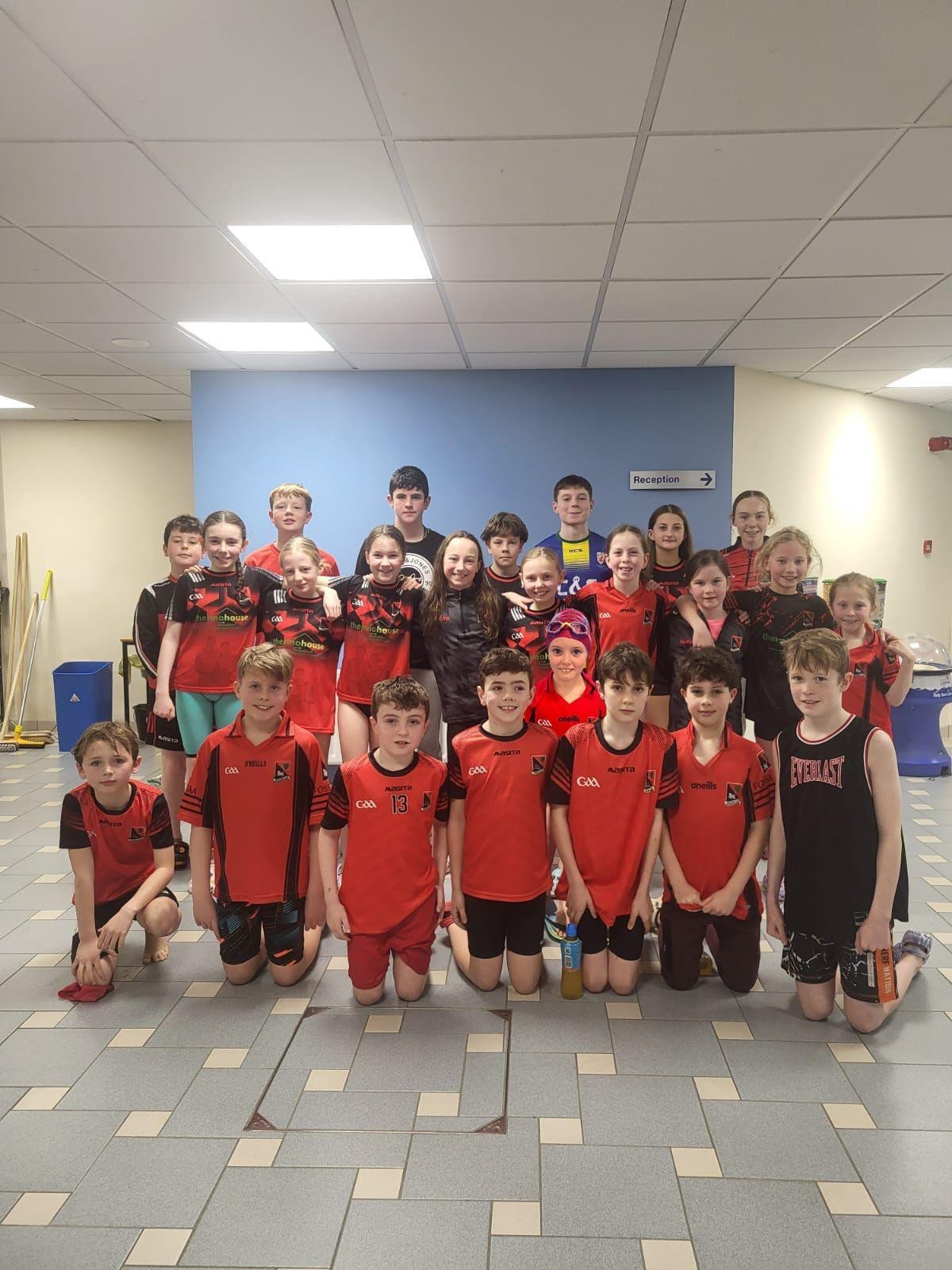
Fossa Swimmers make a splash at County Finals
The Fossa Swim team pictured at the Tralee Sports Complex following their successful outing at the County Finals of the Community Games on Sunday, February 15. The 25-strong squad delivered […]

News
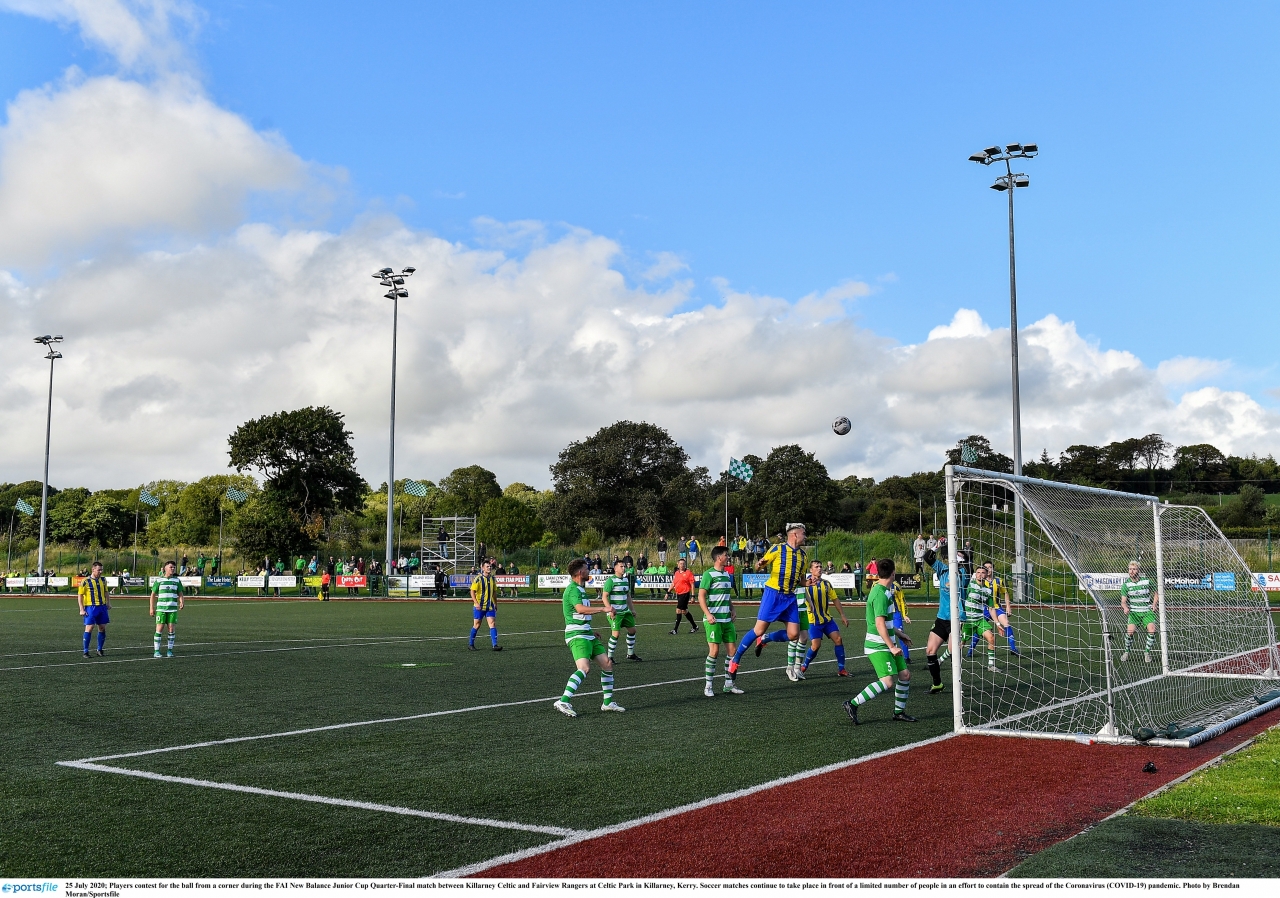
On the Ball Part 2 of the Mikey Daly Interview
Éamonn Fitzgerald EF: Killarney Celtic are invited to participate in an Irish competition. That has big financial implications for travel, meals, etc. MD: It is great to be invited, showing […]

Powerful photo display at St Mary’s brings Ukraine conflict home
A unique photo exhibition has been installed on the railings outside St Mary’s Church of Ireland in Killarney town centre,...

Beaufort Engineer honoured with national emerging leader award
Beaufort Engineer honoured with national emerging leader award Beaufort native Danny Pio Murphy has been named the recipient of the...

Pickleball Club’s record medal haul at Munster Open
Pickleball Club’s record medal haul at Munster Open Killarney Pickleball Club celebrated its most successful outing to date at the...


Women’s Shed to Host Charity Auction for Typhoon Victims
The Killarney Women’s Shed has teamed up with local nurse Chandra Arias to host a major charity auction of upcycled...

Killarney hosts 88th annual Irish Hotels Federation Conference
Hoteliers from across the country gathered at the Gleneagle Hotel this week for the Irish Hotels Federation’s (IHF) 88th Annual...
