
Sport
The forgotten GAA star from Mangerton View


Eamonn Fitzgerald tells the unusual tale of Paul Russell, the Killarney man who won six All-Irelands and played for eight clubs in eight different counties
Dick Fitzgerald, Johnny Culloty and Colm Cooper were outstanding Kerry football stars, all winning five All-Ireland medals wearing the green and gold, but there was another Killarney man who went one better. A man about whom little enough is known. His achievements deserve recognition.
Paul Russell (1906-1965) was born in Mangerton View on July 2, 1906, the second youngster of a family of six (four girls and two boys). His only brother joined the Franciscan Order.
His near neighbour was Hugh O’Flaherty, who was eight years older than him. I don’t know if Hugh ever played football. I must ask his sister Pearl (Dineen) in Cahersiveen to clarify that, but he was an amateur golf champion and that was no surprise. His father Jim, whom I knew, was a steward in Killarney Golf & Fishing Club. Hugh became famous in another sphere, saving the lives of 6,500 Allies in Rome during World War II.
KICKING THE BALL
Now for some meat to flesh out Russell’s achievements. Most of our readers will not remember him, but quite a few knew Kathy, one of his sisters. Niall Keogh, the former Crokes player, interviewed her for ‘Dr Crokes Gaelic Century 1886-1986’. She said Paul’s first love was football and not “the books” because he spent endless hours kicking the ball around Mangerton View. There he perfected the drop-kick, a huge feature of football at that time, but now effectively gone out of the modern game as retaining possession at all times is the mantra.
The street had few cars then and Fitzgerald Stadium wasn’t built. Juvenile football wasn’t organised at that time, but the Street Leagues were hugely popular.
First off let’s look at Paul Russell’s stats: 6 x All-Ireland Senior Football medals (1924, 1926, 1929, 1930, 1931, 1932), 3 x Railway Cups, 1 x Dublin Senior Football Championship.
He was a student in St Brendan’s College, Killarney and the 17-year-old had to get special permission to play in the 1923 final v Dublin, his first All-Ireland. He had never played for any Kerry team before this and hadn’t even got a trial. He had been playing for College Street in the Killarney Town Leagues and was a new lad on the Crokes senior team, but that was all.
It was enough for Dick Fitzgerald, the organiser (no such person as a manager that time) who knew that this fellow would make it. He convinced his fellow Kerry selectors to gamble on this strapping young Killarney man and put him in directly at wing back for the 1923 final. That was of a Tuesday. The first he heard of his Kerry selection was on his way to school in the Sem on the following morning (Wednesday). Frank O’Shea (the local blacksmith obviously being Twitter before its time) delivered the hot news.
CELEBRATION
The Sem boss at the time was Canon John Breen and he was overjoyed, declaring that the college would celebrate this distinction with a holiday to mark Paul’s amazing achievement. He didn’t bother contacting the Department of Education to pass it by them. He ruled and no one objected.
On Saturday Dick Fitzgerald took Russell up to the train and introduced him to his teammates. Russell said he was very nervous as they booked into Barry’s Hotel.
In the dressing room Jack Prendergast (‘Pendy the Jersey Man’) was a key figure. God knows Kerry have had some great bagmen down through the years, all great characters. I think fondly of the great Gaffney (Duggan) who made sure that the perk would stay in Tralee when he got too old to lift the bag of jerseys. He coached Leo (Griffin) to take over from him many years later. The power struggle switched to Killarney and up popped Niall Botty O’Callaghan to give out those precious geansaís. Who has that job now?
Prendy threw Russell the number five geansaí and Paul didn’t leave the Kerry side down with a fine display. They were just edged out by Dublin, 1-5 to 1-3. No medal at the first attempt.
Paul Russell brought something new to the game, perfecting the drop-kick. In the words of Michael O’Hehir, “he sends a long relieving clearance down the field turning defence into attack”.
At that time players were never allowed to stray out of their zones of play. A half back was not allowed to come up beyond midfield, but that did not deter Russell, who was a man before his time, an attacking half-back soloing up the field into enemy territory. That was strange in that era, as Dr Eamonn masterminded Kerry’s All-Ireland victories by promoting own zone play and he drew out that plan for the players on a blackboard. That was the secret to success in 1955, over the hitherto dominant Dublin machine.
Russell went home on the train after the match and was up early for school the following morning. He didn’t have his Greek homework done for obvious reasons, and the heroics of the previous day in Croke Park were not an acceptable excuse. No mercy, no cop-on. Sín amach do lámh and the priest/teacher gave him the customary six ruts. Ouch.
No bother for Russell to take it, as it hardened him for a glorious future to win six All-Irelands. Champions Dublin hoped to retain their title, but not this time. Hard to believe it but the score in the 1924 All-Ireland final was four points to three. Paul Russell won the first of his medals and he was still only 26 years old when he earned his sixth within eight years.
He played on the first Kerry team to win four-in-a-row (1929-1932). He won three Railway Cup medals, two with Munster and he also won one with Leinster. In fact, he was picked to play for both Munster and Leinster in the same year in the same competition and the GAA had to step in to decree that he must play with Leinster, which he did. Strange to relate that he played for Dublin in 1927, but reverted to Kerry for the four-in-a-row.
8 CLUBS, 8 COUNTIES
He is the only player I know of who played with eight different GAA clubs and in eight different counties. What’s more he was legal in all cases. Even Dan Dwyer would be stumped by that remarkable feat. Russell was a member of the Garda Síochána, so he was stationed all over the country.
His winning clubs and their respective counties were Dr Crokes (Kerry), Garda (Dublin), Dungarvan (Waterford), Kilconnell (Galway), Killevin (Monaghan), Smithboro (Cavan), Oldcastle (Meath), and Rockfordsfordbridge (Wexford).
Some strange names in that eight. I wonder how many of these clubs still exist?
Russell was also a fine sprinter, taking on the best in the All-Ireland athletics, often held in the Garda Sportsground.
He was just 19 years old when he became the first secretary of the newly formed East Kerry Board as we know it today. Dick Fitzgerald was the organiser and its first Chairman in 1925.
THE TWO PAULS
In 1925, Kerry beat Cavan 1-7 to 2-3 in the All-Ireland semi-final played in Tralee, but were subsequently disqualified for using an illegal player.
Russell had some great duels with Paul Doyle, the prolific Kildare half-forward in that age of the great Kerry v Kildare rivalry, 1926-1931. Kerry’s four-in-a-row depended on Russell keeping Doyle, Kildare’s most dangerous forward, to a minimum of points. It went into folklore as the Battle of the Two Pauls. The late Paddy Kiely from Woodlawn wrote these lines:
And wherever Doyle (Kildare) did roam,
His star was always clouded,
By the boy (Russell) from Beauty’s Home.
In 1926 they beat Kildare after a replay 1-4 to 0-4. In 1929 Kerry just edged out Kildare 1-8 to 1-5 and seal the first of the four-in–a-row for Kerry and for Paul Russell. In 1930 they had a big win over Monaghan 3-11 to 0-2. Kildare were back in 1931, but Paul Russell stemmed the tide once more to keep the winning Kerry momentum going, 1-11 to 0-8. He won his sixth medal in 1932 when they beat Mayo 2-7 to 2-4.
He ended his intercounty care in style in ‘32. There were just four minutes left in the semi-final game and Dublin were leading by a goal. Paul Russell gained possession from a Paddy Whitty free and sent one of his trademark drop-kicks into the Dublin goal. The ball hit the ground in the middle of the square and careered off the mud into the net. Half-back Russell was credited with the goal. Kerry added a point in time added on for a 1-3 to 1-1 victory and so to a win over Mayo in the final 2-7 to 2-4. Six All-Ireland medals and Paul Russell was still just 26 years old.
DUFFY
Paul Russell continued to play club football all over the country and again he made his mark.
When he was stationed in Dublin, his Garda boss was Eoin Duffy, who became the second Commissioner of the Garda Síochána, the police force of the new Irish Free State,. Later Duffy led The Blueshirts. Duffy saw the opportunity to build an All-Ireland team of gardaí and got Russell to play for the Garda club, and switch his allegiance to play for Dublin. Russell was very reluctant to turn his back on Kerry, but in those days the Commissioner gave you no choice if you wanted promotion.
He thought very seriously about leaving the gardaí, but Dr Éamonn advised him to stick it out. He also won a Dublin County Championship with Garda.
Russell was the hero of club teams he played with when he was stationed in 8 different counties. He switched to hurling in 1938 and trained the Wexford hurlers to win that All-Ireland. He also played for the football team.
He was revered in Meath and as Paddy O’Brien, that great Meath full back, was quoted so often: “We would have won no All-Ireland only for Paul Russell; being around the team had a huge effect on us. He knew about winning All-Irelands and letting him train the team was very important. He brought something new to the county”.
When he went to Oldcastle as a Garda sergeant he was the catalyst for success. Meath nearly did it in 1939 and had to wait until 1949 to win their first All-Ireland with Paul Russell still their guiding force. To this day they talk about the Kerryman who showed them how to win All-Irelands.
WRITER
He was assistant trainer to Dr Éamonn in 1953 when Kerry won 0-13 to 1-6 v Armagh. Many contend that Kerry should have won in 1950 and in 1951.
Strangely enough although he was great friends with Dr Eamonn, the two fellow Croke club members took opposite sides in the public debate on the Ban, which came before GAA Congress in 1962. Since they were well known public figures in the GAA they made headlines in The Kerryman. That was prior to the founding of the Killarney Advertiser. Such was his high profile that when he finished playing he became a Gaelic games writer for his weekly column in the Sunday Review and also wrote for The Kerryman newspaper. He was a controversial writer and won no favours with the top brass in the GAA while arguing his viewpoint that Rule 27 (the controversial ban) should be abolished. He stood out on a limb in that controversy aided by Tom Woulfe, a fellow Kerryman, whom I knew in Dublin.
In 1965, although he was gravely ill, he asked to be taken to the National League final to see his beloved Kerry play Galway.
He died shortly afterwards and was buried in Deansgrange Cemetery in Dublin on June 9, not far away from the grave of Éamonn Mac Gearailt, a former Kerry All-Ireland winning teammate of his in 1931. The latter went on to represent Ireland in the 1932 Olympics in Los Angeles, just edged out of a bronze medal by one inch. Gold medallist Dr Pat O’Callaghan, who worked in St Finan’s Hospital, said that the Castlecove man would surely have won gold only for his injured ankle. A cortisone injection brought him so close.
Éamonn was the forgotten Olympian until the late Weeshie Fogarty got the Kerrymen’s Association in Dublin to erect a monument to a great Kerry and Irish
Paul Russell’s achievements are well known throughout Ireland, but I often wonder have we forgotten about Paul Russell, the Mangerton View garsún, the high achieving football star and sports writer?
News
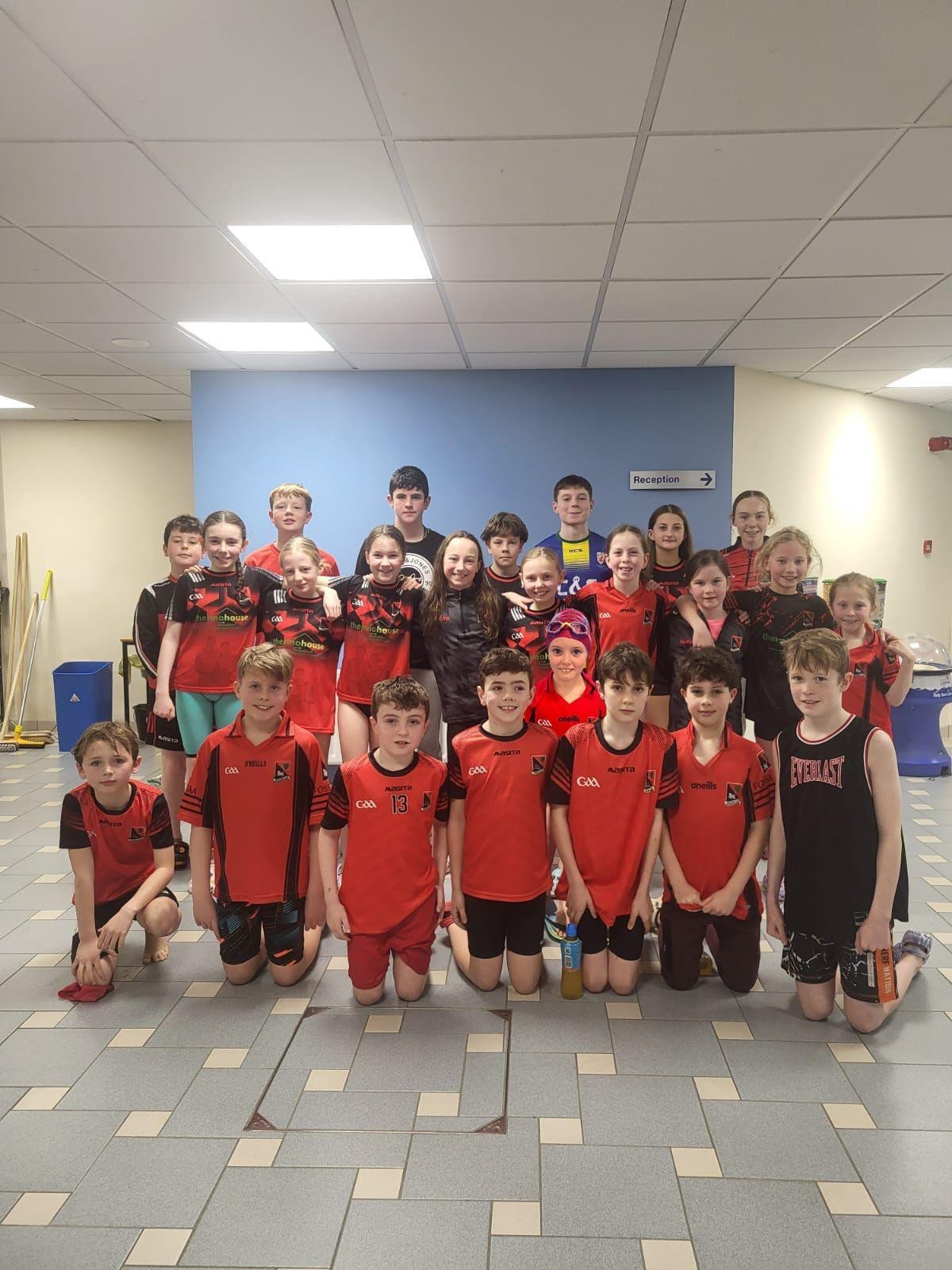
Fossa Swimmers make a splash at County Finals
The Fossa Swim team pictured at the Tralee Sports Complex following their successful outing at the County Finals of the Community Games on Sunday, February 15. The 25-strong squad delivered […]

News
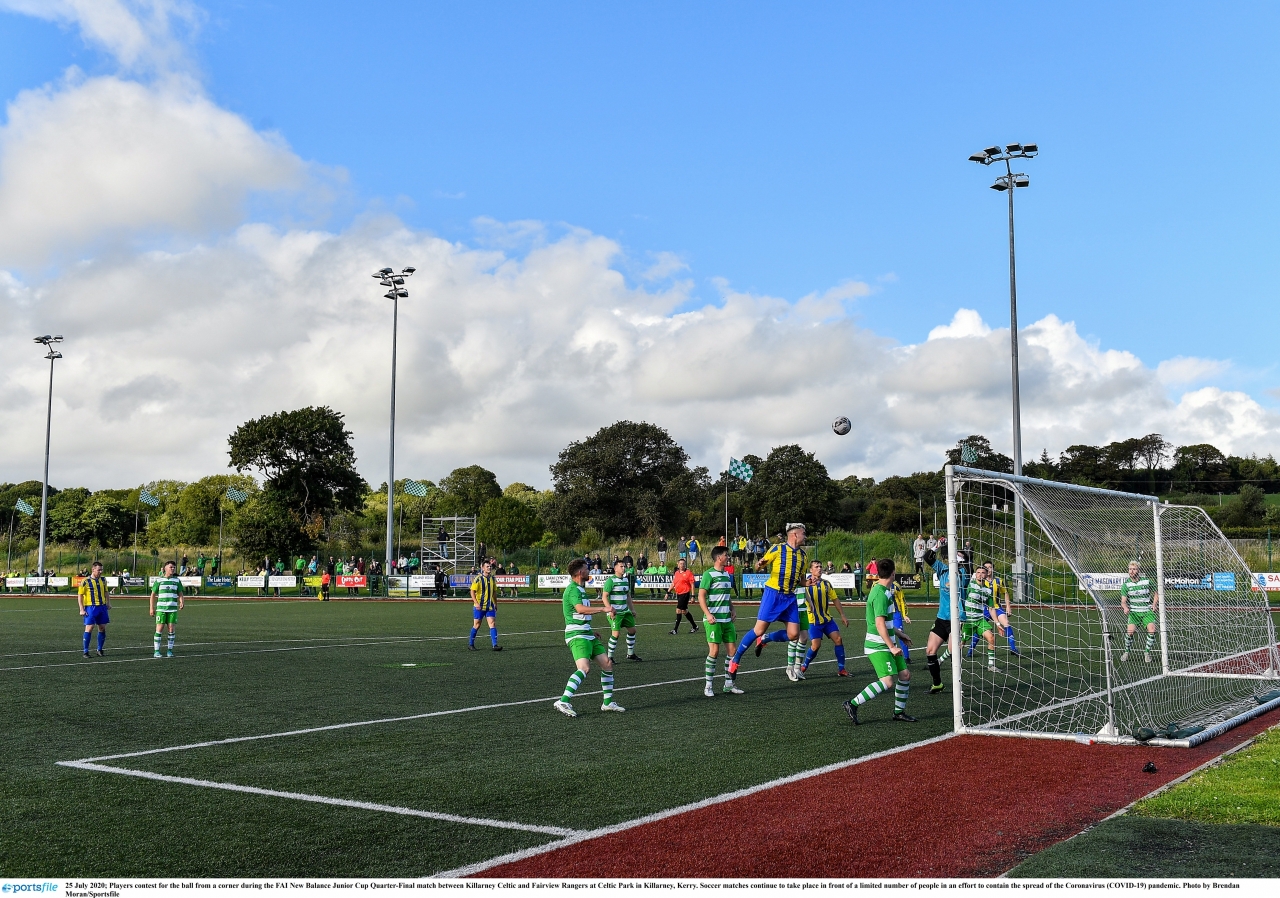
On the Ball Part 2 of the Mikey Daly Interview
Éamonn Fitzgerald EF: Killarney Celtic are invited to participate in an Irish competition. That has big financial implications for travel, meals, etc. MD: It is great to be invited, showing […]

Arbutus Hotel’s 100th anniversary honoured at IHF Conference
The centenary of the historic Arbutus Hotel took centre stage this week at the Irish Hotels Federation (IHF) Annual Conference....

Over €2K raised at Killarney premiere of Hind Rajab film
Killarney for Palestine welcomed over 120 people to The Brehon on Sunday evening for the Kerry premiere of the Oscar-nominated...


Four years on from the Russian invasion of Ukraine, Killarney resident Natalya Krasnenkova shares her experience
When I first arrived at Dublin Airport four years ago, I was handed a small slip of paper. It had...

Top tips at McSweeney’s Cheltenham charity preview night
Racing fans are invited to the McSweeney Arms Hotel on Tuesday, March 3, for an expert preview of the upcoming...


Double award win for Jessie Buckley
Killarney-born actress Jessie Buckley celebrated a historic weekend by securing Lead Actress awards at both the Irish Film and Television...
