
Sport
Kerry’s Golden Years (Part 2): Killing off the Dubs

After the so-called flash in the pan of ‘75 and the ambush of ’78, it was time for The Kingdom to put the final nail in their greatest rival’s coffin. In Part 2 of our series on the Golden Years, Adam Moynihan examines the 1979 All-Ireland final between Kerry and the Dubs.
“Up to 1978, we were learning. The team had been coming steadily over the previous three years. They had tasted success and failure. Their development had been tempered in some of the toughest championship games of all time.
“By 1979, we were at our peak. We had two of the best goalkeepers in the history of the game. We had cover for every position. Even when lost key men at short notice and before crucial games, we were able to keep on winning.”
Speaking to Owen McCrohan for his authorised biography in 1990, Mick O’Dwyer was unequivocal in his assertion that his side were at their absolute best in 1979, and a cursory glance at their championship results that summer tends to back that up.
Kerry ran up nine goals and 21 points against Clare in their Munster semi-final before hammering Cork 2-14 to 2-4 in the decider.
Monaghan, who had beaten Donegal to win the Ulster Championship for the first time in 41 years, were not expected to cause the reigning champions too much trouble in the All-Ireland semi-final but O’Dwyer was taking no chances. In the weeks leading up to the last four clash, he sent a scout north to run the rule over one of their training sessions. Unfortunately for Micko, when the spy arrived the gates were locked. The session was closed to the public.
It mattered little. O’Dwyer simply told his players that Monaghan were “flying”, even going so far as to claim that The Farney Men had flown a coach over from Glasgow Celtic to help with their preparations.
Micko’s white lies clearly worked. Kerry tore into their opponents when the game rolled around as a hat-trick by Mikey Sheehy helped them to a terribly one-sided 5-14 to 0-7 win.
PRIZE
Once again, just as it was in 1975, 1976 and 1978, Kevin Heffernan’s Dubs would stand between Kerry and the ultimate prize.
For the Leinster champions it would be their sixth consecutive All-Ireland final appearance and all things being equal they would have fancied their chances. Sadly for Dublin, and fortunately for Kerry, all things were not equal. Talismanic full forward Jimmy Keaveney was serving an eight-week suspension after he elbowed Ollie Minnock of Offaly in the Leinster final.
The Pope’s visit to Dublin meant that the All-Ireland final of 1979 was brought forward to the third weekend of September instead of the fourth. Had the game gone ahead as scheduled on the fourth Sunday, Keaveney’s suspension would have been served and he would have been available for selection.
The visit of John Paul II famously drew one third of the population of Ireland to Phoenix Park on September 29. One could forgive Keaveney if he decided to give it a miss.
Another key player, Manchester United’s Kevin Moran, aggravated a hamstring injury and also had to sit out the final and with their ageing squad seemingly in decline, few observers gave the Metropolitans a chance of reclaiming the crown they had won in ’76 and ’77.
As for Kerry, Ger Power suffered the same fate as Moran in the weeks leading up to the game but O’Dwyer had an able replacement in Tommy Doyle of Annascaul. Apart from that solitary enforced switch, Kerry lined out exactly as they had done 12 months prior.
EARLY LEAD
The match itself was not a classic. Early points by Mikey Sheehy, the typically industrious Pat Spillane and Eoin Liston gave the champs an early 3-1 lead and when Ogie Moran played in Sheehy for the game’s opening goal in the 10th minute, Kerry were already five points to the good.
The writing was on the wall for the Dubs and their supporters must have known it because when Anton O’Toole pegged one back two minutes later, the Hill barely mustered a cheer.
Sheehy (two) and Spillane kept Kerry ticking over as Dublin continued to misfire in attack. Stand-in free-taker Bobby Doyle pointed a free in the 32nd minute – Dublin’s first score in 20 minutes – before Sheehy tapped over another to leave the half-time score at Kerry 1-7 Dublin 0-3. Ominously for Dublin, they had played that first half with the wind at their backs.
A superb point by Pat Spillane got The Kingdom off the mark in the second and John Egan fired over shortly after to extend the lead to nine.
Then came Dublin’s mini-revival. Substitute Jim Ronayne punched home a scrappy goal in the 45th minute and when Tony Hanahoe made it a five-point game moments later, the Blue Army sniffed a comeback.
Jack O’Shea settled Kerry’s jitters with an excellent point but Dublin were thrown another lifeline when Páidí Ó Sé, who had already been booked for a high challenge, was sent off for another unorthodox tackle on Anton O’Toole. If Kerry were to retain their title, they would have to do it with 14 men.
“Anton O’Toole picked up a ball on the turn and was about to set up Dublin’s second [goal], or that’s what went through my mind,” Páidí later recalled. “I went for broke and grabbed Tooler around the neck and pulled him down. Duggan rushed over. Sent off. As I arrived at the dugout, Gerald McKenna put his arms around me. Well, it had to be done didn’t it?”
After the match Micko admitted that the incident left him with cause for concern, but only briefly.
“After Páidí was sent off, I was worried. But even with 13 men I think we would have still won.”
Dublin’s fightback ran out of steam fairly quickly as a rocket of a penalty by Man of the Match* Mikey Sheehy and a bundled effort by John Egan pushed the lead back out to double figures. Kerry eventually ran out 11-point winners.
Sheehy’s personally tally of 2-6 equaled Keaveney’s haul against Armagh in 1977. To this day they share the record for most points scored in an All-Ireland football final.
RIVALRY
“The great rivalry that has always existed between Kerry and Dublin ensured massive interest in the All-Ireland final but it was a bit phoney really because both sides new the truth,” O’Dwyer reflected in his autobiography. “The gap between us had widened substantially in a year… With Dublin in decline, our lead at the head of affairs looked certain to widen.”
Addressing the masses at a raucous homecoming in Killarney, Micko was even more ebullient.
“You ain’t seen nothing yet.”
1979 All-Ireland Football Final
Kerry 3-13 Dublin 1-8
(HT: Kerry 1-7 Dublin 0-3)
Referee: Hugh Duggan
Venue: Croke Park
Attendance: 72,185
KERRY SCORERS M Sheehy 2-6 (1p-3f), P Spillane 0-4, J Egan 1-1, E Liston 0-1, J O’Shea 0-1.
DUBLIN SCORERS B Doyle 0-3 (3f), J Ronayne 1-0, T Hanahoe 0-2, D Hickey 0-2, A O’Toole 0-1.
KERRY C Nelligan; J Deenihan, J O’Keeffe, M Spillane; P Ó Sé, T Kennelly (c), P Lynch; J O’Shea, S Walsh; T Doyle, D Moran, P Spillane, M Sheehy, E Liston, J Egan. Sub: V O’Connor for O’Keeffe (47).
DUBLIN P Cullen; M Kennedy, M Holden, D Foran; T Drumm, F Ryder, P O’Neill; B Mullins, B Brogan; A O’Toole, T Hanahoe, D Hickey; M Hickey, B Doyle, J McCarthy. Subs: J Ronayne for M Hickey (28), G O’Driscoll for McCarthy (37), B Pocock for O’Toole (62).
*Popular consensus is that Sheehy was, indeed, named Man of the Match but I was unable to find anything official on the matter. In fact, the Stacks legend isn't 100% sure himself...
https://twitter.com/AdamMoynihan/status/1253599476016656384?s=20
Pic: Sportsfile/Connolly Collection.
News
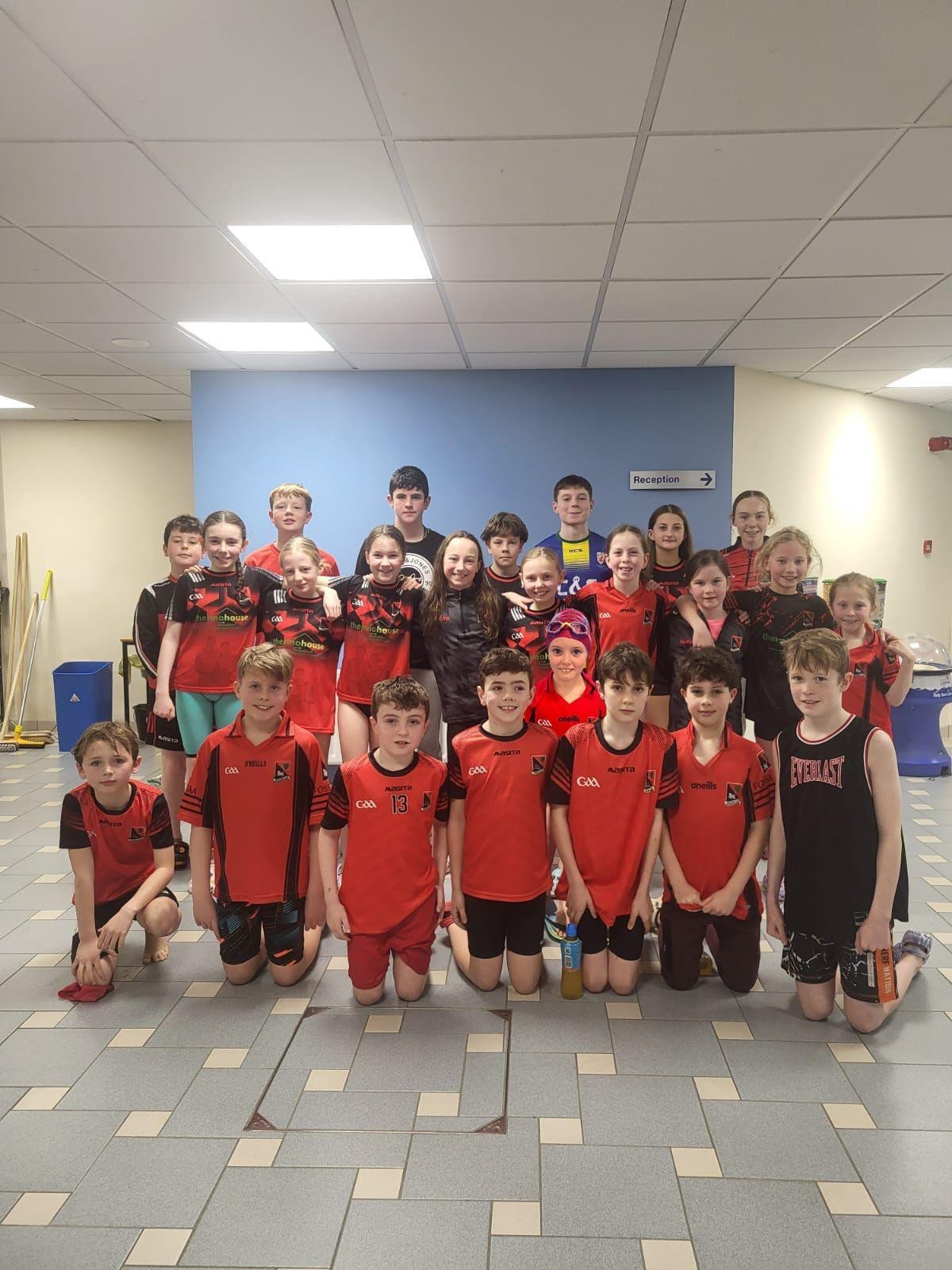
Fossa Swimmers make a splash at County Finals
The Fossa Swim team pictured at the Tralee Sports Complex following their successful outing at the County Finals of the Community Games on Sunday, February 15. The 25-strong squad delivered […]

News
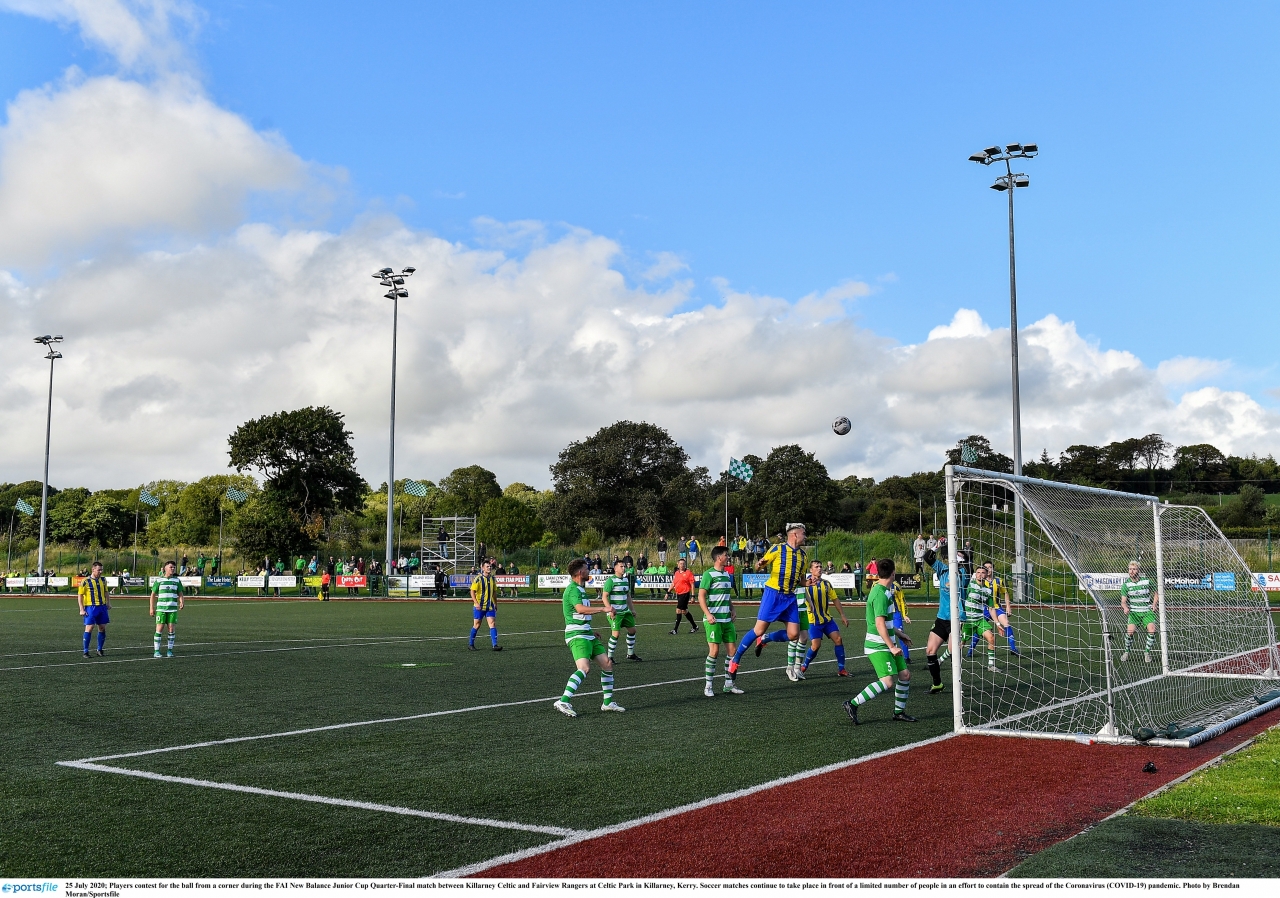
On the Ball Part 2 of the Mikey Daly Interview
Éamonn Fitzgerald EF: Killarney Celtic are invited to participate in an Irish competition. That has big financial implications for travel, meals, etc. MD: It is great to be invited, showing […]

KWD Recycling shortlisted for national environmental awards
KWD Recycling shortlisted for national environmental awards Killarney-based KWD Recycling has been announced as a finalist in the 2026 Repak...

Drivers warned as deer rutting season begins
Drivers warned as deer rutting season begins Motorists in Killarney are being urged to exercise extreme caution as the annual...

Kerry Airport CEO addresses chamber luncheon
Kerry Airport chief executive Adrian Neilan addressed local business leaders at the Killarney Chamber of Tourism and Commerce luncheon at...

The Brehon raises €2,850 for Jack and Jill Foundation
The Brehon Hotel and Spa raised €2,850 for the Jack and Jill Children’s Foundation after hosting a closest-to-the-pin golf simulator...

Five local postmen retire with 185 years service
Five local postmen retire with 185 years service RETIREMENT NIGHT: Pictured at the retirement party held at Killarney Racecourse on...
