
Sport
It’s the dreaded ‘Year 3’ that Keane needs to worry about


Peter Keane is facing a revolt. That’s the latest from my ever-reliable, ever-anonymous source on WhatsApp. He didn’t let me down when he told me that the army were about to roll through the streets of Killarney in armoured tanks to enforce the lockdown, so why should I doubt him now?
In the real world, current and former players have confirmed, in no uncertain terms, that the rumours of an uprising are false.
Peter Keane is probably fielding some tough questions at the moment, though, both from below and from above. The nature of the Cork defeat means that everything must be on the table for discussion, and the players and the county board wouldn’t be doing their jobs if they weren’t searching for solutions.
But realistically Keane’s job was never truly in danger this year. For all the talk of how ruthless and how demanding we are down here, you’d swear we get through managers like Real Madrid, and that Florentino Pérez, not Tim Murphy, was the chairman of the Kerry County Board.
The fact of the matter is that Kerry don’t really sack managers, and the history books back that up.
WALKING AWAY
If we work backwards starting with Keane’s predecessor, Eamonn Fitzmaurice, he resigned in 2018 with two years remaining on his contract. Before that, Jack O’Connor stepped down in 2012 despite having a year to go, Pat O’Shea walked away in 2009 of his own accord, and O’Connor ended his first reign voluntarily after leading Kerry to the All-Ireland in 2006.
Although Fitzmaurice was facing scrutiny following Kerry’s poor showing in the 2018 Super 8s, there is nothing to indicate that the county board were keen on replacing him. They explicitly wanted O’Connor (both times) and O’Shea to stay on.
Things famously got very sour towards the end of Páidí Ó Sé’s tenure, but technically the outspoken bainisteoir was not fired.
While it is true that Ó Sé wanted to stay on for the 2004 season, and it is also true that Kerry GAA didn’t want that to happen, his contract was up at the end of ‘03 anyway. After three years without an All-Ireland and the “roughest type of f***ing animals” comment, which was made during the team holiday in South Africa in January of that year, Ó Sé’s approval rating was low. Kerry GAA decided against offering him a new deal, which is different to sacking him.
A technicality, perhaps, but a point worth noting nevertheless.
UNLUCKY NO. 3
Incidentally, as Páidí found out, ‘three’ is a bit of cursed number for Kerry managers in general.
If an All-Ireland isn’t secured by the end of year three, the writing is invariably on the wall.
Not even the great Micko was immune to it. After three below-par years without winning football’s biggest prize (1987-89), he resigned.
Mickey Ned O’Sullivan took over from O’Dwyer for the 1990 campaign and after a disappointing three-year period, which culminated in the shock defeat to Clare in 1992, he called it a day. Another O’Dwyer protégé, Ogie Moran, got the job in 1993 and he also lasted three years before stepping aside, allowing his former teammate Páidí Ó Sé to take over for 1996.
Páidí secured his first All-Ireland as manager in 1997 (his second year) and his second in 2000 (three years later). As soon as he went three straight years without securing the Holy Grail (2001-2003), he was gone.
Each of the next three managers brought Sam home at the first attempt (O’Connor in 2004 and 2009, and O’Shea in 2007), but when O’Connor went three years without an All-Ireland (2010-2012), he resigned.
His successor, Eamonn Fitzmaurice, won his first All-Ireland in 2014 (his second year) and then did what no other Kerry manager had done in half a century. After going three years without an All-Ireland (2015-2017), he stayed on for another crack of the whip in 2018. That was supposed to be the last year of his contract but he secured a two-year extension before his final year had even begun. This new deal would have kept Fitzmaurice in charge right up to the end of the current season.
He made it past the three-year mark alright but there was tension in the air throughout that fourth one. The Finuge man quit at the end of 2018, saying that he had become a "lightning rod" for "negativity and criticism".
So, what does this all mean for Peter Keane? Well, as disappointingly as 2020 turned out, his head was never really on the chopping block. But history suggests that in this part of the world, it's do or die in Year 3.
If another 12 months pass by without Sam Maguire making his long-awaited return, that salacious WhatsApp gossip about job security could enter the realm of reality.
News
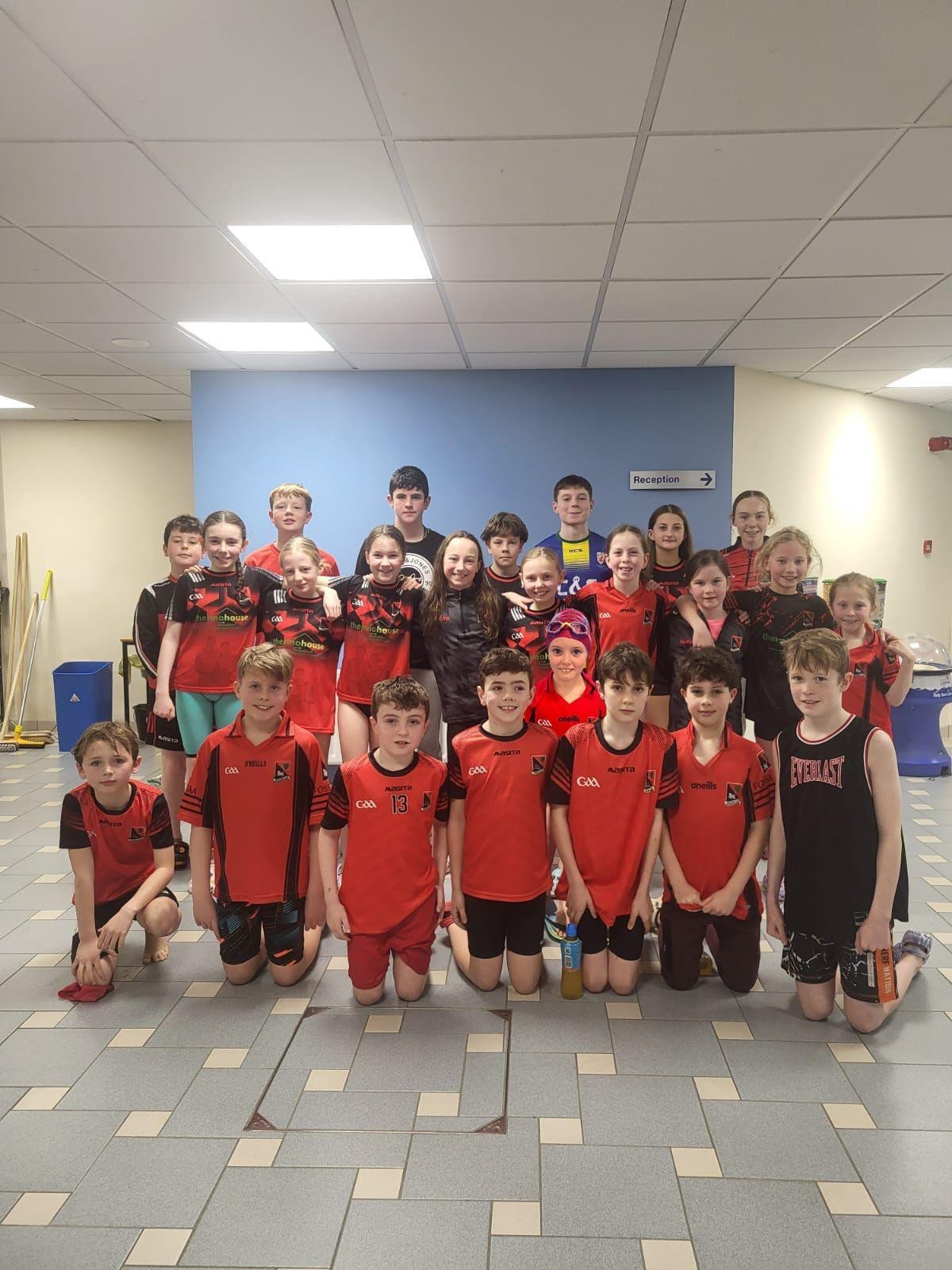
Fossa Swimmers make a splash at County Finals
The Fossa Swim team pictured at the Tralee Sports Complex following their successful outing at the County Finals of the Community Games on Sunday, February 15. The 25-strong squad delivered […]

News
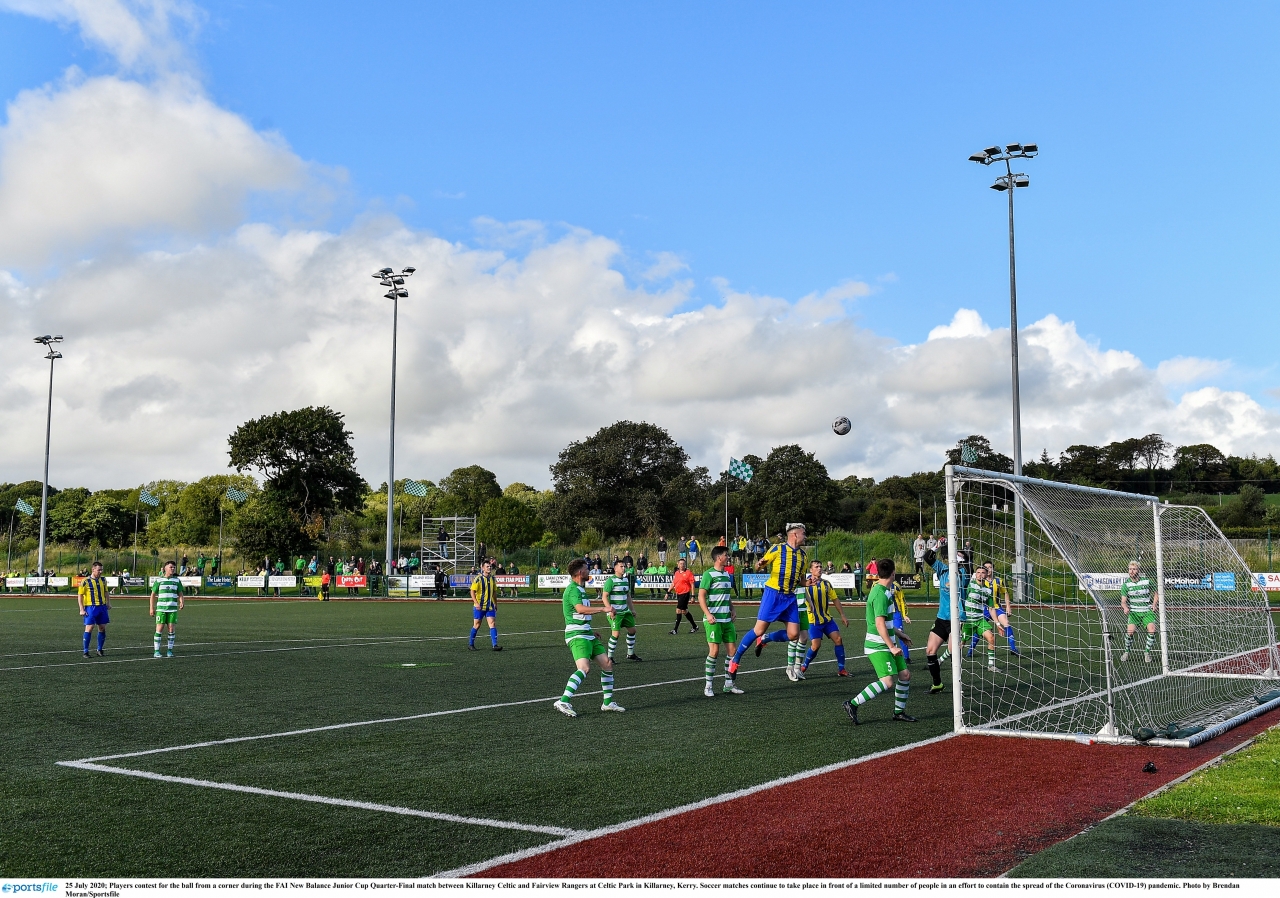
On the Ball Part 2 of the Mikey Daly Interview
Éamonn Fitzgerald EF: Killarney Celtic are invited to participate in an Irish competition. That has big financial implications for travel, meals, etc. MD: It is great to be invited, showing […]


Tourism Ireland CEO Outlines Global Strategy at KTIF Tourism Day
The CEO of Tourism Ireland, Alice Mansergh, was in Killarney on Tuesday of this week to address tourism leaders from...


Kerry Stars honours the Late Vincent Lacke with Memorial Tournament
The second annual Vincent Lacke Memorial Soccer Tournament took place on Sunday at the Killarney Sports and Leisure Centre. Organised...


Registration opens for 44th Ring of Kerry Charity Cycle
Registration is now open for the 44th annual Ring of Kerry Charity Cycle, with thousands of cyclists expected to descend...


Parade will be one of the best in the country
This year’s St Patrick’s Day parade in Killarney – which promises to be one of the most colourful and imaginative...

Pedestrian crossing update at Killarney Athletic
Killarney Athletic AFC is a step closer to securing a new pedestrian crossing following an update at Wednesday’s Killarney Municipal...
