
Sport
‘It happens all the time’ – Killarney’s black athletes tell of shocking racial abuse


In Part 1 of a three-part series on racism in Irish sport, Adam Moynihan speaks to some local black athletes about the discrimination they face both on and off the pitch.
In the wake of George Floyd’s tragic death at the hands of a Minneapolis police officer, fires have raged across the Unites States and cries of injustice have been heard all around the world.
Ireland is making noise, too. Irish social media has been brimming with #BlackLivesMatter posts this past week and a march in Dublin on Monday drew upwards of 4,000 protesters, all eager to show their support for the continually oppressed African-American community.
It’s great to see such solidarity, it really is, but isn’t it curious how we can be so loud when racism happens far away - when it's an "American problem" - yet so quiet when it happens over here?
This week I spoke to some black sportsmen who call, or have called, Killarney home. If, for some reason, you want to believe that racism doesn't exist in this part of the world, please don't look away now.
HURT
Ozzy de Quadros is a black, Brazilian-born tattoo artist who moved to Killarney 18 years ago. He quickly got involved with Killarney Athletic as a coach of an underage team and as a player at senior level. For Ozzy, racism has been a factor from the very start, both in and out of sport.
“I’m here since 2002 and it happens all the time,” he explains. “And I come from South America where people always call each other names - it’s just their nature – so I didn’t grow up with this mentality that I get offended really easily.
“I came here because I was going out with the mother of my children, who is Irish and white, and sometimes we would be out walking and we would both get abused. It was mostly older people, seeing a black guy with a white girl. I’m a grown man so I don’t get traumatised by these things but when it happens to kids, it’s not good for them.”
It must hurt on some level, though?
“Oh, it does. It hurts. It’s not going to stop me living my life, but it hurts.”
Ozzy, now 43 years of age, has also experienced racism in sporting contexts during his time in Ireland. In 2012, a troubling incident during a match against another local club was made even more distressing by the fact that he was with his two young sons at the time.
“Actually, I didn’t hear anything that day,” he says. “I was beside the pitch with my two kids. I was just supporting my club like everyone else there, but the [opposition player] didn’t want to see a black man shouting for Athletic.
“One of the (Killarney Athletic) guys next to me said, ‘did you hear what he said to you?’. I said I didn’t. He said, ‘he called you a n*****’.
“Some of the Athletic players (who had also heard the slur) told the referee but the referee didn’t want to do anything. He didn’t give him a red card. The club didn’t do anything. I posted on Facebook explaining what had happened and for a while people supported me. They said, ‘oh, that’s horrible’ and so on. But they didn’t go further than that. Nobody actually came to me and said ‘look, this is what you can do’. It never happened.”
Ozzy believes that instances of racial abuse are more frequent and more aggressive now than they were when he first arrived, a claim that is supported by the Irish Network Against Racism who say that racist incidents doubled in the first quarter of this year alone. It’s a worrying trend, especially when one considers the fact that this country still doesn’t have proper laws to deal with hate crime.
“There has definitely been an increase in verbal attacks,” Ozzy says. “In 2002, you knew that racist people weren’t going to talk to you or whatever, but they weren’t violent in the way they expressed their anger towards other ethnicities. Now, this could happen three, four, five times a night in a nightclub and nobody does anything.
"I don’t know where this hate is coming from.”
AN EVERYDAY REALITY
Coincidentally another black athlete, Brian Okwute, also came to Killarney in 2002, although he was just a baby at the time. Now a 19-year-old student who studies business in IT Tralee, Okwute became the first ever black player to line out for the Killarney Legion seniors when he made his debut in the East Kerry League earlier this year.
The son of a South African mother and a Nigerian father, Brian says that racism is an everyday reality for him and his family.
“It’s something we just have to live with,” he says. “It happens often, especially on nights out. Sometimes you might hear, ‘you n*****’ out of nowhere. It’d be lads in their twenties or older. I’d say they’re drunk as well, but it’s still not acceptable.
“One time I remember I was walking down through town with my friend and this guy just goes, ‘n*****’. I was like, ‘what?!’. We were so angry, we wanted to fight him, but we just walked away. What’s going to be your defence? He called you a ‘n******’ and nothing’s really going to happen to him, but you assaulted him?
“It does bother me, and it bothers my friends. But you kind of get used to it.”
 Brian with his Legion teammates Peter and Eoghan O'Sullivan.
Brian is a talented Gaelic footballer and he played a starring role for the Legion minor team who won the County League Division 1 title last year. It’s a happy memory for the young midfielder, who says the club have welcomed him with open arms since he joined in 2015.
Unfortunately, his time in the GAA hasn’t all been plain sailing. When he was 17, a minor match descended into a mass brawl when Brian was racially abused by an opponent.
“It was one of those games,” he recalls. “It was tight and tensions were high. This guy pushed me, I pushed him back, he went for a swing and he missed, I went for a swing and I hit him. He was on the floor and the next thing you know he just said, ‘you black c***’.
“To be fair, my teammates stood up for me and I was very happy about that. But I was honestly very hurt.
"I don’t understand why someone has to call me a ‘black c***’. Why can’t he just call me a ‘c***’?”
Okwute received the full backing of his teammates and coaches in the aftermath of the verbal attack but, even though the referee reported it, the player in question was not suspended. The player’s club attempted to set up a meeting so he could offer an apology but, upset by the fact that the perpetrator hadn’t been punished, Brian refused.
“I didn’t want anything to do with it.”
Sadly, Brian’s younger brother, Daniel, was also subjected to racist abuse while playing underage soccer for Killarney Celtic. The incident reduced the boy to tears.
The elder Okwute says the killing of George Floyd made him "sick to [his] stomach" but he is regrettably all-too-familiar with the concept of prejudice.
“If you’re black, you’ve definitely experienced racism at one point,” he says. “You kind of get used to it and brush it off like it never happened. You move on. But it’s not easy. I know I’m going to be racially abused at least once every year.
"Someone is going to say something to me.”
TRUMP
Ohio native Aaron Jackson played National League basketball for the Scotts Lakers last season and although he says he felt "more comfortable being black in Ireland than being black in America”, he was also racially abused during his time here.
“I’m positive that my presence bothered certain people but it’s just more obvious in America, especially since Donald Trump has been elected,” Jackson says.
 Aaron Jackson in action for Scotts Lakers. Pic: Eamonn Keogh.
“In Killarney, I can only remember one time that really stood out to me and was blatant racism. My teammate X (Xavier Talton, a fellow black player) and I were walking home one night from a pub and a car full of fellas were heckling us. They said, ‘n*****s, go back to where you came from’.
“Personally, we brushed it off because we have probably heard it hundreds of times growing up in the States. It wasn’t until that night that it was solidified to me that racism lives everywhere. Although I felt hurt in the moment by it, I brushed it off because I met so many great Irish people who saw no colour at all.”
ANTI-RACIST
A quote attributed to political activist Angela Davis has gained a lot of traction this week: “it’s not enough to be non-racist, we must be anti-racist”.
For their part, Ozzy and Brian echo these sentiments and say that white allies need to call out discrimination whenever they see it.
Brian, who would also like to see harsher penalties for those found guilty of racial abuse, says he understands why some individuals don’t get involved.
"But if that was your son," he asks, "how would you feel? You have to put yourself in our shoes.”
“It’s Ireland so everybody knows everybody,” Ozzy adds. “They’re afraid to offend the people they know, or get involved in a fight with someone, so they don’t stand up for those who are not from here. People are good but they don’t do enough.
“The good thing is that there are a lot more nice people in Ireland than bad people. They just need to be more vocal when it comes to standing up for what they believe in. That’s all.”
News
Fossa Swimmers make a splash at County Finals
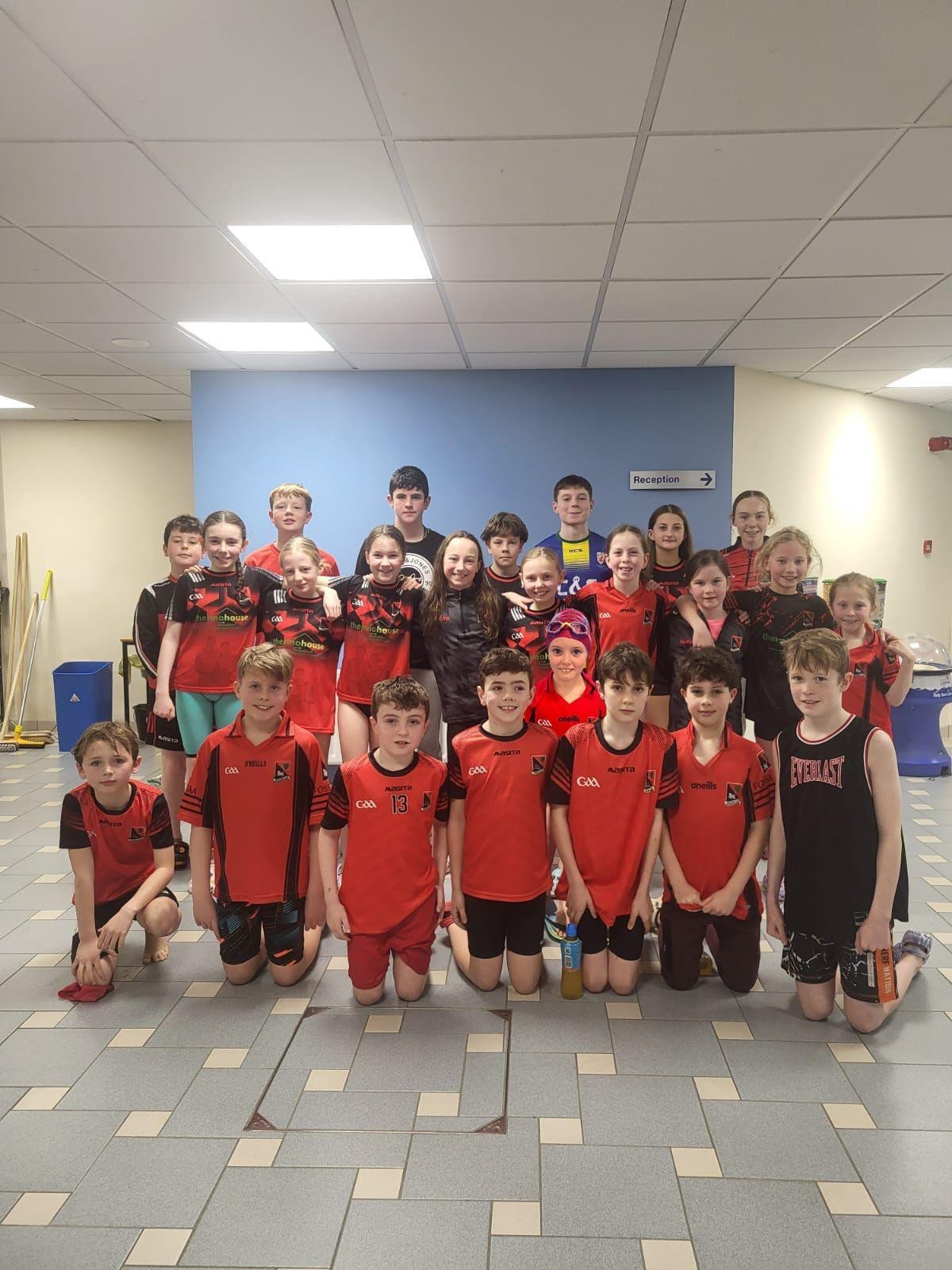
The Fossa Swim team pictured at the Tralee Sports Complex following their successful outing at the County Finals of the Community Games on Sunday, February 15. The 25-strong squad delivered […]

News
On the Ball Part 2 of the Mikey Daly Interview
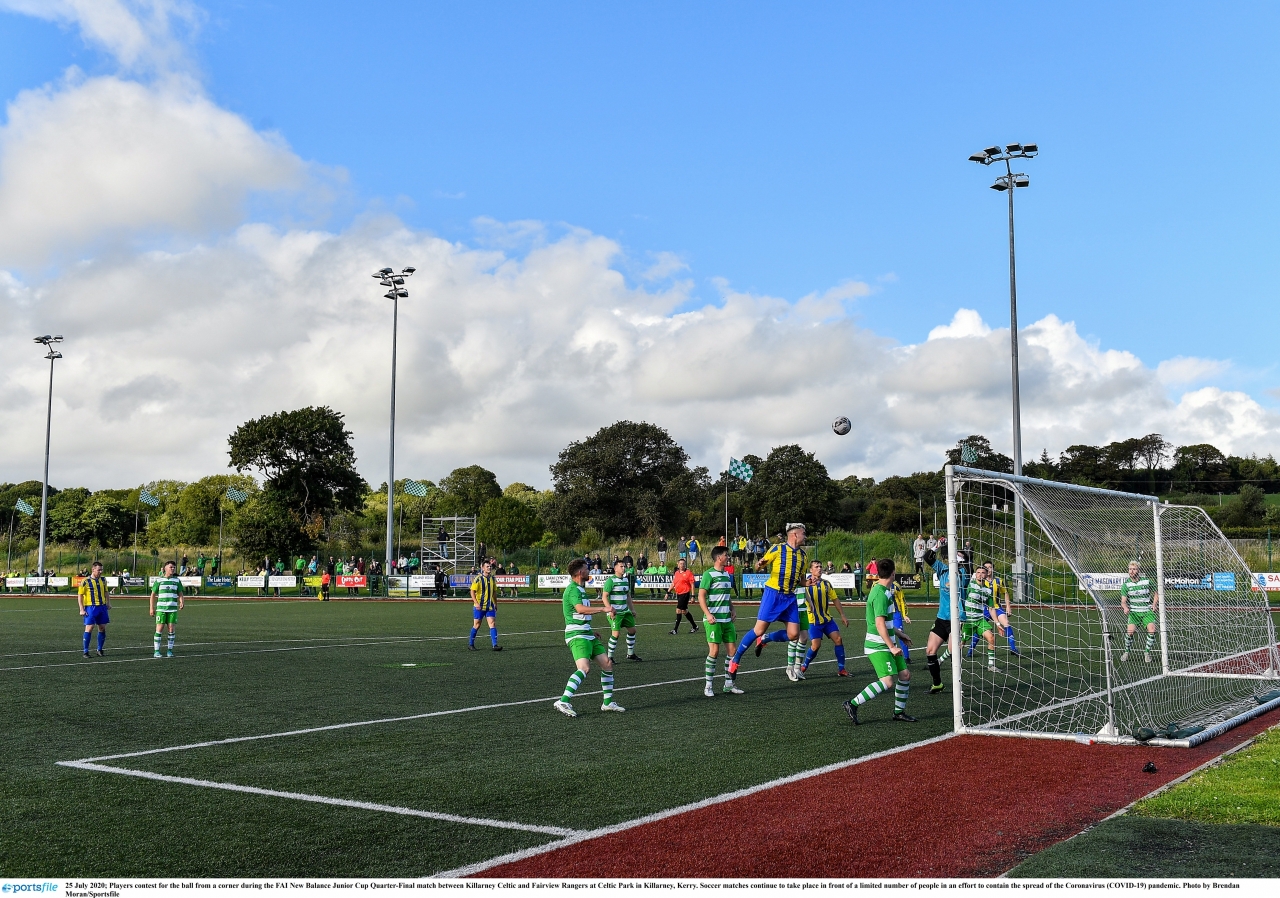
Éamonn Fitzgerald EF: Killarney Celtic are invited to participate in an Irish competition. That has big financial implications for travel, meals, etc. MD: It is great to be invited, showing […]

Powerful photo display at St Mary’s brings Ukraine conflict home
A unique photo exhibition has been installed on the railings outside St Mary’s Church of Ireland in Killarney town centre,...


Beaufort Engineer honoured with national emerging leader award
Beaufort Engineer honoured with national emerging leader award Beaufort native Danny Pio Murphy has been named the recipient of the...

Pickleball Club’s record medal haul at Munster Open
Pickleball Club’s record medal haul at Munster Open Killarney Pickleball Club celebrated its most successful outing to date at the...


Women’s Shed to Host Charity Auction for Typhoon Victims
The Killarney Women’s Shed has teamed up with local nurse Chandra Arias to host a major charity auction of upcycled...


Killarney hosts 88th annual Irish Hotels Federation Conference
Hoteliers from across the country gathered at the Gleneagle Hotel this week for the Irish Hotels Federation’s (IHF) 88th Annual...
