
Sport
If we care about football, simply ‘not caring’ about the Qatar World Cup isn’t enough


by Adam Moynihan
Normally this would be a time of great excitement for fans of the world’s favourite game.
The World Cup is just a matter of days away. At its best, the competition is a festival of football that entertains and enraptures a passionate audience on a global scale. Even here in Ireland, where our team is starved of World Cup appearances, the games attract massive interest.
Sadly, however, it seems like your average fan doesn’t really care about this upcoming instalment. Certainly not to the same extent they cared about instalments past.
On the one hand, I get it. Being apathetic is a normal response to a lot of what has been happening lately and it’s fair enough to feel like you just can’t be bothered getting properly into this particular World Cup.
But I also really think we need to challenge ourselves to go that bit further. To dig a bit deeper into our own hearts and minds. To feel something.
Let’s start at the start. Qatar was chosen as the host nation for the 2022 World Cup following a selection process that was tainted by accusations of bribery and corruption.
Many of the FIFA administrators who oversaw the process – people like Sepp Blatter and Michel Platini - have since been banned from football. Several other executive committee members have faced criminal charges over their conduct while working for the sport's governing body.
It is widely accepted that Qatar, a very small place with summer temperatures that are not conducive to outdoor sports, a place that effectively had no big-tournament infrastructure, was unfairly handed the biggest summer sporting event on Earth. That should make you feel something.
Furthermore, Qatar is a country where LGBTQ fans are not welcome. I recently spoke to a couple of friends from Kerry who have lived in the Middle East (one resided in the UAE and visited Qatar, the other lived in Doha for two years) and neither feel as though Qatar is a suitable host nation. One described the decision to play the World Cup there as “madness”.
What would they say to a gay friend who wanted to travel to the World Cup?
“Openly gay?” the former UAE resident replied. “Forget about it. They’ll be thrown in jail and that’s a fact. There’s going to be massive culture clash.”
A number of horror stories relating to the treatment of gay people in Qatar have come to light recently. These stories should make you feel something.
Qatar also has a very poor record when it comes to racism, which makes something of a mockery of their claims that anti-Qatar World Cup criticism is, itself, racist.
In 2020, a report by the UN highlighted concerns around “structural racial discrimination” against non-nationals, adding that a “de facto caste system based on national origin” exists there.
“European, North American, Australian and Arab nationalities systematically enjoy greater human rights protections than South Asian and sub-Saharan African nationalities,” the report found.
That friend of mine who used to live in Doha was unequivocal in his assessment of labour laws in the country: it amounts to “modern-day slavery”. That should make you feel something.
Meanwhile, you have high-ranking football officials instructing players to “focus on the football”. A letter from the pen of FIFA president Gianni Infantino urged participating teams not to allow football “to be dragged into every ideological or political battle that exists. At FIFA, we try to respect all opinions and beliefs, without handing out moral lessons to the rest of the world”.
Even by FIFA standards, the rhetoric found in the letter is incredibly stupid and tone deaf. Their attitude should make you feel something.
And then there are the deaths. Last year The Guardian reported that 6,500 migrant workers had died since Qatar had been awarded the World Cup in 2011. (The precise figure of those who have died building the infrastructure needed to host this tournament is unknown.)
6,500. That is, roughly speaking, every man and boy in Killarney. Think about that for a second. Your father. Your brother. Your son. Your best friend. 6,500 lives sacrificed.
That should make you feel something.
If you were to tally up all the players who participated in the qualification process, 204 teams multiplied by around 30 players each, your total would be pretty close to that figure of 6,500. Would we care more if it was the footballers who died instead? That’s a rhetorical question. Of course we would. If even one superstar, someone like Messi for example, lost his life, it would be mourned on a larger scale than what we have witnessed for those migrant workers in Qatar.
Acknowledging that should make you feel something.
We all know that this project amounts to sportswashing for the Qatari government. You might well argue that football has been used as a political tool in the past, from Argentina in 1978 to Russia in 2018. The owners of Manchester City, PSG and Newcastle United are engaging in sportswashing too. As far as a large proportion of soccer fans are concerned, the game sold its soul a long time ago.
This World Cup – everything about it - takes things to a different level, though, and it’s a level that I, personally, am not comfortable with. Soccer was my first love. I’ve played and followed the game for 30 years and like a lot of people I can measure my life in major tournaments.
When I’m old(er) and grey(er) and I look back on my life, Qatar 2022 will go down as a different kind of milestone for me: the first World Cup that I didn’t watch.
Apathy is one response and, as I said, it’s understandable to some extent. Sometimes things get so heavy, the easiest thing to do is to disengage from the bigger issues at hand and focus on the lighter stuff (i.e. the actual football).
But I do believe that if we care about football then simply not caring about this World Cup isn’t good enough. If we’re willing to accept this tournament and play our part and watch the games and pretend it’s all fine, what else are we willing to accept?
Where is the line if it hasn’t already been crossed?
Photo Credit: historyofsoccer.info
News
Fossa Swimmers make a splash at County Finals
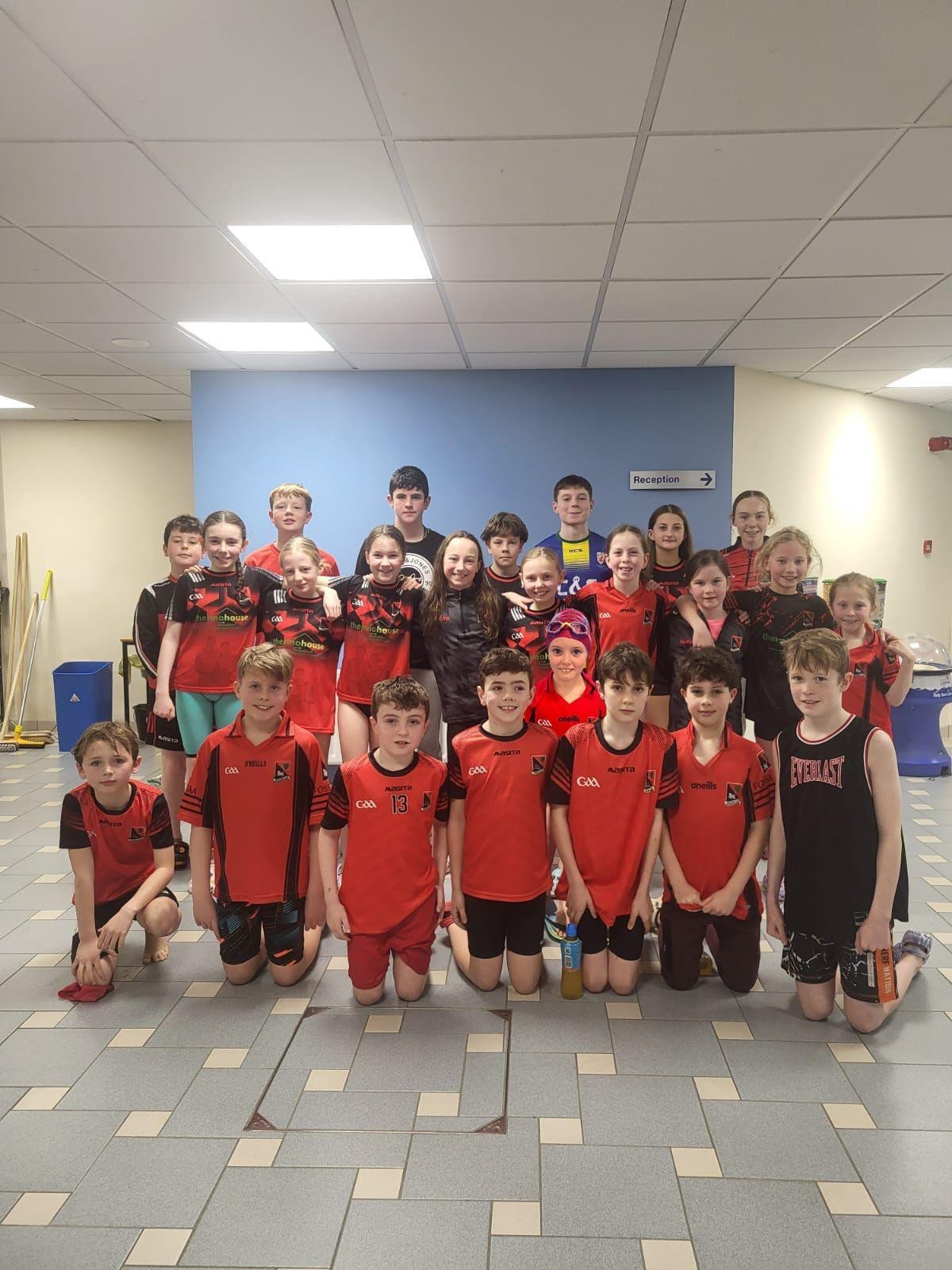
The Fossa Swim team pictured at the Tralee Sports Complex following their successful outing at the County Finals of the Community Games on Sunday, February 15. The 25-strong squad delivered […]

News
On the Ball Part 2 of the Mikey Daly Interview
Éamonn Fitzgerald EF: Killarney Celtic are invited to participate in an Irish competition. That has big financial implications for travel, meals, etc. MD: It is great to be invited, showing […]

Powerful photo display at St Mary’s brings Ukraine conflict home
A unique photo exhibition has been installed on the railings outside St Mary’s Church of Ireland in Killarney town centre,...


Beaufort Engineer honoured with national emerging leader award
Beaufort Engineer honoured with national emerging leader award Beaufort native Danny Pio Murphy has been named the recipient of the...


Pickleball Club’s record medal haul at Munster Open
Pickleball Club’s record medal haul at Munster Open Killarney Pickleball Club celebrated its most successful outing to date at the...


Women’s Shed to Host Charity Auction for Typhoon Victims
The Killarney Women’s Shed has teamed up with local nurse Chandra Arias to host a major charity auction of upcycled...


Killarney hosts 88th annual Irish Hotels Federation Conference
Hoteliers from across the country gathered at the Gleneagle Hotel this week for the Irish Hotels Federation’s (IHF) 88th Annual...
