Connect with us

Sport

If Big Sam hates the present so much, why should we entrust him with Ireland’s future?

Published

on

by Adam Moynihan

Yesterday, by complete coincidence, I consumed two pieces of media that focussed on brash, larger than life Englishmen.

The first was a Second Captains interview with football manager Sam Allardyce and the second was a 2006 Channel 4 documentary about Roy Chubby Brown, aka Britain's rudest comedian.

For those unfamiliar with Brown's work, "rude" is a very kind way of describing his frankly awful brand of outrageously offensive comedy. Many of his jokes cannot be repeated here but the narrator of the documentary sums him up well when he notes that, "on stage [Brown] uses themes that most other comedians discarded several decades ago". He developed a significant following regardless, making millions of pounds off his live gigs, VHS tapes and DVDs.

I was struck by the many similarities between Allardyce and Brown, two controversial celebrities whose success has never been greeted with the acclaim they feel it deserves.

Allardyce is considered one of the leading candidates for the vacant Ireland managerial post and, when prompted by host Eoin McDevitt, he willingly threw his hat into the ring at a Second Captains live show in Dublin. The former Bolton, West Ham and England boss was initially given a warm welcome by the audience but McDevitt and co-hosts Ciarán Murphy and Ken Early subsequently pointed out that the atmosphere soured as the interview wore on.

Allardyce certainly has a tendency to rub people up the wrong way. He and Roy Chubby Brown have that in common. But that’s not where the parallels end.

Perhaps the most tangible link is both men's aversion to foreigners. Brown frequently takes jabs at immigrants as part of his routine, while Big Sam is vociferously opposed to non-English managers and owners coming to the Premier League and, in his words, "pinching our jobs". While Allardyce is obviously nowhere near as overtly xenophobic as Brown, that particular remark is exactly like one of Brown’s gags, albeit without the punchline.

Like Brown, Allardyce rails against modernity and refuses to accept that times change. He claims we have all been brainwashed into thinking that possession football is good in much the same way that Brown believes we've all been brainwashed into thinking that taking the piss out of minorities is bad.

In taking that stance, they both reveal how out of touch they are with the majority of the population. (The classic Principal Skinner line "no, it’s the children who are wrong" springs to mind.) Instead of adapting their approach and moving with the times, they remain devoutly true to their methods, however outdated the rest of the world deems them to be. Emboldened by a small cult following of Little Englanders, they lack the self-awareness to realise why they are out of favour with everyone else. And they're not for changing.

Allardyce, who lost his England job after just 67 days due to alleged professional malpractice, favours a direct style of football. There may be a time and place for such an approach but most people prefer to watch possession-based football, and most players prefer to play it. It’s not a global conspiracy to do old-style managers like Allardyce out of a job. "Tippy tappy football", as Big Sam calls it, is popular for a reason.

In the documentary, Brown (then 61) laments the fact that he hasn't been on TV in 18 years. The audiences at his live shows are dwindling and the money coming in isn’t covering his expenditure. But, of course, he and his material are not to blame. Society is the problem.

(The Middlesbrough native is still performing, incidentally, although earlier this year a number of his shows were cancelled. His manager accused venues of "bowing to the woke/snowflake pressure".)

Allardyce’s best days are more than likely behind him too. His career peaked in the mid-2000s when he brought Bolton all the way to Europe. That was a fantastic achievement but in football terms it’s a lifetime ago.

As I reflected on the interview and the documentary, it occurred to me that giving the Ireland job to Sam Allardyce would, in a way, be like giving The Late Late Show job to Roy Chubby Brown. What message would that put out? What values would it promote?

More importantly, why should we entrust the future of Irish football to someone who clearly despises the modern game?

If that's how he feels about the present, imagine how he'll feel about whatever comes next.

Advertisement

News

On the Ball Part 2 of the Mikey Daly Interview

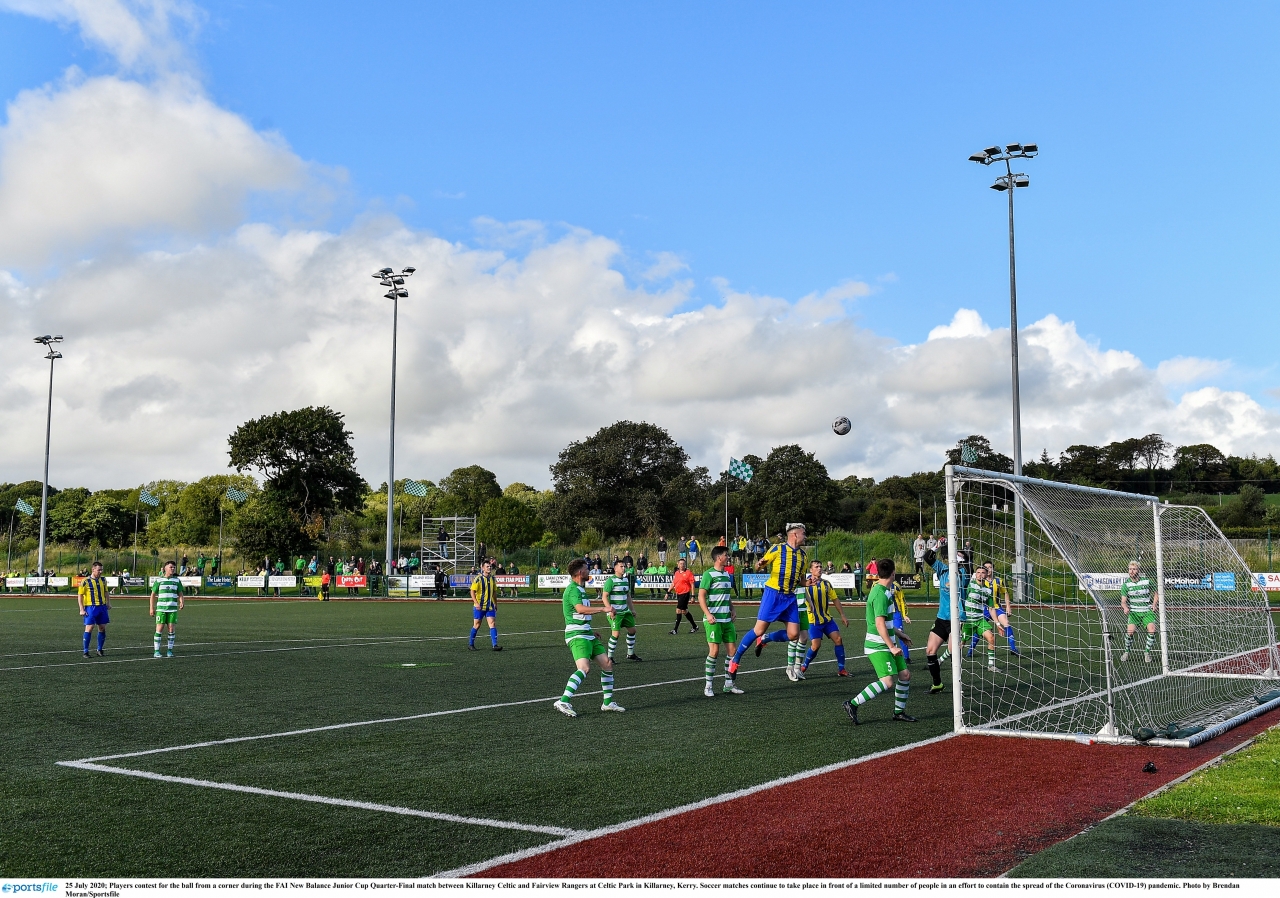
Éamonn Fitzgerald EF: Killarney Celtic are invited to participate in an Irish competition. That has big financial implications for travel, meals, etc. MD: It is great to be invited, showing […]
Published

on

Éamonn Fitzgerald
EF: Killarney Celtic are invited to participate in an Irish competition. That has big financial implications for travel, meals, etc.
MD: It is great to be invited, showing the quality of our squads, but travel costs are very high. I have been looking at clubs like ours in Limerick, Tipperary, Clare and elsewhere for a regionalised competition so that travel costs could be reduced, but I don’t see any commitment to that idea. It’s up in the air at the moment.
EF: Running an amateur sports club is very expensive, especially if you have so many successful teams in competition.
MD: You are well aware of that yourself, but with all of our activities, we are funded by the usual sources used by all sports to collect money. We are in a very good financial state.
EF:How good?
MD: As a trustee of the club, I am very proud to say that we are almost debt-free and we expect to be clear of any debt by October this year, marking our 50th anniversary. In saying that, whether you are an Under 12 or a senior player, all you have to pay for a training session with Killarney Celtic is €2.

EF:The women in Celtic appear to do great work developing soccer for all.
MD: Yes, they do marvellous work in so many parts of the club, led by trojan worker Mary Lyne. On Wednesday night last, the Mothers, Others and Friends started a weekly non-competitive fun game under lights at Celtic Park, and that is great.

EF: Can, can you see some ex-Celtic player is going to make it with a top Irish club and then cross Channel?
Md: I have to compliment Killarney Athletic here right away because Brendan Moloney and Diarmaid O’Carroll did just that. We haven’t had any such shining light yet, but we know that we will in the future because we have great young successful players coming through.
EF: Reverting back again, to 1976, you would have come up at the time The ‘ban’ was abolished. That rule prevented GAA players from playing soccer. If they did, they were suspended. However, it must have been difficult for a player to play both codes when it was permitted.
MD: Fair dues to Seán Kelly, he removed the “ban’, and we were very fortunate that there were some great players from Spa in particular, like Billy Morris, Seán Cronin, the Cahill brothers, James and John, Seánie Kelliher and others. They wanted to play football and soccer. The way we worked it in Celtic was that if the football season was over, then they always played soccer with us, and vice versa
EF: Why do you think that club soccer has become so popular in Ireland? It is climbing the rankings as a sport in Ireland.
MD: Because it’s on television the whole time, and the coverage is getting is precedented. Anytime you turn on the TV, you will find a soccer game from all parts of the world, not just cross channel. The 11-a-side is probably easier to organise than we say 15-a-side in the GAA, and some small clubs, particularly in rural areas, find it hard to get 15 to form a team. See what they’re doing in places. Two neighbouring teams get together as one team, and that’s understandable because all people want to do is play. Of course, not all young people wish to play soccer; they have different hobbies, learning the guitar or whatever, and that is great for them. That’s my experience anyway.

EF: The real crunch time comes when they get to roughly 18-years-old, completing their post-primary education and moving away from Killarney for third-level education. They may be in college, anywhere in the country, making it difficult to come down and play with their local club. So that’s one big reason for the fall off.
MD: Some fall away before that, believe it or not.
EF: Do you think Celtic are doing well, promoting the club?

Yes, for all sexes, but particularly for the girls, so that they can stay on longer for valuable coaching. We’re very fortunate to have David McIndoe as coach for the Celtic girls, and he is outstanding, absolutely fantastic.
EF: The FAI seems to stumble from one crisis to another, but at local level soccer is alive and well in towns, as well as in rural areas. Ballyhar and Mastegeeha are very good examples where great facilities have been developed by enthusiastic volunteers and that attracts the players
MD: So I think once you get to the stage where you have a facility and committed club people, you’re there. We have a very good membership, and we’d be well organised for parents who support their kids playing, and they do. We have two stands, as you know, one dedicated to our former great Celtic man, John Doyle (RIP). That’s important nowadays that you have a clubhouse where the spectators can get that welcome cup of coffee they will relish, especially on cold days.
EF: Where do you see Celtic in 2076?

MD: As I said earlier in Killarney Celtic, we are welcoming for everyone, the local Irish, of course, but it’s open to all. We have great people originally, from China, Europe, and the Middle East. We have an exceptionally good committee at the moment. We had people with foresight like Dermot O’Callaghan (RIP), who were progressive, and of course, that family continues the Celtic tradition. Obviously, we like to push the thing on a bit further, but we’re very conscious that we spent 50 years putting this together and we want to make sure that when we go, the structures are in place in (Killarney) Celtic for the next 50 ( years)As a trustee I am very proud of how we have developed and will celebrate that achievement this year. We will also remember the Celtic players and supporters who have passed away since 1976 and look forward to whatever challenges and opportunities face Killarney Celtic in the years ahead. It is hard to believe that it all started from our conversation (with Billy Healy and Tommy O’Shea) that a new club was needed in Killarney, so that all players who wish to play soccer will be able to play at whatever level they wish and join us at Celtic Park.
EF: Thanks, Mikey, and wish you good health on your daily cycles with your good friend Mike O’Neill.
That’s Mikey Daly, always a pleasure to chat with him on a variety of sports.

Continue Reading

News

LUKE MANGAN recently caught up with Kerry FC’s manager, Colin Healy. 

  He spoke to him about his careers as a player and manager. Here’s how it went: When you began your career, was there ever a player or manager you idolised? […]

Published

on


He spoke to him about his careers as a player and manager.

Here’s how it went:

When you began your career, was there ever a player or manager you idolised?

‘When I started my career, not really, I was 18 with Celtic and you know a lot of good players were there. Henrik Larsson was one. It was more important for me to get to that level and stay at that level, and it was a great experience’.

Tell me how it felt to play for Ireland while Mick McCarthy was manager.

‘It was very good. I began working with him in the Irish camp, and then when I joined Sunderland he would have been the manager there. So he’s been fantastic’.

Looking back on your career, what are you most proud of?

‘I’m just proud as always that I had a long career, a lot of injuries aswell, so probably getting back from those injuries. Along with playing for Cork City and playing internationally for Ireland which is always a good thing’.

When you went into managing, was there ever a manager or manager’s style you idolised?

‘Well we had a few, obviously Martin O’Neil at Celtic, and of course he’s still coaching today. Martin was a very good man and a very good manager. So I’d probably say Martin’.

Describe to me what it felt like to represent your country at an international level.

‘Yea, it was probably the proudest day and one of the biggest achievements’.

This will be your first full season with Kerry, what would you like to being to the club?

‘We recruited well, we still look to bring in more players, but listen i just want to get us as far as we can and get higher up the table and improve on last year’.

What do you believe is Kerry’s strongest capability?

‘We’re still in pre-season so we got some good goals, there’s still some stuff we can improve on, but its still early doors for us. Obviously we got new players, and they need the type of time as the players that are here. So overall it was good to get into the next round (of the Munster Senior Cup), but as I say, we can always be better’.

Attachments

Continue Reading