
Sport
How did a Kenyan striker with 25 caps end up in the Kerry District League?


This week Adam Moynihan sat down with his new Killarney Athletic teammate Paul Kiongera to talk about his pro career in Kenya, playing for his country and adjusting to life in the Kerry District League
When I first heard that Triona Sheehy, a teacher from Killarney, was going out with a professional footballer in Kenya, I did what any self-respecting journalist would do. I googled him.
Paul Mungai Kiongera immediately passed the acid test: he had a Wikipedia page. That’s all the verification I needed. He must be the real deal.
Then I glanced at the side panel to check out his career stats. The 30-year-old had scored 50 league goals in 110 games for Kenyan Premier League clubs KCB, Gor Mahia, AFC Leopards and Ushuru, as well as two in nine during a short stint with Simba in Tanzania.
But then came the kicker. He had caps for Kenya. He was definitely the real deal.
Fast-forward to approximately one month ago when I got an Instagram DM from Triona telling me that her boyfriend was coming down to train with Killarney Athletic.
“Will you mind him?” she asked. When training rolled around on Wednesday night, I quickly discovered that Paul didn’t need much minding.
But how had all of this come to pass? How did an international footballer from East Africa wind up playing with us, a bunch of amateurs, on a cold and damp August evening in Killarney?
THE BOY FROM WEBUYE
It’s certainly a far cry from the balmy West Kenyan town of Webuye, where a young Kiongera and his friends honed their soccer skills with a makeshift football they had carefully constructed from discarded paper.
Speaking to me at the Killarney Advertiser offices this week, Paul said he has happy memories of his childhood and playing football, though he never dreamed he would make it as a professional.
“It was a carefree environment. We used to play outside, all day every day, kicking the ball. We started playing football when we were young because it was the only sport that was accessible. Football was always a big part of my life."
“At first I played it for fun. Even in primary school and high school I played for fun. Then towards my last two years in high school, my teachers and my coach started saying that I could make a good player. Then I started getting serious with it.”
Kiongera signed his first pro contract with Ushuru FC (known at the time as Kenya Revenue Authority) but just six months later he was snapped up by Kenya Commercial Bank, who handed him his Premier League debut in 2010. He would go on to score 18 goals in 32 games for The Bankers, an impressive return that led to a loan move to Gor Mahia.
The boy from Webuye scored seven times in 21 appearances for his new club and he played his part as the Kenyan giants won the league in 2013. It was Gor Mahia's first title in 18 years.
NATIONAL TEAM
His fine form at club level also caught the attention of the Kenya manager and he made his debut for his country in 2012. Getting the call from the national team was a proud moment for Paul and his family, although (like every other international footballer before him) he admits to not believing the voice on the other end of the line.
“For my first senior cap, I had played a league game on Saturday and on Sunday I was at home resting. My phone rang and it was the national team coach (Vince Ombiji). At first I didn’t believe it; I thought maybe one of my teammates was kidding me or something. So I talked to the coach and I had to call him again to confirm.
“Everyone was happy for me. It’s a dream to play for your country.”
He would go on to make 25 appearances for the Harambee Stars, lining out alongside elite players like Victor Wanyama of Tottenham and Wanyama’s older brother McDonald Mariga, the former Inter Milan defensive midfielder who made history in 2010 by becoming the first Kenyan to play in the Champions League.
Kiongera came head-to-head with some big names on international duty, chief amongst them Liverpool and Egypt star Mo Salah. In a match against Senegal, he also came up against Salah’s Liverpool teammate Sadio Mané and former Newcastle strikers Demba Ba and Papiss Demba Cissé.
BUNDESLIGA
While at Gor Mahia, Kiongera was linked with a massive $200,000 move to German Bundesliga outfit Borussia Mönchengladbach but, unfortunately, a thigh injury put paid to any potential move to Europe. Mönchengladbach would go on to finish sixth in the 2013/14 season under current Borussia Dortmund manager Lucien Favre.
“Had I not sustained that thigh injury, I think the transfer to Borussia Mönchengladbach would have happened."
"The injuries slowed me down," Paul admits. "I started to have doubts, and I lost a bit of pace. They had a major impact.”
Not many Kenyan footballers make it in Europe but Kiongera is adamant that there is plenty of untapped talent in his homeland. However, financial limitations and the pigeonholing of African footballers make things difficult for Kenyans who dream of following in Wanyama’s footsteps.
“The issue is: how do the players get to Europe?” Kiongera says. “That’s the major challenge. Most of the players can’t afford it. Even when they’re playing professionally, they don’t earn big money. But honestly, there is a lot of talent in Kenya.
“Unfortunately in Kenya we are known for running! When people see that you’re an African player, they expect you to be strong and fast. That’s the expectation. With football, it’s your decision-making that matters. If you are fast with your decision-making, then you are fast. You can run fast, be physical but if your decisions are slow, then you are slow as well.”
That last observation is telling when it comes to analysing Kiongera as a footballer. The No. 10 certainly isn’t lacking when it comes to athleticism but his real strengths come to the fore when the ball is at his feet. Let’s put it this way, he is currently adjusting to the Irish style of play.
KILLARNEY
Kiongera first met Triona when the Killarney woman was helping her father, Eddie, with his charity in Embulbul near Nairobi. The couple started dating in 2016 and this year they decided to relocate to Ireland. Paul was keen to play a bit of ball so the Sheehys sent him down to their local club, Killarney Athletic.
Paul says he’s enjoying his time with The Blues.
“The lads are good. They’re welcoming and they’re friendly. In Kenya when you move to a different team, people have a mentality that you’re there to take their position. Here the lads have tried to help me settle in.”
And what about the standard?
“There are some very good players,” Paul says, although he could hardly say otherwise when he’s staring me, his teammate, straight in the face.
“I would say that the standard is not ‘top’ standard but you understand that it’s amateur. People don’t get to train every day, just twice a week or three times a week. It’s much better than the amateur standard in Kenya.
"I’ve noticed here that players try to find a solution quickly, try to go long, which is different. In Kenya we love short passing and we don’t hold the ball, but I’ve noticed here that people love dribbling. So it’s quite different.”
When I mention that Irish football is known for its tough tackling, his eyes widen.
“I’ve noticed with the tackling, yeah. They are quite aggressive. At first I was scared but I’m getting used to it.”
Apart from having to adjust to the tactics and the cooler climate (“when you wrap up properly, it’s not a problem”), Paul has had little difficulty finding his feet in Kerry, something he attributes to the warmth of the locals.
“I was surprised the way people are very friendly. I wasn’t expecting it because it’s different in Africa. When you are walking on the road, somebody will say ‘hi’. You see people chatting and you think that they know each other but no, they are just chatting. So yeah, I’m happy to be here because people are friendly.”
The ‘céad míle fáilte’ afforded to Kiongera in Killarney is a million miles from the racist abuse African footballers, and footballers of African descent, are subjected to in the top leagues in England, Italy and Russia. Instances of racial abuse, both online and at matches, are frequently documented in the media but, interestingly, the adopted Kerryman believes that the culprits shouldn’t be given the oxygen of press coverage.
“It’s unfortunate that there are people who are still racist. I don’t understand how you think you are superior to a fellow human being; we are all human beings."
“Sometimes the players need to be strong and ignore it and continue doing what they are doing. If fans are being racist towards you, it’s because something you are doing is good. They are trying to slow you down. I also think that the media shouldn’t give it so much coverage. They shouldn’t give the racists publicity.”
DEBUT
Kiongera had to sit out Athletic’s season opener last weekend as he is currently awaiting international clearance to play in the Kerry District League. The Blues, who won the double as recently as 2017 but finished mid-table last season, defeated AC Athletic 4-3 without Kiongera, thanks in part to a hat-trick from recently returned forward Tony Brosnan.
Manager Stuart Templeman is optimistic that the paperwork will be sorted out in due course and their Kenyan international will be available for selection sooner rather than later. Questions surrounding the eligibility of international players led to a series of messy appeals in last season’s FAI Junior Cup so Athletic officials want to be certain that everything is above board before handing Kiongera his debut.
If (and hopefully when) Kiongera does play for Athletic, he will arguably become the highest profile player to ever line out in the Kerry District League.
And he has the Wikipedia page to prove it.
News
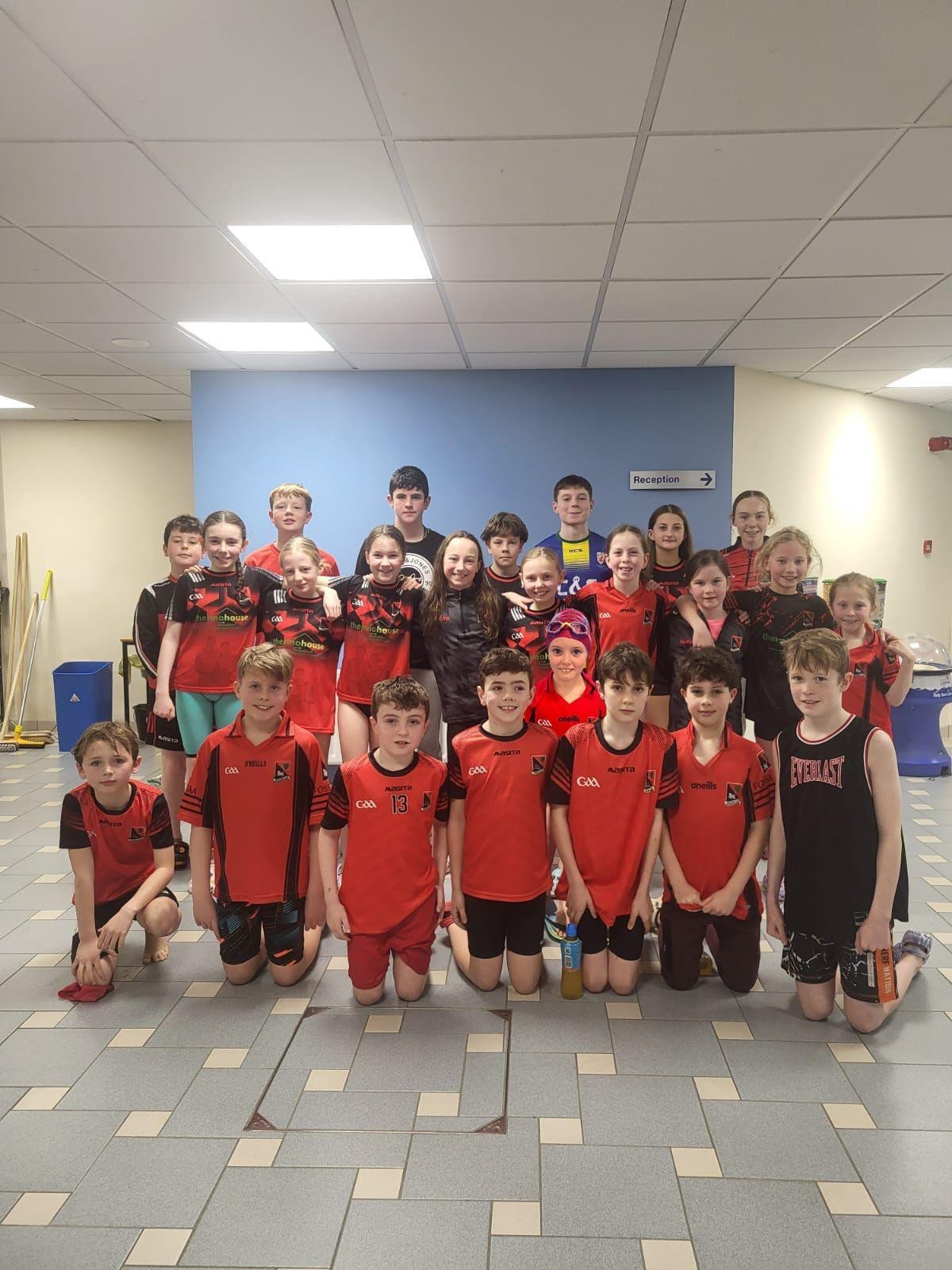
Fossa Swimmers make a splash at County Finals
The Fossa Swim team pictured at the Tralee Sports Complex following their successful outing at the County Finals of the Community Games on Sunday, February 15. The 25-strong squad delivered […]

News
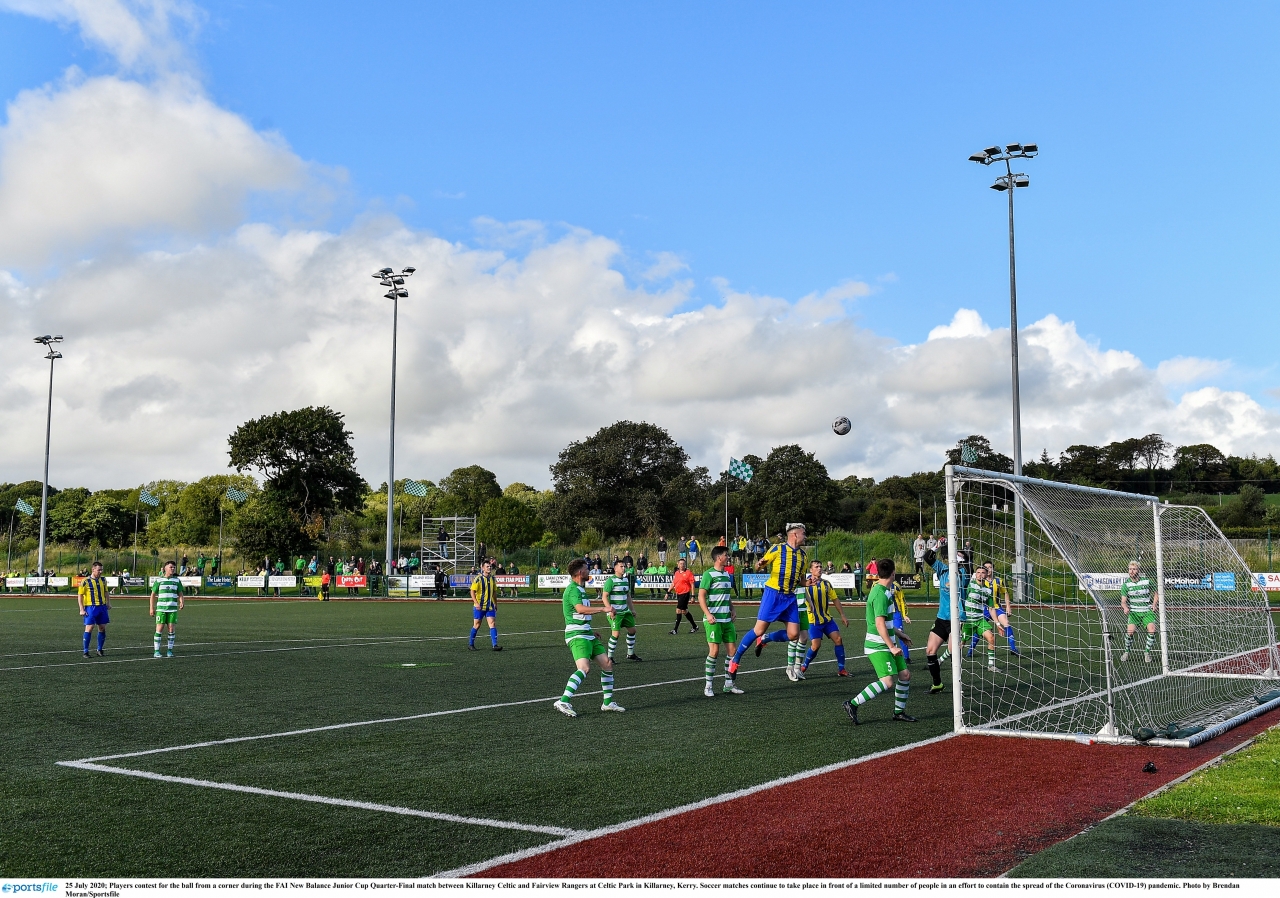
On the Ball Part 2 of the Mikey Daly Interview
Éamonn Fitzgerald EF: Killarney Celtic are invited to participate in an Irish competition. That has big financial implications for travel, meals, etc. MD: It is great to be invited, showing […]

Céilí Mór will send ‘em home sweatin’
It will be a case of all around the house but mind the dresser at a traditional Céilí Mór which...

St Brendan’s student Aodhagan O’Sullivan crowned CPR champion
Aodhagan O’Sullivan, a student at St Brendan’s College, Killarney, has been named the 2026 School CPR Challenge Champion. The prestigious...

Cllrs demand meeting with HSE property officials
Killarney councillors are seeking an urgent face-to-face meeting with the HSE to prevent the town’s health infrastructure from falling into...


Maggie’s Montessori supports National Pyjama Day
The usual morning routine was swapped for slippers and dressing gowns at Maggie’s Montessori last Friday as the children took...

Incredible value at Paco warehouse clearance
Paco Clothing is to open a second shop at the Killarney Outlet Centre for March and April – and the...
