
Sport
Donie O’Sullivan – A footballer once but a friend always


Killarney Advertiser sports columnist Eamonn Fitzgerald reviews the autobiography of his former Kerry teammate Donie O’Sullivan
There is no shortage of sports books on offer and many will make their way into our stockings this Christmas.
Several sports personalities’ autobiographies are ghosted, but all too often star players commit to print far too soon after ending their glorious sporting careers. Invariably, these books are shallow, egotistical and a self-glorifing journey of self-delusion, providing no real insights into the person’s thoughts and values.
The hero’s achievements are well known but what does the biography tell us about the inner persona?
There are some great exceptions. I found the biographies of Kieran Donaghy and Philly McMahon well worth reading and hopefully some of this year’s Christmas crop will emerge as very worthwhile too. I have found one already and it is very much homegrown, well over 40 decades since the subject’s playing days. Mature reflection provides the necessary savvy.
INSIGHT
Donie O’Sullivan: A Footballer, Once, an autobiography penned with fellow Spa man Jimmy O’Sullivan Darcy, gives us a fine insight into the values and principles of an enduring GAA star.
Four All-Ireland titles with Kerry, one All-Ireland Club and three Kerry SFC titles in a row with East Kerry, Kerry’s first All-Star, nine O’Donoghue Cups and a plethora of other awards. That and more but you’ll be scratching your head to find these facts in this autobiography.
Jimmy Darcy is a sports columnist who provides a comprehensive and constructive honest analysis of the local and national sports scene. In this book he sets the context of the social and political life during which the ‘once footballer’ excelled.
I had the good fortune to play on teams with Donie and we were also in opposition in the very healthy Spa v Dr Crokes O’Donoghue Cup rivalry. He was a full-blooded competitor, tough as táithfhéileann, but fair and sporting.
We travelled far and wide along with Mick Gleeson to play together most times, but not always. Donie gave sterling service to Dr Crokes in the early 1960s, winning three O’‘Donoghue Cups. When Spa got going once more, he quite rightly played with his home team, winning six more O’Donoghue Cups.
He was the leading figure for Spa along with Pat Casey and Mick Gleeson, usually at the expense of the Crokes. The game plan was simple, direct, and successful. Donie boomed a 70-yard kick-out, Casey fetched cleanly and delivered quickly into Gleeson. Raise another flag.
I recall the 1968 O’Donoghue Cup final fixed for a Friday night. Mick Gleeson and I were in the same workplace in Dublin and Donie was employed elsewhere in Dublin. The game was fixed for 7.30pm in the Park. Travelling in the same car out of Dublin on a Friday afternoon without the luxury of a motorway; a four or five-hour journey was not the ideal preparation.
The friendly conversation kept us occupied until we took a four-minute sos to stretch our legs 14 miles from the Park, just 20 minutes to throw-in. I had the duty to mark Mick Gleeson, a huge challenge at the best of times. No quarter given or taken, friendships suspended for one hour. But with the shake hands at the final whistle, normal respectful relationships were renewed. Values.
PERSONAL VALUES
Darcy drove Donie around the Spa countryside and the latter supplied the commentary, facilitating the reader to see into the recollecting mind of footballer. The writer discovered the real personal values of faith, integrity, and respect of the footballer of fadó, fadó.
Footballer, is it? He readily admits that he couldn’t even make the Sem team. Why? because he was “too small”. Maybe so, but there was plenty of work to be done in the modest farm at Tiernaboul. Cycling both ways on a high nelly was enough to take the teaspach off anyone.
He was also a very keen student, a lifetime learner and teacher, which took him off to the USA on so many occasions, especially to San Diego. He studied there and lectured on Irish history, a subject dear to his heart, as is the Irish language. Significantly, his Ó Súilleabháin offspring have Irish names: Colm, Fionnuala, Eoin and Orna.
Forget the Kerry minors or U21s but look to Maynooth. That was the era of big numbers answering the call of a Higher Authority. Donie answered the call.
He must have togged out there every day whatever the weather. He liked the structure of Maynooth, the self-discipline. “You studied, you slept, and you played sports.”
Friends in that seminary said that Donie practiced and practiced kicking, which in later life crowned him King in the Kingdom of dead-ball kickers. When I placed the ball on the edge of the square, his explosive contact was like a jet taking off and Mick O’Connell, his lifelong friend, knew exactly when and where to leap into the clouds.
Seánie O’Shea is a splendid long kicker but how would he have done with the old ball on a wet day? The weather was never an issue for Donie. The pitches at Maynooth were a small bit shorter than your regular pitch, but still, he could drive the kickout so far, bypassing all lines until it was safely grabbed at the other end by his cousin Bill Murphy. The latter became Bishop of Kerry and is still a keenly interested sports supporter.
The former could well have been a kicker with the New York Jets, who wanted him to join them. However, he felt life is for living and cherishing, even when it throws up so many challenges and disappointments. It wasn’t all plain sailing.
DISAPPOINTMENTS
Darcy listens for a response and the open confessions emerge. It wasn’t a winner all the way. Donie had disappointments go leor. Imagine having to listen to the 1962 All-Ireland final on the wireless because at that time clerical students were not allowed to play games outside of the college once they returned to Maynooth in September.
He won his first All-Ireland medal in 1962 and was not one bit sour about not being allowed play. He confided, prayed, and then made his own decision, as he did when he left the seminary some years later. To this day he has an eternally grateful grá for Maynooth and particularly for the lifelong friends he made in that era of his life.
More disappointments were to follow. He was dropped for the 1969 All-Ireland final, having played so well all the way to that final. One never got a reasoned explanation why. He was disappointed but never sulked. Like life, he just got on with it and held no grudges.
Think of the 1970 All-Ireland final. Kerry won, but he received a leg injury after 20 minutes. Still, he continued to play on until half-time. Looking at him hobble off eventually, I was disappointed that the lion-hearted Spa man would not be fit to join us in the county final one week later against Waterville. He had to sit it out for the three-in-a row.
But nothing compared to the biggest challenge of all, life and death staring you in the face, this time off the field. Eoin, his son, appeared to have no chance of surviving and “we were thinking and then discussing when the life support would be unplugged”. Aggressive lymphoma on a 10-year-old is hard to take. Miraculously, Eoin survived and returned to full health.
Also, for six years, Donie was the primary carer for his beloved wife Dr Áine, who was suffering from dementia. His family said he never once complained, resilient and reliable as ever. She passed away in April 2021.
Others will count his medals and a plethora of awards, but the Donie I know values friends most of all. That thread runs right through the autobiography. The friendships forged on the sporting fields endured forever and when he hears that a former player, friend or foe, was experiencing health issue, the once footballer - but always friend - lifted the phone and visited his former teammate or rival player.
This book is well worth reading to encounter the inner persona of a very public footballer who knows where he came from and cherishes his beloved Spa with no hint of éirí in airde. He knows that life is thuas seal, thíos seal.
Donie is fíor dhílis don Ghaeilge i gcónaí, agus ritheann liricí an Ríordánaigh liom. The man from just over the county bounds offers this nugget.
“Is níl laistigh d’aon daoiorse, Ach saoirse ón daoirse sin.”
Donie O’Sullivan: A Footballer, Once, an autobiography with Jimmy Darcy O’Sullivan, is available from Amazon.
News
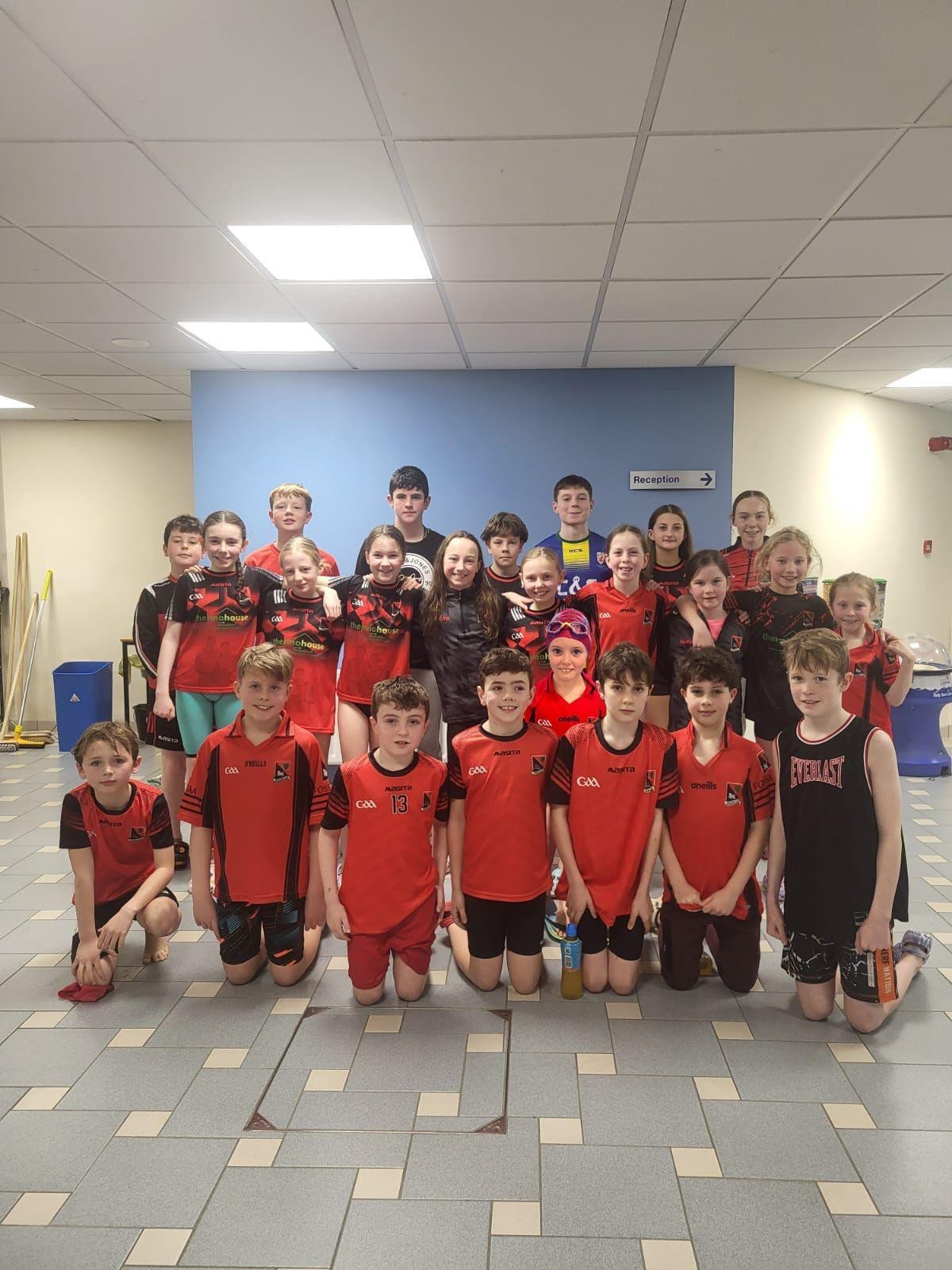
Fossa Swimmers make a splash at County Finals
The Fossa Swim team pictured at the Tralee Sports Complex following their successful outing at the County Finals of the Community Games on Sunday, February 15. The 25-strong squad delivered […]

News
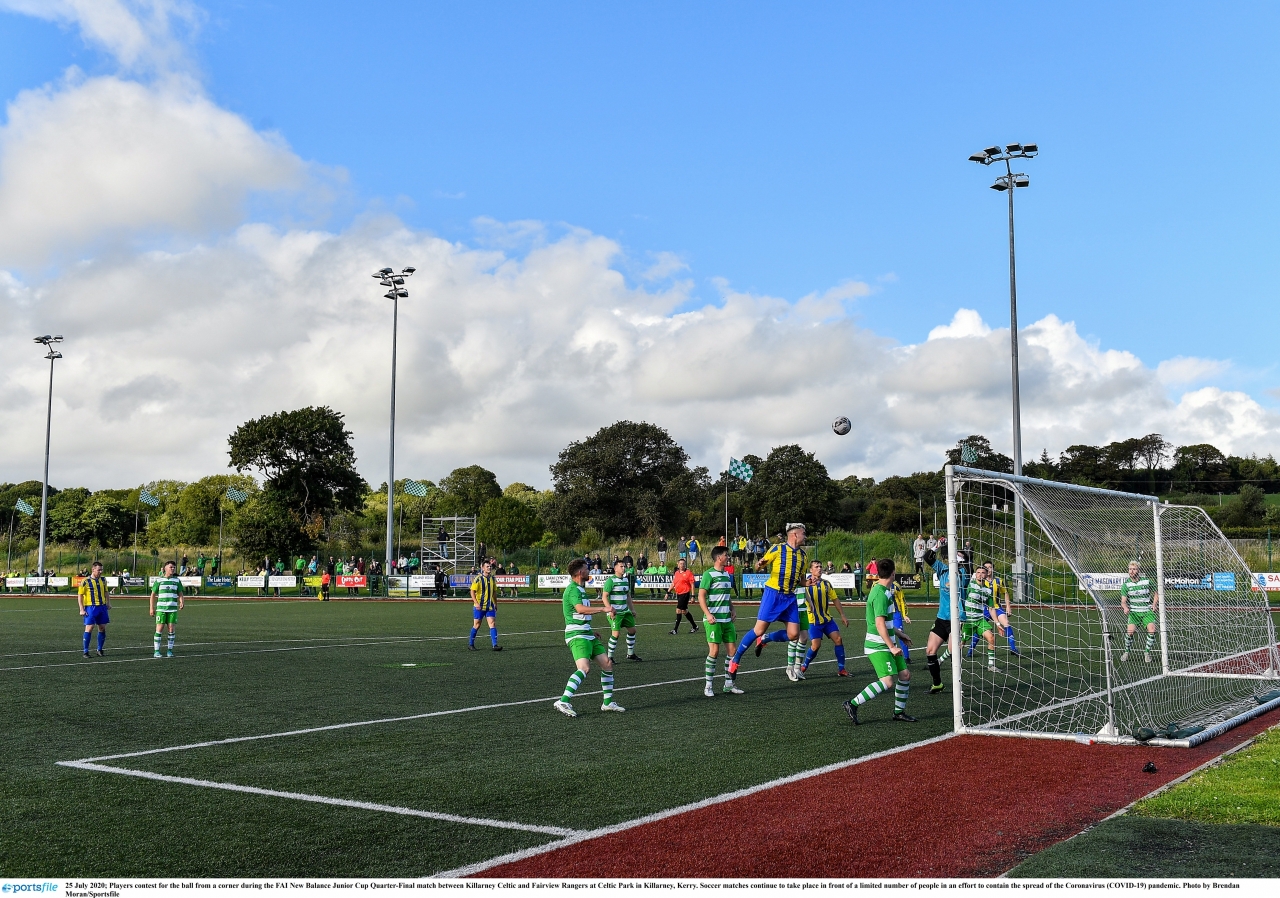
On the Ball Part 2 of the Mikey Daly Interview
Éamonn Fitzgerald EF: Killarney Celtic are invited to participate in an Irish competition. That has big financial implications for travel, meals, etc. MD: It is great to be invited, showing […]

Powerful photo display at St Mary’s brings Ukraine conflict home
A unique photo exhibition has been installed on the railings outside St Mary’s Church of Ireland in Killarney town centre,...


Beaufort Engineer honoured with national emerging leader award
Beaufort Engineer honoured with national emerging leader award Beaufort native Danny Pio Murphy has been named the recipient of the...

Pickleball Club’s record medal haul at Munster Open
Pickleball Club’s record medal haul at Munster Open Killarney Pickleball Club celebrated its most successful outing to date at the...


Women’s Shed to Host Charity Auction for Typhoon Victims
The Killarney Women’s Shed has teamed up with local nurse Chandra Arias to host a major charity auction of upcycled...


Killarney hosts 88th annual Irish Hotels Federation Conference
Hoteliers from across the country gathered at the Gleneagle Hotel this week for the Irish Hotels Federation’s (IHF) 88th Annual...
