
Sport
Brave Kerry down Dubs thanks to ‘unkickable’ Seánie Shea free


Adam Moynihan reports from Croke Park
All-Ireland SFC Semi-Final
Kerry 1-14 Dublin 1-13
Speaking to the media after the game, Jack O’Connor admitted that he didn’t think it was kickable.
77 minutes on the clock.
All square.
54 metres out.
A place in the All-Ireland final on the line.
Deafening noise from Hill 16.
A stiff wind coming the wrong way.
A decade of Dublin dominance hanging in the air.
Seán O’Shea, who had fluffed a penalty in the first half, stands upright, draws one last deliberate intake of breath, strides, and strikes.
It wasn’t kickable.
Until it was.
When the dust settles, O’Shea’s point – the final, killer blow in an absorbing slugfest – could well go down as the greatest act of individual brilliance in the history of Kerry football.
Joyous scenes followed the final whistle as Kerry booked a spot in the All-Ireland final, where they will face Galway.
That’s two weeks down the road. For now, players, management and supporters can bask in one of the county’s sweetest ever wins.
ATMOSPHERE
As the match began, the atmosphere inside a sun-soaked Croke Park was spine-tingling. Due to a combination of Covid and premature championship exits, both sets of fans had been waiting for a big Dublin-Kerry match like this since 2019. Certainly in terms of drama, this battle did not disappoint.
Dublin corner back Lee Gannon kicked the first score of the game into the Hill and into a strong breeze, but the Sky Blues quickly found themselves chasing the game.
Seán O’Shea equalised within seconds of Gannon’s opener and Kerry fans really found their voice in the fourth minute when O’Shea latched on to David Moran’s long ball before dispatching a cool finish beyond the reach of Evan Comerford.
Dean Rock (free) and Brian Howard replied for the Dubs and then Kerry scored three on the bounce. David Clifford (free), Tom O’Sullivan and Clifford again pushed the lead out to four in the 12th minute.
That gap was cut to three by John Small before Clifford grabbed the spotlight once again with two superb scores. The first came from a mark after a great catch and the second was a thing of beauty from long range.
While he was shaping up to kick the latter shot, John Small was dragging Paul Geaney down off the ball, an incident which resulted in a black card.
Rock and O’Shea exchanged scores and then O’Shea missed a golden opportunity in the 31st minute when his tame penalty was saved by Comerford. The Kerry centre forward lashed at the rebound from close range but Comerford saved again, and a scuffle broke out as the Dubs accused O’Shea of dangerous play.
Tempers cooled as Comerford slowly recovered, and the Munster champions finished the half in the ascendency when David Clifford fired over a brilliant individual point. Kerry led by five at the break (1-8 to 0-6). Half the job done, and no more than that.
SPARKED
The Kingdom appeared to be handling the game well in the early stages of the second half but a fabulously executed goal by Cormac Costello in the 45th minute sparked the home team into life. Ciarán Kilkenny fisted over to make it a one-point game shortly after.
Man of the Match Paudie Clifford tagged on two crucial scores as he and his colleagues tried to hold back the wave but three straight points by Kilkenny, James McCarthy, and Kilkenny again drew Dublin level with a minute of normal time to play.
Croker was rocking at this point and the nerves of Kerry supporters were jangling, but in the 73rd minute O’Shea engineered a free near the goal which he then converted to put Kerry ahead.
Dean Rock equalised with a free of his own two minutes later and the game looked to be heading for extra time until David Clifford was fouled way out from the posts.
Goalkeeper Shane Ryan came forward to offer his services but O’Shea waved him away. He didn’t want an out. He was the man for the job.
Kerry's number 11. The captain on the field. The man who kicked the unkickable free.
KERRY: S Ryan; G O’Sullivan, J Foley, T O'Sullivan (0-1); B Ó Beaglaoich, G White, T Morley; J Barry, D Moran; D O’Connor, S O’Shea (1-4, 2f), S O’Brien; P Clifford (0-2), D Clifford (0-6, 1f, 1m), P Geaney.
Subs: D Moynihan (0-1) for O’Brien (41), K Spillane for Geaney (41), A Spillane for Moran (51), P Murphy for G O’Sullivan (62), J O’Connor for White (66).
DUBLIN: E Comerford; E Murchan, M Fitzsimons, L Gannon (0-1); J Small (0-1), J Cooper, J McCarthy (0-1); B Fenton (0-1), T Lahiff; S Bugler (0-1), B Howard (0-1), C Kilkenny (0-3); C Costello (1-0), D Rock (0-3f), L O’Dell.
Subs: P Small (0-1) for O’Dell (40), D Byrne for Cooper (41), S McMahon for Murchan (57), N Scully for Howard (61), C Murphy for Fitzsimons (72).
Attendance: 73,602
News
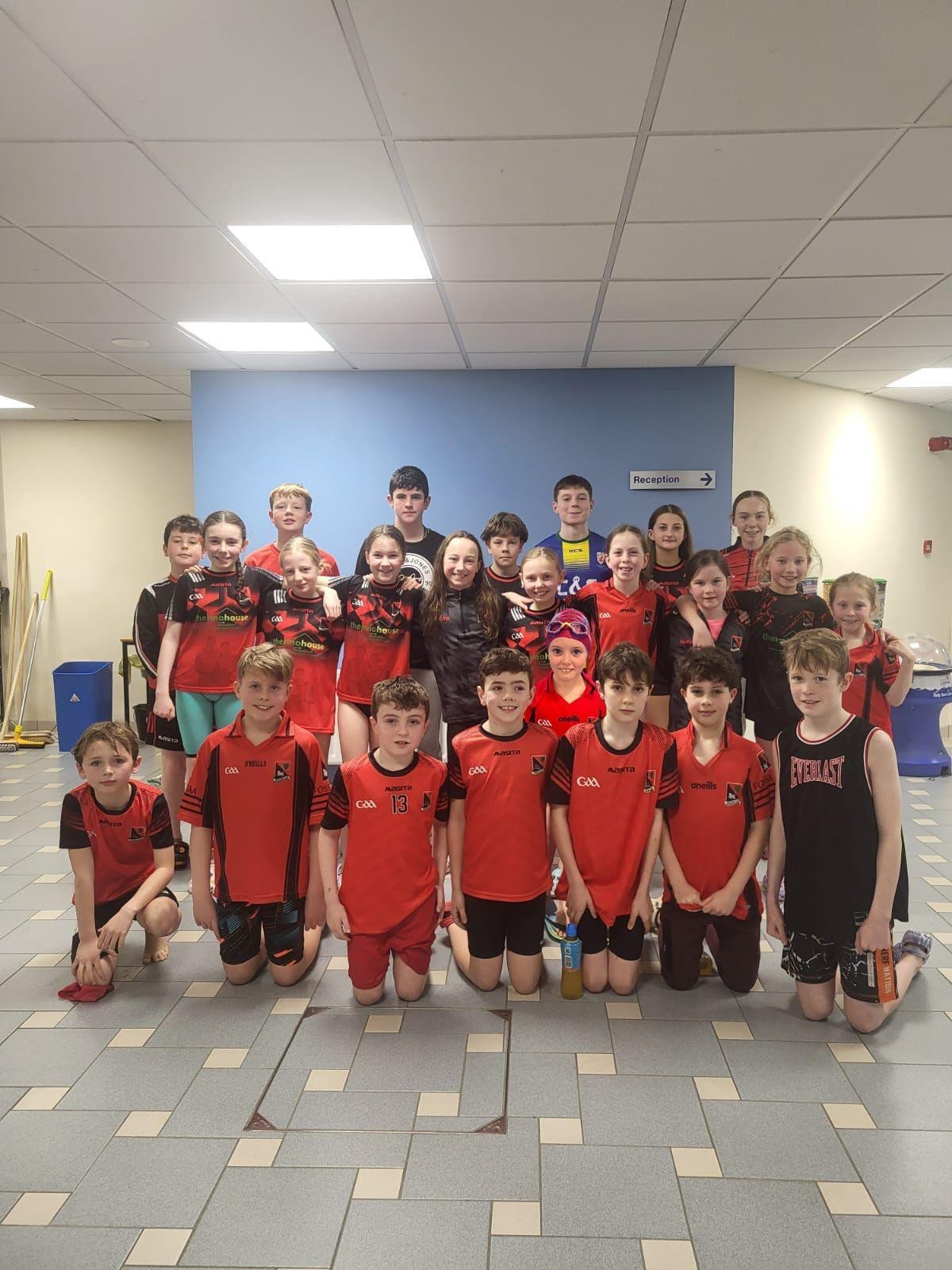
Fossa Swimmers make a splash at County Finals
The Fossa Swim team pictured at the Tralee Sports Complex following their successful outing at the County Finals of the Community Games on Sunday, February 15. The 25-strong squad delivered […]

News
On the Ball Part 2 of the Mikey Daly Interview
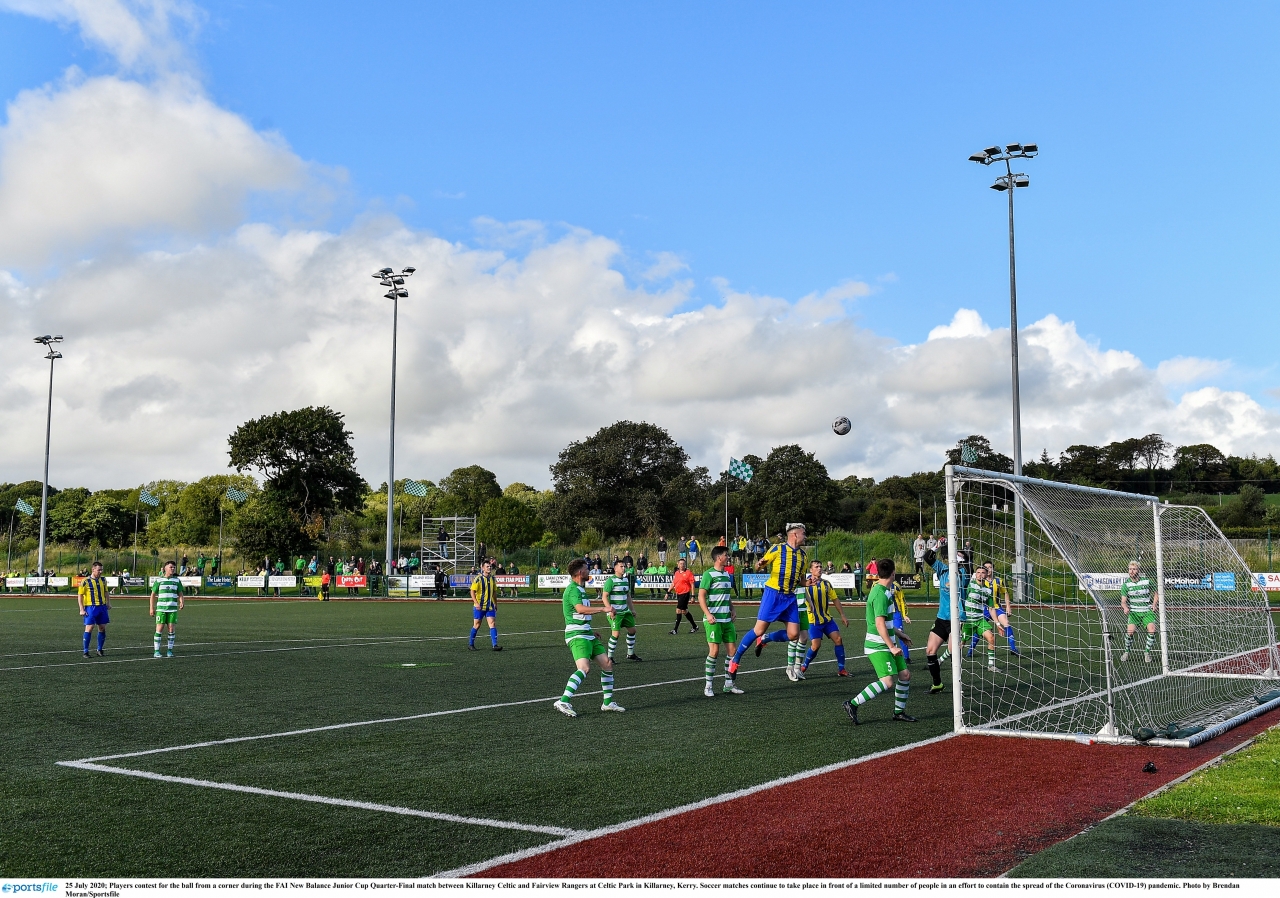
Éamonn Fitzgerald EF: Killarney Celtic are invited to participate in an Irish competition. That has big financial implications for travel, meals, etc. MD: It is great to be invited, showing […]

KWD Recycling shortlisted for national environmental awards
KWD Recycling shortlisted for national environmental awards Killarney-based KWD Recycling has been announced as a finalist in the 2026 Repak...

Drivers warned as deer rutting season begins
Drivers warned as deer rutting season begins Motorists in Killarney are being urged to exercise extreme caution as the annual...

Kerry Airport CEO addresses chamber luncheon
Kerry Airport chief executive Adrian Neilan addressed local business leaders at the Killarney Chamber of Tourism and Commerce luncheon at...

The Brehon raises €2,850 for Jack and Jill Foundation
The Brehon Hotel and Spa raised €2,850 for the Jack and Jill Children’s Foundation after hosting a closest-to-the-pin golf simulator...

Five local postmen retire with 185 years service
Five local postmen retire with 185 years service RETIREMENT NIGHT: Pictured at the retirement party held at Killarney Racecourse on...
