
News
Why ladies’ football isn’t filling Croke Park – yet

by Adam Moynihan
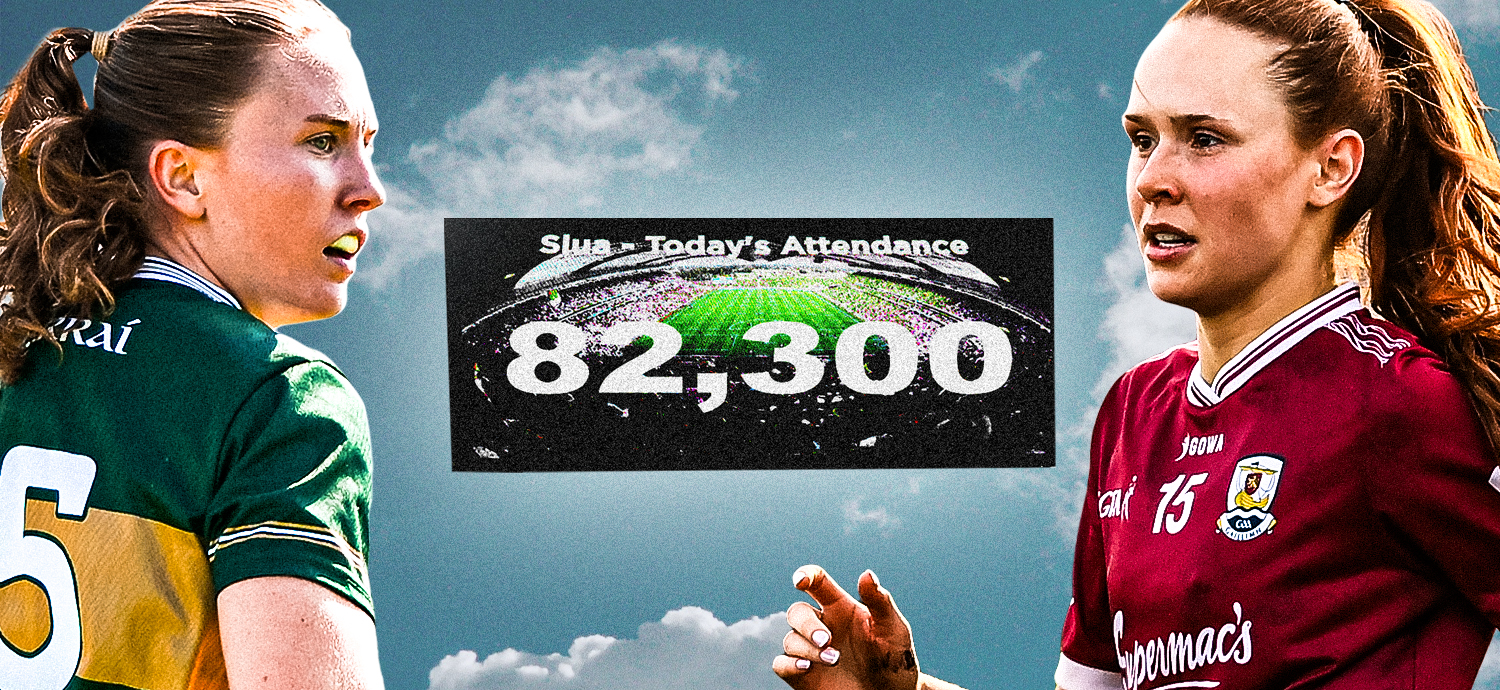
Sources say 30,000 people are expected to pass through the turnstiles on LGFA All-Ireland finals day for a triple-header that will be headlined by Kerry versus Galway.
As recently as 2012 the final drew 17,000 to Croke Park so 30,000 is nothing to be sneered at, but the figure would be lower than the post-Covid average of 42,500.
After a sustained period of consistent growth, have LGFA All-Ireland final attendances levelled off?
Again, there’s nothing wrong with 30,000. It matches the last Kerry v Galway senior final in 2024, and it’s better than most people could have imagined just a few short decades ago. But what about 50,000… 60,000… 70,000? What about a full house?
Imagine 82,300 Gaels packing out Croke Park for a ladies’ football final. Wouldn’t that be a sight to behold?
It’s important to acknowledge that Dublin’s involvement or non-involvement in the final does impact the numbers. The three best-attended games of all time featured the Dubs, and the two highest featured the all-conquering four-in-a-row team of 2017-2020.
Croke Park welcomed 50,141 spectators through its doors for the Dublin v Tyrone final in 2018. A new record was set in 2019 when 56,114 watched Dublin v Galway.
2019 also marked the seventh consecutive year that the All-Ireland final attendance saw an increase on the year before.
Then Covid came. The 2020 decider was played behind closed doors. In 2021, the capacity was capped at 32,000.
The average attendance in the three-year boom pre-Covid was roughly 50,800. Post-Covid it has dropped by over 8,000.
Even if you only count Dublin finals since Covid (i.e. 2023 and 2025), the average is around 46,700 – down 4,000 on that three-year run pre-2020.
LGFA All-Ireland final attendances since 2011
2011 – 20,061 (Cork v Monaghan)
2012 – 16,998 (Cork v Kerry)
2013 – 25,103 (Cork v Monaghan)
2014 – 27,374 (Cork v Dublin)
2015 – 31,083 (Cork v Dublin)
2016 – 34,445 (Cork v Dublin)
2017 – 46,286 (Dublin v Mayo)
2018 – 50,141 (Dublin v Cork)
2019 – 56,114 (Dublin v Galway)
2020 – 0* (Dublin v Cork)
2021 – 32,000** (Meath v Dublin)
2022 – 46,440 (Meath v Kerry)
2023 – 45,326 (Dublin v Kerry)
2024 – 30,340 (Kerry v Galway)
2025 – 48,089 (Dublin v Meath)
2026 – approximately 30,000, TBC (Kerry v Galway)
*Behind closed doors due to the Covid-19 pandemic
**Capacity capped due to the Covid-19 pandemic
Whatever way you spin it, the numbers haven’t gone up. There’s room for improvement, and room for 30 to 40,000 more people in the stands and terraces of HQ.
Cynics might say that filling Croke Park for a ladies’ match isn’t possible, but the cynics also doubted the potential of women’s soccer. Barcelona Feminí went from tiny crowds at a mostly empty Mini Estadi to 91,000 in the towering Camp Nou.
When the Irish women’s team held their first ever match in the Aviva Stadium in 2023, they brought a crowd of almost 36,000 – roughly five times their previous record of 7,300.
Some experts even doubted Katie Taylor’s ability to sell out Croker. After all, no women’s boxing match had ever filled a stadium of that size. Tickets went on general sale on Friday, June 12 at 9am. Within half an hour, they were gone.
Different codes, different circumstances, but it does show that the growing popularity of women’s sport should not be underestimated.
So, if the figures show that LGFA final attendances have, indeed, reached some sort of plateau, why is that? And what can be done to take them to the next level?
Research conducted in 2025 by the LGFA’s partner Lidl revealed that 42% of the Irish public would be more likely to attend a female game if a high-profile player was playing. We saw how much of the recent World Cup was framed around household names like Messi, Mbappé and Haaland. Barça have Bonmatí. Men’s football has Clifford. The Irish women have McCabe. The WNBA has Clark. Irish athletics have Adeleke.
With all the outstanding female footballers on show this season, including leading scorers for the senior finalists Síofra O’Shea (Kerry) and Olivia Divilly (Galway), identifying the Messi or Bonmatí or Clifford of the LGFA is not all that straightforward at present. It feels like ladies’ football is waiting for its next breakout superstar. Maybe one will emerge on Sunday...
Even so, players doing their thing on the pitch is not enough. Marketing also plays its part. Thankfully female footballers are now more visible than ever, which can largely be attributed to the impressive efforts of TG4, Lidl and other commercial sponsors.
When it comes to social media, the LGFA and Camogie Association are doing fantastic work but, for me, the GAA are currently the standard bearers – not just in Gaelic games, but in Irish sport in general. Their graphics are sharp, their content is becoming increasingly engaging, and videographer Mark Forde and others are supplying superb footage that highlights the individuals and sells the product to would-be match-goers.
In more ways than one, the pending merger of the associations and a pooling of resources will benefit everyone.
Of course, the elephant in the room is that many of the LGFA’s most high-profile players – some of them household names – are no longer in this country to be highlighted.
Vikki Wall (Meath), Erika O’Shea (Cork), Sarah Rowe (Mayo), Kayleigh Cronin (Kerry), Jennifer Dunne (Dublin) and others too numerous to mention have been lured Down Under to the AFLW, following in the footsteps of LGFA greats like Cora Staunton (Mayo) and Sinéad Goldrick (Dublin) before them.
In total, 44 Irish players are currently contracted to teams in Australia, including Kerry exports Julie O'Sullivan, Paris McCarthy and Emma Dineen. There are so many Irish players in the league that an Australia v Ireland Aussie Rules exhibition fixture took place this weekend.
No one can deny these talented Irish athletes their right to pursue a career in professional sport – nor can anyone deny that our own game is worse off for losing them. Kerry legend Louise Ní Mhuircheartaigh, who was the game’s biggest star prior to her retirement in 2024, has said that given the extent of the ongoing player drain, she fears for the standard of ladies’ football. Her concerns are understandable.
It all adds up. While the men’s game thrives under the new rules (some of which have been replicated in the ladies’ game), what effect would it have if you took 40 of its best players out of the mix?
Interestingly, shortly after St Kilda-bound starlet Kobe McDonald led Mayo to their first All-Ireland since 1951, reports emerged that the GAA are in talks with the AFL over implementing new guidelines that would potentially limit such transfers. McDonald will join 14 other Irish men in the league, including Kerry’s Mark O’Connor, Cillian Burke, Rob Monahan and Ben Murphy.
Perhaps ladies’ football should also be part of that conversation. Having said that, if the GAA and LGFA want to keep their best players, incentivising a career as a Gaelic footballer should be their number one priority.
Another star of the ladies’ game Hannah Tyrrell of Dublin followed Ní Mhuircheartaigh into retirement in 2025 after falling victim to the dreaded ACL. Cruciate injuries hamper more female players than male, in turn taking high profile female footballers out of the action for extended periods of time. There is no obvious solution to that particular problem but it’s another factor that merits consideration.
While they may be set to join forces in the future, for now direct competition from the GAA is clearly holding back LGFA attendances, at least to some extent. Male and female intercounty matches frequently clash over the course of the season, making it difficult or sometimes impossible for supporters from a particular county to go to both.
That doesn’t apply directly for the All-Ireland itself as the ladies’ final is held one week after the men’s, but even that arrangement can prove challenging. For instance, this year Kerry qualified for both All-Ireland football finals. For some fans who went to Dublin for the men’s fixture, doing it again the following weekend, with all the travelling and expense that it entails, can be a big ask.
Ticket prices shouldn’t be a major barrier, however. Adult tickets for this Sunday’s LGFA finals are €30 while children go for €15. A family ticket (two adults and two kids) is €70.
Meanwhile, tickets for the men’s final were €100 for the stands and €55 for the terrace.
There are other types of clashes this weekend. The captains of intermediate finalists Roscommon and junior finalists Carlow have lamented the fact that male senior club matches in their respective counties have been scheduled for Sunday. Meanwhile, the Kerry senior hurling final is also due to take place at 2pm, just over two hours before the Kerry ladies play Galway in Dublin.
We know the crowded Gaelic games calendar is a hornet’s nest with no obvious solution. Perhaps that pending amalgamation of the Gaelic games associations will somehow facilitate a positive change.
As for the numbers at the LGFA’s showpiece event at Croke Park, one of the key questions to address is, ‘who is missing?’ The high pitch of the cheers when the ball goes over the bar on Sunday will hint at the answer; the proportion of men to women and children at women’s games is clearly significantly lower than it is at men’s games.
If we are to one day see a capacity crowd at HQ for a ladies’ final, it’s not just about getting more male supporters through the gates, but that would certainly help.
Attitudes may have changed (broadly speaking) but old habits die hard, and many men are simply in the habit of going to men’s fixtures and not women's. Supporting ladies' football is just not something they've ever done.
Perhaps the perspective needs to shift from “supporting ladies’ football” to “supporting Kerry/Galway/Dublin/Armagh”?
Think about it. When we cheer for a female Irish athlete in the Olympics, we don’t necessarily see it as “supporting women’s athletics”. We’re simply supporting an Irish athlete.
When we cheer for Katie Taylor, we don’t necessarily see it as “supporting women’s boxing”. We’re simply supporting an Irish boxer.
So why, if we love our county, and we love football, would we not cheer for our county’s female footballers? Why would we not head to Croke Park for them and celebrate them and enjoy the match and the great day out?
For all the challenges ladies' football is facing, it's exciting, it's stacked with talent, and Sunday's finals will no doubt provide some top-class entertainment.
So, yes, there’s nothing wrong with 30,000 or 40,000 on All-Ireland final day. Considering where the ladies’ game has come from, it should be applauded.
But making history and filling Croke Park? That should be the ultimate dream – and it's not beyond our reach.

Great Southern to host 20th Women’s Enterprise Day
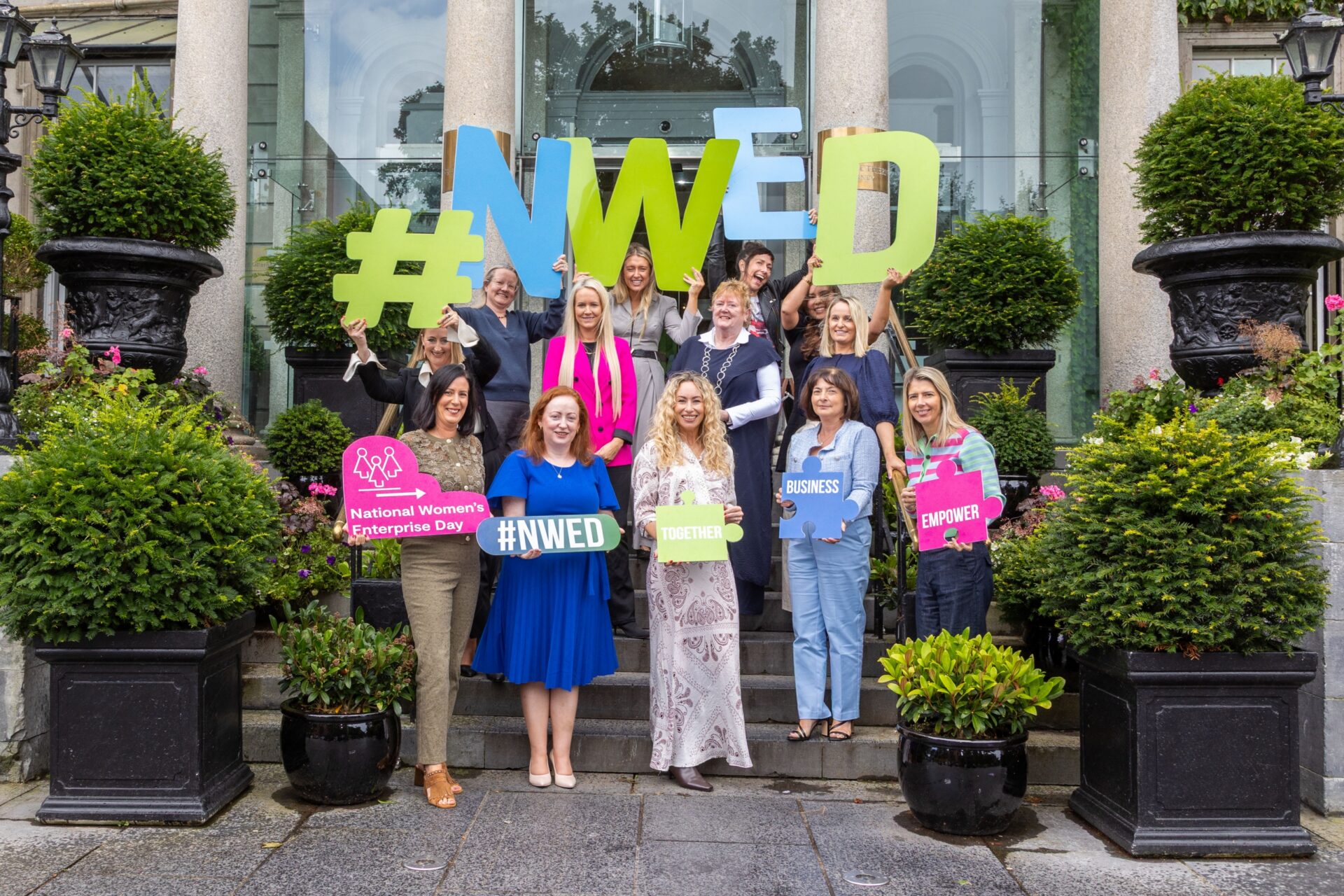
Female entrepreneurs and budding businesswomen from across Kerry and Cork are being encouraged to register for this year’s National Women’s Enterprise Day, which marks its 20th anniversary with a flagship Southwest regional gathering at Killarney’s Great Southern Hotel.
Organised by the Local Enterprise Offices (LEO) in Kerry and Cork, the full-day event takes place on Thursday, 15 October, as part of a nationwide series of 16 events celebrating female entrepreneurship, sustainability, innovation, and networking.
The Killarney event features a keynote address by Oonagh O’Hagan, pharmacist and award-winning entrepreneur. Radio Kerry presenter and RTE Today Show panellist Elaine Kinsella will act as master of ceremonies for the day.
A major highlight will be an interactive “Leading Lights” panel discussion featuring Christina Foley, founder of Kenmare-based wellness brand Inish Living; Claire Morgan, owner of McWilliam Bags in Crosshaven; Shannen O’Reilly, founder of food allergy management app TrustDish; and Virginia O’Gara, co-founder of My Goodness and the Cork Urban Soil Project.
Proceedings will open with a warm-up session led by wellbeing professional Paola Kennedy. A new “Homegrown Hero” segment will feature a fireside chat between Elaine Kinsella and Louise Quill, founder of the Tír na nÓg Children’s Foundation.
Fiona Leahy of Kerry Local Enterprise Office highlighted the milestone anniversary for the region’s businesswomen, stating: “For two decades, National Women’s Enterprise Day has been about more than one day of events. It has been about creating space for women in business to connect, learn, share their experiences and access the practical supports that can help them move forward with confidence.
“Across the Local Enterprise Office network, we see every day the ambition, creativity and resilience of women entrepreneurs in every county. Our role is to help turn that ambition into sustainable businesses through mentoring, training, funding, expert advice and connections. As we celebrate 20 years of NWED, we want to recognise the businesses that have been supported along the way and encourage even more women to take the next step, whether they are starting out, scaling up or looking to reach new markets.”
Peter Burke, T.D., Minister for Enterprise, Tourism and Employment, noted the significance of the national initiative, saying: “National Women’s Enterprise Day is a hugely important date in the enterprise calendar. It is an opportunity to recognise the real progress that has been made in supporting women in business across Ireland. It is also a celebration of the ambition, innovation and resilience of female entrepreneurs who are building successful businesses in sectors from agtech and manufacturing to fashion and food.
“These are business leaders with the drive and confidence to grow beyond Ireland and compete on the global stage. As we look ahead, we must continue to ensure that women entrepreneurs have access to the supports, networks and opportunities they need to start, scale and succeed.”
Further information and ticket bookings for the Great Southern Hotel event are available online at www.LocalEnterprise.ie/NWED.
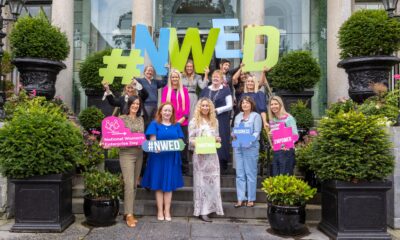

Great Southern to host 20th Women’s Enterprise Day
Great Southern to host 20th Women’s Enterprise Day Female entrepreneurs and budding businesswomen from across Kerry and Cork are being...


Speed surveys planned for Killarney estates
Kerry County Council has agreed to conduct speed surveys and directly engage with residents in Marian’s Terrace and Dalton’s Avenue...
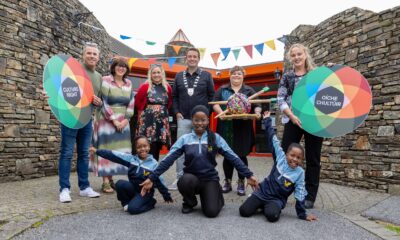

Get Involved in Culture Night 2026
Get Involved in Culture Night 2026 The Cathaoirleach of Kerry County Council, Cllr Mikey Sheehy, is encouraging people across the...

Funding sought for Bohereen na Goun link road
Funding sought for Bohereen na Goun link road The compulsory land acquisition process for the proposed Bohereen na Goun link...

Funding sought for Glebe Craft Quarter
Funding sought for Glebe Craft Quarter Plans to redevelop Killarney’s town centre laneways remain on hold as local authority officials...


Fossa Swimmers make a splash at County Finals
The Fossa Swim team pictured at the Tralee Sports Complex following their successful outing at the County Finals of the...

On the Ball Part 2 of the Mikey Daly Interview
Éamonn Fitzgerald EF: Killarney Celtic are invited to participate in an Irish competition. That has big financial implications for travel,...


LUKE MANGAN recently caught up with Kerry FC’s manager, Colin Healy.
He spoke to him about his careers as a player and manager. Here’s how it went: When you began your...

Home cup tie for St Paul’s could be epic
Paudie O’Connor National Cup (Round 1) Utility Trust St Paul’s v GCU Brunell Saturday 7.30pm Killarney Sports and Leisure Centre...


Chances of Kerry v Cork Munster final in 2026 decrease as Munster GAA delay seeding plan
After facing a backlash from Limerick, Clare, Waterford and Tipperary players, Munster GAA have postponed their plan to keep Cork...
