
News
Where do plant names come from?


By Debby Looney, gardening expert
Have you ever opened up a gardening book and been confused by all the names?


It is pretty daunting to be faced with Latin, illegible and irrelevant words, possibly very few pictures and a whole gamut of words in italics.
Many people just close the book again thinking they will not make any sense of it, which is a shame, as so much can be learned! I meet people who grumble that they cannot find a plant in a book, or by Googling it, and this is often because they are using the common name, which, especially with Google, will bring up an unfamiliar plant on an American website. Imagine if all plants only had a common name - it would be great! Or maybe not so handy, for example, take the flower ‘Bluebell’ - in Ireland it can be one of two species of bulb, in Australia it’s a climber and in America it’s a Mertensia. If I say I love Spirea, do you think of as Sorbaria, Astilbe, goatsbeard or an actual Spirea?
So how did we arrive at the correct names we have?
We owe our binomial nomenclature, to give it its correct terminology, to Carl Linneaus, a Swedish naturalist born in 1707. He studied medicine and botany, which was one of the required subjects when studying medicine. At the age of 30 he developed a system of classification for all organisms, which is more or less still the one we use. Unfortunately for us, Latin was the scientific language of the time, so this is what has been kept. The genus and species names are always italicised (something about which I am very lazy), or, in handwriting, underlined.
When you look at a plant name, for example Cornus sanguinea, the first part denotes the genus, which is a large group of plants sharing similar characteristics. The second part is the species with the name often descriptive, in this case sanguinea comes from the Latin for blood, as Cornus sanguinea has brightly coloured stems. The species name can relate to many different characteristics, where a plant comes from as in japonica - Japan, occidentalis – America, arabis – Arabia, - or colour; alba - white, purpurea – purple. Where it grows; saxatile – rocks, campestris – fields, how it grows; fruticosa – bushy, repens – creeping, and so on.
There are a few curveballs thrown in too, where a plant is named after a person, as in fortuneii – Robert Fortune - who is credited with bringing us tea!), or darwinii - Charles Darwin. The RHS have a lovely book called 'Latin for Gardeners' which is a gem if you are interested in this type of thing!
Now is the time to start thinking about the flower garden. It is the perfect time to plant begonia bulbs in pots, as starting them off in the greenhouse or even shed will get you a much earlier flowering time. The depressed part of the bulb is the top, which is unusual. Do not plant them too deep! Dahlias are also available currently, again it is a good idea to start them off indoors, as they are not very hardy if we get a late frost. Plant them with their crown level to the soil, and when shoots appear only leave five grow. I know it seems wrong, but this will produce strong plants with a lot of flowers. As Dahlias grow, pinch the top of the shoots out to encourage bushy growth. All dahlias have different speeds at which they grow, so don’t despair if one seems very slow compared to others!

Kerry artist explores identity at ANAM
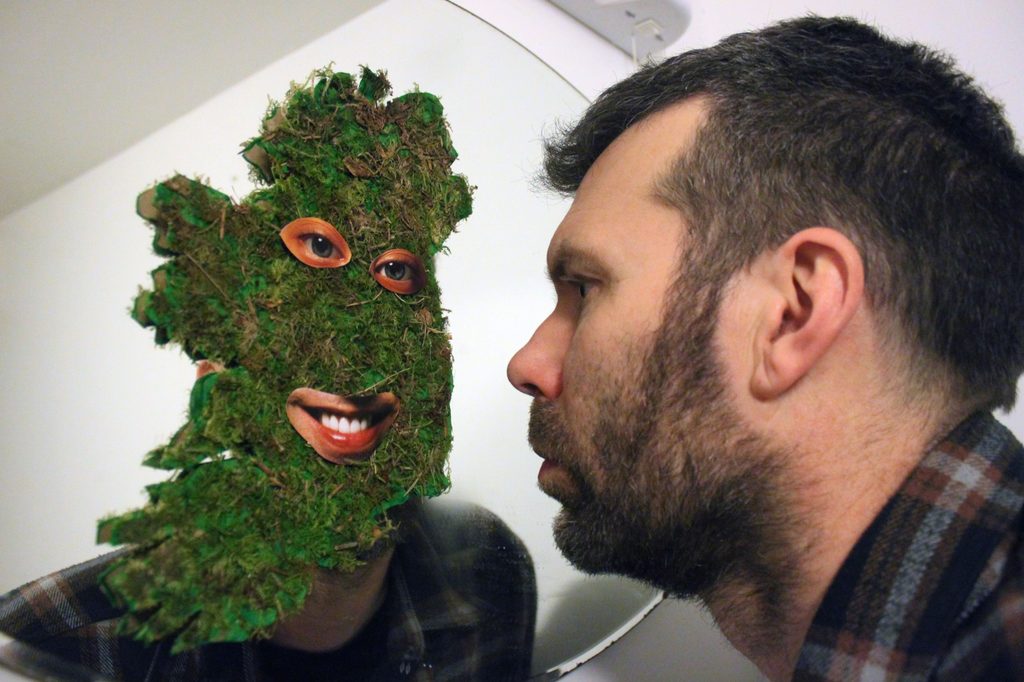
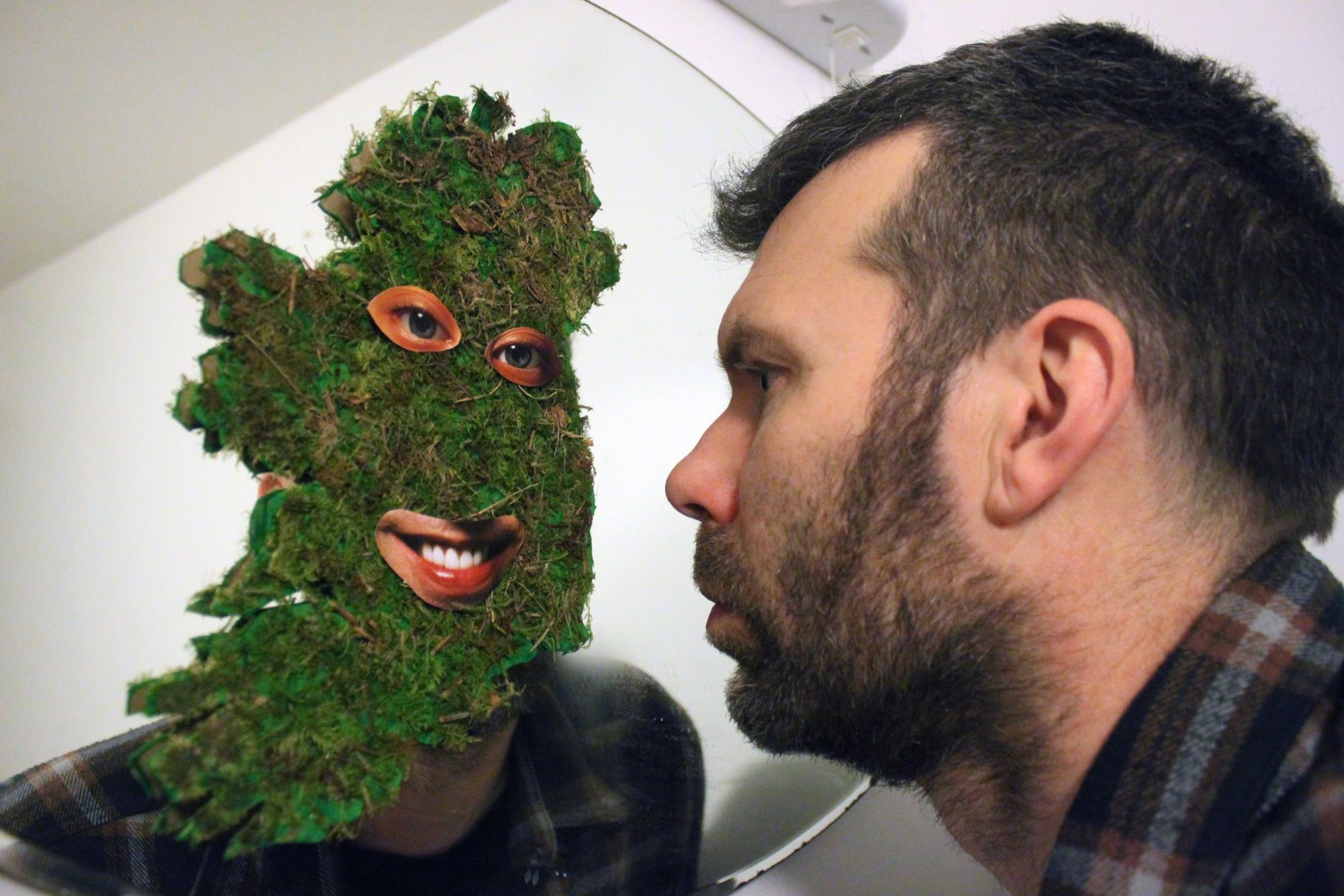
Kerry artist Felix Power is inviting the Killarney community to explore personal ideas of identity, belonging, and Irishness at a free interactive afternoon event this weekend.
Titled Where’s the I in Ireland?, the project takes place on Saturday, October 10, at the ANAM Centre on East Avenue Road, starting at 2.30pm.
The initiative centres around 21 questions regarding personal identity and participants’ complex relationships with Ireland. Over 2025 and 2026, groups across Dublin, Cork, and Kerry participated in sessions structured as part research project, part table quiz, and part bingo night, offering lighthearted moments alongside genuine personal reflection.
During the session, Felix Power and guest facilitators will guide attendees through thoughts on their own personal journeys, sharing notable responses gathered from previous events across the country. Attendees complete anonymous survey cards answering the core questions, with no expectation to speak publicly or share stories out loud. Those who wish to can hand in their cards at the end for inclusion in upcoming public installations.
A pop-up exhibition featuring previous written responses from past participants will also be on display inside the venue, showing the varied ways people move towards or away from traditional ideas of Irishness.
“What emerges is far from a unified voice or consensus,” stated Felix Power. “I see it as a beautiful cacophony, a hectic dawn chorus of differing voices, diverse journeys and unique understandings.”
Power, a graduate of MTU Cork’s MA in Arts and Engagement, has a background spanning visual art, sculpture, live performance, and film. His work focusses heavily on creating participatory spaces that combine playfulness with authentic dialogue about local culture and place.
The event is open to everyone regardless of background or nationality. Supported by Creative Ireland and the Kerry County Council Arts Office, admission is entirely free. While a limited number of entry passes will be available at the door on the day, advance online booking is encouraged to assist organisers with capacity monitoring.

Town encouraged to wear bright colours for Kevin
The town of Killarney was encouraged to wear its brightest colours this week to honour the memory of one of its most beloved sons following the sudden and unexpected passing of Kevin Looney on Tuesday.

A familiar sight walking the streets of Killarney and his adopted home of Tralee alongside his wife Katie, Kevin was widely known for his bright personality, athletic talent, and involvement with local sports organisations.
A gifted athlete and dedicated leader, Kevin served for many years as captain of the Kerry Stars Special Olympics basketball team, leading the side to back-to-back tournament victories in Little Island, Cork, in 2023. Beyond his success on the court, he was a talented runner with an 18-minute 5k record, a keen soccer player with ambitions for Kerry FC, and a head designer who created custom sports gear for his clubs.
Tributes have poured in for the young man, whose kindness, dedication, and enthusiasm left a lasting mark on teammates, coaches, and the wider community.
Kevin is survived by his wife Katie, his mother Carmel, his sisters Selina, Carmel-Ann, and Frankie, his brothers Darren and Tommy-Dan, his granddad Dan McCarthy, and his nephews Sean, Noah, and Theo, along with his extended family, neighbours, and friends.
His removal took place on Thursday evening at O’Shea’s Funeral Home, Killarney. Funeral mass takes place this morning, Friday, at 10am at St Mary’s Cathedral, with burial afterwards in Aghadoe Lawn Cemetery.
Mourners attending the service have been asked to wear bright colours in Kevin’s memory. Family flowers only, with donations in lieu, if desired, to Epilepsy Ireland.

Kerry artist explores identity at ANAM
Kerry artist explores identity at ANAM Kerry artist Felix Power is inviting the Killarney community to explore personal ideas of...


Town encouraged to wear bright colours for Kevin
Town encouraged to wear bright colours for Kevin The town of Killarney was encouraged to wear its brightest colours this...

Killarney National Park Autumn Talks up and running
Killarney National Park Autumn Talks up and running Following a successful opening presentation by award-winning photographer James Crombie on the...

Missing Killarney chef located dead in UK
Missing Killarney chef located dead in UK A 34-year search for missing former Killarney chef Patrick (Patsy) O’Sullivan ended following...

Speed cameras go live at Farranfore level crossing
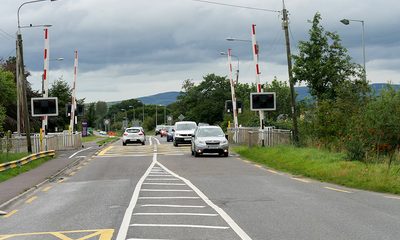
Speed cameras go live at Farranfore level crossing An Garda Síochána, Iarnród Éireann, Transport Infrastructure Ireland, and Kerry County Council...

Fossa Swimmers make a splash at County Finals
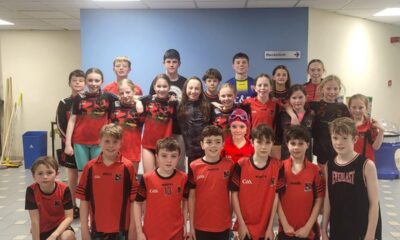
The Fossa Swim team pictured at the Tralee Sports Complex following their successful outing at the County Finals of the...

On the Ball Part 2 of the Mikey Daly Interview
Éamonn Fitzgerald EF: Killarney Celtic are invited to participate in an Irish competition. That has big financial implications for travel,...


LUKE MANGAN recently caught up with Kerry FC’s manager, Colin Healy.
He spoke to him about his careers as a player and manager. Here’s how it went: When you began your...


Home cup tie for St Paul’s could be epic
Paudie O’Connor National Cup (Round 1) Utility Trust St Paul’s v GCU Brunell Saturday 7.30pm Killarney Sports and Leisure Centre...


Chances of Kerry v Cork Munster final in 2026 decrease as Munster GAA delay seeding plan
After facing a backlash from Limerick, Clare, Waterford and Tipperary players, Munster GAA have postponed their plan to keep Cork...
