
News
Town councils could be restored

A
Almost 400 submissions have been received on a review of local electoral areas currently underway, and a good deal of them from Kerry in what will be the third review of local government since 2008.
The radical reforms of 2014, introduced by Fine Gael Minister Phil Hogan, in the Local Government Reform Act 2014, the biggest in over 100 years, abolished 80 town councils and their powers and with them hundreds of council seats.
Towns were subsumed into new, often huge, geographical areas called Municipal Districts and with them went the urbane tradition of 115 years of town halls, town clerks, town mayors and chairmen, and most importantly revenue-raising powers.
Most of the rates struck and raised locally were spent within the town boundaries with towns fighting against the handover of too much of what they raise to the county council.
But right from the start, the reforms attracted criticism. At a time of cuts in local authority funding, main towns had to share out their crews and finance among smaller towns and villages miles away.
And not least in Killarney.
There was a need to re-imagine town councils. They were too big. There were too many men. Killarney was a case in point. The last town council had all men.
The new reforms won’t bring back the old structures. However, there is a move by Brendan Howlin in the Labour Party which might see to that. If it gets support.
The terms of reference drawn up by Minister for Local Government and Reform John Paul Phelan are to reduce the size of territorially large local electoral areas, limiting councillor numbers to a maximum of seven.
And, in an apparent reversal of the previous policy, there is a specific focus on local areas focusing around towns.
But Labour’s Brendan Howlin says the review, which is to report back this May/June, and implemented in time for the 2019 local elections will not bring back town councils and will not repair the damage of 2014.
And Mr Howlin says what the minister is creating are “notional” new areas for the town.
Phil Hogan’s reforms damaged his own town, Wexford (where Mr Howlin was a former mayor) and left towns at the mercy of rural councillors. Allowing his cabinet colleague to abolish town councils was one of his great regrets as a Labour Minister in government.
“It was one of our significant mistakes. Phil Hogan’s reforms dealt a significant blow against democracy,” he told me.
The Labour leader is introducing a new piece of legislation in a matter of weeks which, if supported, will see the full restoration of town councils as legal entities before the 2019 local elections.
“The Restoration of Town Councils Bill” currently being finalised will seek to repeal sections of Phil Hogan’s 2014 Act so all the main powers of the old town councils would be restored.
Towns are the primary economic drivers and the legislation will restore their rate collecting powers, Mr Howlin says.
Town mayors would also be restored. In Wexford, the last three chairmen were from rural areas, he points out.
A previous bill by Fianna Fáil to appoint a commission to pave the way towards working towards the restoration was passed narrowly last October. But it did not go far enough. Mr Howlin says and hopes Fianna Fáil will support his full restoration bill. He has already met with cross-party deputation of councillors on the issue and he would hope to get support, too, from Sinn Féin.
Will he get support? If he does, it will help resurrect Labour. The abolition of the town councils diminished a means for people to go into politics.
Finally, had there been more women on the town council in Killarney, or even in the county council, or even in the Dáil or Senate (all eight are men), I am certain we would have more pedestrian crossings into our National Park. We still haven’t a crossing from Beech to Mission Road in by the Monsignor O’Flaherty monument. We still have no pedestrian crossing at the new entrance. We still have no crossing on Beech Road to access the car parks from the supermarket. Women with trolleys, prams and out walking have long ago seen the need for these.
At this stage, it seems we will have an outer ring road before we can achieve a few basic road crossings!


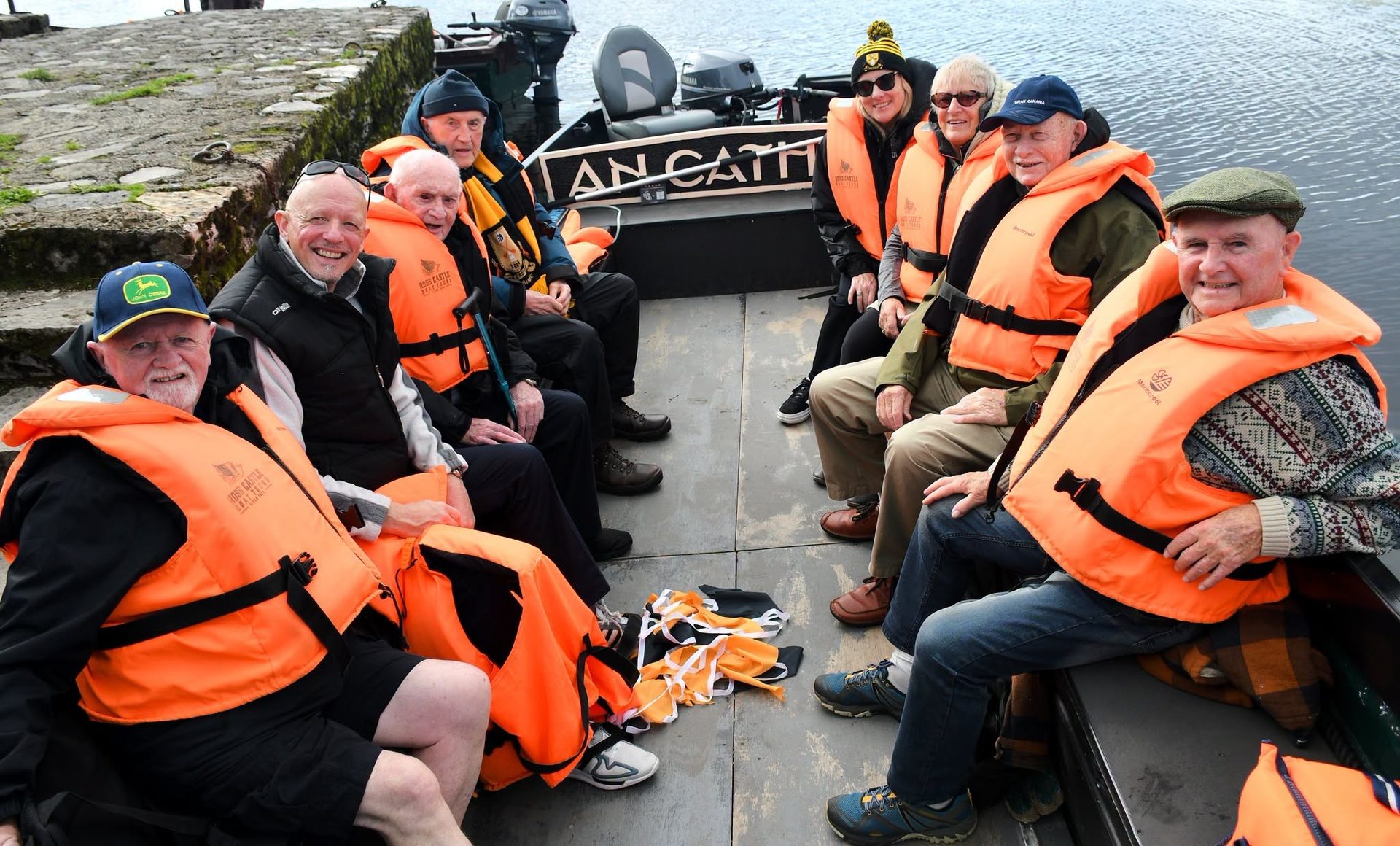
Dr Crokes stalwarts enjoy lake cruise
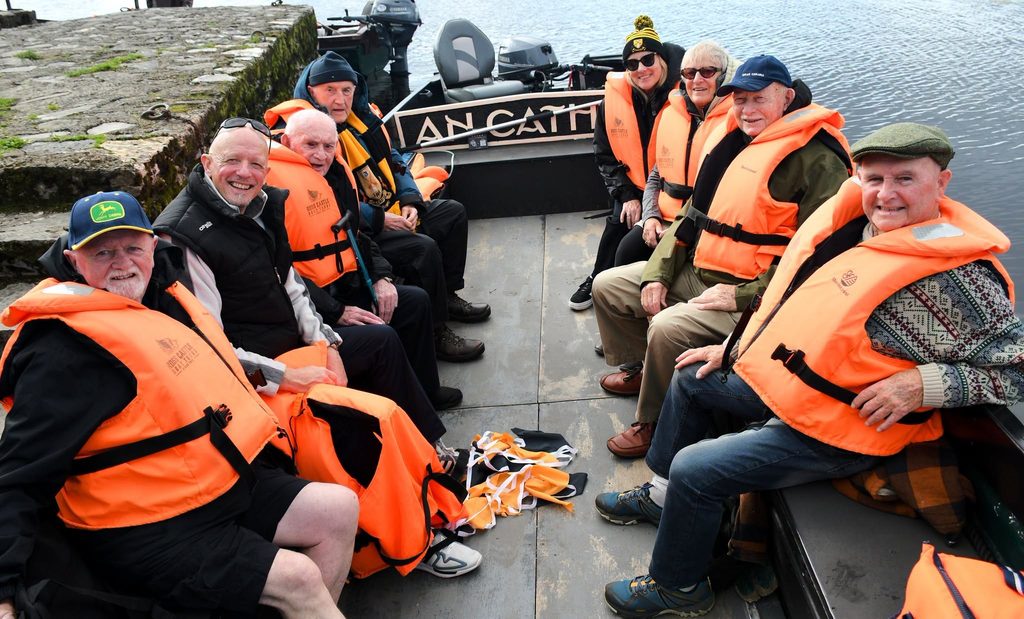
Dr Crokes GAA Club hosted a special day out for its senior members on Monday, this week, taking a group aged between 70 and 90 on a cruise across the Lakes of Killarney.
Organised by the Dr Crokes Healthy Club committee under its Crokes Cruisers initiative, the event was held to recognise the lifetime contribution made by long-standing members who continue to support club activities behind the scenes.
The group travelled on two vessels, including An Cathal, an open boat operated by local brothers Tony and Mike Fleming. Built to preserve the traditional Killarney lake boat style, it is the only purpose-built, fully accessible boat on the lakes, allowing members with mobility issues and wheelchair users to safely join the two-hour trip.
Following the lake tour, the party gathered on shore for coffee and refreshments provided by Derric McMahon and Harry Clifton of the Ross Castle Garden Cafe.
The initiative forms part of the club’s ongoing community work as a Gold Award winner in the GAA Healthy Club programme.


New Streetscapes murals launched at College Square
A colourful collaboration between the Kerry Local Creative Youth Partnership (LCYP) and the Architecture Kerry Festival at Kerry County Council...

Dr Crokes stalwarts enjoy lake cruise
Dr Crokes stalwarts enjoy lake cruise Dr Crokes GAA Club hosted a special day out for its senior members on...


Green light for Torc to Dinis walkway
Green light for Torc Dinis walkway Planning approval has been granted for a long-awaited lakeside walkway and cycleway connecting Torc...
LOCAL GOLD:
LOCAL GOLD: Terrie O’Shea, founder and owner of Killarney-based business Sorella Berries, celebrating her Gold award win at the Blas...

Grady demands Killarney traffic review
Killarney councillor Martin Grady has called for an urgent review of traffic management across the town following severe delays along...


Fossa Swimmers make a splash at County Finals
The Fossa Swim team pictured at the Tralee Sports Complex following their successful outing at the County Finals of the...

On the Ball Part 2 of the Mikey Daly Interview
Éamonn Fitzgerald EF: Killarney Celtic are invited to participate in an Irish competition. That has big financial implications for travel,...


LUKE MANGAN recently caught up with Kerry FC’s manager, Colin Healy.
He spoke to him about his careers as a player and manager. Here’s how it went: When you began your...


Home cup tie for St Paul’s could be epic
Paudie O’Connor National Cup (Round 1) Utility Trust St Paul’s v GCU Brunell Saturday 7.30pm Killarney Sports and Leisure Centre...


Chances of Kerry v Cork Munster final in 2026 decrease as Munster GAA delay seeding plan
After facing a backlash from Limerick, Clare, Waterford and Tipperary players, Munster GAA have postponed their plan to keep Cork...
