
News
The A to Z of the World Cup

T
The biggest show on earth is finally upon us. The 2018 World Cup kicked off yesterday in Russia and a month of (hopefully) exciting soccer action lies ahead. Adam Moynihan takes you through the A to Z of this summer’s tournament.
A – Africa’s year?
In two words, probably not. Of the six African nations at this year’s tournament, Egypt (150/1 to lift the trophy) are the most likely to cause a stir, and their star player is a doubt for the group stage (see ‘S’).
B – Brazil
It wouldn’t be a World Cup without a bit of samba magic and the seleção have the players (as always) to brighten up any fixture. Can Tite’s team bounce back from their darkest hour, the shocking 7-1 defeat to Germany in 2014?
C – Cristiano
They might be the reigning champions of Europe but Portugal aren’t great. Expect to see plenty of shots of an exasperated Ronaldo throwing his hands in the air/berating a flustered teammate.
D – Dark horses
No outsider has ever won a World Cup and there’s no reason to think it might happen this summer, but it’s always nice to see traditionally weaker nations over-perform. Belgium must be the most hyped up dark horse of the past decade but they will struggle to make it past the quarters. Our neighbours, maybe?
E – England
Roy Hodgson’s fledgling English side went into the last major tournament with virtually no expectations, yet somehow they still managed to make a show of themselves. Defeat to Iceland was great if you love to hate the English football team and with two of the weakest nations at the World Cup in their group (Tunisia and Panama), further embarrassment could well be on the cards.
F – Fan favourites
Ireland aren’t at the party so who should we follow for the next four weeks or so? Nigeria always seem to bring great entertainment to the World Cup, and they also have the best kit (see ‘K’), so they’re not a bad shout.
G – Goals
The art of defending is dead, if RTÉ’s senior analysts are to be believed, and the numbers from the last World Cup back actually back them up. 171 goals were scored in Brazil, which tied France ’98 for the most ever. Could the record be broken in Russia?
H – Hooligans
It’s unfortunate but it seems as though fights between rival fans are inevitable, with the English and Russians apparently at the front of the queue. One Russian politician has even called for licensed 20-a-side fights outside stadiums. (That is a real thing that a real politician said and not a headline from The Onion, by the way.)
I – Iniesta
This will be Andrés Iniesta’s last international tournament. What a story it would be if one of the greatest midfielders of all time led Spain to glory once more.
J – Jealousy
It should have been us. When images of joyous Danish fans are beamed into our living rooms tomorrow evening (they play Peru at 5pm), try not to get too jealous.
K – Kits
There will be some beauties on show in Russia, most notably Nigeria’s flashy bright green and white home shirt. I got my hands on one and will be wearing it every day from now until the end of the summer.
L – Luzhniki
The Luzhniki Stadium (capacity: 81,006) will host the 2018 World Cup Final in addition to four group ties, one last 16 game and one semi-final.
M – Messi
Is this it? Is it finally going to happen? You would need a heart of stone to not want Lionel Messi to lift his first World Cup trophy on July 15. If he leads Argentina to glory, any questions about whether or not he’s the greatest of all time will disappear forever.
N – No-hopers
There are quite a few at this particular World Cup but plucky Panama appear to be particularly ill-equipped to compete at this level. They’ve played five games in 2018 to date and scored just once.
O – Odds
Argentina at 9/1 might be worth a punt but if you’re looking for something a bit more outlandish, how about Sergio Aguero to be top scorer? The Manchester City legend is 40/1. (Or keep your money in your pocket. That’s a good tip.)
P – Penalties
No World Cup would be complete without a penalty shootout. It’s cruel on the players but great for neutrals like us. It would also be great to see another ‘P’, a Panenka.
Q – Qatar
The next World Cup is four years away but expect plenty of references to the 2022 tournament in Qatar. (Still can’t believe that’s actually happening.)
R – Racism
Russian football fans don’t have the best track record when it comes to their treatment of players of colour. Hopefully racism doesn’t rear its ugly head during the World Cup but, realistically, it could. So serious is the problem, England full-back Danny Rose has asked his family not to travel over fears they could be racially abused in Russia.
S – Salah
The English Footballer of the Year suffered an injury to his shoulder in the Champions League final against Real Madrid and may not be fit to play in Egypt’s opener against Uruguay today (1pm). If available, Salah has the potential to shoot the lights out.
T – TV coverage
The good news is that RTÉ 2 has coverage of every one of the 64 games (it will naturally have choose one when two games clash at the end of the group stage). The bad news? Well, it’s a question of personal taste but I cannot stand co-commentators Ronnie Whelan and Ray Houghton. Jim Beglin is good and Brian Kerr I can stomach, but Whelan (or Captain Hindsight, as I call him) appears to be the state broadcaster’s number one choice for big games.
U – Unrest
The Dutch, perennial troublemakers, didn’t qualify so all eyes will be on the French camp. Les Bleus have a track record when it comes to player unrest, most notably at the 2010 World Cup in South Africa when the squad went on strike after an altercation beween Nicolas Anelka and coach Raymond Domenech.
V – VAR
The Video Assistant Referee system will be used at a World Cup for the very first time. It will be called upon for key decisions in four areas: goals, penalties, straight red cards and mistaken identity
W – WAGs
The media’s obsession with the players’ wives and girlfriends seems to have waned somewhat in recent times but expect the WAGs (and children) of the winning team to make an appearance on the pitch after the final on Sunday, June 15.
X – Xherdan Shaqiri
Nothing too exciting to report about Xherdan Shaqiri. ‘X’ is just a hard letter.
Y – Young guns
Marcus Rashford (20) and Brazilian striker Gabriel Jesus (21) coud well shine, but 19-year-old France forward Kylian Mbappé is my tip to pick up the Best Young Player award.
Z – Ze Germans
You can never rule them out, can you? All jokes aside, if you can leave a player like Leroy Sané at home then you must be a serious outfit.

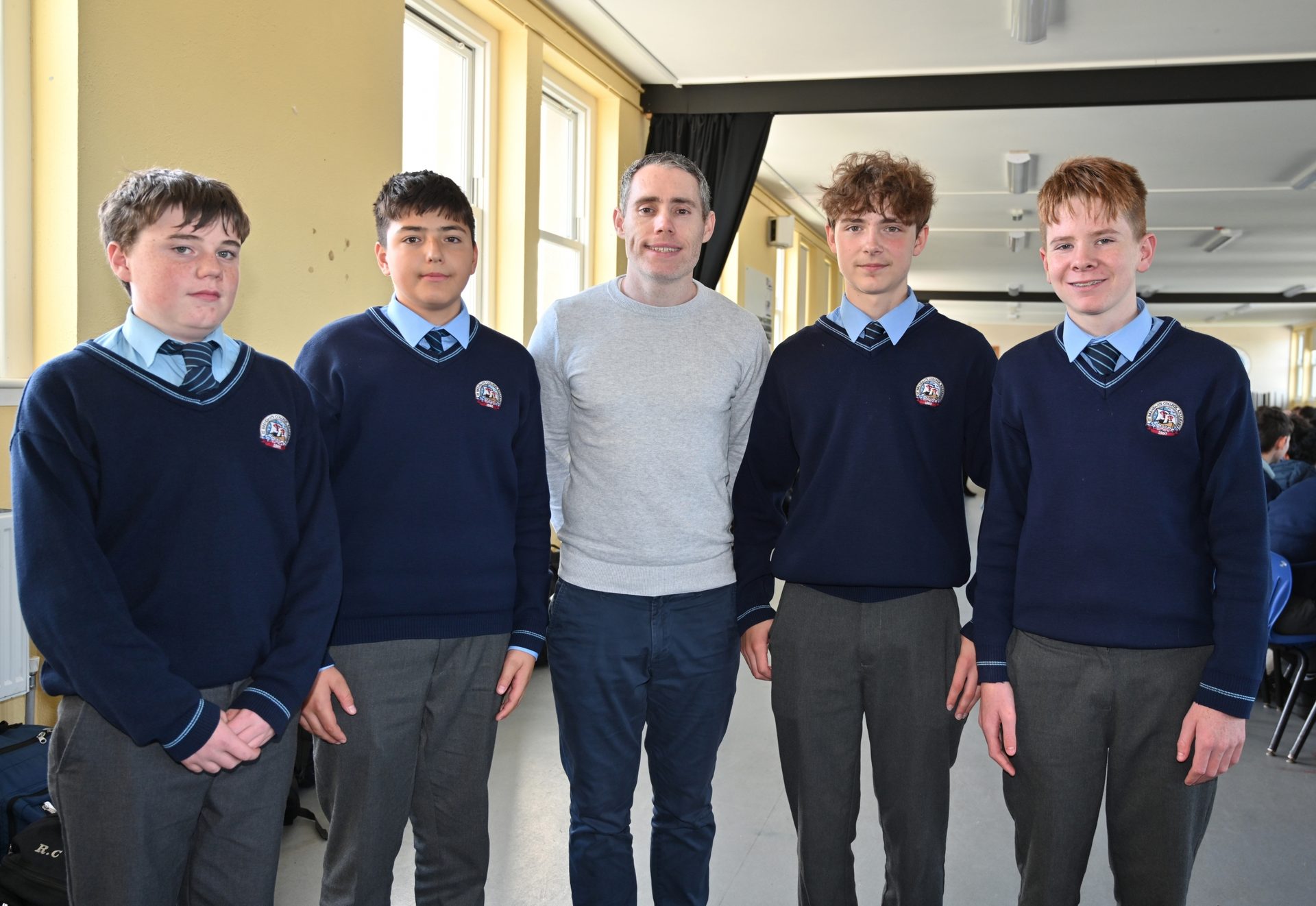
Paralympic legend Jason Smyth visits St Brendan’s
World renowned Paralympian and world record holder Jason Smyth paid a visit to St Brendan’s College on Wednesday afternoon as part of a high profile visit to Killarney.
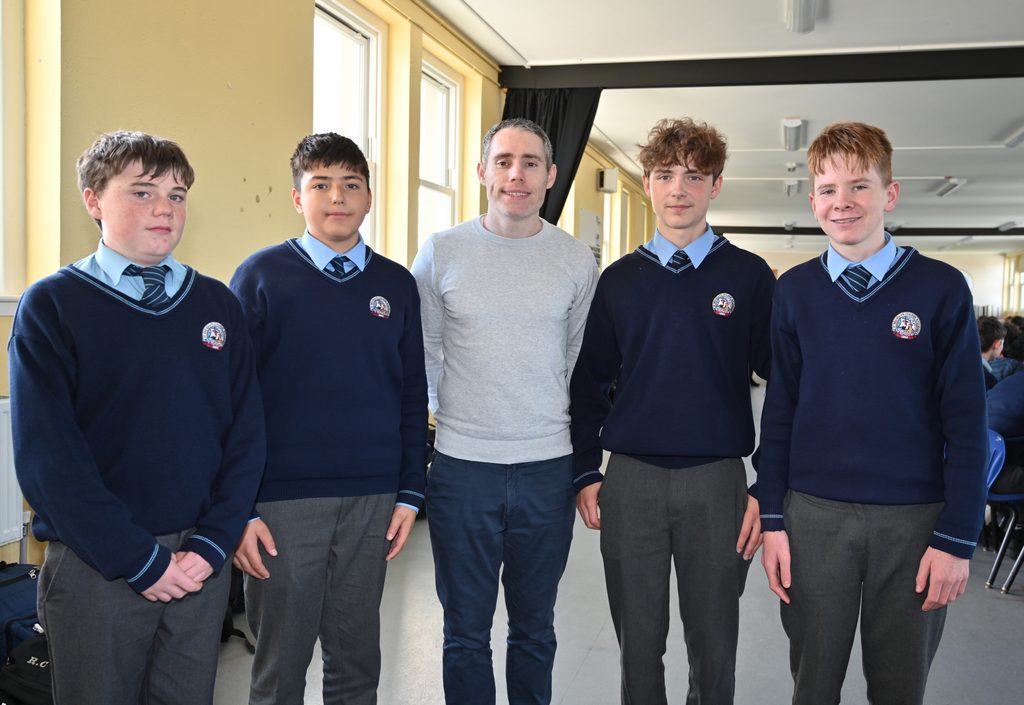
The six time Paralympic gold medallist spoke to second year students from St Brendan’s College, alongside students from neighbouring schools St Brigid’s Presentation Secondary School and Killarney Community College.
The interactive talk and interview took place ahead of World Sight Day, with the legendary sprinter sharing his personal journey with Stargardt disease, a genetic eye condition that left him legally blind at eight years old.
The Derry native, who holds the world record as the fastest Paralympian on earth over 100 metres, offered inspiring insights into overcoming physical adversity and achieving success at the highest level of world sport.
The school visit formed the opening leg of his Killarney schedule before he took centre stage later on Wednesday evening at The Killarney Plaza Hotel & Spa.
Smyth headlined An Evening with Paralympian Jason Smyth, an event organised by the Killarney Chamber of Tourism and Commerce as part of its winter schedule, sponsored by AIB.

Paralympic legend Jason Smyth visits St Brendan’s
Paralympic legend Jason Smyth visits St Brendan’s World renowned Paralympian and world record holder Jason Smyth paid a visit to...


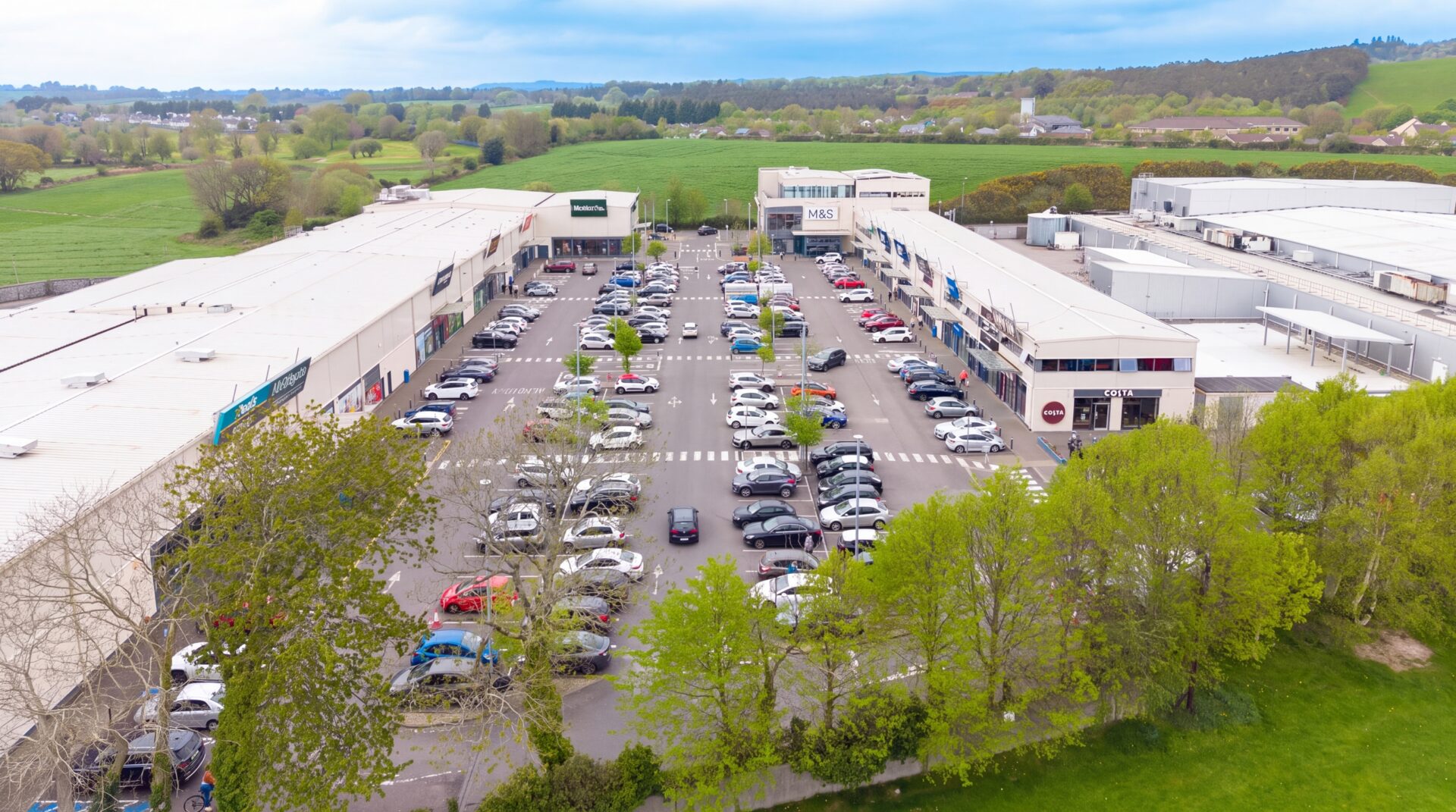
Deerpark Retail Park placed on market for fifteen million euro
Deerpark Retail Park in Killarney has officially been placed on the market with a guide price in excess of 15.4...
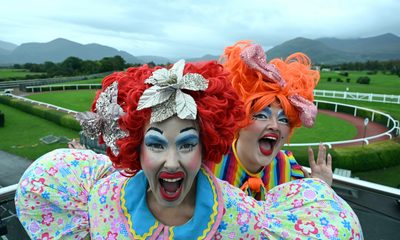

Killarney Racecourse to host first professional festive pantomime
Killarney Racecourse to host first professional festive pantomime A classic fairytale is set to receive a distinct Kerry makeover this festive...


Kerry artist explores identity at ANAM
Kerry artist explores identity at ANAM Kerry artist Felix Power is inviting the Killarney community to explore personal ideas of...


Town encouraged to wear bright colours for Kevin
Town encouraged to wear bright colours for Kevin The town of Killarney was encouraged to wear its brightest colours this...
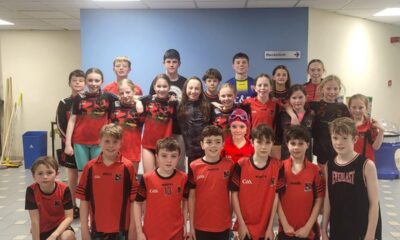

Fossa Swimmers make a splash at County Finals
The Fossa Swim team pictured at the Tralee Sports Complex following their successful outing at the County Finals of the...
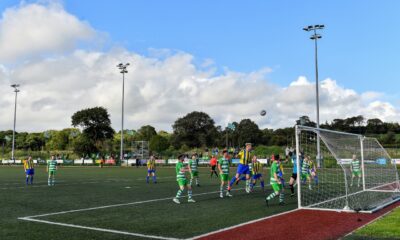

On the Ball Part 2 of the Mikey Daly Interview
Éamonn Fitzgerald EF: Killarney Celtic are invited to participate in an Irish competition. That has big financial implications for travel,...


LUKE MANGAN recently caught up with Kerry FC’s manager, Colin Healy.
He spoke to him about his careers as a player and manager. Here’s how it went: When you began your...
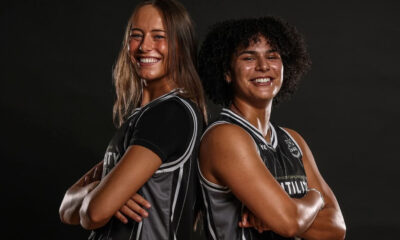

Home cup tie for St Paul’s could be epic
Paudie O’Connor National Cup (Round 1) Utility Trust St Paul’s v GCU Brunell Saturday 7.30pm Killarney Sports and Leisure Centre...


Chances of Kerry v Cork Munster final in 2026 decrease as Munster GAA delay seeding plan
After facing a backlash from Limerick, Clare, Waterford and Tipperary players, Munster GAA have postponed their plan to keep Cork...
