News
Soccer schedule a major concern for players in Kerry, survey finds

A
A new survey on the current state of the Kerry District League has revealed that long seasons and the scheduling of fixtures are amongst the issues of greatest concern to soccer players right across the county.
The ongoing survey, which is being carried out by the Killarney Advertiser, has been filled out anonymously by a number of team captains with further contributions expected in the coming week.
When asked to share their teammates’ biggest concerns, the majority of captains mentioned the length of the soccer season in Kerry, which frequently runs well into the summer months.
“Players in successful teams are still playing matches throughout the summer period, they only have a short break and then the new season starts again,” one skipper said.
In 2017, the Reserve Cup final was played on August 14. The 2017/18 season began a little over two weeks later on September 1 and finally concluded over 10 months later on July 17.
The number of games that teams need to play varies depending on how far they progress in cup competitions but by way of example, Killarney Celtic have played 28 games so far this season and have the Premier A and Greyhound Bar KO Cup finals to come. That’s 30 games in total.
Critics of the current Kerry soccer schedule say that it shouldn’t take 45 weeks to play 30 games, especially when many clubs would, on occasion, be open to playing more than one game per week.
The erratic scheduling of fixtures has also been criticised by players, with the current practice of arranging games 5-7 days before they’re due to take place proving to be quite unpopular.
Clubs can often go a number of weeks without any fixtures at all, which is a source of frustration for a lot of players who would naturally prefer regular matches once the season begins.
One captain said he and his teammates would like to see fixtures being arranged a month ahead of time “to make sure teams are playing a game every week or every two weeks”.
“The fixtures are sporadic and don’t allow players time to plan,” another player said. “The season is far too spread out and Gaelic football impacts heavily on clubs at the end of the season.”
These sentiments were echoed by another club captain.
“Granted it’s not an easy job, but the fixtures and how they are made are a bit of a joke.”
Captains were also tasked with answering a series of ‘yes or no’ questions in relation to KDL top brass but at the time of going to print, there was no clear consensus on whether or not players were generally happy with the way the league is being run.
Unfortunately, a number of clubs could not be reached through their Facebook pages while others seemed reluctant to take part in the survey at all.
One club, when contacted through Facebook, refused to participate, another immediately said that no players were willing to speak and I have very good reason to believe that another filled out the player survey without actually consulting any of their players.
Every captain I spoke to directly was extremely helpful but when I had to go through the clubs I found that a few simply wanted nothing to do with it. Some were great to deal with in fairness but the impression I’m getting is that clubs don’t want to stick their heads above the parapet, which is a shame because it would be interesting to hear what players in Kerry really think about the league.
The survey is still open so I would be hopeful that more teams will use this opportunity to make their voices heard. If your captain has not yet been reached and would be willing to participate, please contact me by email (sport@killarneyadvertiser.ie) or Twitter (@AdamMoynihan). All feedback will remain anonymous.

LOCAL GOLD: Terrie O’Shea, founder and owner of Killarney-based business Sorella Berries, celebrating her Gold award win at the Blas na hÉireann Irish Food Awards held in Dingle last week. Her hand-crafted chocolate covered strawberries secured the top spot in national competition, earning recognition for the local food producer on the national stage.

LOCAL GOLD:
LOCAL GOLD: Terrie O’Shea, founder and owner of Killarney-based business Sorella Berries, celebrating her Gold award win at the Blas...


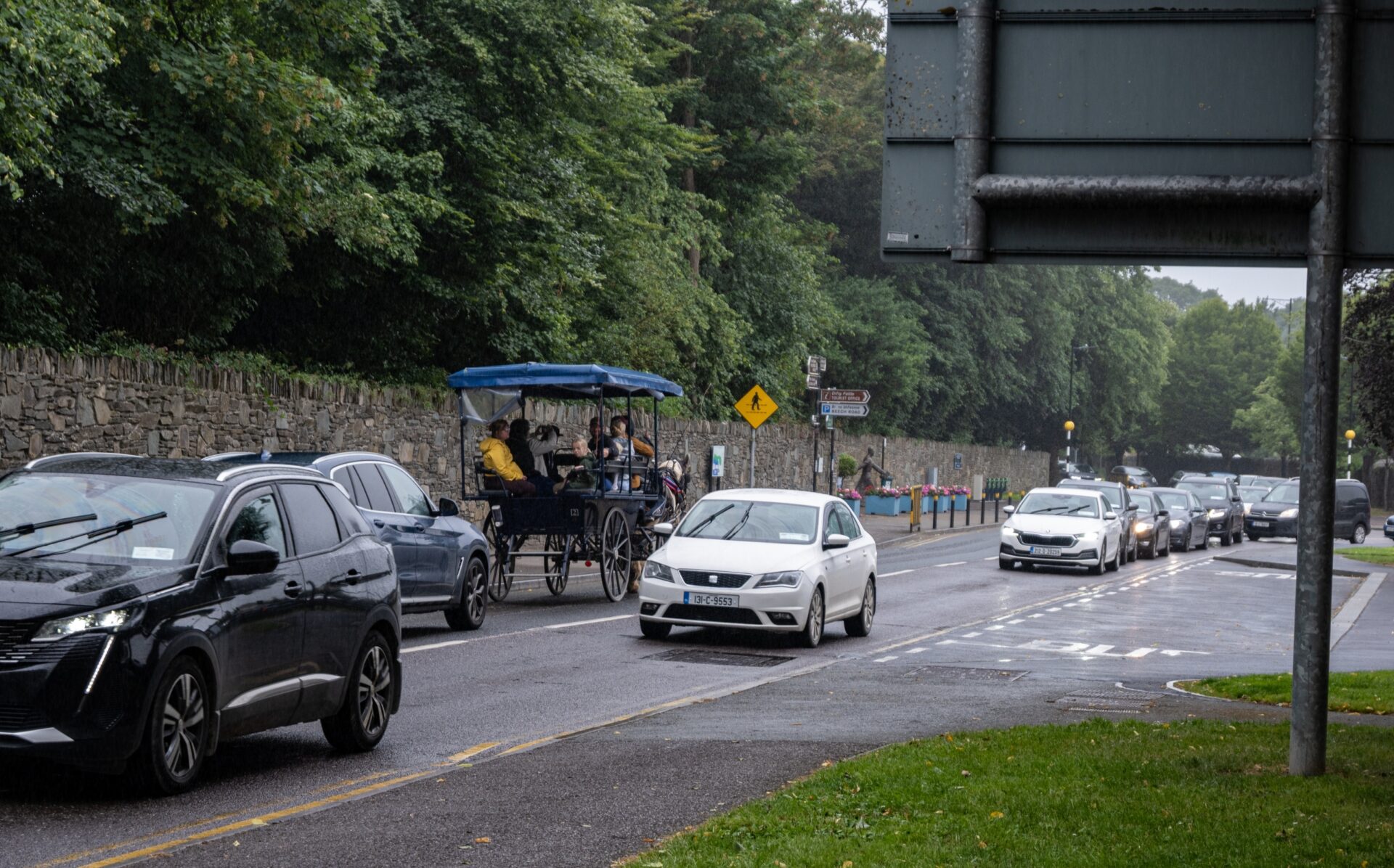
Grady demands Killarney traffic review
Killarney councillor Martin Grady has called for an urgent review of traffic management across the town following severe delays along...


Killarney Pumpkin Farm returns for Halloween
The annual event is in its sixth year and caters to people of all ages. The farm is located in...


Killarney Toastmasters host special open night
Killarney Toastmasters is inviting members of the local community to an open night at the Dromhall Hotel on Muckross Road...


Killarney hotels achieve top global rankings in Readers’ Choice Awards
Killarney hotels achieve top global rankings in Readers’ Choice Awards Two leading Killarney hotels are celebrating major international accolades following...


Fossa Swimmers make a splash at County Finals
The Fossa Swim team pictured at the Tralee Sports Complex following their successful outing at the County Finals of the...

On the Ball Part 2 of the Mikey Daly Interview
Éamonn Fitzgerald EF: Killarney Celtic are invited to participate in an Irish competition. That has big financial implications for travel,...


LUKE MANGAN recently caught up with Kerry FC’s manager, Colin Healy.
He spoke to him about his careers as a player and manager. Here’s how it went: When you began your...


Home cup tie for St Paul’s could be epic
Paudie O’Connor National Cup (Round 1) Utility Trust St Paul’s v GCU Brunell Saturday 7.30pm Killarney Sports and Leisure Centre...


Chances of Kerry v Cork Munster final in 2026 decrease as Munster GAA delay seeding plan
After facing a backlash from Limerick, Clare, Waterford and Tipperary players, Munster GAA have postponed their plan to keep Cork...