News
Shane Murphy: “I’d nearly chance my arm outfield if the back pass ban came in”

Shane Murphy has warned that the GAA’s proposed ban on passing the ball back to the goalkeeper will not only discourage young players from playing in goal, it may also force current keepers to pursue a career out the field – himself included.
Speaking to this journalist in the first ever Killarney Advertiser Sport Podcast, the Dr Crokes netminder joined fellow stoppers Niall Morgan and Rory Beggan in criticising the radical new plan to exclude goalkeepers from open play.
GAA President John Horan is keen on the move having reviewed data from 20 National League games which showed that there was an average of 10 back passes to the goalkeeper per match.
“If you think about it, if you take out the goalkeeper as the safety valve behind the defence it then allows the team to press forward much more and actually draw them out instead of going back behind,” Horan was recently quoted as saying.
Murphy, who played intercounty with Kerry in 2018 and has been a mainstay for Dr Crokes during the most successful period in the club’s history, doesn’t see the merit in even trialling the back pass ban.
“It’s absolutely ridiculous,” he said.
“Becoming a goalkeeper is actually an attractive position nowadays. It’s an important position and people actually want to do it. Before, it was the fat kid who went in goals, and that’s probably the way I started myself.
“I don’t know how he (John Horan) is even contemplating bringing it in. Maybe the one where the keeper takes a short kickout and it’s punched back to him inside the 21, maybe cut that out. Maybe the keeper can’t receive the ball from outside the 21, back in. That wouldn’t be too bad.
“But let’s say a corner back is under pressure on the endline. He can’t pass it across to the keeper? It makes no sense.”
Murphy is part of a new generation of goalkeepers who have revolutionised the game with their ball skills and accurate kicking and the Crokes No. 1 says that curtailing these keepers now would detract from the game, not add to it.
“Most goalkeepers are ball players these days. They’re well able to kick it and carry it. Why would you take that away?
“I don’t think it slows down the game. It does make the kickout, at times, a bit easier, and that can slow it down a bit. But they’re getting way too bogged down with trying to get the keeper to lamp the ball again. That’s just a 50/50 ball. It takes a lot of the skill and a lot of the tactics out of the game.”
When it was put to him that the option of the goalkeeper was giving backs an easy way out and ultimately discouraging forward kicking, Murphy had an interesting take.
“I’d say that 90% of keepers would be more comfortable on the ball than the corner back. Your good, solid, man-marking corner back might not necessarily be great on the ball. It might benefit the team if he gives it to the keeper and lets him kick it out or carry it out.
“I just don’t see how this proposed rule change could possibly benefit the game. It’ll discourage young fellas from playing in goal, and it’ll discourage people who are playing in goals at the moment. I’d nearly chance my arm outfield if that came in.”
In spite of the widespread opposition, the proposed new rule change could go before a special congress which is due to take place in Páirc Uí Chaoimh in October.
Rule changes related to the attacking mark, kickouts from the 20-metre line, the ban on backwards sidelines and a 10-minute sin bin for black card offences will also be voted on, as will the new two-tiered championship format which is expected to be in place for 2020.
The GAA have also announced plans to complete next year’s All-Ireland Club Championships by January with a view to bringing the finals back to December for 2021.
Listen to the full Shane Murphy interview on the Killarney Advertiser Sport Podcast.
In our first ever episode, Shane speaks to Adam about his Crokes teammates, missing out on the Kerry panel and life between the sticks. Adam also puts Shane’s knowledge of Dr Crokes history to the test in a tricky round of trivia.
Listen here.
Pic: Sportsfile.

LOCAL GOLD: Terrie O’Shea, founder and owner of Killarney-based business Sorella Berries, celebrating her Gold award win at the Blas na hÉireann Irish Food Awards held in Dingle last week. Her hand-crafted chocolate covered strawberries secured the top spot in national competition, earning recognition for the local food producer on the national stage.

LOCAL GOLD:
LOCAL GOLD: Terrie O’Shea, founder and owner of Killarney-based business Sorella Berries, celebrating her Gold award win at the Blas...


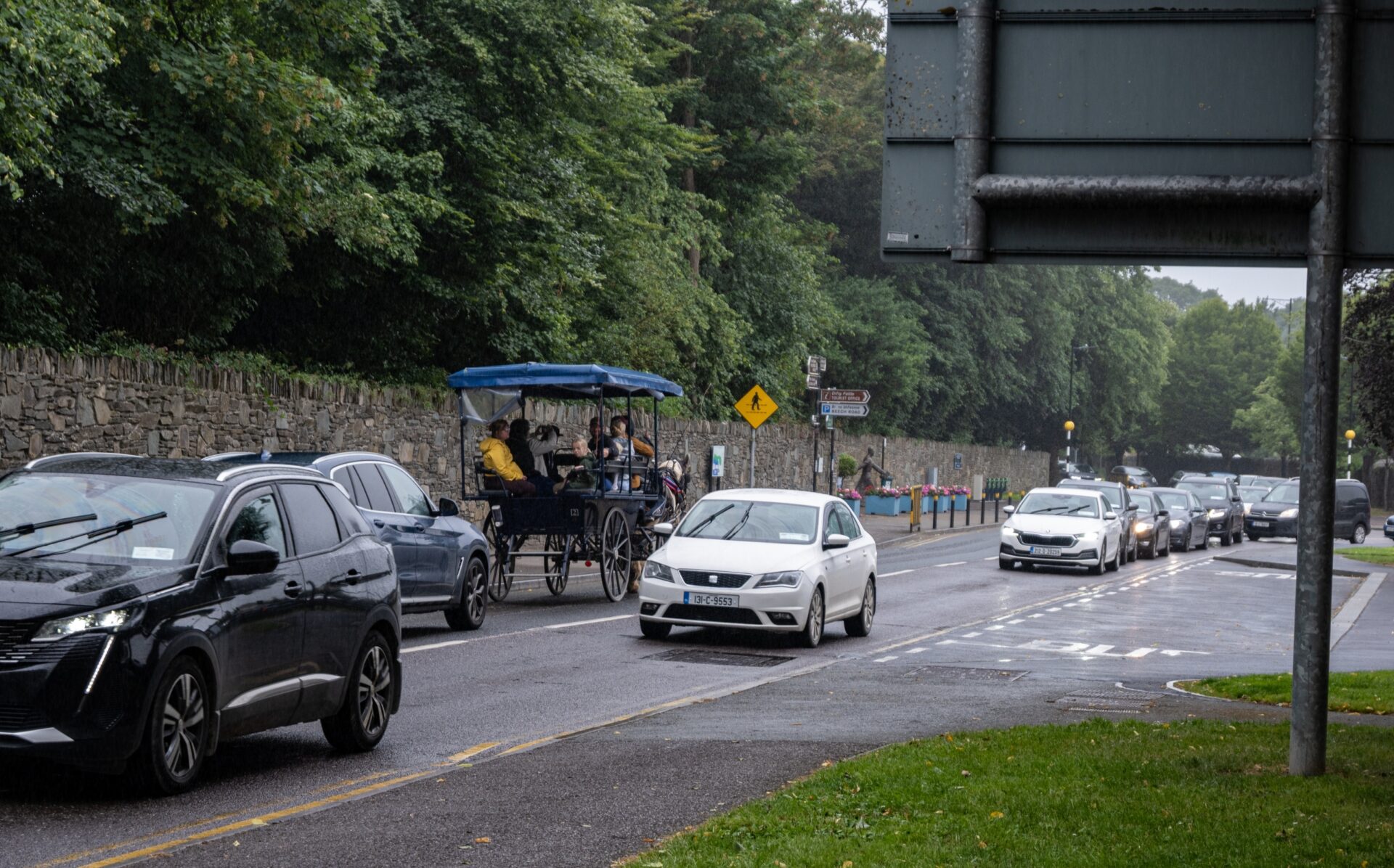
Grady demands Killarney traffic review
Killarney councillor Martin Grady has called for an urgent review of traffic management across the town following severe delays along...


Killarney Pumpkin Farm returns for Halloween
The annual event is in its sixth year and caters to people of all ages. The farm is located in...


Killarney Toastmasters host special open night
Killarney Toastmasters is inviting members of the local community to an open night at the Dromhall Hotel on Muckross Road...


Killarney hotels achieve top global rankings in Readers’ Choice Awards
Killarney hotels achieve top global rankings in Readers’ Choice Awards Two leading Killarney hotels are celebrating major international accolades following...


Fossa Swimmers make a splash at County Finals
The Fossa Swim team pictured at the Tralee Sports Complex following their successful outing at the County Finals of the...

On the Ball Part 2 of the Mikey Daly Interview
Éamonn Fitzgerald EF: Killarney Celtic are invited to participate in an Irish competition. That has big financial implications for travel,...


LUKE MANGAN recently caught up with Kerry FC’s manager, Colin Healy.
He spoke to him about his careers as a player and manager. Here’s how it went: When you began your...


Home cup tie for St Paul’s could be epic
Paudie O’Connor National Cup (Round 1) Utility Trust St Paul’s v GCU Brunell Saturday 7.30pm Killarney Sports and Leisure Centre...


Chances of Kerry v Cork Munster final in 2026 decrease as Munster GAA delay seeding plan
After facing a backlash from Limerick, Clare, Waterford and Tipperary players, Munster GAA have postponed their plan to keep Cork...