Connect with us

News

Seamus Kiely, a man ahead of his time, passes away

Published

on

Photos by Don McMonagle

The passing of retired businessman Seamus Kiely this week was widely felt across the Killarney area.

Mr Kiely died peacefully on Wednesday morning, surrounded by his family in the Palliative Care Unit at University Hospital Kerry.
Described as a man ahead of his time, Mr Kiely was Kerry’s leading electrical goods and music trader for decades.
Mr Kiely first demonstrated his entrepreneurial skills by operating a bar in the old town hall ballroom.
In the late 1960s he opened a small record shop at the bottom of High Street where he sold records and cassettes, introducing Killarney people to international music stars.
Many locals of a certain age bracket would have bought their first albums from Kiely’s.
Later Mr Kiely expanded this business to include televisions, radios, and household appliances.
Always at the cutting edge of new technology, he sold early computer appliances like the Commodore 64 and Sinclair ZX Spectrum long before personal computers were in every household.
In their heyday, Kiely’s Electrical were the largest independent electrical retailer in Munster, employing over 40 staff across five stores (in Killarney, Tralee, Ennis and two in Limerick).
The head office was based in Killarney and there was a warehouse in Newcastle West. Mr Kiely was fiercely proud of his Killarney roots.
Killarney Advertiser Managing Director Cormac Casey said: "I am saddened to learn of the death of Seamus Kiely, an entrepreneur, a loyal supporter of the Killarney Advertiser, a man of integrity to do business with and a man away ahead of his times."
Prior to his retail ventures, he was also a pub, and nightclub owner and operated the legendary Hardy’s Nite Club, on College Street, where McSorley’s now stands.
Demonstrating innovation in every business sense, he opened an out-of-town electrical goods showroom in the Woodlands Industrial Estate, long before out-of-town shopping centres were the norm.
Later, he moved to a massive unit half way between Killarney and Farranfore, which was known as Kiely’s Supersave. This warehouse sold discounted goods long before such stores like Eurosaver were common in towns across Ireland.
A founder member of Killarney Rotary Club, Mr Kiely demonstrated fierce loyalty to his customers and staff.
Patrick Rowe, Financial Controller at KC Print, who worked with Mr Kiely during the business’s peak, paid tribute to his former boss.
“He was a very astute businessman and a tough negotiator,” Mr Rowe said. “His basic business principle was to look after the customer and they’ll repay you with their loyalty. He always looked to stock the latest cutting-edge products at a competitive price in a convenient location served by knowledgeable staff. He was a good judge of character and would have you sized up in no time. He was always the ‘the smartest person in the room’ and could compute figures in his head faster than any accountant’s calculator! He could also be a bit of a rogue with an infectious laugh and up for a ‘bit of devilment’. He was a generous employer who looked after his staff and expected loyalty and hard work in return.”
He is survived by his wife, Nuala, daughter Louise, son-in-law Daniel, and grandchildren Isabelle, Harry, and Henry.
Seamus’s funeral mass took place on Friday morning at St Mary’s Cathedral before he was laid to rest at Aghadoe Cemetery.

Advertisement

News

On the Ball Part 2 of the Mikey Daly Interview

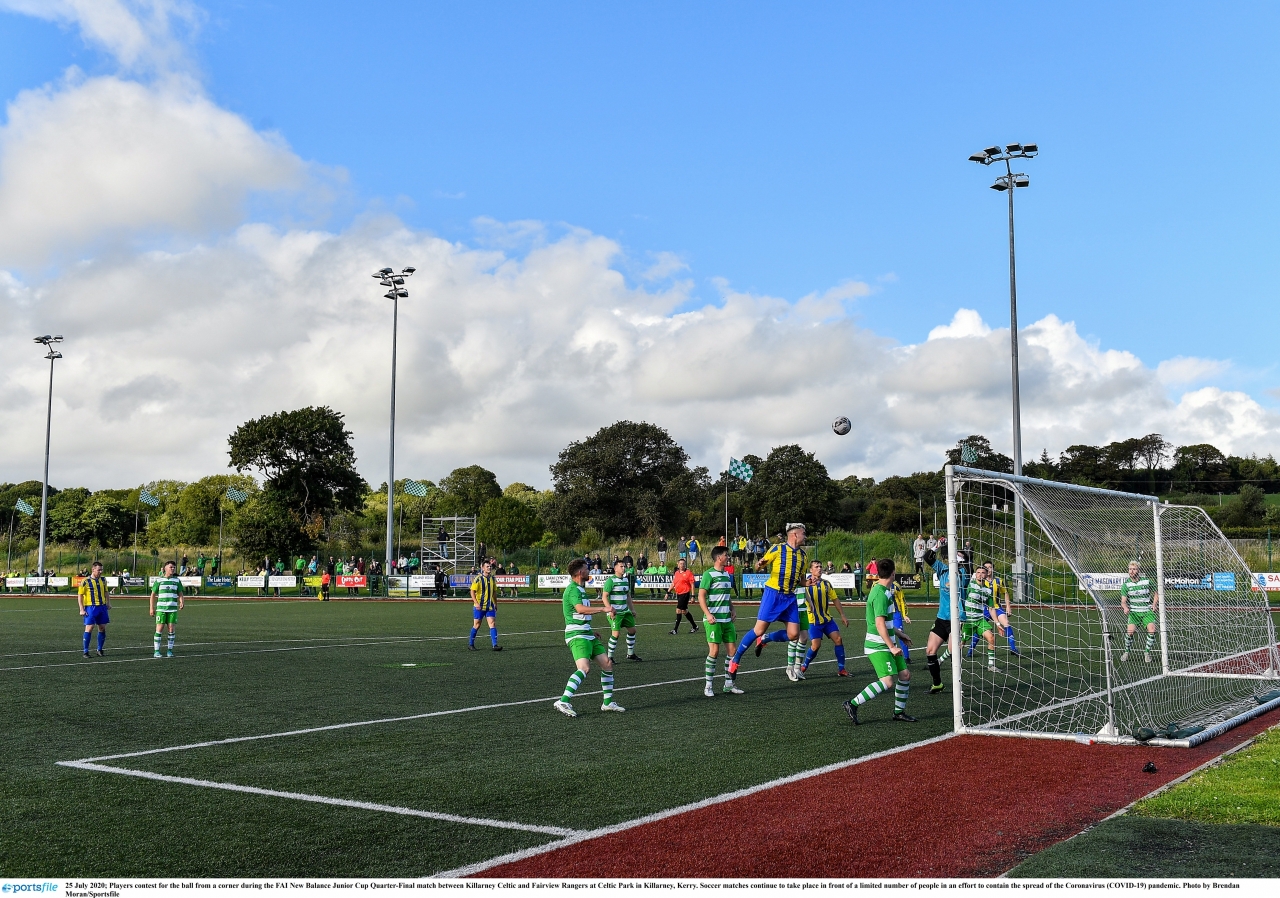
Éamonn Fitzgerald EF: Killarney Celtic are invited to participate in an Irish competition. That has big financial implications for travel, meals, etc. MD: It is great to be invited, showing […]
Published

on

Éamonn Fitzgerald
EF: Killarney Celtic are invited to participate in an Irish competition. That has big financial implications for travel, meals, etc.
MD: It is great to be invited, showing the quality of our squads, but travel costs are very high. I have been looking at clubs like ours in Limerick, Tipperary, Clare and elsewhere for a regionalised competition so that travel costs could be reduced, but I don’t see any commitment to that idea. It’s up in the air at the moment.
EF: Running an amateur sports club is very expensive, especially if you have so many successful teams in competition.
MD: You are well aware of that yourself, but with all of our activities, we are funded by the usual sources used by all sports to collect money. We are in a very good financial state.
EF:How good?
MD: As a trustee of the club, I am very proud to say that we are almost debt-free and we expect to be clear of any debt by October this year, marking our 50th anniversary. In saying that, whether you are an Under 12 or a senior player, all you have to pay for a training session with Killarney Celtic is €2.

EF:The women in Celtic appear to do great work developing soccer for all.
MD: Yes, they do marvellous work in so many parts of the club, led by trojan worker Mary Lyne. On Wednesday night last, the Mothers, Others and Friends started a weekly non-competitive fun game under lights at Celtic Park, and that is great.

EF: Can, can you see some ex-Celtic player is going to make it with a top Irish club and then cross Channel?
Md: I have to compliment Killarney Athletic here right away because Brendan Moloney and Diarmaid O’Carroll did just that. We haven’t had any such shining light yet, but we know that we will in the future because we have great young successful players coming through.
EF: Reverting back again, to 1976, you would have come up at the time The ‘ban’ was abolished. That rule prevented GAA players from playing soccer. If they did, they were suspended. However, it must have been difficult for a player to play both codes when it was permitted.
MD: Fair dues to Seán Kelly, he removed the “ban’, and we were very fortunate that there were some great players from Spa in particular, like Billy Morris, Seán Cronin, the Cahill brothers, James and John, Seánie Kelliher and others. They wanted to play football and soccer. The way we worked it in Celtic was that if the football season was over, then they always played soccer with us, and vice versa
EF: Why do you think that club soccer has become so popular in Ireland? It is climbing the rankings as a sport in Ireland.
MD: Because it’s on television the whole time, and the coverage is getting is precedented. Anytime you turn on the TV, you will find a soccer game from all parts of the world, not just cross channel. The 11-a-side is probably easier to organise than we say 15-a-side in the GAA, and some small clubs, particularly in rural areas, find it hard to get 15 to form a team. See what they’re doing in places. Two neighbouring teams get together as one team, and that’s understandable because all people want to do is play. Of course, not all young people wish to play soccer; they have different hobbies, learning the guitar or whatever, and that is great for them. That’s my experience anyway.

EF: The real crunch time comes when they get to roughly 18-years-old, completing their post-primary education and moving away from Killarney for third-level education. They may be in college, anywhere in the country, making it difficult to come down and play with their local club. So that’s one big reason for the fall off.
MD: Some fall away before that, believe it or not.
EF: Do you think Celtic are doing well, promoting the club?

Yes, for all sexes, but particularly for the girls, so that they can stay on longer for valuable coaching. We’re very fortunate to have David McIndoe as coach for the Celtic girls, and he is outstanding, absolutely fantastic.
EF: The FAI seems to stumble from one crisis to another, but at local level soccer is alive and well in towns, as well as in rural areas. Ballyhar and Mastegeeha are very good examples where great facilities have been developed by enthusiastic volunteers and that attracts the players
MD: So I think once you get to the stage where you have a facility and committed club people, you’re there. We have a very good membership, and we’d be well organised for parents who support their kids playing, and they do. We have two stands, as you know, one dedicated to our former great Celtic man, John Doyle (RIP). That’s important nowadays that you have a clubhouse where the spectators can get that welcome cup of coffee they will relish, especially on cold days.
EF: Where do you see Celtic in 2076?

MD: As I said earlier in Killarney Celtic, we are welcoming for everyone, the local Irish, of course, but it’s open to all. We have great people originally, from China, Europe, and the Middle East. We have an exceptionally good committee at the moment. We had people with foresight like Dermot O’Callaghan (RIP), who were progressive, and of course, that family continues the Celtic tradition. Obviously, we like to push the thing on a bit further, but we’re very conscious that we spent 50 years putting this together and we want to make sure that when we go, the structures are in place in (Killarney) Celtic for the next 50 ( years)As a trustee I am very proud of how we have developed and will celebrate that achievement this year. We will also remember the Celtic players and supporters who have passed away since 1976 and look forward to whatever challenges and opportunities face Killarney Celtic in the years ahead. It is hard to believe that it all started from our conversation (with Billy Healy and Tommy O’Shea) that a new club was needed in Killarney, so that all players who wish to play soccer will be able to play at whatever level they wish and join us at Celtic Park.
EF: Thanks, Mikey, and wish you good health on your daily cycles with your good friend Mike O’Neill.
That’s Mikey Daly, always a pleasure to chat with him on a variety of sports.

Continue Reading

News

Liam O’Connor to hit the highest notes in Alpine concert

Published

on

By

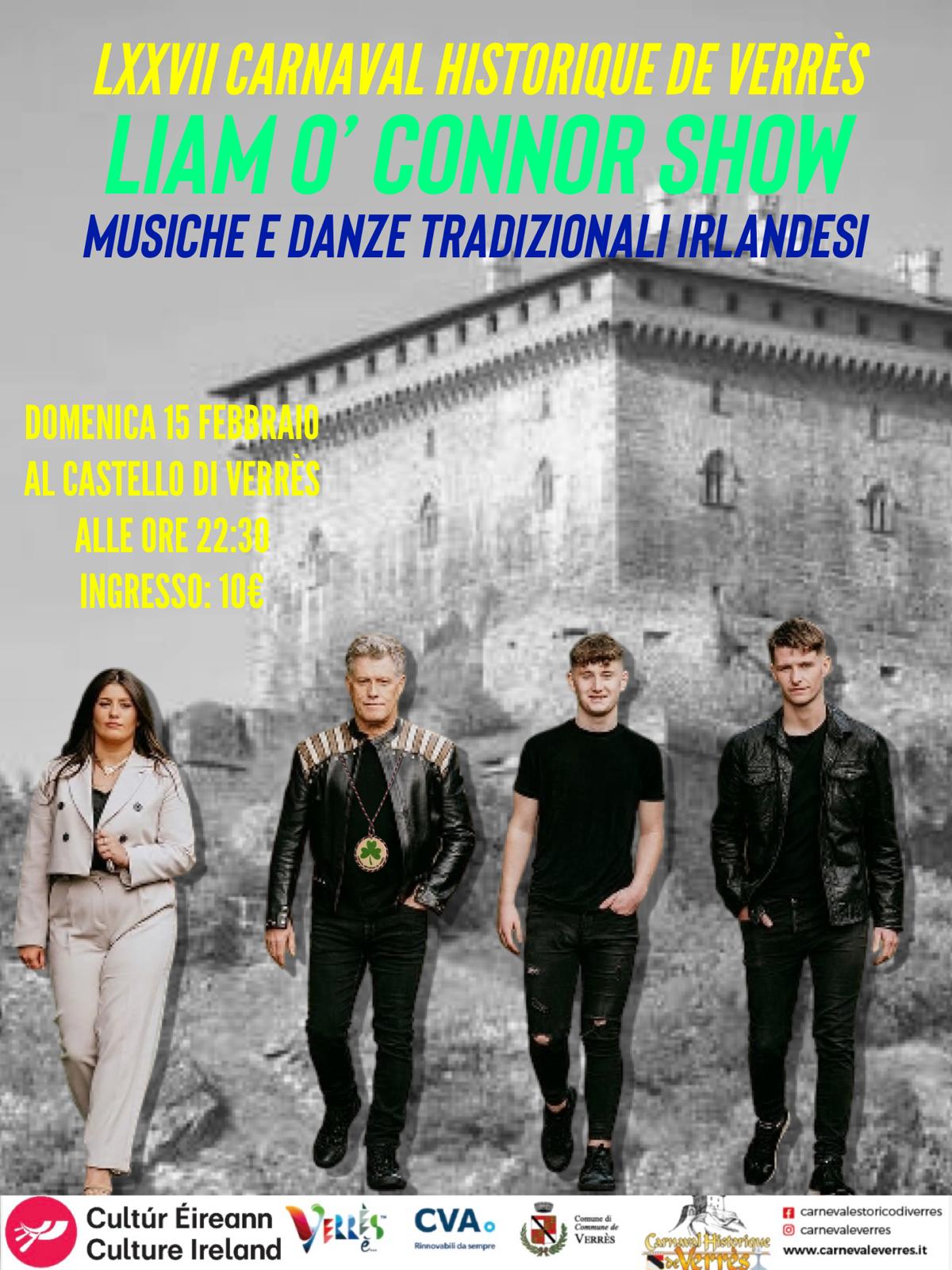
Killarney musician Liam O’Connor and his family band are to hit the Italian Alps bringing their brand of high tempo Irish music and dance to an Italian audience in the unique surrounds of a 14th century mountaintop castle overlooking the town of Verrès in northwestern Italy.


In the shadows of some of Italy’s highest peaks like Monte Bianco (Mont Blanc) and Cervino (the Matterhorn), Liam is certain to be hitting the high notes with two concerts in the Castello di Verrès, which will take place on the 15th and 16th of February, thanks to grant funding received from Culture Ireland and a growing connection between the towns of Verrès and Killarney.


The concerts are the centrepiece events in this year’s 77th rendition of the Alpine town’s medieval Carnevale celebrations and an Irish delegation led by Verrès native and long-time Killarney resident Davide Mosca and Killarney Chambers and Killarney Celtic’s Paul Sherry will be among the guests of honour.


Verrès hosted a visit by Killarney Celtic teams in 2023 and reciprocated with brilliant colour and sounds in their medieval costumes at the St. Patricks Day parade in Killarney in 2024.

The town then hosted an Erasmus+ Youth exchange from Celtic in 2025 and they are bringing their Carnevale pageantry back to Killarney for the St. Patrick’s Day festival in March.


Carnevale supremo Tiziana Balma is delighted with the deepening cultural, sporting and economic relationship between the Alpine town and Killarney.

“Liams concerts are going to add a new layer in the relationship between our two communities. The whole Aosta Valley (province) is excited, and we are also looking forward to joining in Killarney’s St. Patricks Day parade”

Attachments

Continue Reading

Last News

Sport